• Home
  • Latest
  • Fortune 500
  • Finance
  • Tech
  • Leadership
  • Lifestyle
  • Rankings
  • Multimedia
Techspace

Obama is About to Give Private Space Companies a Big Break

By
Clay Dillow
Clay Dillow
Down Arrow Button Icon
By
Clay Dillow
Clay Dillow
Down Arrow Button Icon
November 24, 2015, 7:22 PM ET
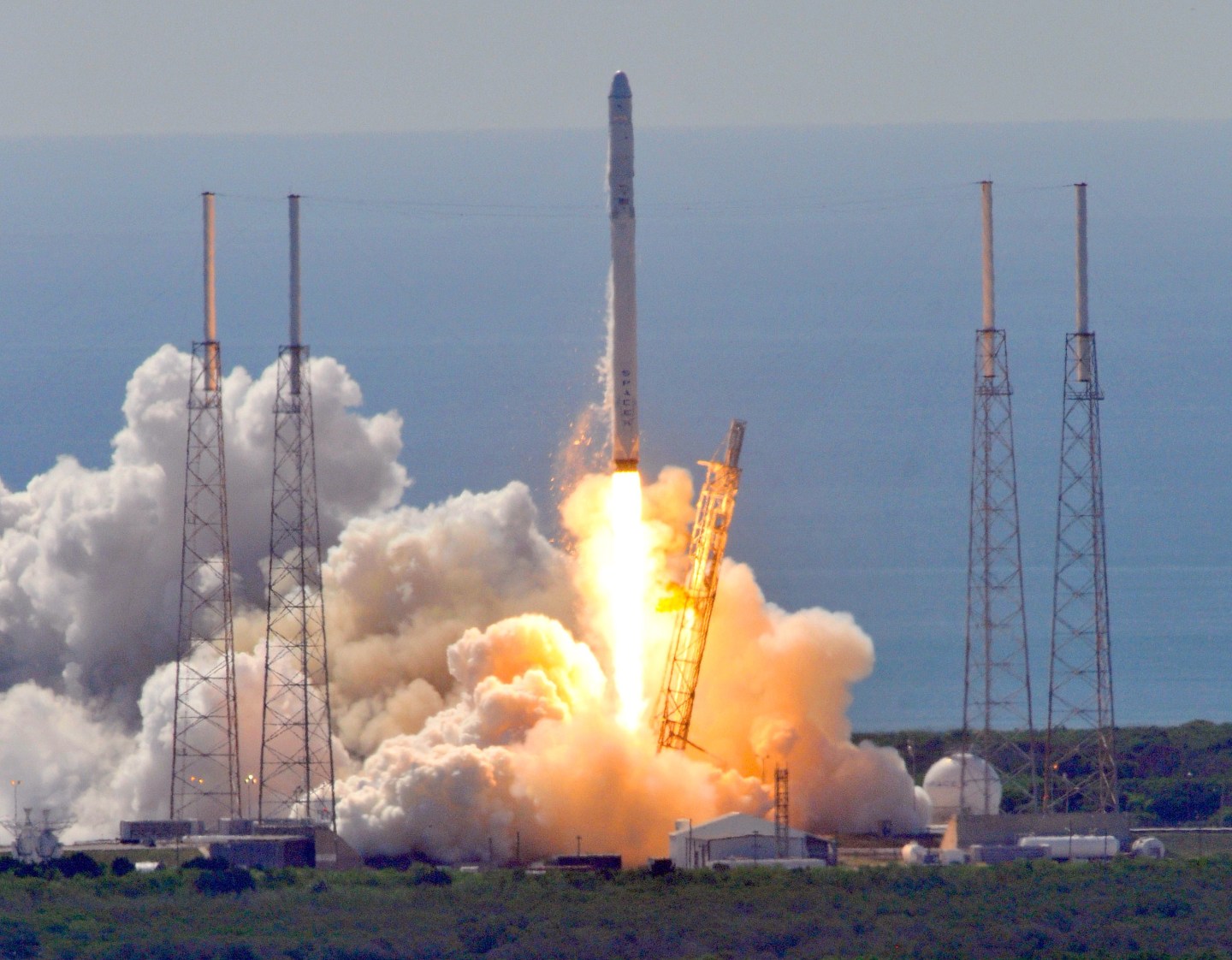
SpaceX's Falcon 9 rocket launches at Cape Canaveral
Space X's Falcon 9 rocket as it lifts off from space launch complex 40 at Cape Canaveral, Florida June 28, 2015 with a Dragon CRS7 spacecraft. The unmanned SpaceX Falcon 9 rocket exploded minutes after liftoff from Cape Canaveral, Florida, following what was meant to be a routine cargo mission to the International Space Station. "The vehicle has broken up," said NASA commentator George Diller, after NASA television broadcast images of the white rocket falling to pieces. "At this point it is not clear to the launch team exactly what happened." The disaster was the first of its kind for the California-based company headed by Internet entrepreneur Elon Musk, who has led a series of successful launches even as competitor Orbital Sciences lost one of its rockets in an explosion in October, and a Russian supply ships was lost in April. SpaceX's live webcast of the launch went silent about two minutes 19 seconds into the flight, and soon after the rocket could be seen exploding and small pieces tumbling back toward Earth. AFP PHOTO/ BRUCE WEAVER (Photo credit should read BRUCE WEAVER/AFP/Getty Images)Photograph by Bruce Weaver — Getty Images

A bill currently awaiting President Obama’s signature would exempt private spaceflight companies like SpaceX, Blue Origin, and Virgin Galactic from most U.S. government oversight for the next eight years.

The legislation would extend a so-called “learning period” for the industry until at least 2023, keeping agencies like the Federal Aviation Administration from regulating commercial space companies as closely as the rest of the aerospace industry. The bill also covers ownership and extraction of resources in space (think: asteroid mining) and extends U.S. commitment to the International Space Station into the next decade. President Obama is expected to sign the bill into law this week.

The U.S. Commercial Space Launch Competitiveness Act stems from an earlier 2004 bill that established a “learning period” for the industry that exempted it from government oversight and regulation while companies developed and tested new technologies. In 2004, the commercial spaceflight industry wasn’t doing a whole lot of flying, and Congress wanted to ensure that regulatory requirements didn’t keep them from doing so. That regulatory amnesty is set to expire in December, but the latest bill would extend the learning period until at least Oct. 1, 2023.

As such, people participating in commercial spaceflight—be they tourists, test pilots, or part of a crewed commercial mission—do so at their own risk. Human commercial spaceflight will be governed by informed consent, meaning that participants must sign a waiver confirming that they are aware of the dangers inherent in strapping themselves to the nose of a towering silo filed with rocket fuel.

The bill has already drawn praise from the private spaceflight sector, which will be free to continue pushing the envelope without regulators looking over its shoulders. Perhaps more importantly, keeping regulators at bay for a predetermined period will also keep the industry’s money spigot wide open.

“When you start regulating an industry, you can start driving away investment,” Marco Caceres, a senior analysts and director of space studies at aerospace consultancy Teal Group, says. “You don’t want to create too many regulations that keep investors from investing before you get fully developed as an industry.”

This isn’t just about rockets and spacecraft, Caceres says, but also about infrastructure on the ground as well. Though at times it feels like the commercial space industry is moving rapidly—just yesterday Blue Origin scored a major technological coup by launching a rocket to space and landing it safely back on its launchpad, for instance—it hasn’t moved as fast as many thought it would.

Consider all the private spaceports that popped up over the last decade under the assumption that by now they’d be doing a brisk business hosting Virgin Galactic or other space tourism concerns, he says. Relief from regulation makes it easier for infrastructure like that to remain viable while waiting for the rest of the industry to catch up.

Not everyone is thrilled with the bill, however. The FAA is responsible for ensuring the safety of human beings transiting U.S. airspace as well as for certifying the aircraft that carry them. The bill restricts the agency’s ability to do that job. Language in the bill provides the FAA with leeway to step in and issue safety regulations if there is an accident that causes injury, death, or extensive property damage. But even then, its jurisdiction is limited.

The bill also creates a framework for establishing resource rights on celestial bodies that lets companies claim ownership of minerals or other resources they manage to extract from asteroids, moons, or distant planets. It does not, however, let those companies claim ownership of those celestial bodies in the name of their governments, careful to hew to the 1967 Outer Space Treaty that forbids the claiming of planets or asteroids as government territory.

Another provision extends the U.S. commitment to the International Space Station into 2024. Continuing support for the ISS comes as no surprise, as the Obama administration has vocally supported doing so. But codifying that support into will make it more difficult for a future administration to withdraw U.S. support from the orbiting lab at some point in the future.

For more on the commercial space industry, watch this Fortune video.

About the Author
By Clay Dillow
See full bioRight Arrow Button Icon

Latest in Tech

robots
InnovationRobots
‘The question is really just how long it will take’: Over 2,000 gather at Humanoids Summit to meet the robots who may take their jobs someday
By Matt O'Brien and The Associated PressDecember 12, 2025
1 hour ago
Man about to go into police vehicle
CryptoCryptocurrency
Judge tells notorious crypto scammer ‘you have been bitten by the crypto bug’ in handing down 15 year sentence 
By Carlos GarciaDecember 12, 2025
2 hours ago
three men in suits, one gesturing
AIBrainstorm AI
The fastest athletes in the world can botch a baton pass if trust isn’t there—and the same is true of AI, Blackbaud exec says
By Amanda GerutDecember 12, 2025
2 hours ago
Brainstorm AI panel
AIBrainstorm AI
Creative workers won’t be replaced by AI—but their roles will change to become ‘directors’ managing AI agents, executives say
By Beatrice NolanDecember 12, 2025
3 hours ago
Fei-Fei Li, the "Godmother of AI," says she values AI skills more than college degrees when hiring software engineers for her tech startup.
AITech
‘Godmother of AI’ says degrees are less important in hiring than ‘how quickly can you superpower yourself’ with new tools
By Nino PaoliDecember 12, 2025
5 hours ago
C-SuiteFortune 500 Power Moves
Fortune 500 Power Moves: Which executives gained and lost power this week
By Fortune EditorsDecember 12, 2025
5 hours ago

Most Popular

placeholder alt text
Economy
Tariffs are taxes and they were used to finance the federal government until the 1913 income tax. A top economist breaks it down
By Kent JonesDecember 12, 2025
11 hours ago
placeholder alt text
Success
At 18, doctors gave him three hours to live. He played video games from his hospital bed—and now, he’s built a $10 million-a-year video game studio
By Preston ForeDecember 10, 2025
2 days ago
placeholder alt text
Success
Palantir cofounder calls elite college undergrads a ‘loser generation’ as data reveals rise in students seeking support for disabilities, like ADHD
By Preston ForeDecember 11, 2025
1 day ago
placeholder alt text
Investing
Baby boomers have now 'gobbled up' nearly one-third of America's wealth share, and they're leaving Gen Z and millennials behind
By Sasha RogelbergDecember 8, 2025
4 days ago
placeholder alt text
Arts & Entertainment
'We're not just going to want to be fed AI slop for 16 hours a day': Analyst sees Disney/OpenAI deal as a dividing line in entertainment history
By Nick LichtenbergDecember 11, 2025
23 hours ago
placeholder alt text
Economy
‘We have not seen this rosy picture’: ADP’s chief economist warns the real economy is pretty different from Wall Street’s bullish outlook
By Eleanor PringleDecember 11, 2025
1 day ago
Rankings
  • 100 Best Companies
  • Fortune 500
  • Global 500
  • Fortune 500 Europe
  • Most Powerful Women
  • Future 50
  • World’s Most Admired Companies
  • See All Rankings
Sections
  • Finance
  • Leadership
  • Success
  • Tech
  • Asia
  • Europe
  • Environment
  • Fortune Crypto
  • Health
  • Retail
  • Lifestyle
  • Politics
  • Newsletters
  • Magazine
  • Features
  • Commentary
  • Mpw
  • CEO Initiative
  • Conferences
  • Personal Finance
  • Education
Customer Support
  • Frequently Asked Questions
  • Customer Service Portal
  • Privacy Policy
  • Terms Of Use
  • Single Issues For Purchase
  • International Print
Commercial Services
  • Advertising
  • Fortune Brand Studio
  • Fortune Analytics
  • Fortune Conferences
  • Business Development
About Us
  • About Us
  • Editorial Calendar
  • Press Center
  • Work At Fortune
  • Diversity And Inclusion
  • Terms And Conditions
  • Site Map

© 2025 Fortune Media IP Limited. All Rights Reserved. Use of this site constitutes acceptance of our Terms of Use and Privacy Policy | CA Notice at Collection and Privacy Notice | Do Not Sell/Share My Personal Information
FORTUNE is a trademark of Fortune Media IP Limited, registered in the U.S. and other countries. FORTUNE may receive compensation for some links to products and services on this website. Offers may be subject to change without notice.