• Home
  • Latest
  • Fortune 500
  • Finance
  • Tech
  • Leadership
  • Lifestyle
  • Rankings
  • Multimedia
Retail

Which Foods Are Most Likely To Get You Sick — In Three Charts

By
Tamar Haspel
Tamar Haspel
Down Arrow Button Icon
By
Tamar Haspel
Tamar Haspel
Down Arrow Button Icon
November 19, 2015, 6:00 AM ET
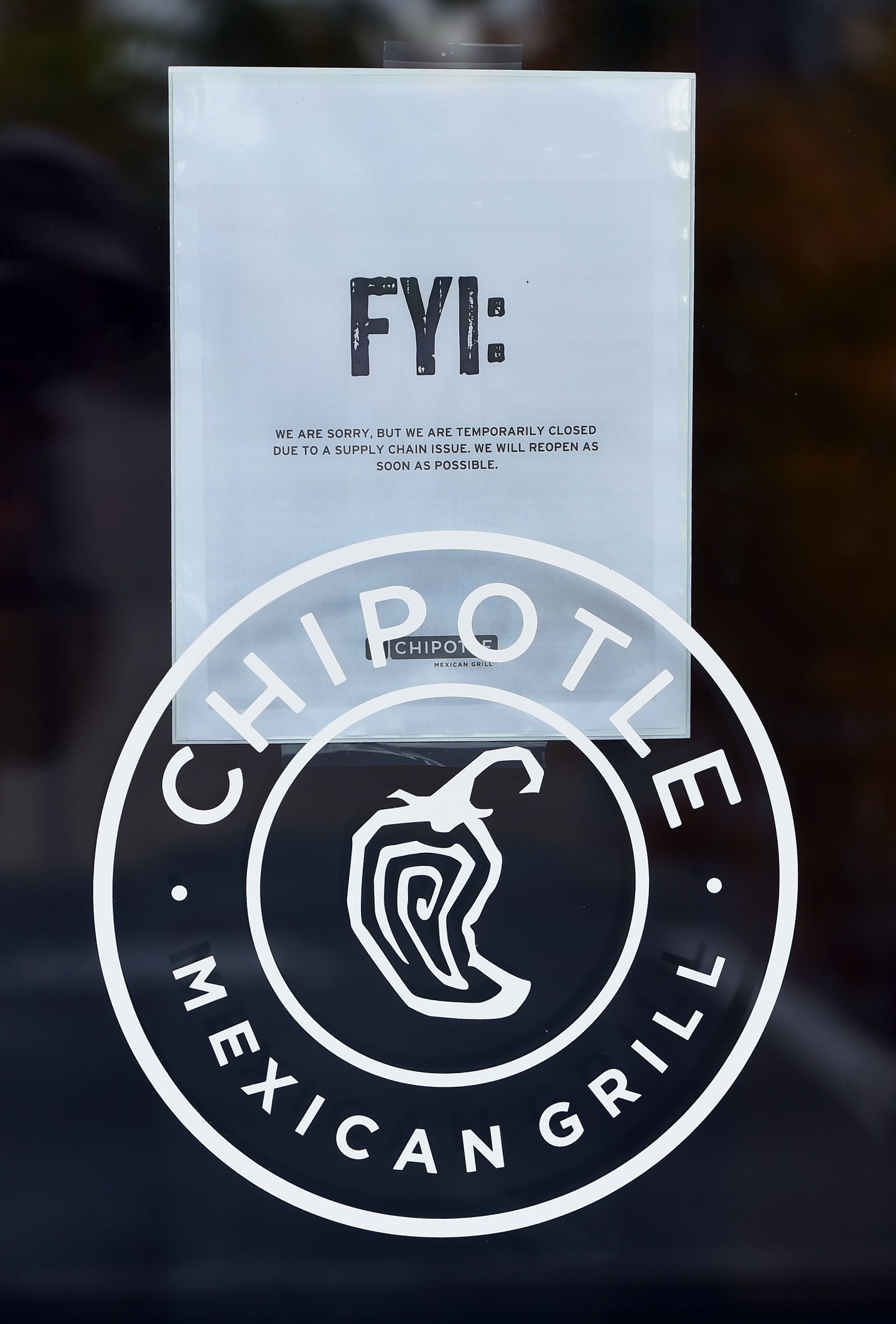
Chipotle Closes Over 40 Restaurants In Portland Area Over E. Coli Outbreak
VANCOUVER, WA - NOVEMBER 03: A sign hangs on the door of a Chipotle Mexican Grill store location in on November 3, 2015 in Vancouver, Washington. Chipotle Mexican Grill is temporarily closing more than 40 restaurants in and around Washignton and Oregon, as health officials investigate an E. coli outbreak that has gotten at least 22 people sick. (Photo by Steve Dykes/Getty Images)Photograph by Steve Dykes — Getty Images

An E. coli outbreak that sickened at least 42 people and shuttered Chipotle restaurants in Oregon and Washington was another recent reminder of the impact of food-related or foodborne illness. In the next year, studies suggest that nearly one in 30 Americans — 10 million people — will get sick from a foodborne pathogen, and one in 250,000 will die.

The U.S. economy will take a $15.5 billion dollar hit through lost income, lost revenue, healthcare-related costs and some intangibles, like “pain and suffering,” according to the U.S. Department of Agriculture.

Research shows the most common foodborne pathogen is norovirus, which is the leading cause of gastroenteritis. The most deadly is listeria; though it is rare, with just 123 confirmed cases in 2013, 24 led to death. The most expensive is salmonella, which is quite common — 7,277 cases in 2013, but with a small fraction (127) resulting in death.

How worried should Americans be about the safety of the food supply? Which foods are most likely to get Americans sick? A deep dive into the data offers a look at where the risks lie.

Which foods carry health risks

To identify the most dangerous foods, the Emerging Pathogens Institute, a research institute at the University of Florida, compiled a greatest hits of dangerous pathogen/food pairings. Using a methodology that combined the likelihood of contracting an illness and the illness’s severity to calculate total disease burden, the group identified a Top Ten list of combinations.

Number one, by a long shot, is campylobacter, a bacterium found in poultry.

Next come toxoplasma in pork, listeria in deli meats, and salmonella in poultry. Although leafy vegetables are responsible for the greatest number of foodborne illnesses by a wide margin (nearly a quarter of the total), it’s not until you get to number 8 on the Top Ten list that produce, paired with salmonella, makes an appearance.

The top pairings don’t necessarily map to the major outbreaks of disease; only four of the top ten outbreaks in 2014 were from pairings on the list. J. Glenn Morris, director of the Emerging Pathogens Institute, told Fortune that, outbreaks are “a small fraction” of the total number of foodborne illnesses. In most cases, foodborne illnesses are limited to a small group of people, which makes it difficult for authorities to track.

The financial toll

When it comes to calculating economic impact, cost scales up with the pathogen’s virulence. Norovirus, according to Morris, is very common, but is likely only to make anyone who contracts it sick with, perhaps, diarrhea or nausea for a couple of days so costs of medical care and lost productivity are relatively small.

With listeria, though, or toxoplasmosis, “the number of cases is small, but the risk of death or long-term disability is significant, so you get long-term financial impact.” According to Michael Batz, also with the Emerging Pathogens Institute and one of the authors of the paper calculating the $15.5 billion impact of foodborne illness, “there’s also a social welfare value to a life,” and the estimate of intangibles like pain and suffering that he and his co-authors use is $8.7 million per life lost. Value attributed to those lives are the lion’s share (83%) of the total $15.5 billion estimate.

Salmonella’s ubiquity, as well as the rare possibility of causing death, earned it the Most Expensive Pathogen title, with an annual $3.7 billion dollar price tag. Toxoplasma and listeria, though far less common, earn the #2 and #3 slots respectively because they are more deadly than salmonella.

But the food supply is still safe

Still, Morris calls the American food supply “basically safe” and says that overall, foodborne illnesses are not on the rise (“basically flat”).

He says the estimate of almost 10 million food-borne illnesses per year from known pathogens is “reasonable” because it’s an extrapolation of hard, pathogen-by-pathogen data. The Center for Disease Control (CDC) has made a larger estimate of 48 million illnesses and 3,000 deaths but that estimate comes from self-reported data of diarrheal disease, which tends to be less reliable, Morris says.

For something that costs thousands of lives and billions of dollars, shouldn’t there be a better handle on the data? “We don’t have an optimal means of monitoring occurrence of foodborne disease,” Morris argues. The responsibility for tracking foodborne diseases lie with state health departments, while the USDA is responsible for ensuring the safety of meat, poultry, and eggs, and the FDA is responsible for everything else. Though Morris acknowledges the U.S. record on food safety is on par with other developed nations, he adds, “every other developed country has one agency responsible for food safety. We really have something of a mess.”

USDA Secretary Tom Vilsack is on record as favoring a system in which a single agency is responsible for food safety. A spokesperson for the FDA, when asked for comment by Fortune, said only that the agency supports “a more integrated national food safety system.” The FDA recently finalized new rules that are designed to prevent outbreaks. The rules require farmers to regularly train workers on best practices, and the rules also make importers accountable if their foods don’t meet U.S. standards of safety. The government estimates about 52% of fresh fruit and 22% of fresh vegetables are imported.

This story was updated. An earlier version incorrectly named the Emerging Pathogens Institute and incorrectly identified what number produce fell on the list of food risks.

About the Author
By Tamar Haspel
See full bioRight Arrow Button Icon

Latest in Retail

Finance
Lorem ipsum dolor sit amet, consectetur adipiscing elit, sed do eiusmod tempor incididunt ut labore et dolore magna aliqua. Ut enim ad minim veniam
By Fortune Editors
October 20, 2025
Finance
Lorem ipsum dolor sit amet, consectetur adipiscing elit, sed do eiusmod tempor incididunt ut labore et dolore magna aliqua. Ut enim ad minim veniam
By Fortune Editors
October 20, 2025
Finance
Lorem ipsum dolor sit amet, consectetur adipiscing elit, sed do eiusmod tempor incididunt ut labore et dolore magna aliqua. Ut enim ad minim veniam
By Fortune Editors
October 20, 2025
Finance
Lorem ipsum dolor sit amet, consectetur adipiscing elit, sed do eiusmod tempor incididunt ut labore et dolore magna aliqua. Ut enim ad minim veniam
By Fortune Editors
October 20, 2025
Finance
Lorem ipsum dolor sit amet, consectetur adipiscing elit, sed do eiusmod tempor incididunt ut labore et dolore magna aliqua. Ut enim ad minim veniam
By Fortune Editors
October 20, 2025
Finance
Lorem ipsum dolor sit amet, consectetur adipiscing elit, sed do eiusmod tempor incididunt ut labore et dolore magna aliqua. Ut enim ad minim veniam
By Fortune Editors
October 20, 2025

Most Popular

Finance
Lorem ipsum dolor sit amet, consectetur adipiscing elit, sed do eiusmod tempor incididunt ut labore et dolore magna aliqua. Ut enim ad minim veniam
By Fortune Editors
October 20, 2025
Finance
Lorem ipsum dolor sit amet, consectetur adipiscing elit, sed do eiusmod tempor incididunt ut labore et dolore magna aliqua. Ut enim ad minim veniam
By Fortune Editors
October 20, 2025
Finance
Lorem ipsum dolor sit amet, consectetur adipiscing elit, sed do eiusmod tempor incididunt ut labore et dolore magna aliqua. Ut enim ad minim veniam
By Fortune Editors
October 20, 2025
Finance
Lorem ipsum dolor sit amet, consectetur adipiscing elit, sed do eiusmod tempor incididunt ut labore et dolore magna aliqua. Ut enim ad minim veniam
By Fortune Editors
October 20, 2025
Finance
Lorem ipsum dolor sit amet, consectetur adipiscing elit, sed do eiusmod tempor incididunt ut labore et dolore magna aliqua. Ut enim ad minim veniam
By Fortune Editors
October 20, 2025
Finance
Lorem ipsum dolor sit amet, consectetur adipiscing elit, sed do eiusmod tempor incididunt ut labore et dolore magna aliqua. Ut enim ad minim veniam
By Fortune Editors
October 20, 2025
Rankings
  • 100 Best Companies
  • Fortune 500
  • Global 500
  • Fortune 500 Europe
  • Most Powerful Women
  • Future 50
  • World’s Most Admired Companies
  • See All Rankings
Sections
  • Finance
  • Leadership
  • Success
  • Tech
  • Asia
  • Europe
  • Environment
  • Fortune Crypto
  • Health
  • Retail
  • Lifestyle
  • Politics
  • Newsletters
  • Magazine
  • Features
  • Commentary
  • Mpw
  • CEO Initiative
  • Conferences
  • Personal Finance
  • Education
Customer Support
  • Frequently Asked Questions
  • Customer Service Portal
  • Privacy Policy
  • Terms Of Use
  • Single Issues For Purchase
  • International Print
Commercial Services
  • Advertising
  • Fortune Brand Studio
  • Fortune Analytics
  • Fortune Conferences
  • Business Development
About Us
  • About Us
  • Editorial Calendar
  • Press Center
  • Work At Fortune
  • Diversity And Inclusion
  • Terms And Conditions
  • Site Map
  • Facebook icon
  • Twitter icon
  • LinkedIn icon
  • Instagram icon
  • Pinterest icon

© 2026 Fortune Media IP Limited. All Rights Reserved. Use of this site constitutes acceptance of our Terms of Use and Privacy Policy | CA Notice at Collection and Privacy Notice | Do Not Sell/Share My Personal Information
FORTUNE is a trademark of Fortune Media IP Limited, registered in the U.S. and other countries. FORTUNE may receive compensation for some links to products and services on this website. Offers may be subject to change without notice.


Most Popular

placeholder alt text
Success
In 2026, many employers are ditching merit-based pay bumps in favor of ‘peanut butter raises’
By Emma BurleighFebruary 2, 2026
2 days ago
placeholder alt text
Cybersecurity
Top AI leaders are begging people not to use Moltbook, a social media platform for AI agents: It’s a ‘disaster waiting to happen’
By Eva RoytburgFebruary 2, 2026
2 days ago
placeholder alt text
Politics
Meet the Palm Beach billionaire who paid $2 million for a private White House visit with Trump
By Tristan BoveFebruary 3, 2026
1 day ago
placeholder alt text
North America
Gates Foundation doubles down on foreign aid as U.S. government largely withdraws
By Thalia Beaty and The Associated PressFebruary 3, 2026
1 day ago
placeholder alt text
Future of Work
‘You’re not a hero, you’re a liability’: Shark Tank’s Kevin O’Leary warns Gen Z founders to stop glorifying hustle culture
By Jacqueline MunisFebruary 2, 2026
2 days ago
placeholder alt text
Economy
President Trump just missed a key legal deadline for his spending plans—stoking economists’ fears over the $38.5 trillion national debt
By Eleanor PringleFebruary 3, 2026
1 day ago

Latest in Retail

kalshi
RetailGrocery
Kalshi gave away $50 in free groceries for 3 hours in New York City. A line 4 blocks long full of students and people on food stamps formed
By Eva RoytburgFebruary 4, 2026
2 hours ago
super bowl
Arts & EntertainmentAdvertising
The ‘Kardashian Kurse’ and a Jurassic Park reunion are among the Super Bowl commercials planned for this year
By Mae Anderson and The Associated PressFebruary 4, 2026
3 hours ago
MagazineVictoria's Secret
How Victoria’s Secret got its sexy back
By Emma HinchliffeFebruary 4, 2026
8 hours ago
transformation
SuccessBook Excerpt
In 250 years, the economy has gone from agrarian to industrial to service to experience. Now the transformation economy is here
By B. Joseph Pine IIFebruary 3, 2026
1 day ago
RetailFortune 500
In his day one message, Target’s new CEO ignored the elephant in the room. People noticed
By Phil WahbaFebruary 3, 2026
1 day ago
EconomyManufacturing
Indonesia’s Danantara bets a new $6 billion SOE can save a textile industry from Trump tariffs and foreign competition
By Angelica AngFebruary 2, 2026
2 days ago