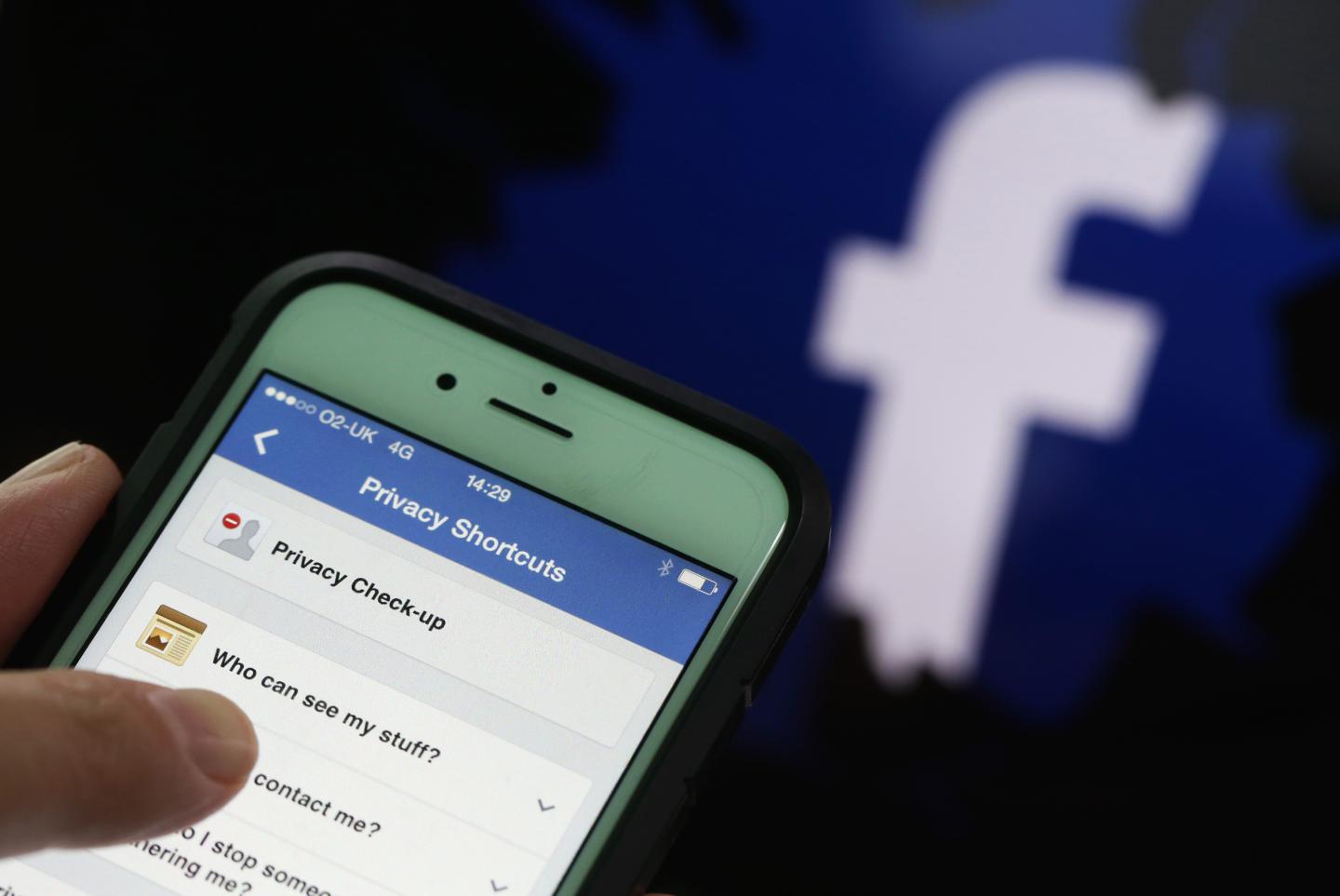
Your Facebook feed has likely been full of the notification this week: Facebook is about to start charging you to keep your profile private.
It is, of course, a hoax. In fact, it’s a well-trodden hoax—one that has surfaced twice this year—and many more times since it originated. Internet rumor control site Snopes says it originated in Dec. 2009. About the only thing that’s changed is the amount Facebook was said to be charging. (It was $3.99 per month in the original hoax. These days, it’s a one-time charge of $5.99.)
Facebook (FB) has squashed the story several times, but it’s the Rasputin of rumors, refusing to die. So why do people keep falling for this sort of thing?
Psychologists and social media experts say it comes down to a few factors.
First off, while it might be the most popular social media site by far, Facebook hasn’t exactly earned people’s trust. Regular, drastic redesigns in its early days and smaller changes to its privacy settings have put people on edge.
“There have been so many issues with privacy that people are becoming skeptical,” says Dr. Janet Johnson, a social media scholar and clinical assistant professor at Univeristy of Texas-Dallas. “They read the line saying ‘Facebook is going to get you’ and say ‘well I should repost this—just in case’.”
MORE: Facebook legal notice is back—and it still doesn’t work
Additionally, the hoaxes prey on people’s natural instincts. Try as we might to be brave, our internal wiring on the whole is programmed in the opposite direction.
“People are hard wired to respond to fear,” says Dr. Pamela Rutledge, director of the Media Psychology Research Center. “People feel very vulnerable to Facebook because it’s turning into Google. It’s becoming big and powerful. Facebook is making something that you feel you have to do and people feel powerless—and when they feel powerless, they’re scared. … We share these things to get comfort; if we’re in it with others we feel less afraid. It normalizes our experience and we also have the hope of it being wrong.”
Another hook is not only does it inspire fear, but it also offers an escape, adds Prof. Shannon Rauch, assistant professor of psychology at Benedictine University at Mesa.
“It is a fear-based message—and we know those can be really effective especially if it’s a fear-based message where they also give you a way to prevent the bad outcome, which in this case is to pay.”
Don’t underestimate the lemming factor, either. Trending topics on social media outlets tend to be shared more. And by sharing this warning, despite its veracity, people can join the discussion.
“If other people are reacting, then you don’t feel weird for reacting too,” says Rutledge. “There’s also a chain letter thing going on. There’s a sense of ritualized behavior of sharing it makes you feel more in control—which is why people share the letters that say if you don’t share this, then something [bad will happen]—because the cost of not doing it is big, but the cost of sharing it is minimal.”
Ultimately, the seemingly endless reposts about this may not be a commentary on the IQ of the people who keep putting the warning on their wall, it’s about the endless flow of information we’re dealing with on a day-to-day basis.
“I think it’s a case of information overload,” says Rauch. “We’re so used to getting a lot of information through Facebook—especially younger people—[that] we quickly scroll through . And the fact that it is a hoax gets lost, because we’re on to the next thing.”
And the echo effect—from our social circle—lends an added layer of validity.
“The more times we see something, the more it becomes truth in our minds,” says Johnson. “How many times has Morgan Freeman died on Twitter? … The people we trust are on Facebook. We know these people, so when my friend, who I trust, posts this information, I’m going to think ‘this must be trustworthy information’.”
Sign up for Data Sheet, Fortune’s daily newsletter about the business of technology.
For more Fortune coverage of Facebook, watch this video: