• Home
  • News
  • Fortune 500
  • Tech
  • Finance
  • Leadership
  • Lifestyle
  • Rankings
  • Multimedia
Tech

The science behind why smart people fall for dumb social media hoaxes

By
Chris Morris
Chris Morris
Former Contributing Writer
Down Arrow Button Icon
By
Chris Morris
Chris Morris
Former Contributing Writer
Down Arrow Button Icon
September 30, 2015, 1:50 PM ET
Social Media Illustrations
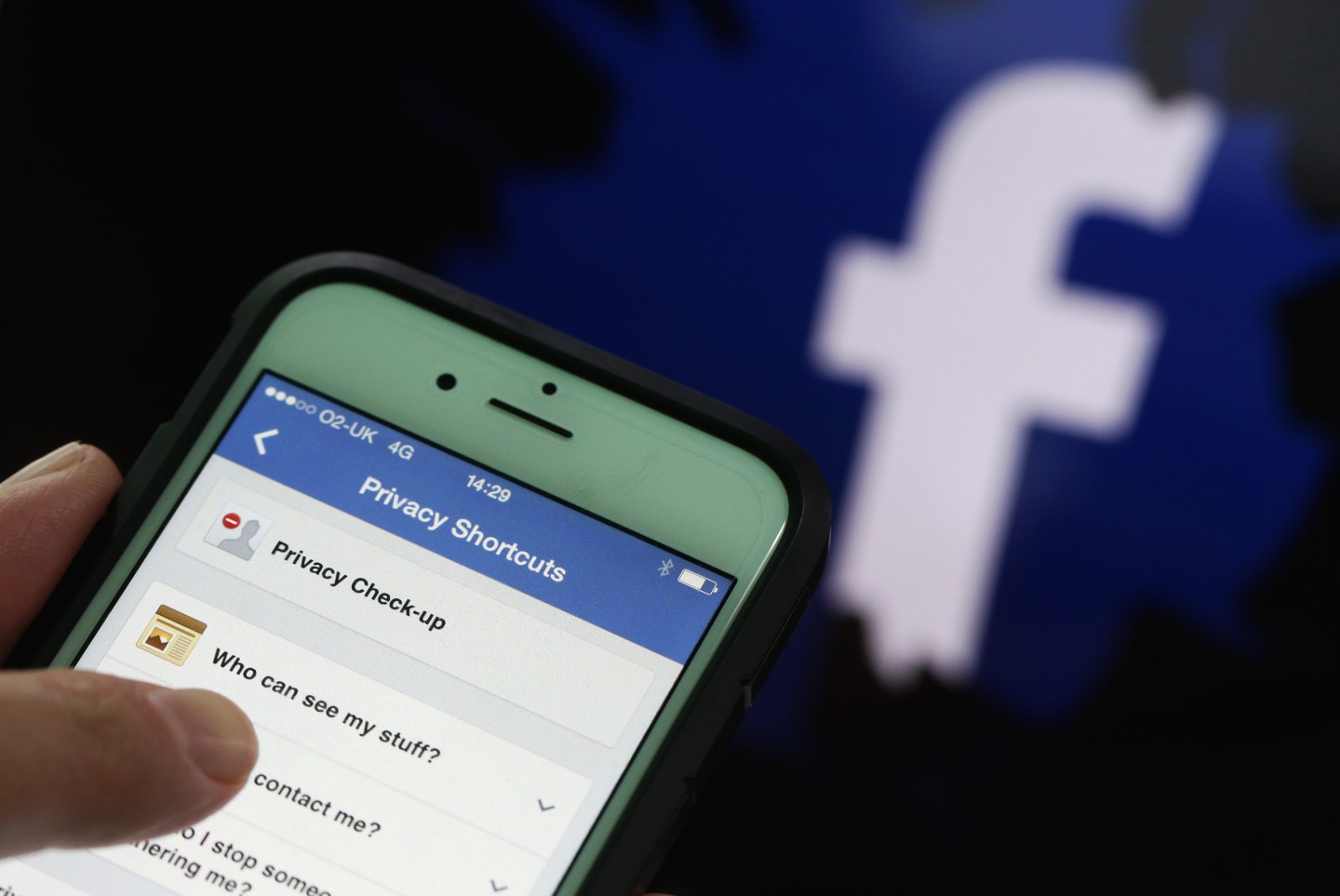
Privacy setting shortcuts are displayed on Apple Inc. iPhone 6 smartphone screen as a FaceBook Inc. logo is seen in this arranged photograph taken in London, U.K., on Friday, May, 15, 2015.Photograph by Bloomberg via Getty Images

Your Facebook feed has likely been full of the notification this week: Facebook is about to start charging you to keep your profile private.

It is, of course, a hoax. In fact, it’s a well-trodden hoax—one that has surfaced twice this year—and many more times since it originated. Internet rumor control site Snopes says it originated in Dec. 2009. About the only thing that’s changed is the amount Facebook was said to be charging. (It was $3.99 per month in the original hoax. These days, it’s a one-time charge of $5.99.)

Facebook (FB) has squashed the story several times, but it’s the Rasputin of rumors, refusing to die. So why do people keep falling for this sort of thing?

Psychologists and social media experts say it comes down to a few factors.

First off, while it might be the most popular social media site by far, Facebook hasn’t exactly earned people’s trust. Regular, drastic redesigns in its early days and smaller changes to its privacy settings have put people on edge.

“There have been so many issues with privacy that people are becoming skeptical,” says Dr. Janet Johnson, a social media scholar and clinical assistant professor at Univeristy of Texas-Dallas. “They read the line saying ‘Facebook is going to get you’ and say ‘well I should repost this—just in case’.”

MORE:Facebook legal notice is back—and it still doesn’t work

Additionally, the hoaxes prey on people’s natural instincts. Try as we might to be brave, our internal wiring on the whole is programmed in the opposite direction.

“People are hard wired to respond to fear,” says Dr. Pamela Rutledge, director of the Media Psychology Research Center. “People feel very vulnerable to Facebook because it’s turning into Google. It’s becoming big and powerful. Facebook is making something that you feel you have to do and people feel powerless—and when they feel powerless, they’re scared. … We share these things to get comfort; if we’re in it with others we feel less afraid. It normalizes our experience and we also have the hope of it being wrong.”

Another hook is not only does it inspire fear, but it also offers an escape, adds Prof. Shannon Rauch, assistant professor of psychology at Benedictine University at Mesa.

“It is a fear-based message—and we know those can be really effective especially if it’s a fear-based message where they also give you a way to prevent the bad outcome, which in this case is to pay.”

Don’t underestimate the lemming factor, either. Trending topics on social media outlets tend to be shared more. And by sharing this warning, despite its veracity, people can join the discussion.

“If other people are reacting, then you don’t feel weird for reacting too,” says Rutledge. “There’s also a chain letter thing going on. There’s a sense of ritualized behavior of sharing it makes you feel more in control—which is why people share the letters that say if you don’t share this, then something [bad will happen]—because the cost of not doing it is big, but the cost of sharing it is minimal.”

Ultimately, the seemingly endless reposts about this may not be a commentary on the IQ of the people who keep putting the warning on their wall, it’s about the endless flow of information we’re dealing with on a day-to-day basis.

“I think it’s a case of information overload,” says Rauch. “We’re so used to getting a lot of information through Facebook—especially younger people—[that] we quickly scroll through . And the fact that it is a hoax gets lost, because we’re on to the next thing.”

And the echo effect—from our social circle—lends an added layer of validity.

“The more times we see something, the more it becomes truth in our minds,” says Johnson. “How many times has Morgan Freeman died on Twitter? … The people we trust are on Facebook. We know these people, so when my friend, who I trust, posts this information, I’m going to think ‘this must be trustworthy information’.”

Sign up for Data Sheet, Fortune’s daily newsletter about the business of technology.

For more Fortune coverage of Facebook, watch this video:

About the Author
By Chris MorrisFormer Contributing Writer

Chris Morris is a former contributing writer at Fortune, covering everything from general business news to the video game and theme park industries.

See full bioRight Arrow Button Icon

Latest in Tech

AIMeta
It’s ‘kind of jarring’: AI labs like Meta, Deepseek, and Xai earned some of the worst grades possible on an existential safety index
By Patrick Kulp and Tech BrewDecember 5, 2025
9 hours ago
Elon Musk
Big TechSpaceX
Musk’s SpaceX discusses record valuation, IPO as soon as 2026
By Edward Ludlow, Loren Grush, Lizette Chapman, Eric Johnson and BloombergDecember 5, 2025
10 hours ago
data center
EnvironmentData centers
The rise of AI reasoning models comes with a big energy tradeoff
By Rachel Metz, Dina Bass and BloombergDecember 5, 2025
10 hours ago
netflix
Arts & EntertainmentAntitrust
Hollywood writers say Warner takeover ‘must be blocked’
By Thomas Buckley and BloombergDecember 5, 2025
10 hours ago
person
CybersecurityDigital
Dictionaries’ words of the year are trying to tell us something about being online in 2025
By Roger J. KreuzDecember 5, 2025
11 hours ago
Greg Peters
Big TechMedia
Top analyst says Netflix’s $72 billion bet on Warner Bros. isn’t about the ‘death of Hollywood’ at all. It’s really about Google
By Nick LichtenbergDecember 5, 2025
12 hours ago

Most Popular

placeholder alt text
Economy
Two months into the new fiscal year and the U.S. government is already spending more than $10 billion a week servicing national debt
By Eleanor PringleDecember 4, 2025
2 days ago
placeholder alt text
Success
‘Godfather of AI’ says Bill Gates and Elon Musk are right about the future of work—but he predicts mass unemployment is on its way
By Preston ForeDecember 4, 2025
2 days ago
placeholder alt text
Success
Nearly 4 million new manufacturing jobs are coming to America as boomers retire—but it's the one trade job Gen Z doesn't want
By Emma BurleighDecember 4, 2025
2 days ago
placeholder alt text
Success
Nvidia CEO Jensen Huang admits he works 7 days a week, including holidays, in a constant 'state of anxiety' out of fear of going bankrupt
By Jessica CoacciDecember 4, 2025
2 days ago
placeholder alt text
Real Estate
‘There is no Mamdani effect’: Manhattan luxury home sales surge after mayoral election, undercutting predictions of doom and escape to Florida
By Sasha RogelbergDecember 4, 2025
2 days ago
placeholder alt text
Economy
Tariffs and the $38 trillion national debt: Kevin Hassett sees ’big reductions’ in deficit while Scott Bessent sees a ‘shrinking ice cube’
By Nick LichtenbergDecember 4, 2025
2 days ago
Rankings
  • 100 Best Companies
  • Fortune 500
  • Global 500
  • Fortune 500 Europe
  • Most Powerful Women
  • Future 50
  • World’s Most Admired Companies
  • See All Rankings
Sections
  • Finance
  • Leadership
  • Success
  • Tech
  • Asia
  • Europe
  • Environment
  • Fortune Crypto
  • Health
  • Retail
  • Lifestyle
  • Politics
  • Newsletters
  • Magazine
  • Features
  • Commentary
  • Mpw
  • CEO Initiative
  • Conferences
  • Personal Finance
  • Education
Customer Support
  • Frequently Asked Questions
  • Customer Service Portal
  • Privacy Policy
  • Terms Of Use
  • Single Issues For Purchase
  • International Print
Commercial Services
  • Advertising
  • Fortune Brand Studio
  • Fortune Analytics
  • Fortune Conferences
  • Business Development
About Us
  • About Us
  • Editorial Calendar
  • Press Center
  • Work At Fortune
  • Diversity And Inclusion
  • Terms And Conditions
  • Site Map

© 2025 Fortune Media IP Limited. All Rights Reserved. Use of this site constitutes acceptance of our Terms of Use and Privacy Policy | CA Notice at Collection and Privacy Notice | Do Not Sell/Share My Personal Information
FORTUNE is a trademark of Fortune Media IP Limited, registered in the U.S. and other countries. FORTUNE may receive compensation for some links to products and services on this website. Offers may be subject to change without notice.