• Home
  • News
  • Fortune 500
  • Tech
  • Finance
  • Leadership
  • Lifestyle
  • Rankings
  • Multimedia
TechPointCloud

Amazon explains database glitch that impacted big customers

Barb Darrow
By
Barb Darrow
Barb Darrow
Down Arrow Button Icon
Barb Darrow
By
Barb Darrow
Barb Darrow
Down Arrow Button Icon
September 23, 2015, 8:24 AM ET
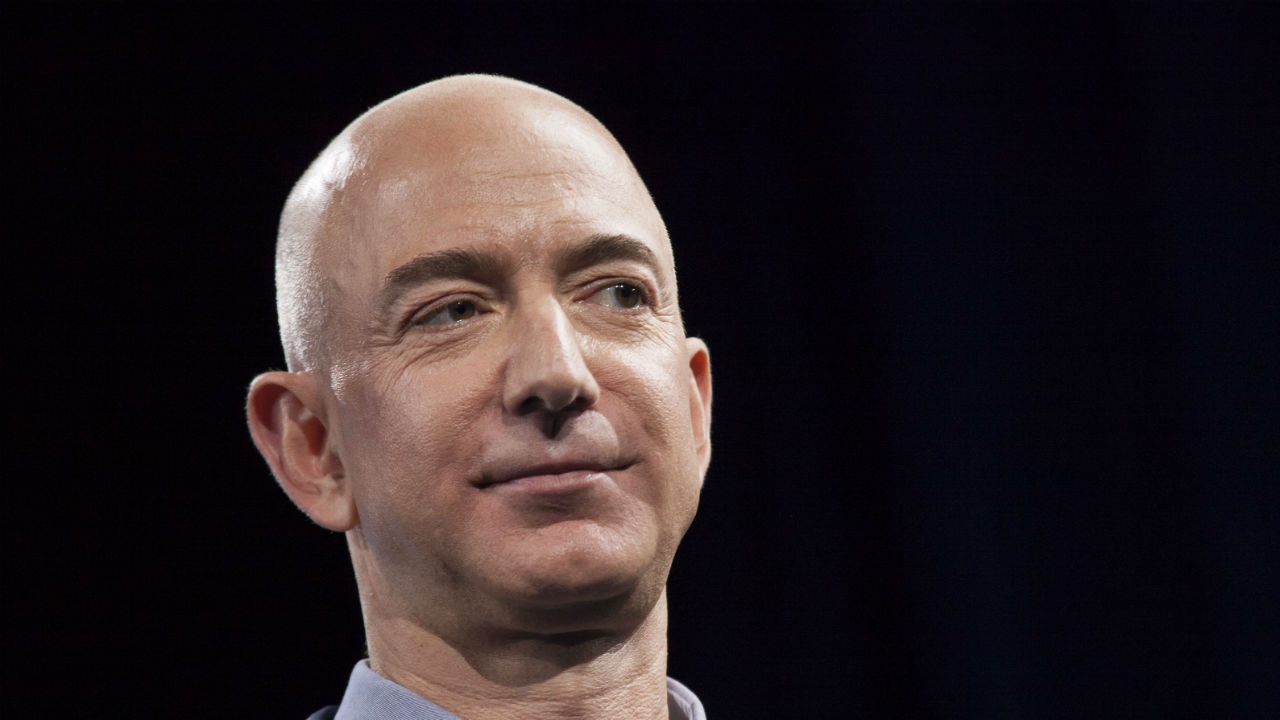
Photograph by David Ryder — Getty Images

Amazon Web Services has posted an explanation of what happened at its big U.S. East data center that caused customers like Netflix to experience issues on Sunday.

According to the post-mortem of the “service event” (you have to love that term) a brief network disruption at 2:19 a.m. PDT affected a subset of the servers running Amazon’s (AMZN) DynamoDB database service which stores and maintains data tables for customers. Each table is divvied up into partitions, containing a portion of the table data and those partitions, in turn, are parceled out to many servers to provide fast access and to allow data replication.

Per the post, which apparently went up Tuesday night:

The specific assignment of a group of partitions to a given server is called a “membership.” The membership of a set of table/partitions within a server is managed by DynamoDB’s internal metadata service. The metadata service is internally replicated and runs across multiple data centers. Storage servers hold the actual table data within a partition and need to periodically confirm that they have the correct membership. They do this by checking in with the metadata service and asking for their current membership assignment. In response, the metadata service retrieves the list of partitions and all related information from its own store, bundles this up into a message, and transmits back to the requesting storage server.

Emphasis is mine. Read the post for the full blow-by-blow, but in essence, Amazon said the issue Sunday was that because so many customers are using a new DynamoDB feature called Global Secondary Indexes, the affected DynamoDB servers could not query the metadata service within the allotted time and took themselves offline.

As of 5:06 a.m. PDT Amazon thus decided to pause requests to the metadata service to relieve the load. By cutting down all those server retries, it was able to bring up additional capacity and restart the service.

Basically this all boils down to the fact that this Amazon service was operating at near full-capacity but AWS internal monitoring apparently did not pick that up in time to avert an outage, said David Mytton, CEO of Server Density, a London-based company which keeps an eye on web server performance across providers for customers.

“A normal network issue caused enough extra load to push the system over capacity which caused the issue,” he said via email.

Amazon will likely fix the monitoring situation and adjust its processes to improve analysis so this does not happen again, he noted. Amazon is nothing if not reactive.

Events like this one reignite the debate about whether businesses should entrust so much of their critical workload to shared public cloud infrastructure that they themselves do not own or control.

Some even brought up the notion that AWS, the self-proclaimed master of distributed and redundant resources, has become the de facto single point of failure IT people dread.

This morning’s #AWS outage reminds us that we all have a single point of failure now. In some ways, we used to be more resilient than that.

— Michael Jackson (@mjackson) September 20, 2015

Fortune reached out to Amazon for comment, but typically the cloud giant and big customers— including Netflix (NFLX)—note that if applications are designed correctly to take advantage of public cloud resources the benefits outweigh the risks.

The Amazon post ended in an apology and a promise to do better, explaining “… we will do everything we can to learn from the event and to avoid a recurrence in the future.”

Expect to hear more about this issue at AWS Re:invent in Las Vegas next month.

For more on Amazon Web Services, see the video.

Subscribe to Data Sheet, Fortune’s daily newsletter on the business of technology.

About the Author
Barb Darrow
By Barb Darrow
See full bioRight Arrow Button Icon

Latest in Tech

AIMeta
It’s ‘kind of jarring’: AI labs like Meta, Deepseek, and Xai earned some of the worst grades possible on an existential safety index
By Patrick Kulp and Tech BrewDecember 5, 2025
5 hours ago
Elon Musk
Big TechSpaceX
Musk’s SpaceX discusses record valuation, IPO as soon as 2026
By Edward Ludlow, Loren Grush, Lizette Chapman, Eric Johnson and BloombergDecember 5, 2025
6 hours ago
data center
EnvironmentData centers
The rise of AI reasoning models comes with a big energy tradeoff
By Rachel Metz, Dina Bass and BloombergDecember 5, 2025
6 hours ago
netflix
Arts & EntertainmentAntitrust
Hollywood writers say Warner takeover ‘must be blocked’
By Thomas Buckley and BloombergDecember 5, 2025
6 hours ago
person
CybersecurityDigital
Dictionaries’ words of the year are trying to tell us something about being online in 2025
By Roger J. KreuzDecember 5, 2025
7 hours ago
Greg Peters
Big TechMedia
Top analyst says Netflix’s $72 billion bet on Warner Bros. isn’t about the ‘death of Hollywood’ at all. It’s really about Google
By Nick LichtenbergDecember 5, 2025
8 hours ago

Most Popular

placeholder alt text
Economy
Two months into the new fiscal year and the U.S. government is already spending more than $10 billion a week servicing national debt
By Eleanor PringleDecember 4, 2025
2 days ago
placeholder alt text
Success
‘Godfather of AI’ says Bill Gates and Elon Musk are right about the future of work—but he predicts mass unemployment is on its way
By Preston ForeDecember 4, 2025
1 day ago
placeholder alt text
Success
Nearly 4 million new manufacturing jobs are coming to America as boomers retire—but it's the one trade job Gen Z doesn't want
By Emma BurleighDecember 4, 2025
1 day ago
placeholder alt text
Success
Nvidia CEO Jensen Huang admits he works 7 days a week, including holidays, in a constant 'state of anxiety' out of fear of going bankrupt
By Jessica CoacciDecember 4, 2025
1 day ago
placeholder alt text
Real Estate
‘There is no Mamdani effect’: Manhattan luxury home sales surge after mayoral election, undercutting predictions of doom and escape to Florida
By Sasha RogelbergDecember 4, 2025
1 day ago
placeholder alt text
Economy
Tariffs and the $38 trillion national debt: Kevin Hassett sees ’big reductions’ in deficit while Scott Bessent sees a ‘shrinking ice cube’
By Nick LichtenbergDecember 4, 2025
1 day ago
Rankings
  • 100 Best Companies
  • Fortune 500
  • Global 500
  • Fortune 500 Europe
  • Most Powerful Women
  • Future 50
  • World’s Most Admired Companies
  • See All Rankings
Sections
  • Finance
  • Leadership
  • Success
  • Tech
  • Asia
  • Europe
  • Environment
  • Fortune Crypto
  • Health
  • Retail
  • Lifestyle
  • Politics
  • Newsletters
  • Magazine
  • Features
  • Commentary
  • Mpw
  • CEO Initiative
  • Conferences
  • Personal Finance
  • Education
Customer Support
  • Frequently Asked Questions
  • Customer Service Portal
  • Privacy Policy
  • Terms Of Use
  • Single Issues For Purchase
  • International Print
Commercial Services
  • Advertising
  • Fortune Brand Studio
  • Fortune Analytics
  • Fortune Conferences
  • Business Development
About Us
  • About Us
  • Editorial Calendar
  • Press Center
  • Work At Fortune
  • Diversity And Inclusion
  • Terms And Conditions
  • Site Map

© 2025 Fortune Media IP Limited. All Rights Reserved. Use of this site constitutes acceptance of our Terms of Use and Privacy Policy | CA Notice at Collection and Privacy Notice | Do Not Sell/Share My Personal Information
FORTUNE is a trademark of Fortune Media IP Limited, registered in the U.S. and other countries. FORTUNE may receive compensation for some links to products and services on this website. Offers may be subject to change without notice.