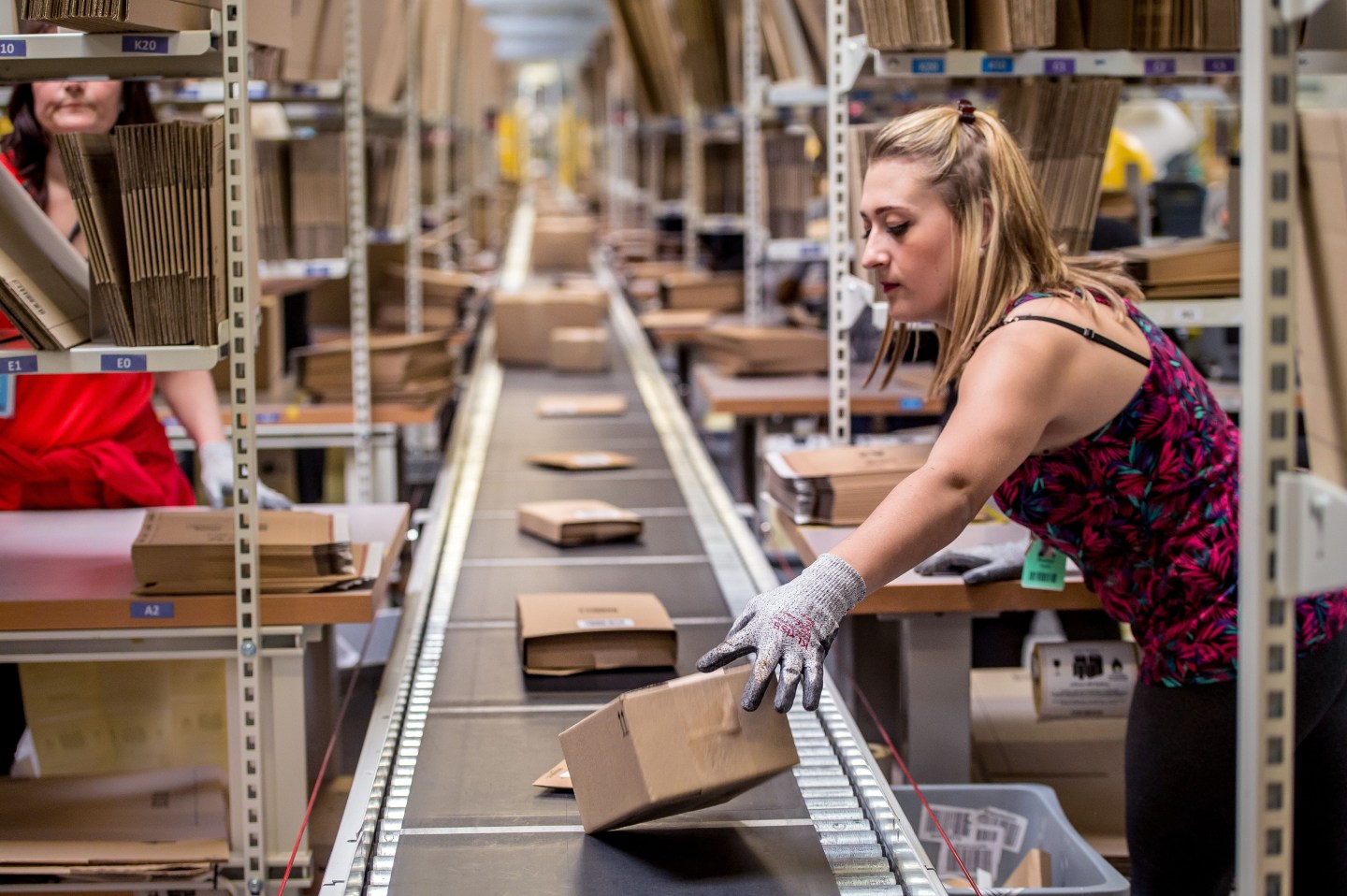
This week, a New YorkTimes profile of Amazon’s (AMZN) treatment of employees has provoked a debate about the future of the workplace.
The article claims that Amazon’s professional employees are well paid and work on world-changing projects, but are pushed to the breaking point in a survival-of-the-fittest climate where they tend to burn out and leave quickly.
Readers, including Amazon CEO Jeff Bezos, say they are appalled by the anecdotes of insensitivity in the Times report. But the controversy has raised the possibility that the underlying business model portrayed in the article is legitimate or perhaps inevitable. The Times article quotes an ex-Amazon employee who says CEO Jeff Bezos has envisioned a “new workplace: fluid but tough, with employees staying only a short time and employers demanding the maximum.”
Is this kind of harsh, hyper-competitive management style the way to lead a company in the 21st century economy that is unfolding?
We would argue that, on the contrary, this kind of workplace is based on an old-fashioned business model: that is, one that treats workers as replaceable cogs in the machine. We believe that the future will belong to the kinds of workplaces typified by companies like those on the annual list of the “100 Best Companies to Work For” that we prepare for Fortune magazine.
We see three challenges facing workplace cultures that are long on toughness and short on caring:
Attracting talent
It will be increasingly difficult to attract employees to places where, as one ex-Amazonian put it, “Work came first, life came second, and trying to find the balance came last.” In recent years, people around the globe have been seeking greater well-being—including in their work lives. The millennial generation in particular is likely to pass on “work-first” company cultures. A recent survey of nearly 66,000 U.S. undergraduates by consulting firm Universum found that young people rank work-life balance as their top career goal.
What’s more, we’re in an age of workplace transparency. In this era of social media, no company can get away with mistreating its employees without having its practices being broadcast on dozens of sites and blogs.
Consumer Loyalty
The same transparency trends that give job seekers visibility into companies allow consumers insight into companies. And customers increasingly care about how businesses treat employees and the broader community. Marketing firm Young & Rubicam found that between 2005 and 2009, U.S. consumers expressed a nearly four-fold increase in their preference for companies, brands, and products that show kindness in both their operations and their encounters with customers.
High-trust companies outperform in the long-run
A growing raft of evidence shows that companies with workplace cultures characterized by high levels of trust in leaders, camaraderie among colleagues and pride on the job beat the competition. From 1997 to 2014, publicly traded companies on Fortune’s100 Best Companies to Work For list outperformed the S&P 500 by a factor of nearly two to one. Around the globe, companies on the Great Place to Work best workplace lists in 45 countries also have demonstrated such business benefits as lower turnover, lower absenteeism and higher revenue than peers.

Among the companies showing good guys finish first is Google (GOOG). The tech giant has been named No. 1 on the 100 Best Companies to Work For list for 6 years running, and ranked as the No. 1 desirable employer for young people in a recent Universum study.
Google is famous for great perks. But underneath those is a culture defined by in large part by caring relationships — a culture that brings out the best in people. “It’s important that the company be a family, that people feel that they’re part of the company, and that the company is like a family to them,” says Google co-founder Larry Page. “When you treat people that way, you get better productivity.”
In the wake of the Times report, Bezos himself rejected the idea that a brutal culture could be a winning one: “I don’t think any company adopting the approach portrayed could survive, much less thrive, in today’s highly competitive tech hiring market,” he wrote to employees.
He’s right on that count. In the 21st century, people are demanding better of the companies in their lives. Old-school companies that live by the law of the jungle, that treat people as disposable, will fade. The fittest cultures today are human-centered, high-trust workplaces. These are the ones likely to flourish.
Ed Frauenheim is director of global research and content at research and consulting firm, Great Place to Work. Robert Levering is co-founder and former CEO of Great Place to Work.