• Home
  • News
  • Fortune 500
  • Tech
  • Finance
  • Leadership
  • Lifestyle
  • Rankings
  • Multimedia
Tech

Here’s why ocean shipping companies are switching to natural gas

By
David Z. Morris
David Z. Morris
Down Arrow Button Icon
By
David Z. Morris
David Z. Morris
Down Arrow Button Icon
July 23, 2015, 12:00 PM ET
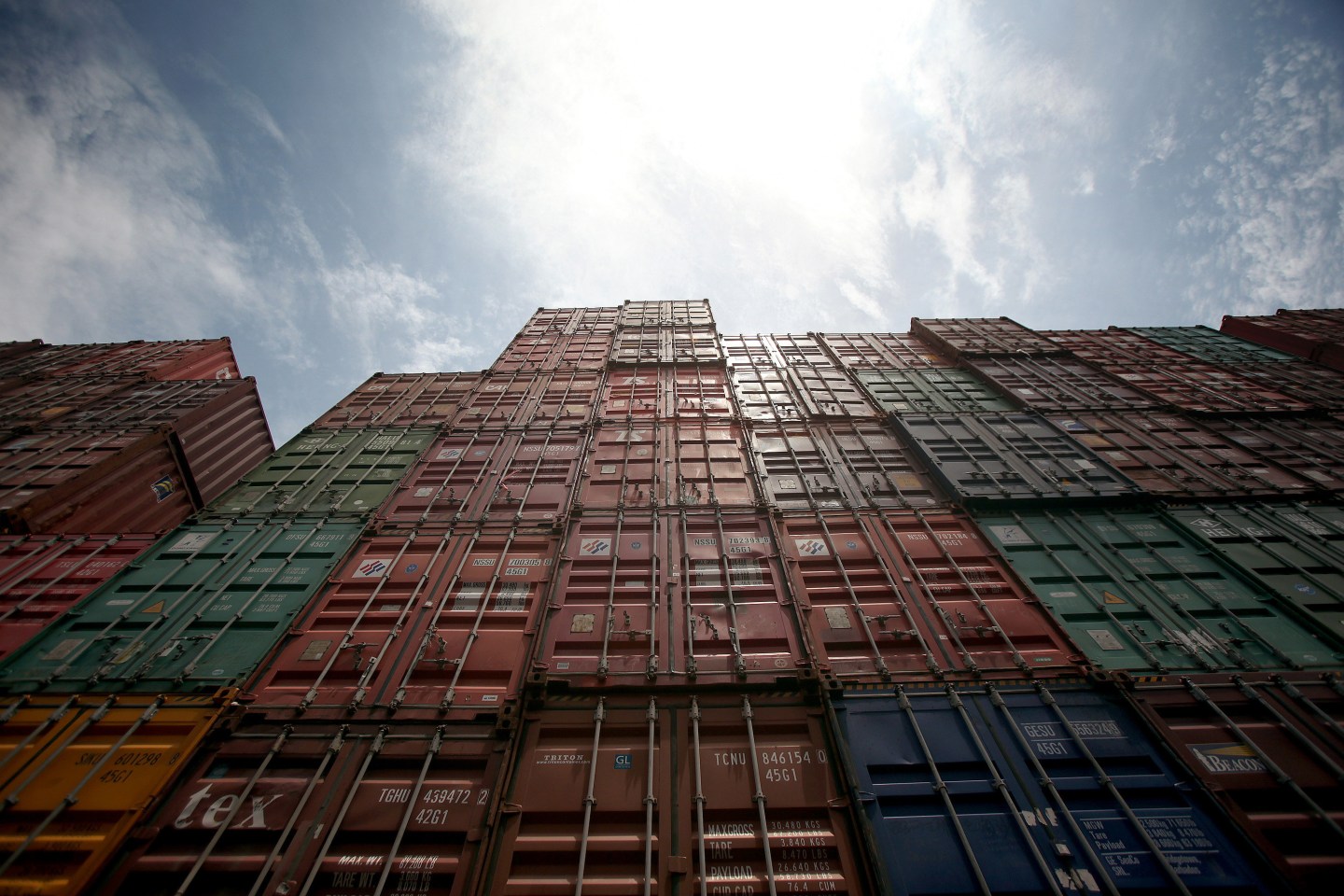
Containers are stacked in the yard of a shipment company, outside the Bangkok port on Saturday, June 23, 2012. Photographer: Dario Pignatelli/Bloomberg *** Local Caption *** Bangkok Port Import Export
Containers are stacked in the yard of a shipment company, outside the Bangkok port on Saturday, June 23, 2012. Photographer: Dario Pignatelli/Bloomberg *** Local Caption *** Bangkok Port Import ExportDario Pignatelli/Bloomberg

The North American ocean carrier TOTE is deploying the world’s first container ships fueled by liquefied natural gas (LNG). The move anticipates imminent environmental regulations that are likely to trigger large shifts in the maritime shipping industry.

TOTE is making the move to comply with the international Marpol Annex VI maritime emissions standards, first implemented in 2005. Restrictions on emissions like sulfur and nitrogen oxide will tighten in 2016 within designated emission control areas (ECAs), including the waters surrounding North America.

Sulfur and nitrogen oxides are generated in large volumes by conventional maritime ships, which have long relied on so-called heavy fuel oil—the thick, dirty, but affordable remnants of the crude oil refining process. According to the International Council on Clean Transportation, the ocean shipping industry currently accounts for 8% of global emissions of sulfur dioxide, which causes acid rain.

These emissions also have serious effects on human health. Michael Samulski, Director of the EPA’s Large Marine and Aviation Center, says that the tighter regulations will prevent between 12,000 and 31,000 U.S. deaths per year now linked to maritime pollution. Those impacts are not only in port areas or along coastlines, but reach hundreds of miles inland.

TOTE’s first LNG-fueled ship, the Isla Bella, was constructed by General Dynamics NASSCO, and completed in April. It will start working its planned route between Puerto Rico and Jacksonville, Florida, later this year. A second ship of the same model, dubbed the Marlin class, is expected to be completed in early 2016, and will work the same route. TOTE is also converting two ships in the Alaska trade to LNG.

TOTE claims that the Marlin class ships will emit 98 percent less nitrogen oxide, 97 percent less sulfur, and 72 percent less carbon dioxide than comparable conventional ships.

As shippers move to comply with the Marpol Annex VI standards, they have a handful of options. They can use higher-grade fuel, or install scrubbing technologies comparable to a car’s catalytic converter. TOTE CEO Anthony Chiarello says his company explored scrubbing technology, but concluded it’s not yet advanced enough. Higher grade diesel, on the other hand, “becomes a very expensive option.”

That left LNG, but it has its own challenges. Most importantly, ports don’t currently have much infrastructure for getting LNG fuel into ships. TOTE is partnering with Peuget Sound Energy to build LNG fueling facilities in Tacoma, where it will fuel its Alaskan ships, and AGL Resources is constructing a liquefaction plant in Jacksonville for Puerto Rico-bound ships. But those facilities won’t be completed until 2019 and late 2016, respectively. In the meantime, TOTE will rely on trucks and barges to fuel ships.

Despite these challenges, more LNG-fueled ships are in the pipeline. Crowley, one of TOTE’s competing carriers in Puerto Rico, is building LNG ships expected for delivery in late 2017. The United Arab Shipping Company has ordered 17 ships ready to be easily retrofitted for LNG.

“I personally believe within the next ten years, LNG will be the predominant maritime fuel,” says Chiarello. The Korean energy ministry agrees, projecting that the market for LNG ship manufacturing will grow by nearly 25 times over the next decade, and LNG fueling facilities are being built at major Korean ports to help the shipbuilding units of Samsung, Hyundai, and Daewoo capture that market.

About the Author
By David Z. Morris
See full bioRight Arrow Button Icon

Latest in Tech

Elon Musk
LawSocial Media
Elon Musk’s X fined $140 million by EU for breaching digital regulations
By Kelvin Chan and The Associated PressDecember 6, 2025
12 minutes ago
Sarandos
InvestingM&A
Netflix’s $5.8 billion breakup fee for Warner among largest ever
By Elizabeth Fournier and BloombergDecember 6, 2025
35 minutes ago
index
Investingindex funds
Quant who said passive era is ‘worse than Marxism’ doubles down
By Denitsa Tsekova, Vildana Hajric and BloombergDecember 6, 2025
2 hours ago
meta
LawSocial Media
‘Its own research shows they encourage addiction’: Highest court in Mass. hears case about Instagram, Facebook effect on kids
By Michael Casey and The Associated PressDecember 6, 2025
2 hours ago
Amit Walia
CommentaryM&A
Why the timing was right for Salesforce’s $8 billion acquisition of Informatica — and for the opportunities ahead
By Amit WaliaDecember 6, 2025
3 hours ago
AITech
Nvidia’s CEO says AI adoption will be gradual, but when it does hit, we may all end up making robot clothing
By Marco Quiroz-GutierrezDecember 6, 2025
5 hours ago

Most Popular

placeholder alt text
Economy
Two months into the new fiscal year and the U.S. government is already spending more than $10 billion a week servicing national debt
By Eleanor PringleDecember 4, 2025
2 days ago
placeholder alt text
Success
‘Godfather of AI’ says Bill Gates and Elon Musk are right about the future of work—but he predicts mass unemployment is on its way
By Preston ForeDecember 4, 2025
2 days ago
placeholder alt text
Success
Nvidia CEO Jensen Huang admits he works 7 days a week, including holidays, in a constant 'state of anxiety' out of fear of going bankrupt
By Jessica CoacciDecember 4, 2025
2 days ago
placeholder alt text
Success
Nearly 4 million new manufacturing jobs are coming to America as boomers retire—but it's the one trade job Gen Z doesn't want
By Emma BurleighDecember 4, 2025
2 days ago
placeholder alt text
Big Tech
Mark Zuckerberg rebranded Facebook for the metaverse. Four years and $70 billion in losses later, he’s moving on
By Eva RoytburgDecember 5, 2025
23 hours ago
placeholder alt text
Real Estate
‘There is no Mamdani effect’: Manhattan luxury home sales surge after mayoral election, undercutting predictions of doom and escape to Florida
By Sasha RogelbergDecember 4, 2025
2 days ago
Rankings
  • 100 Best Companies
  • Fortune 500
  • Global 500
  • Fortune 500 Europe
  • Most Powerful Women
  • Future 50
  • World’s Most Admired Companies
  • See All Rankings
Sections
  • Finance
  • Leadership
  • Success
  • Tech
  • Asia
  • Europe
  • Environment
  • Fortune Crypto
  • Health
  • Retail
  • Lifestyle
  • Politics
  • Newsletters
  • Magazine
  • Features
  • Commentary
  • Mpw
  • CEO Initiative
  • Conferences
  • Personal Finance
  • Education
Customer Support
  • Frequently Asked Questions
  • Customer Service Portal
  • Privacy Policy
  • Terms Of Use
  • Single Issues For Purchase
  • International Print
Commercial Services
  • Advertising
  • Fortune Brand Studio
  • Fortune Analytics
  • Fortune Conferences
  • Business Development
About Us
  • About Us
  • Editorial Calendar
  • Press Center
  • Work At Fortune
  • Diversity And Inclusion
  • Terms And Conditions
  • Site Map

© 2025 Fortune Media IP Limited. All Rights Reserved. Use of this site constitutes acceptance of our Terms of Use and Privacy Policy | CA Notice at Collection and Privacy Notice | Do Not Sell/Share My Personal Information
FORTUNE is a trademark of Fortune Media IP Limited, registered in the U.S. and other countries. FORTUNE may receive compensation for some links to products and services on this website. Offers may be subject to change without notice.