• Home
  • Latest
  • Fortune 500
  • Finance
  • Tech
  • Leadership
  • Lifestyle
  • Rankings
  • Multimedia
TechWorld's Most Admired Companies

IBM’s Watson supercomputer is learning Arabic in move to Middle East

By
Jonathan Vanian
Jonathan Vanian
Down Arrow Button Icon
By
Jonathan Vanian
Jonathan Vanian
Down Arrow Button Icon
July 14, 2015, 12:01 AM ET
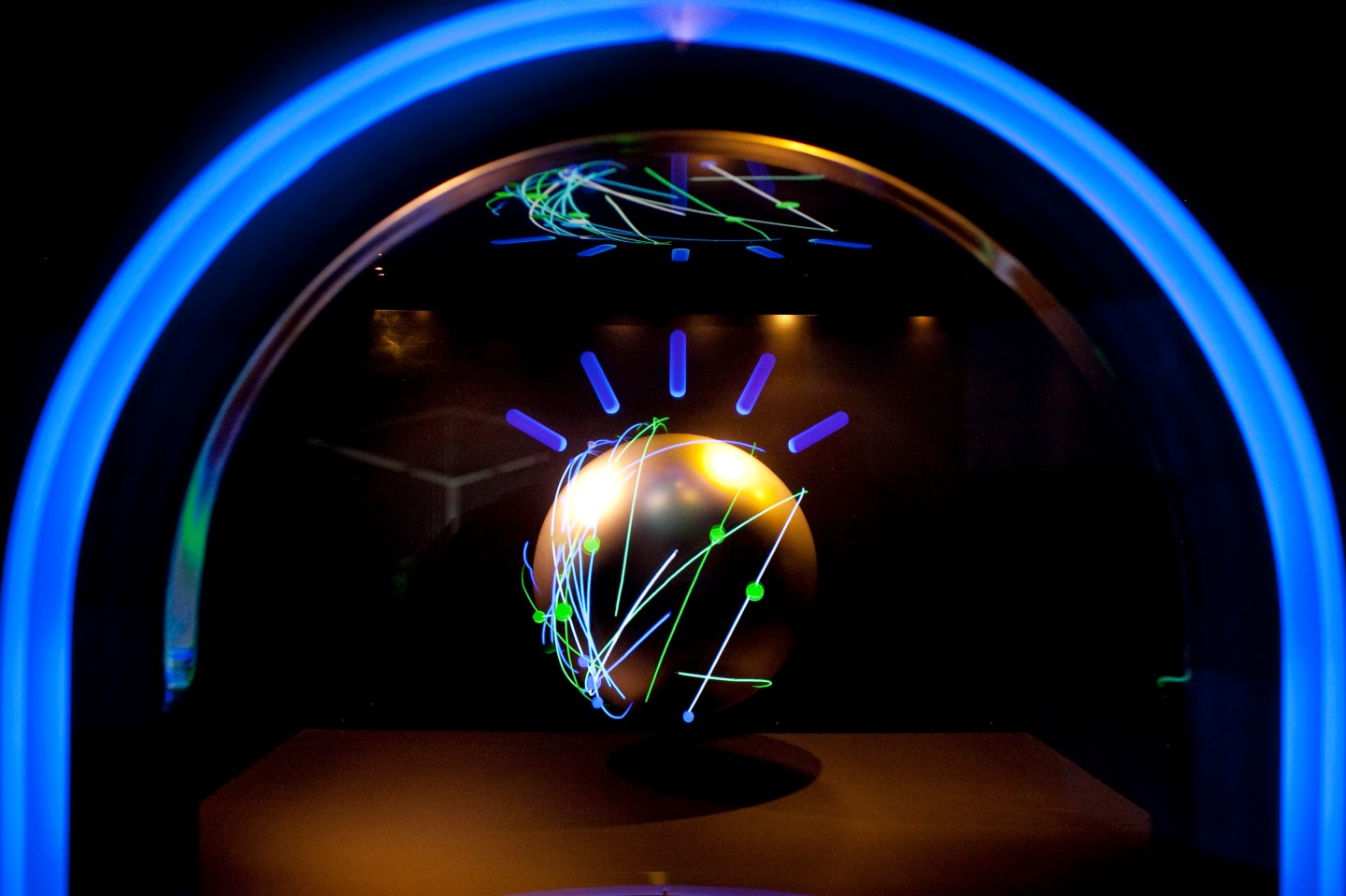
Watson computer at IBM in New York City
NEW YORK CITY, NY- MAY 27: IBM Watson's computer housing case. IBM's Watson computer is best known for winning Jeopardy, unaware of time constraints, while playing against humans. Some of Watson's other features are based in problem solving across many different careers. A demonstration showed how quickly Watson is able to diagnose illnesses, and provided a real life case that took doctors and nurses six days to diagnose, and only ended with the correct diagnosis because a nurse had seen the disease before. Based on symptoms input, Watson was able to correctly diagnose in minutes. The demonstration took place at IBM Watson's New York City, New York office on May 27, 2015. (Photo by Andrew Spear for The Washington Post via Getty Images.)Photograph by Andrew Spear — The Washington Post/Getty Images

IBM supercomputer and Jeopardy champion Watson is learning Arabic and setting up shop in the Middle East and North Africa, IBM said Tuesday morning.

The big data service and source of heavy investment from IBM (IBM) will be rolled out to the region as part of joint venture between Big Blue and the Mubadala Development Company, the investment arm of the government of Abu Dhabi in the United Arab Emirates.

Mubadala and IBM formed a new company in which IBM is the minority shareholder, Mike Rhodin, the senior vice president of IBM’s Watson group, said in an interview with Fortune. IBM did not disclose the financial terms of the deal, and the name of the newly formed company is still being decided on, Rhodin said.

The goal of the joint venture is to spread the use of Watson throughout the Middle East, especially for startups and universities there to tap into the supercomputer’s data crunching services, Rhodin said. While IBM traditionally courts large enterprises like big banks or telecoms to be customers, in this case it made sense for the IBM to work with a local company like Mubadala to attract smaller organizations in the region as potential Watson users, he explained.

IBM is no stranger to Mubadala considering the Abu Dhabi investment company owns Globalfoundries. IBM sold Mubadala that chip-making business last fall.

As part of bringing Watson to the Middle East, IBM will be setting up the supercomputer technology inside the data centers of Injazat Data Systems, a Mubadala subsidiary, said Rhodin. Because IBM must abide by local data sovereignty laws, the company had to install the analytic service and the servers for its cloud computing service (which companies can use to access Watson) in the Middle East.

IBM is hoping that with the Watson artificial intelligence service now in the Middle East, local startups looking to create consumer-focused applications, like the next Uber, will use it to build their products, he said.

The company is also banking on Middle Eastern healthcare organizations turning to Watson. The Cleveland Clinic, a U.S.-based academic hospital that’s signed up to use Watson for genomic research, worked with Mubadala to build a hospital in Abu Dhabi a few years ago. The Cleveland Clinic and Mayo Clinic are all users of the IBM Watson Health service, which is essentially a version of the Watson service tailored for healthcare.

Rhodin said that medical problems like obesity and diabetes plague the Middle East like they do in the U.S. and Asia. He’s hoping that Middle Eastern healthcare companies and researchers can tap into Watson much like the Cleveland Clinic and the Mayo Clinic currently do as a tool that can aid in their healthcare findings.

But it will be a little while at least before Watson can get started in the area.

Right now, IBM is working on teaching Watson Arabic so local residents can better work with the service. And that’s more than just teaching Watson the Arabic equivalents of English words.

IBM is “actually teaching Watson to understand the grammar, the nuances of the culture, and how the spoken word handles the nuances of meaning,” said Rhodin.

Arabic isn’t the only language Watson is being taught. The supercomputer also knows Brazilian Portuguese, Spanish, and Japanese. By teaching Watson different languages, it’s more likely that IBM can spread the technology throughout the globe. The company recently launched Watson in Japan with the help of Japanese telecom company Softbank.

Rhodin estimates that it will take roughly nine months to fully train Watson in Arabic, which is about the same time it takes to train Watson in other languages like Spanish and Japanese.

In the meantime, however, there are a “lot of companies that do a lot of business in English” that can use Watson, said Rhodin.

The move to spread Watson throughout the globe is just another way IBM is attempting to make Watson a big business. While IBM is clearly pushing Watson hard, it currently doesn’t generate as much cash when compared to the company’s other services.

Subscribe to Data Sheet, Fortune’s daily newsletter on the business of technology.

For more on Watson, check out the following Fortune video:
About the Author
By Jonathan Vanian
LinkedIn iconTwitter icon

Jonathan Vanian is a former Fortune reporter. He covered business technology, cybersecurity, artificial intelligence, data privacy, and other topics.

See full bioRight Arrow Button Icon

Latest in Tech

robots
InnovationRobots
‘The question is really just how long it will take’: Over 2,000 gather at Humanoids Summit to meet the robots who may take their jobs someday
By Matt O'Brien and The Associated PressDecember 12, 2025
26 minutes ago
Man about to go into police vehicle
CryptoCryptocurrency
Judge tells notorious crypto scammer ‘you have been bitten by the crypto bug’ in handing down 15 year sentence 
By Carlos GarciaDecember 12, 2025
1 hour ago
three men in suits, one gesturing
AIBrainstorm AI
The fastest athletes in the world can botch a baton pass if trust isn’t there—and the same is true of AI, Blackbaud exec says
By Amanda GerutDecember 12, 2025
2 hours ago
Brainstorm AI panel
AIBrainstorm AI
Creative workers won’t be replaced by AI—but their roles will change to become ‘directors’ managing AI agents, executives say
By Beatrice NolanDecember 12, 2025
2 hours ago
Fei-Fei Li, the "Godmother of AI," says she values AI skills more than college degrees when hiring software engineers for her tech startup.
AITech
‘Godmother of AI’ says degrees are less important in hiring than ‘how quickly can you superpower yourself’ with new tools
By Nino PaoliDecember 12, 2025
4 hours ago
C-SuiteFortune 500 Power Moves
Fortune 500 Power Moves: Which executives gained and lost power this week
By Fortune EditorsDecember 12, 2025
5 hours ago

Most Popular

placeholder alt text
Success
At 18, doctors gave him three hours to live. He played video games from his hospital bed—and now, he’s built a $10 million-a-year video game studio
By Preston ForeDecember 10, 2025
2 days ago
placeholder alt text
Economy
Tariffs are taxes and they were used to finance the federal government until the 1913 income tax. A top economist breaks it down
By Kent JonesDecember 12, 2025
10 hours ago
placeholder alt text
Success
Palantir cofounder calls elite college undergrads a ‘loser generation’ as data reveals rise in students seeking support for disabilities, like ADHD
By Preston ForeDecember 11, 2025
1 day ago
placeholder alt text
Investing
Baby boomers have now 'gobbled up' nearly one-third of America's wealth share, and they're leaving Gen Z and millennials behind
By Sasha RogelbergDecember 8, 2025
4 days ago
placeholder alt text
Arts & Entertainment
'We're not just going to want to be fed AI slop for 16 hours a day': Analyst sees Disney/OpenAI deal as a dividing line in entertainment history
By Nick LichtenbergDecember 11, 2025
23 hours ago
placeholder alt text
Economy
‘We have not seen this rosy picture’: ADP’s chief economist warns the real economy is pretty different from Wall Street’s bullish outlook
By Eleanor PringleDecember 11, 2025
1 day ago
Rankings
  • 100 Best Companies
  • Fortune 500
  • Global 500
  • Fortune 500 Europe
  • Most Powerful Women
  • Future 50
  • World’s Most Admired Companies
  • See All Rankings
Sections
  • Finance
  • Leadership
  • Success
  • Tech
  • Asia
  • Europe
  • Environment
  • Fortune Crypto
  • Health
  • Retail
  • Lifestyle
  • Politics
  • Newsletters
  • Magazine
  • Features
  • Commentary
  • Mpw
  • CEO Initiative
  • Conferences
  • Personal Finance
  • Education
Customer Support
  • Frequently Asked Questions
  • Customer Service Portal
  • Privacy Policy
  • Terms Of Use
  • Single Issues For Purchase
  • International Print
Commercial Services
  • Advertising
  • Fortune Brand Studio
  • Fortune Analytics
  • Fortune Conferences
  • Business Development
About Us
  • About Us
  • Editorial Calendar
  • Press Center
  • Work At Fortune
  • Diversity And Inclusion
  • Terms And Conditions
  • Site Map

© 2025 Fortune Media IP Limited. All Rights Reserved. Use of this site constitutes acceptance of our Terms of Use and Privacy Policy | CA Notice at Collection and Privacy Notice | Do Not Sell/Share My Personal Information
FORTUNE is a trademark of Fortune Media IP Limited, registered in the U.S. and other countries. FORTUNE may receive compensation for some links to products and services on this website. Offers may be subject to change without notice.