• Home
  • Latest
  • Fortune 500
  • Finance
  • Tech
  • Leadership
  • Lifestyle
  • Rankings
  • Multimedia

Trendingnow

1

Corporate America has been draining the world's water. Matt Damon's new campaign calls on Gap, Starbucks, and Amazon to help give it back

2

When SpaceX starts trading, some 'shareholders' will discover they own nothing at all

3

Analysts expected oil to surge above $200 but China has quietly kept prices half of that—and can’t for much longer

1

Corporate America has been draining the world's water. Matt Damon's new campaign calls on Gap, Starbucks, and Amazon to help give it back

2

When SpaceX starts trading, some 'shareholders' will discover they own nothing at all

3

Analysts expected oil to surge above $200 but China has quietly kept prices half of that—and can’t for much longer
CommentaryOPEC

Why OPEC can’t stop the shale oil industry

By
George Perry
George Perry
Down Arrow Button Icon
By
George Perry
George Perry
Down Arrow Button Icon
June 8, 2015, 3:14 PM ET
Northeast Debates Benefits And Dangers Of Hydrofracking
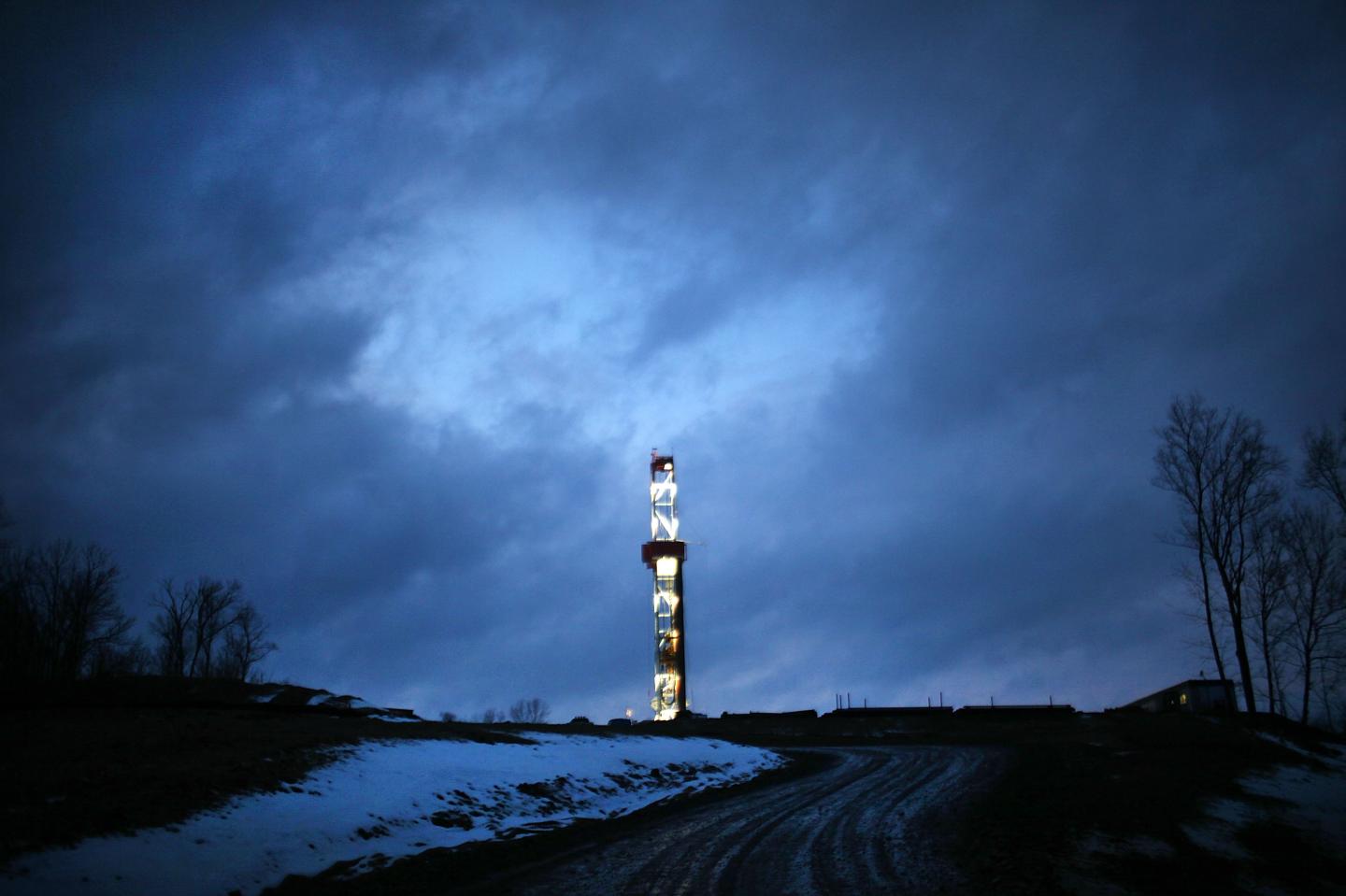
SPRINGVILLE, PA - JANUARY 17: A Cabot Oil and Gas natural gas drill is viewed at a hydraulic fracturing site on January 17, 2012 in Springville, Pennsylvania. Hydraulic fracturing, also known as fracking, stimulates gas production by injecting wells with high volumes of chemical-laced water in order to free-up pockets of natural gas below. The process is controversial with critics saying it could poison water supplies, while the natural-gas industry says it's been used safely for decades. While New York State has yet to decide whether to allow fracking, economically struggling Binghamton has passed a drilling ban which prohibits any exploration or extraction of natural gas in the city for the next two years. The Marcellus Shale Gas Feld extends through parts of New York State, Pennsylvania, Ohio and West Virginia and could hold up to 500 trillion cubic feet of natural gas. (Photo by Spencer Platt/Getty Images)Photograph by Spencer Platt — Getty Images

OPEC is not what it used to be. The cartel of major oil producing nations, dominated by Saudi Arabia, used to meet to collude on cutting production in order to support prices. Now they meet to try to get someone else to do the cutting, and their target is the shale oil industry.

In the 2000s, a growing demand for oil coming from China and other emerging economies had driven oil prices from around $20 a barrel to over $100 before the Great Recession in 2008. Rising prices had pushed producers to find new conventional oil fields (they did not get very far) and develop technologies that would profitably mine “tight oil” sources — tar sands and oil shale. By the time the U.S. economy started recovering, fracking oil shale had become commercially feasible. And just in time. All of the 5 million barrel a day increase in global oil production since then corresponds to the increased output of shale oil. Without it, oil prices would have risen much higher than they did.

Oil prices collapsed last fall because the growth in demand worldwide did not keep up with the growth in shale supplies. Now shale fields are the most vulnerable to today’s lower prices because their output declines steeply after the first year of a well’s operation. So drilling must continue in order to sustain production levels.

Drilling of shale fields has now dropped sharply and oil production is expected to decline in the coming months. So for the present, OPEC is succeeding in its attack on shale oil and it remains as aggressive as ever in that attack. Even though OPEC announced at its recent meeting last week that the cartel was sticking to it production quota of 30 million barrels a day, OPEC was actually producing more than 5% above its quota in order to keep downward pressure on prices.

So is there a future for shale oil?

Some observers argue that shale drilling is an expensive, inefficient technology that only flourished briefly because the price of oil was temporarily so high. That argument ignores how little new supply the market has seen from conventional sources in recent years. Even though prices plateaued to just above $100 a barrel, global oil production from conventional sources did not grow.

Looking ahead, the global appetite for oil will rise steadily — mainly from continued industrialization in China and other emerging economies. Recent years have shown that oil supplies from conventional sources would not begin to satisfy that demand even if prices returned to historic highs.

Of course, the recent past may not be a good guide to the longer run. The ongoing turmoil in the Middle East has affected some of the region’s major producers. Iraq’s oil output has risen by 1 million barrels a day since 2010, and Iran’s production fell by 1 million barrels a day after economic sanctions were imposed. If economic sanctions are now lifted, Iran can be expected to gradually restore that production.

Will OPEC absorb that increase within the cartel’s quota or will the quota rise to accommodate Iran? Barring any surprises, it seems likely that increased output from the Middle East will at least offset the likely decline in conventional oil from other areas. However, as the recent scud missile attack on Saudi Arabia from Yemen reminds us, surprises are to be expected.

Is it likely that the Saudis and other low-cost Gulf states would expand their own production sharply and for an extended period? Some observers are skeptical of how far they could go even if they wanted to. Questions about OPEC strategy do not turn just on what is technically doable but rather on what is profitable.

Just as a cartel benefits from cutting output to raise price, it suffers from raising output to lower price. This would not be true if it could permanently eliminate competitors by temporarily lowering prices, but that is not the case here. The shale oil industry is resilient and flexible – just as it can be pushed out of the market by very low prices, it can promptly get back into the market when prices improve. So an extended attempt by OPEC to close down the shale industry is a lose-lose situation, and as such is very unlikely to happen.

George Perry is a Senior Fellow in Economic Studies at the Brookings Institution.

About the Author
By George Perry
See full bioRight Arrow Button Icon

Latest in Commentary

Finance
Lorem ipsum dolor sit amet, consectetur adipiscing elit, sed do eiusmod tempor incididunt ut labore et dolore magna aliqua. Ut enim ad minim veniam
By Fortune Editors
October 20, 2025
Finance
Lorem ipsum dolor sit amet, consectetur adipiscing elit, sed do eiusmod tempor incididunt ut labore et dolore magna aliqua. Ut enim ad minim veniam
By Fortune Editors
October 20, 2025
Finance
Lorem ipsum dolor sit amet, consectetur adipiscing elit, sed do eiusmod tempor incididunt ut labore et dolore magna aliqua. Ut enim ad minim veniam
By Fortune Editors
October 20, 2025
Finance
Lorem ipsum dolor sit amet, consectetur adipiscing elit, sed do eiusmod tempor incididunt ut labore et dolore magna aliqua. Ut enim ad minim veniam
By Fortune Editors
October 20, 2025
Finance
Lorem ipsum dolor sit amet, consectetur adipiscing elit, sed do eiusmod tempor incididunt ut labore et dolore magna aliqua. Ut enim ad minim veniam
By Fortune Editors
October 20, 2025
Finance
Lorem ipsum dolor sit amet, consectetur adipiscing elit, sed do eiusmod tempor incididunt ut labore et dolore magna aliqua. Ut enim ad minim veniam
By Fortune Editors
October 20, 2025

Most Popular

Finance
Lorem ipsum dolor sit amet, consectetur adipiscing elit, sed do eiusmod tempor incididunt ut labore et dolore magna aliqua. Ut enim ad minim veniam
By Fortune Editors
October 20, 2025
Finance
Lorem ipsum dolor sit amet, consectetur adipiscing elit, sed do eiusmod tempor incididunt ut labore et dolore magna aliqua. Ut enim ad minim veniam
By Fortune Editors
October 20, 2025
Finance
Lorem ipsum dolor sit amet, consectetur adipiscing elit, sed do eiusmod tempor incididunt ut labore et dolore magna aliqua. Ut enim ad minim veniam
By Fortune Editors
October 20, 2025
Finance
Lorem ipsum dolor sit amet, consectetur adipiscing elit, sed do eiusmod tempor incididunt ut labore et dolore magna aliqua. Ut enim ad minim veniam
By Fortune Editors
October 20, 2025
Finance
Lorem ipsum dolor sit amet, consectetur adipiscing elit, sed do eiusmod tempor incididunt ut labore et dolore magna aliqua. Ut enim ad minim veniam
By Fortune Editors
October 20, 2025
Finance
Lorem ipsum dolor sit amet, consectetur adipiscing elit, sed do eiusmod tempor incididunt ut labore et dolore magna aliqua. Ut enim ad minim veniam
By Fortune Editors
October 20, 2025
Fortune Secondary Logo
Rankings
  • 100 Best Companies
  • Fortune 500
  • Global 500
  • Fortune 500 Europe
  • Most Powerful Women
  • World's Most Admired Companies
  • See All Rankings
  • Lists Calendar
Sections
  • Finance
  • Fortune Crypto
  • Features
  • Leadership
  • Health
  • Commentary
  • Success
  • Retail
  • Mpw
  • Tech
  • Lifestyle
  • CEO Initiative
  • Asia
  • Politics
  • Conferences
  • Europe
  • Newsletters
  • Personal Finance
  • Environment
  • Magazine
  • Education
Customer Support
  • Frequently Asked Questions
  • Customer Service Portal
  • Privacy Policy
  • Terms Of Use
  • Single Issues For Purchase
  • International Print
Commercial Services
  • Advertising
  • Fortune Brand Studio
  • Fortune Analytics
  • Fortune Conferences
  • Business Development
  • Group Subscriptions
About Us
  • About Us
  • Press Center
  • Work At Fortune
  • Terms And Conditions
  • Site Map
  • About Us
  • Press Center
  • Work At Fortune
  • Terms And Conditions
  • Site Map
  • Facebook icon
  • Twitter icon
  • LinkedIn icon
  • Instagram icon
  • Pinterest icon

Latest in Commentary

ss
CommentaryWorld Cup
‘Soccernomics’ co-author: FIFA’s ticket strategy isn’t price discovery, it’s a wealth filter
By Stefan Szymanski and The ConversationJune 12, 2026
6 hours ago
fort
CommentaryFlorida
Ken Griffin has Miami. Stephen Ross has West Palm Beach. Fort Lauderdale had Wayne Huizenga — and it’s been winning ever since
By Jenni MorejonJune 12, 2026
14 hours ago
Three ways that Asia’s enterprises are adopting AI—and where they are falling behind
CommentaryOracle
Three ways that Asia’s enterprises are adopting AI—and where they are falling behind
By Garrett IlgJune 11, 2026
1 day ago
gordon
CommentaryVenture Capital
Gordon Ritter: I predicted AI’s learning loop a decade ago. The doomers are still measuring the wrong thing
By Gordon RitterJune 11, 2026
2 days ago
bessent
CommentarySocial Security
Social Security and Medicare are heading toward insolvency. Congress has 6 years to act
By Steve H. Hanke and David M. WalkerJune 11, 2026
2 days ago
Digital sovereignty isn’t the same thing as digital isolation. Asia’s governments should be careful
Commentarydata sovereignty
Digital sovereignty isn’t the same thing as digital isolation. Asia’s governments should be careful
By Leonard LimJune 10, 2026
2 days ago

Most Popular

Corporate America has been draining the world's water. Matt Damon's new campaign calls on Gap, Starbucks, and Amazon to help give it back
Environment
Corporate America has been draining the world's water. Matt Damon's new campaign calls on Gap, Starbucks, and Amazon to help give it back
By Catherina GioinoJune 9, 2026
3 days ago
When SpaceX starts trading, some 'shareholders' will discover they own nothing at all
Investing
When SpaceX starts trading, some 'shareholders' will discover they own nothing at all
By Jim EdwardsJune 12, 2026
14 hours ago
Analysts expected oil to surge above $200 but China has quietly kept prices half of that—and can’t for much longer
Energy
Analysts expected oil to surge above $200 but China has quietly kept prices half of that—and can’t for much longer
By Sasha RogelbergJune 10, 2026
2 days ago
Current price of oil as of June 12, 2026
Personal Finance
Current price of oil as of June 12, 2026
By Joseph HostetlerJune 12, 2026
12 hours ago
American taxpayers have spent $33 billion on sports stadiums. They got fewer seats—and higher prices
Success
American taxpayers have spent $33 billion on sports stadiums. They got fewer seats—and higher prices
By Catherina GioinoJune 11, 2026
1 day ago
Current price of oil as of June 11, 2026
Personal Finance
Current price of oil as of June 11, 2026
By Joseph HostetlerJune 11, 2026
1 day ago

© 2026 Fortune Media IP Limited. All Rights Reserved. Use of this site constitutes acceptance of our Terms of Use and Privacy Policy | CA Notice at Collection and Privacy Notice | Do Not Sell/Share My Personal Information
FORTUNE is a trademark of Fortune Media IP Limited, registered in the U.S. and other countries. FORTUNE may receive compensation for some links to products and services on this website. Offers may be subject to change without notice.