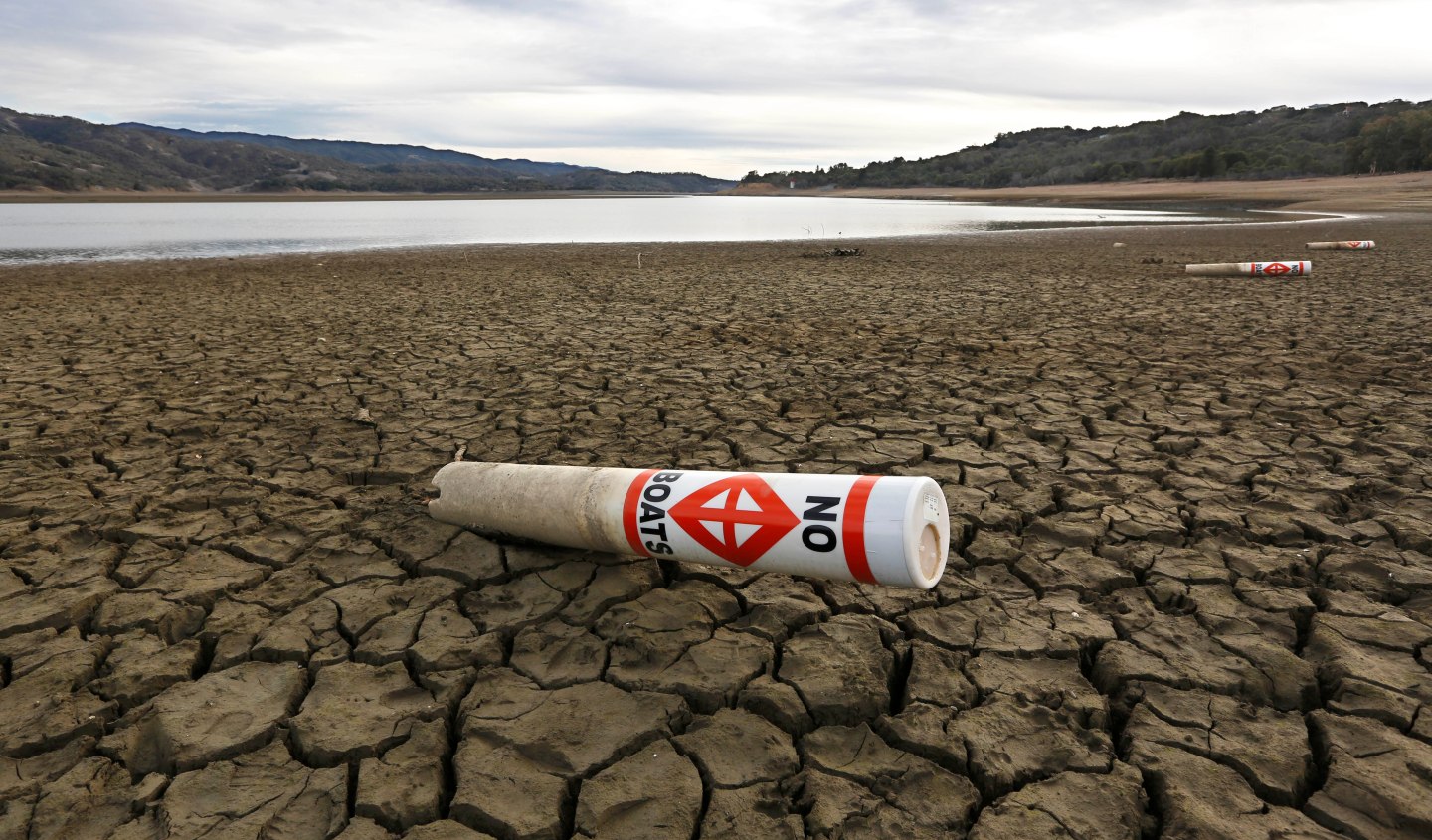
Another year of crushing drought in California means new water cuts are in the works for both cities and farmers, who use up to 80 percent of the state’s water in an average year. In what is likely a sign of things to come, a group of farmers in the Sacramento-San Joaquin River Delta recently decided to voluntarily give up a quarter of their water by either fallowing the land or using other conservation methods.
Over the years, Silicon Valley—a region which has become synonymous with tech success—hasn’t been overly interested in funding water conservation technology, despite a drought taking place right in their backyard. Almost $12 billion was invested in Internet startups in 2014, compared to a few hundred million dollars in water startups.
But, it’s tech trends started in Silicon Valley— such as the Internet of things, big data, mobile, biotech and genetics, and nanotechnology —that could truly help farmers increase water efficiency. Founder and CEO of startup OnFarm, Lance Donny said a few years ago the agriculture industry was ripe for change and is “a sleeping giant” for digital tech.
It should be noted that farmers and cities mostly plan to reduce water use through new policies and better management, but here are some technologies I’ve been keeping an eye on that could help conserve more water in the state.

Sensor networks: Sensors and wireless networks are about as low cost as can be these days. Companies like Hortau, founded in 2002, use soil tension sensors—combined with data about temperature, weather and humidity—to manage smarter irrigation systems for farmers. These irrigation systems use gathered data to find more efficient times and better ways to use water.
Farm trade group American Farm Bureau Federation says 39 percent of farmers who grow water-needy corn or wheat now use sensor tech on their farms. Companies that already build sensor networks — like ThingWorx — for a variety of other industries are now targeting agriculture as new opportunities open up in the field.
While some companies are focused on making irrigation water go as far as possible, others are concentrating on protecting back-up water sources. Wisconsin-based startup Wellntel has developed a sensor system for monitoring ground water using sound waves, which farmers can then tap into like a savings account when surface water levels are low. It’s a far cry from the more traditional ground water measurement methods used today that rely on tape and chalk to monitor underground water.

Data analytics: Some farmers aren’t willing (or able) to pay for smart irrigation systems and instead rely on companies that can provide valuable analytics. For example, young startup PowWow Energy uses electricity data from basic smart meters that are installed on water pumps and networks to detect pump leaks. There’s no hardware to install and a farmer receives a text message if there’s an abnormal spike in water use (which corresponds with the spike in energy from the meter).
The Climate Corporation, which was founded in 2006 and acquired by Monsanto in 2013, is another company that is focused on helping farmers by analyzing massive amounts of data about environmental conditions. The firm delivers insight and recommendations to farmers based on the data, which can lead to water being used more efficiently.

Management software, social media: Basic software and social networking tools that are commonly used for communication in other industries are starting to be used widely in the agriculture industry and could lead to better conservation efforts.
The Farmer’s Business Network just raised $15 million from Google Ventures, Kleiner Perkins and DBL Investors to grow its social network for independent farmers. On the platform, farmers can compare and collaborate with others in the industry on issues including water use, irrigation tools and weather information to increase yield.
Last month, OnFarm launched a new update to its farm data management software, which included new tools for water management for drought-stricken farmers. The software helps farmers manage data like real-time soil moisture, water balance information, irrigation scheduling, water reporting and more.

Biotech and genetics: It’s not just digital tools that farmers are using to battle the drought. Companies are also using sophisticated genomics and breeding techniques to make seeds and crops that are more drought-resistant and water efficient.
Chicago-based Chromatin uses gene stacking (combining more than one gene in a plant) to make different types of water-efficient sorghum, which is a type of grass that is used for animal feed, grain, biofuel and brewing. Chromatin’s investors include GE Capital and BP Ventures.
Cibus is also using gene-editing technology to create water-efficient crops. The startup makes seeds that are pest tolerant and/or drought-resistant to increase a farmer’s harvest. Another company called Arcadia Biosciences went public in April and has helped seed companies deploy water-conservative crops like rice.

Water cleaning & reuse: Water purification and desalination (a process that removes salt and minerals from water) has been around for decades and is an oft-used tool in most arid countries around the world. Israel is a major proponent of the process and reuses about 80 percent of its municipal wastewater for irrigation.
Reverse osmosis is one the most popular processes used in water cleaning technology, but generally uses a lot of energy and ends up being quite expensive. A company called Desalitech, based in Newton, Massachusetts, hopes to change that by creating water systems that use significantly less energy and therefore become accessible to both independent and commercial farms.
Other types of next-gen water cleaning systems are leveraging the latest in nanotechnology to create processes that can clean water with less energy. A startup called NanoH20 has developed nanotech-tweaked filtration techniques that clean water faster and as a result was later bought by Korean giant LG last year for $200 million.

Weirder ways for water conservation: There’s other, more unusual, methods startups are using to help reduce water use both directly and indirectly.
Five-year-old California startup mOasis makes a super absorbent gel polymer called hydrogel that farmers can put in soil ahead of planting seasons. The hydrogel — which is the size of a grain of sand, but can soak up 250 times its weight in water — absorbs excess water during irrigation and releases it as the soil dries out.
The company says using the gel can help farmers reduce water use by 20 percent, and cut water bills by 15 percent. The gel, developed at Stanford University, lasts about a year before it starts breaking down, and according to the company doesn’t leave behind bi-products that are environmentally questionable.
Permanently changing the paradigm of water-hungry industries could be another conceptual (and drastic) way to deliver water conservation in the long term. In California, cows raised for consumption often consume massive amounts of alfalfa, which is one of the most water-intensive crops. If cows raised explicitly for meat were replaced with lab-grown versions it would put less strain on water resources.
Startup Modern Meadow—based in Brooklyn, New York—is also hoping to change consumers’ eating habits by developing lab-printed meat that can be used in food or for leather goods. Another company called Cultured Beef is also working on their own version of lab-grown burgers as a way to conserve water.
California’s water issues aren’t expected to end anytime soon, but perhaps (just maybe) the ongoing drought will push Silicon Valley to finally do more.
Subscribe to Data Sheet, Fortune’s daily newsletter on the business of technology.