Decades of sexy computing, web and mobile startups have emerged out of Silicon Valley built on the backs of low-cost, commoditized hardware. Some of these startups have gone on to fundamentally change technology and society. A similar thing is starting to happen—though at an early stage—around lithium-ion batteries.
While these batteries, mostly manufactured in bulk in Asian countries, have long been widely used in laptops and cell phones, similar batteries are now beginning to be made at a much higher volume and are becoming cheap enough to start to have an influential effect on both the power and auto industries.
Tesla’s battery ambitions
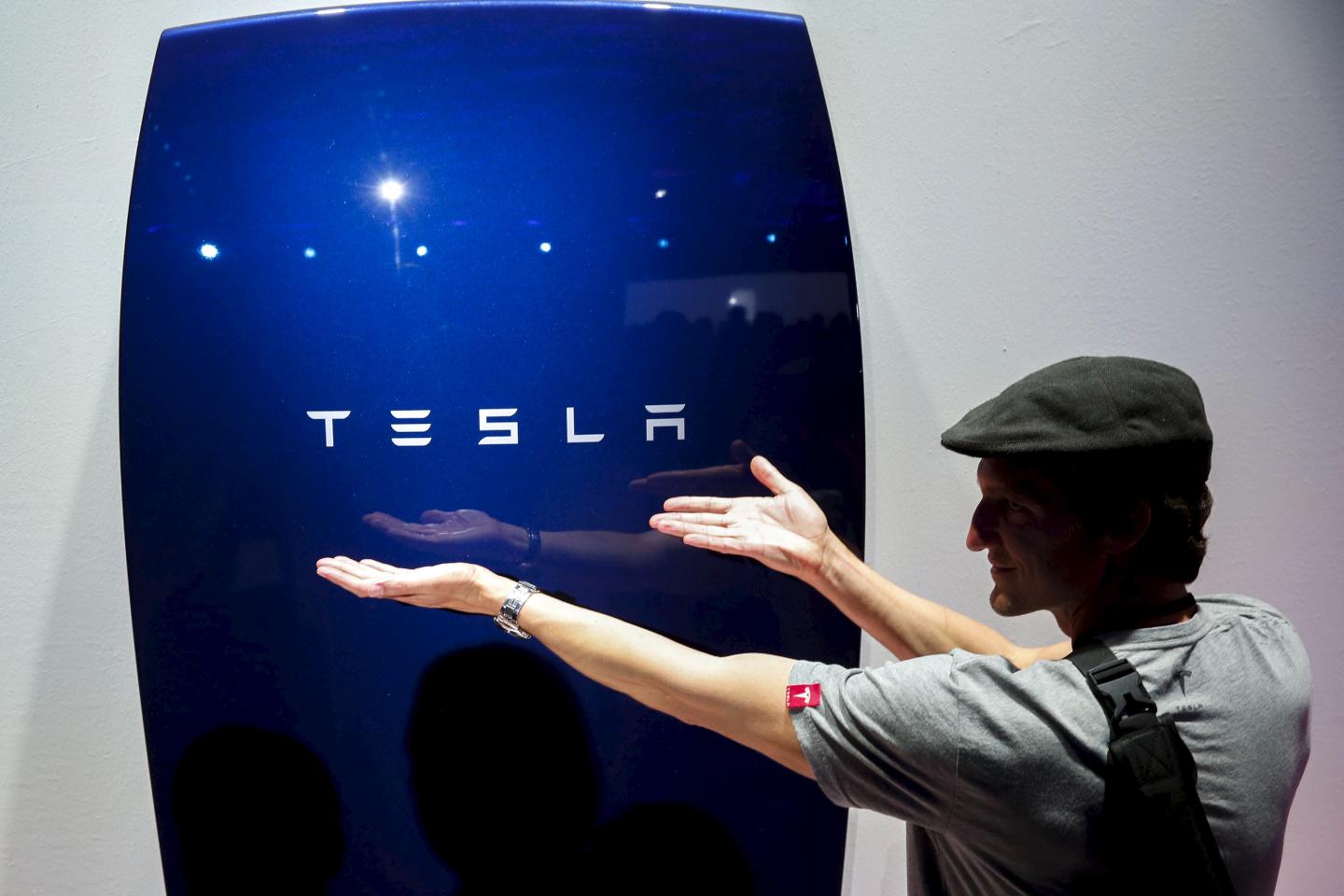
Tesla (with its planned huge battery factory under construction outside of Reno, Nevada) is using this low-cost battery thesis as an underlying tenant for its business model, and is probably the most well-known company leading this ‘battery-as-a-platform’ wave. However, there are many other startups, big power companies, Internet companies, solar and clean energy firms, auto makers and battery giants pushing this trend, too.
Tesla’s business is as much about creating a battery pack that can be used as efficiently, safely and as low cost as possible for whatever application, as it is about wowing customers with a sexy electric car. Its batteries are being used in many more applications such as the recent announcement of the Powerwall, which stores energy from a rooftop solar panel in a home, and the Powerpack, which can provide a utility with a burst of energy to help it avoid using an expensive and dirty peaker plant (a power plant only used during peak grid times) on a hot Summer afternoon.

Following Tesla’s launch of its grid batteries two weeks ago, Tesla CEO Elon Musk said on the company’s earnings call last week that the lithium-ion battery cells that the company uses (its partner is Panasonic) are “relatively generic.” Tesla’s value instead lies in the mechanical, electrical and software engineering of the battery modules and pack, said Musk.
The grid software startups
Like Tesla before them, many of the startups building software, data analytics, user interfaces, visualization and simulation tools, and plug-and-play electronic product designs, on top of low-cost, lithium-ion batteries are coming out of Silicon Valley and backed by venture capitalists. These include Stem (based in Milbrae, Calif.), Greensmith Energy (Rockville, Maryland), Green Charge Networks (Santa Clara, Calif), GELI (San Francisco), Advanced Microgrid Solutions (San Francisco), Coda Energy (the reborn former electric car company in Los Angeles) and Sonnenbatterie (originally from Germany, with an office in Los Angeles).
Stem CEO John Carrington says even in the time between when he joined Stem in late 2013 and today, there has been a “massive decline in battery prices.” The world’s largest battery suppliers have been investing heavily in the battery manufacturing side of their business, much of it for electric cars, said Carrington, but with the recent drop in oil prices, electric cars might be a little slower coming to market than expected.
Beyond the pull of electric cars, and the already-established market for lithium-ion batteries for computing devices, the market for grid storage is emerging first in regions with strong incentives for clean energy and for lowering carbon emissions, as well as in places with very high electricity rates (such as islands like Hawaii). California in particular has a first-of-its-kind mandate that says utilities need to buy over a gigawatt of energy storage in the coming years. Germany has strong incentives that encourage batteries paired with solar panels for homes and businesses.
Stem, which is in various stages of installing a couple hundred battery projects, deploys its batteries at its business and industrial customers’ buildings, and the company’s software switches the building over to using battery power when electricity rates from the grid are high. Stem offers financing for the batteries — so it’s “no money down”—then leases the batteries while the customer saves money on the electricity rates. The company also installs big battery banks for utilities, such as Southern California Edison, for helping them manage the grid.

Seven-year-old Greensmith Energy, which says it manages over a third of all the energy storage capacity installed in the U.S. last year, also uses software to manage low-cost batteries for both businesses and utilities. Greensmith CEO John Jung says that even though the power grid runs on software, it has largely been an afterthought for a long time.
[fortune-brightcove videoid=3447056122001]
While the majority of the batteries Greensmith has installed — it has 30 projects for 17 customers including nine utilities—have been lithium-ion, it has also used other kinds of batteries for its customers such as flow batteries. The startup offers its customers software that can simulate how batteries would work for whatever purpose the customer needs, and then helps them choose the right battery and configuration to solve their problem.
Sonnenbatterie, which has 8,000 battery systems installed, is different in that it sells its battery systems mostly for homes and small businesses for daily use. The company uses lithium ion batteries from Sony (Fortelion), and Sonnenbatterie CEO Boris Von Bormann says those are the only batteries on the market today that can fulfill the daily charging and discharging needs of its residential customers.
Other big companies are jumping into the grid battery market, too, looking to stay on the right side of the tech curve. GE has appeared to have scaled down its sodium-grid battery manufacturing division, and has more recently started to offer a lithium-ion battery grid product using third-party batteries. Kyocera is selling home energy systems using lithium-ion batteries from Samsung.
EnerNOC, which built a business off of turning down its customers’ energy during peak hours (called demand response), is quickly becoming an energy software services company, and is testing out Tesla’s batteries for that purpose. A scan of the publicly available data of the incentives that the state of California offers for the deployment of energy storage projects includes other electronics giants like Sony, as well as power behemoth Schneider.
Beyond lithium ion
Battery innovation is notoriously tough, and always seems to take far longer than expected. But battery makers will continue to innovate around new chemistries. GELI CEO and co-founder Ryan Wartena says “we are still in the early days of battery commodification. We will see continued advances in technology over the coming years that lead to hyper-cycle batteries that will open more and more markets.”
New battery chemistries from startups have been slowly making their way to market. The CEO of battery startup Ambri, Phil Giudice, likewise says the market for grid storage is still “at an early stage.” Ambri is making a low cost grid battery using molten salt sandwiched between two layers of liquid metal.
The company expects to ship their first battery prototypes this summer and fall, and commercial batteries by the end of 2016. He says “We’re not so worried about the first movers. It’s more important to get it right.” When Giudice joined Ambri three years ago, he says the grid storage market was far more conceptual, but now there are many more projects being done in reality.
In that way, lithium-ion batteries could help pave the way for the next generation of batteries that some day will make it to market. Though, like what occurred with the solar manufacturing startups that tried to make solar panels from new materials years ago and struggled, there could be a lot of market ups and downs along the way.
Most of the battery integrator and software makers are actually “battery agnostic,” and welcome any new battery chemistry that is low-cost, effective, and safe enough. However, for large grid projects that need project financing, lithium-ion batteries are more easily “bankable” right now than a new chemistry, explained Stem’s Carrington. Tesla’s Musk noted in the company’s latest earnings call that if there’s any breakthroughs in battery chemistry and new batteries beyond lithium-ion batteries, Tesla would be quick to implement these, too.
Down the road, the dream for companies like GELI are to help the “Internet of Energy” emerge. Wartena says:
“Over the coming years I expect to see similar business models that happened in the original build of the Internet, for energy software, energy computers, microgrids, networks of microgrids, energy operations, energy applications, networked energy services, and the list goes on.”
When batteries become as low cost, reliable and widely available as chips for computers, radios for cell phones, and networks for the Internet, some day all that could become true.