Across the country, thousands of people are desperate for accessible and affordable healthcare. For far too many of them, their only option—even for non-emergency care—is a $1,500 visit to the emergency room.
For example, 200 counties in Texas are considered medically underserved with 16 counties having just one primary care doctor and 27 counties having none. These citizens have nowhere to turn.
The good news is that a solution exists. It is called telehealth and has been increasing in use across the country over the last decade. However, a decision last month by the Texas State Medical Board will sharply restrict access for Texans by requiring in-person visits before you are allowed to use telemedicine. Previously, the board required doctors to establish a relationship with patients before giving a diagnosis or prescribing drugs, but its April 10 decision narrowed rules to state that “questions and answers exchanged through email, electronic text, or chat or telephonic evaluation or consultation with a patient” are not enough to establish a doctor-patient relationship.
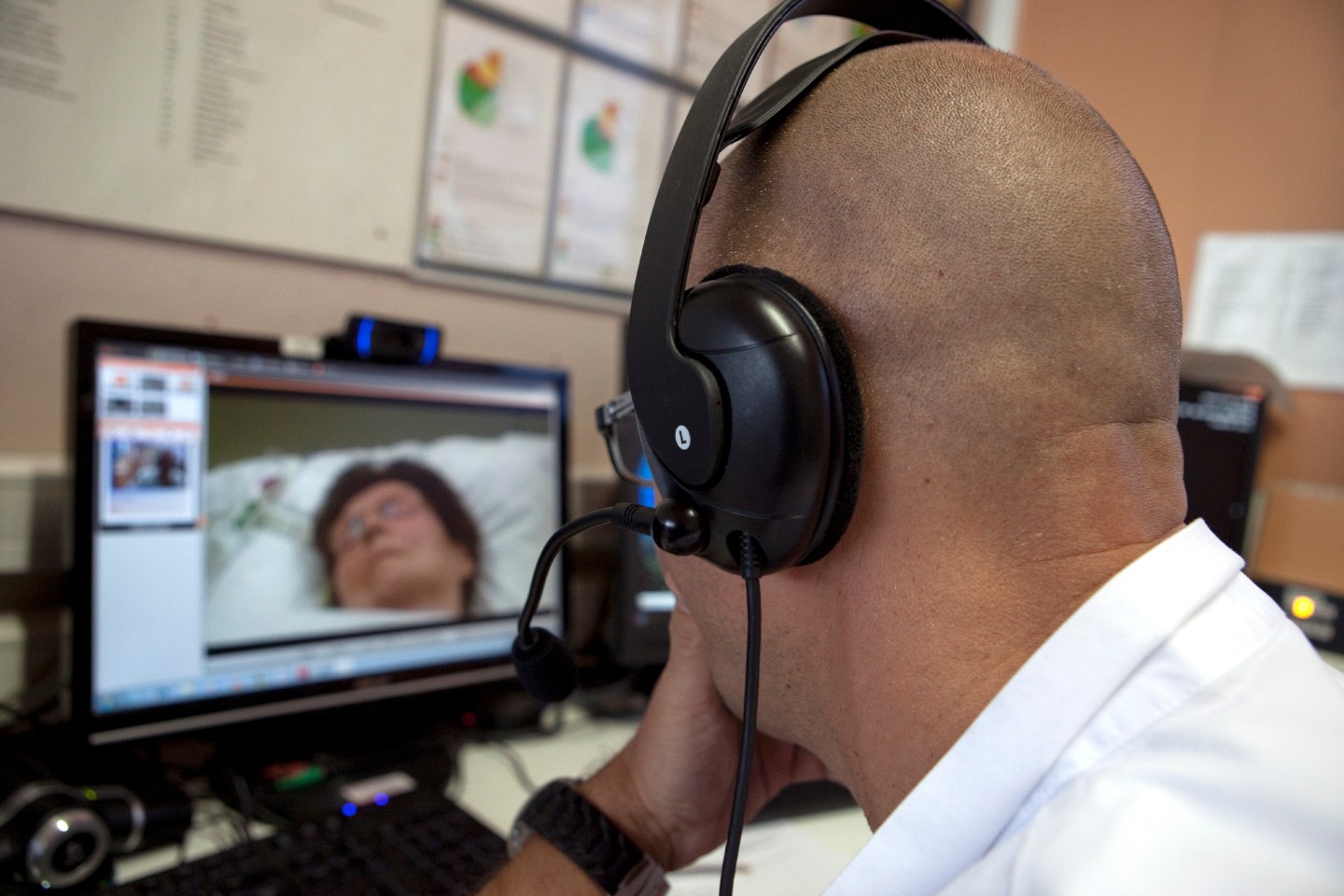
That is a step in the wrong direction. Telehealth is a proven option to deliver quality, non-emergency care when a primary care doctor is not available or for the many Americans who have not yet established a primary care provider (PCP) because of a lack of availability or waiting times. It allows a patient to have a telephonic or videoconference with a doctor in lieu of an in-person visit when appropriate to facilitate comparable diagnosis and treatment. Using the tool of telemedicine, providers can remotely examine patients, reference medical records, and prescribe appropriate medication.
Telehealth does not replace the need for a primary care doctor, but serves as a complementary convenient and cost-effective alternative to an office visit when circumstances or geography warrant. For Americans living in medically-underserved areas, it can prevent a patient from ignoring what is now a minor issue, but might be an emergency later, for lack of access or transportation.
Across the country, 49 states now allow video and phone conference consults. In Texas alone hundreds of employers provide telehealth to more than 3 million employees when seeing their doctor isn’t necessary for common health problems. This practice has existed for over a decade and companies specializing in telemedicine have demonstrated excellent patient satisfaction and outcomes.
Given these benefits and safety profile, what is behind the Texas Medical Board’s ruling?
As a physician who has worked in medicine for 42 years, I can attest that one of the most exciting and simultaneously terrifying constants in medicine is change. Just a few years out of training, physicians learn new evidence, improved protocols, and better methods that they must master. A successful career in medicine requires adapting to and embracing change.
In the case of telemedicine, it is a monumental change. We are taught as physicians to lay hands on patients – touch them, examine them, listen to them, see them. The idea of separating the visit and the exam from care is a fundamental reversal of what we learn when we first put on the white coat and don the stethoscope.
But we must remember that telemedicine is not the practice of medicine, but a tool for the delivery of care. And it’s a tool with a proven track record and support in the medical community.
In Texas, the Medical Board received 203 comment letters from physicians and other interested parties affected by the rule change; only four spoke out against telemedicine. For specific concerns—such as prescribing practices—these elements that can be addressed and regulated without stopping the use of telemedicine altogether.
The question, as I see it, is whether a physician who has met a patient once for 15 minutes is better equipped to safely diagnose and treat a non-emergent issue on a weekend than a provider who practices via telemedicine regularly and is trained in the delivery of remote care.
Finally, we have to remember that the way we pay for healthcare – the fee-for-service model – is going away. We are moving to value-based-care, a model where outcomes and efficiencies are rewarded, not volume. Trying to preserve fee-for-service medicine by stymieing innovative business models will prove fruitless.
We call it practicing medicine for a reason. It is a constantly-evolving application of principles and judgment to do what is best in a series of patterned but ultimately unique interactions. As physicians, we get up every day unsure of what is to come, but knowing we must use the tools we have to do what is best for our patients. Telemedicine is a tool that in many instances is best for the patient, and in some cases is the only option for a patient.
It is time to do what is best for the patient and the healthcare economy and get online with telemedicine.
Bill Frist is a surgeon, businessman and former two-term U.S. senator representing Tennessee, serving as majority leader from 2003 until 2007. Frist is a member of the Board of Directors of Teladoc, a U.S. telemedicine provider. The company has filed a lawsuit against the Texas Medical Board over the new rules over the usage of telemedicine.