• Home
  • Latest
  • Fortune 500
  • Finance
  • Tech
  • Leadership
  • Lifestyle
  • Rankings
  • Multimedia
Financeflash crash

This is how much money the arrested trader made on the ‘flash crash’

By
Jen Wieczner
Jen Wieczner
Down Arrow Button Icon
By
Jen Wieczner
Jen Wieczner
Down Arrow Button Icon
April 23, 2015, 6:01 AM ET
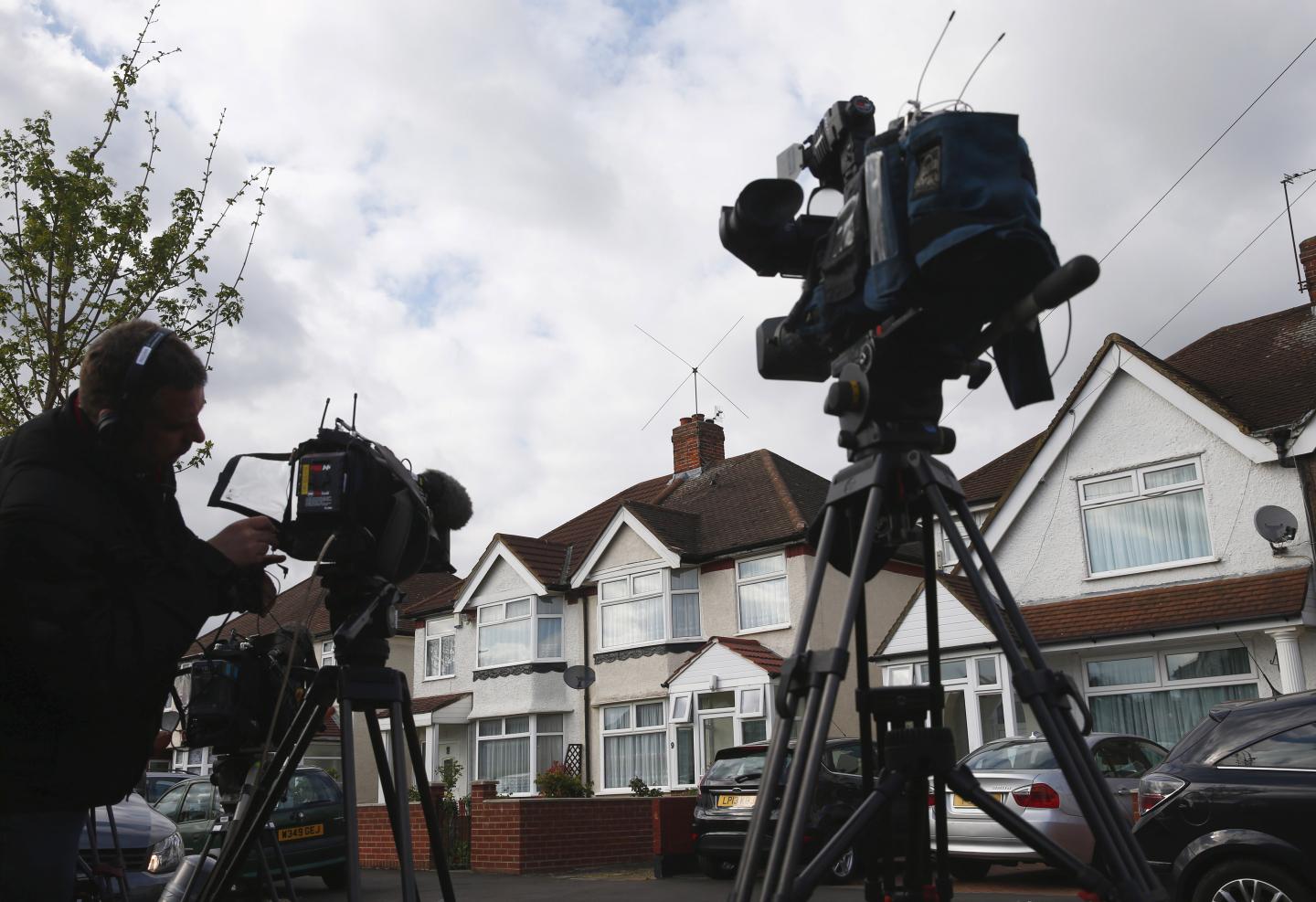
Television crews wait outside the address where Nav Sarao Futures Limited  is registered, in Hounslow, London
Television crews wait outside the address where Nav Sarao Futures Limited is registered, in Hounslow, west London April 22, 2015. The small suburban house in the flight path of London's Heathrow airport gave no clue to neighbours that it was headquarters of a man accused of earning millions through fraud, and helping cause a trillion dollar "flash crash" on U.S. stock markets. REUTERS/Eddie Keogh - RTX19UBUPhotograph by Eddie Keogh — Reuters

Nearly five years after the so-called “flash crash”—when the market dropped hundreds of points in the span of a few minutes on May 6, 2010—authorities have arrested a trader that they believe helped cause the swoon.

But the alleged culprit, a U.K.-based futures trader named Navinder Singh Sarao, didn’t actually make a whole lot of money off the flash crash, according to the U.S. Justice Department’s criminal complaint against Sarao.

The complaint, which accuses Sarao of manipulating market prices by fraudulently trading S&P 500 futures contracts, says that he netted $879,018 in profits on the day of the crash.

But that was a relatively small haul compared to Sarao’s gains on other days where he used the same strategy, according to the indictment. For example, more than a year later, on August 4, 2011, Sarao allegedly reaped more than $4 million by manipulating the prices of the same kinds of contracts.

Sarao’s strategy, described in the 35-page complaint by FBI special agent Gregory Laberta, involved placing large orders for electronic S&P 500 futures contracts known as “E-minis,” only to cancel them before the orders were actually executed. The practice is known as “spoofing” and it is illegal.

Using automated trading software, Sarao allegedly placed repeat bogus orders to sell huge blocks of E-minis, artificially pushing the market price of the futures contracts down. Once the price dropped, he would then execute real trades to buy the contracts at the lower price, while simultaneously cancelling his original sell orders. Next, he would turn around and use spoofing to drive the price of the contracts back up, actually selling some at the higher price while cancelling the rest of his fake orders.

Between 2010 and 2014, Sarao made a total of roughly $40 million using that strategy—and he was still actively spoofing through at least the first week of April, according to a separate civil complaint against Sarao by the U.S. Commodity Futures Trading Commission.

But if Sarao’s actions really did lead to the flash crash, it’s unclear why they only caused a single one—especially when that wasn’t even his biggest windfall amid a long-running scheme.

Indeed, Sarao’s conduct on the day of the flash crash actually seems pretty ordinary for him, by the FBI agent’s account. Over a period of two hours starting in the early afternoon New York time, when the Dow was down by more than 300 points, Sarao allegedly traded more than 62,000 E-mini contracts worth $3.5 billion. But for him that was nothing: The previous day he’d traded E-minis worth more than double that amount (or $7.6 billion); the day after the flash crash, he traded some $8.7 billion of them. (According to an email Sarao sent in 2012, cited in the complaint, the trader bragged that he “made the majority of [his] net worth” in “no more than 20 days trading.”)

Still, the day of the flash crash, Sarao’s spoof orders somehow created an “extreme order book imbalance” on the Chicago Mercantile Exchange (CME), the primary place where E-minis are traded. During the two-hour period just before the flash crash, as much as 29% (or nearly a third) of the sell orders on the exchange were coming from Sarao, according to the criminal complaint. At that time, there was “little liquidity left in the market,” as there were more than twice as many sell orders as buy orders for E-mini futures contracts, the complaint says.

And that’s when the market went into free fall—triggering the “flash crash” at about 2:45 p.m. As investors (or their algorithmic trading programs) noticed what appeared to be a major fire sale of E-minis, the sell-off “spilled into equities markets” as traders dumped stock: The Dow shed another 600 points in a matter of five minutes, and was briefly down by 1000 points.

And if E-minis trading had caused the crash, all it took was a quick timeout to stop the chaos: the CME halted trading in E-minis for five seconds, and the market mostly recovered by 3 p.m.

The very next day, it was rinse-and-repeat for Sarao, who kept up his spoofing routine as though nothing ever happened, according to the complaint. So why hasn’t there been another flash crash since (other than the brief 2013 swoon following a hoax tweet about a White House attack)?

One theory is that it wasn’t just Sarao, but a confluence of spoof traders or price manipulators who caused the market imbalance; Sarao is simply the only one—or perhaps just the first—to get caught. It just may take another flash crash for government regulators to find the others.

Watch more business news from Fortune:

About the Author
By Jen Wieczner
See full bioRight Arrow Button Icon

Latest in Finance

Finance
Lorem ipsum dolor sit amet, consectetur adipiscing elit, sed do eiusmod tempor incididunt ut labore et dolore magna aliqua. Ut enim ad minim veniam
By Fortune Editors
October 20, 2025
Finance
Lorem ipsum dolor sit amet, consectetur adipiscing elit, sed do eiusmod tempor incididunt ut labore et dolore magna aliqua. Ut enim ad minim veniam
By Fortune Editors
October 20, 2025
Finance
Lorem ipsum dolor sit amet, consectetur adipiscing elit, sed do eiusmod tempor incididunt ut labore et dolore magna aliqua. Ut enim ad minim veniam
By Fortune Editors
October 20, 2025
Finance
Lorem ipsum dolor sit amet, consectetur adipiscing elit, sed do eiusmod tempor incididunt ut labore et dolore magna aliqua. Ut enim ad minim veniam
By Fortune Editors
October 20, 2025
Finance
Lorem ipsum dolor sit amet, consectetur adipiscing elit, sed do eiusmod tempor incididunt ut labore et dolore magna aliqua. Ut enim ad minim veniam
By Fortune Editors
October 20, 2025
Finance
Lorem ipsum dolor sit amet, consectetur adipiscing elit, sed do eiusmod tempor incididunt ut labore et dolore magna aliqua. Ut enim ad minim veniam
By Fortune Editors
October 20, 2025

Most Popular

Finance
Lorem ipsum dolor sit amet, consectetur adipiscing elit, sed do eiusmod tempor incididunt ut labore et dolore magna aliqua. Ut enim ad minim veniam
By Fortune Editors
October 20, 2025
Finance
Lorem ipsum dolor sit amet, consectetur adipiscing elit, sed do eiusmod tempor incididunt ut labore et dolore magna aliqua. Ut enim ad minim veniam
By Fortune Editors
October 20, 2025
Finance
Lorem ipsum dolor sit amet, consectetur adipiscing elit, sed do eiusmod tempor incididunt ut labore et dolore magna aliqua. Ut enim ad minim veniam
By Fortune Editors
October 20, 2025
Finance
Lorem ipsum dolor sit amet, consectetur adipiscing elit, sed do eiusmod tempor incididunt ut labore et dolore magna aliqua. Ut enim ad minim veniam
By Fortune Editors
October 20, 2025
Finance
Lorem ipsum dolor sit amet, consectetur adipiscing elit, sed do eiusmod tempor incididunt ut labore et dolore magna aliqua. Ut enim ad minim veniam
By Fortune Editors
October 20, 2025
Finance
Lorem ipsum dolor sit amet, consectetur adipiscing elit, sed do eiusmod tempor incididunt ut labore et dolore magna aliqua. Ut enim ad minim veniam
By Fortune Editors
October 20, 2025
Rankings
  • 100 Best Companies
  • Fortune 500
  • Global 500
  • Fortune 500 Europe
  • Most Powerful Women
  • Future 50
  • World’s Most Admired Companies
  • See All Rankings
Sections
  • Finance
  • Leadership
  • Success
  • Tech
  • Asia
  • Europe
  • Environment
  • Fortune Crypto
  • Health
  • Retail
  • Lifestyle
  • Politics
  • Newsletters
  • Magazine
  • Features
  • Commentary
  • Mpw
  • CEO Initiative
  • Conferences
  • Personal Finance
  • Education
Customer Support
  • Frequently Asked Questions
  • Customer Service Portal
  • Privacy Policy
  • Terms Of Use
  • Single Issues For Purchase
  • International Print
Commercial Services
  • Advertising
  • Fortune Brand Studio
  • Fortune Analytics
  • Fortune Conferences
  • Business Development
About Us
  • About Us
  • Editorial Calendar
  • Press Center
  • Work At Fortune
  • Diversity And Inclusion
  • Terms And Conditions
  • Site Map
  • Facebook icon
  • Twitter icon
  • LinkedIn icon
  • Instagram icon
  • Pinterest icon

Latest in Finance

EconomyAerospace and defense
France’s Thales ‘extensively’ ramps up production to meet a global boom in defense spending, says international CEO Pascale Sourisse
By Angelica AngFebruary 10, 2026
17 minutes ago
Eddie Bauer
RetailRetail
Eddie Bauer’s retail operator declares bankruptcy as younger shoppers view the brand as ‘old-fashioned and a bit irrelevant’
By Anne D'Innocenzio and The Associated PressFebruary 9, 2026
8 hours ago
Personal FinanceSavings
Best money market accounts of February 2026
By Glen Luke FlanaganFebruary 9, 2026
9 hours ago
CryptoDonald Trump
The Trump family’s crypto portfolio is getting battered with the rest of the industry—but Melania’s memecoin has fared surprisingly well
By Ben WeissFebruary 9, 2026
9 hours ago
Personal Financechecking accounts
Best checking account bonuses for February 2026
By Glen Luke FlanaganFebruary 9, 2026
9 hours ago
take off
InvestingMarkets
Why you shouldn’t worry about AI eating the stock market, top analyst says. The U.S. economy is ‘about to take off’
By Nick LichtenbergFebruary 9, 2026
11 hours ago

Most Popular

placeholder alt text
C-Suite
Meet Jody Allen, the billionaire owner of the Seattle Seahawks, who plans to sell the team and donate the proceeds to charity
By Jake AngeloFebruary 9, 2026
11 hours ago
placeholder alt text
AI
As billionaires bail, Mark Zuckerberg doubles down on California with $50 million donation
By Sydney LakeFebruary 9, 2026
13 hours ago
placeholder alt text
Economy
China might be beginning to back away from U.S. debt as investors get nervous about overexposure to American assets
By Eleanor PringleFebruary 9, 2026
18 hours ago
placeholder alt text
Economy
Elon Musk warns the U.S. is '1,000% going to go bankrupt' unless AI and robotics save the economy from crushing debt
By Jason MaFebruary 7, 2026
2 days ago
placeholder alt text
Commentary
America marks its 250th birthday with a fading dream—the first time that younger generations will make less than their parents
By Mark Robert Rank and The ConversationFebruary 8, 2026
2 days ago
placeholder alt text
Economy
Russian officials are warning Putin that a financial crisis could arrive this summer, report says, while his war on Ukraine becomes too big to fail
By Jason MaFebruary 8, 2026
1 day ago

© 2026 Fortune Media IP Limited. All Rights Reserved. Use of this site constitutes acceptance of our Terms of Use and Privacy Policy | CA Notice at Collection and Privacy Notice | Do Not Sell/Share My Personal Information
FORTUNE is a trademark of Fortune Media IP Limited, registered in the U.S. and other countries. FORTUNE may receive compensation for some links to products and services on this website. Offers may be subject to change without notice.