• Home
  • Latest
  • Fortune 500
  • Finance
  • Tech
  • Leadership
  • Lifestyle
  • Rankings
  • Multimedia
LeadershipChina

China must resist imperial overreach in competition with the U.S.

By
Minxin Pei
Minxin Pei
Down Arrow Button Icon
By
Minxin Pei
Minxin Pei
Down Arrow Button Icon
April 17, 2015, 3:58 PM ET
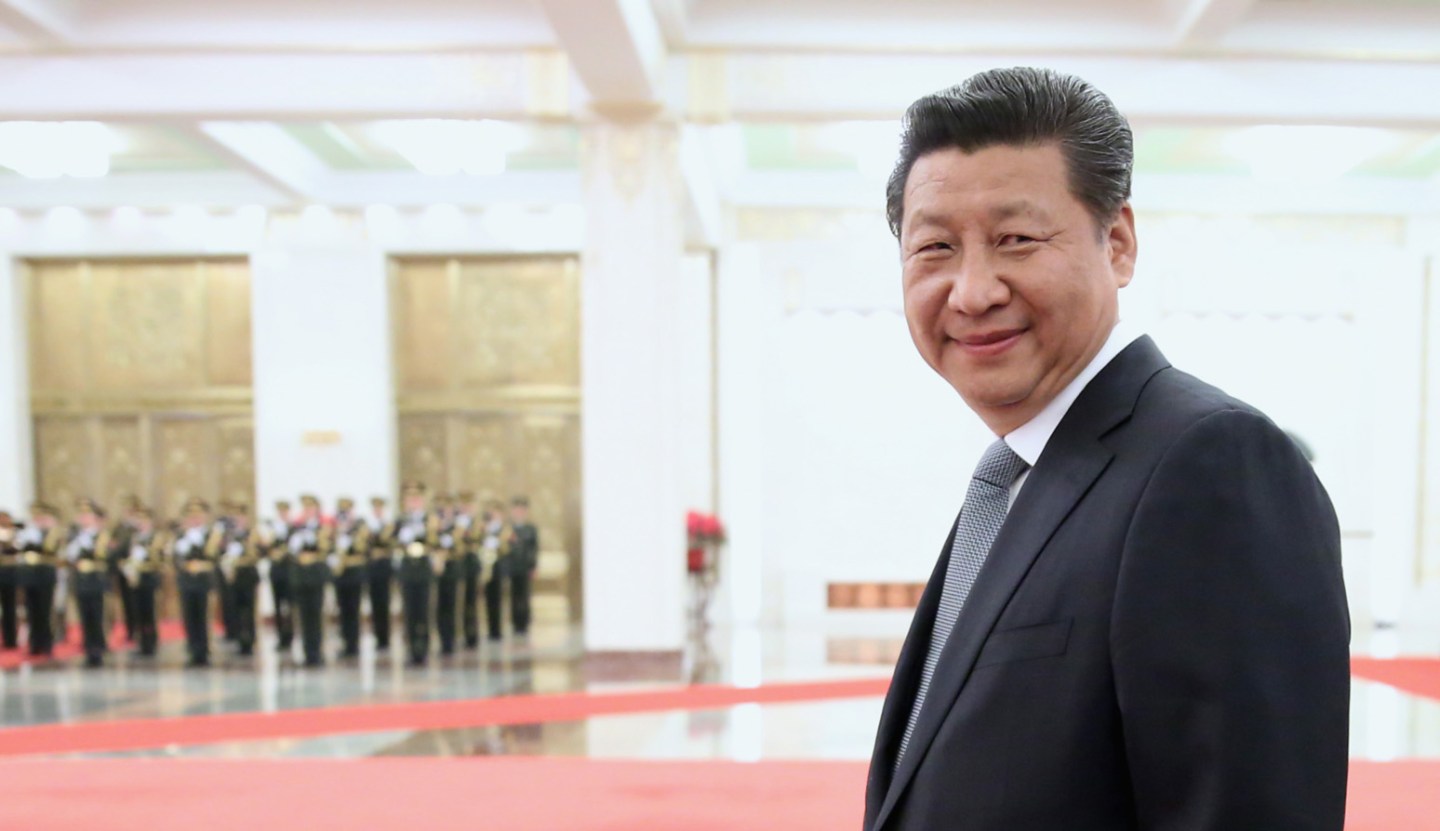
Presidnet Xi Jinping Meets Visiting Armenian President Serzh Sargsyan
BEIJING, CHINA - MARCH 25: Chinese President Xi Jinping accompanies Armenian President Serzh Sargsyan to view an honour guard during a welcoming ceremony inside the Great Hall of the People on March 25, 2015 in Beijing, China. (Photo by Feng Li/Getty Images)Photograph by Feng Li — Getty Images

Empires fall for many reasons. One of them is overreach: the lust for power often drives imperial rulers to extend their commitments beyond what their resources can support. The collapse of the Soviet Union is among the most recent illustrations of the perils of imperial overreach. During the Cold War, Moscow recklessly took on unaffordable security commitments around the world and engaged in an un-winnable arms race against a foe with a much larger economy.

Among the lessons China learned from the Soviet collapse, avoiding imperial overreach was perhaps one of the most consequential. The leaders of the Chinese Communist Party (CCP) in the early 1990s understood that they must never repeat the Soviet mistake. In the two decades since, Beijing has followed a prudent foreign policy. Although China sees the U.S. as a threat, it has resisted a full-scale arms race with the U.S. Instead of seeking parity of power, China has devoted its limited resources to niche military capabilities, designed solely to deter the U.S. from intervening in its neighborhood. Equally notable is China’s consistent resistance to the temptation of setting up puppet regimes and military bases overseas.

Unfortunately, as economic growth has boosted Chinese power and status, its leaders seem to be succumbing to the same imperial temptations that lured the rulers of the former Soviet Union into strategic imprudence. To be sure, as China still lags behind the U.S. in military capabilities, Beijing has maintained its cautious and largely defensive security posture. And in the foreseeable future, China is unlikely to risk a direct military conflict with the U.S.

But the temptations to take on the U.S. in global finance are simply too powerful to resist for Chinese leaders. With $4 trillion in foreign exchange reserves and an economy growing twice the rate as the U.S., Beijing confidently thinks that it has the wherewithal to contest American dominance in the global financial order. While it is impossible to pinpoint when and how the Chinese strategy was conceived, its two main prongs are now becoming increasingly visible.

As part of its first prong, China has led in the formation of international financial institutions that directly compete against those founded and dominated by the U.S. In the last two years, China has successfully set up the $50 billion Shanghai-based New Development Bank (NDB), the $50 billion Beijing-based Asian Infrastructure Investment Bank (AIIB), a China-financed $40-billion New Silk Road Fund, and a $100 billion dollar liquidity reserve, also largely bankrolled by China.

The second prong: China has put together massive bilateral aid packages for strategic allies and resource-rich developing countries designed to strengthen its economic ties to these nations. The latest manifestation on this front is the $46 billion energy and infrastructure deal China announced for Pakistan. And when President Xi Jinping visited Latin America in July 2014, he signed contracts worth roughly $70 billion.

On the surface, China’s strategy of competing with the U.S. in global finance and investment seems both prudent and shrewd. With a large chunk of its foreign exchange reserves invested in low-yielding American Treasuries and other securities, allocating hundreds of billions of dollars of its forex-reserves into alternative assets (overseas infrastructure and natural resources) may diversify risk and generate better returns. In addition, money diplomacy is more potent than gunboat diplomacy in peeling off American allies; just witness the recent rush of nearly all America’s longtime allies into Beijing’s arms as the AIIB is about to close its doors to new members.

However, China’s strategy is as flawed as it is unsustainable. Taking on large global financial commitments, as China has recently done, entails significant risk. Running a startup multilateral development institution presents complex technical and political challenges for which China has little experience or demonstrated competence. Investments in infrastructure and natural resource projects in developing countries can be endangered due to ethnic conflict, terrorism, and political instability. China’s most recent setback in Sri Lanka, where a change of government threatens billions of dollars in Chinese investments in infrastructure, is just one example of the fallout that can come from such activities. In Pakistan’s failing state, huge Chinese investments might fare even worse.

Beijing has also overestimated China’s financial capacity. Despite China’s rapid growth, the U.S. economy, with a GDP of $17.4 trillion in 2014, is still two-thirds larger than the Chinese economy ($10.4 trillion). More importantly, as history shows, constructing an alternative global financial order requires uncontested economic hegemony and resources. When the U.S. designed the post-World War II global financial system (the so-called Bretton Woods system) in 1944, the American economy made up half of the world’s GDP. Since China accounts for 13.4% of the world’s GDP, it is questionable whether it has sufficient resources to underwrite an alternative system.

In its imperial overreach, Beijing’s is diverting precious resources away from its home front. With a collapsing real estate bubble, mountains of bad loans in the financial system, massive manufacturing overcapacity, an aging population, and catastrophic environmental degradation, China ought to be spending its money at home to shore up its economy, instead of chasing elusive prestige abroad.

Minxin Pei is the Tom and Margot Pritzker ’72 Professor of Government at Claremont McKenna College and a non-resident senior fellow of the German Marshall Fund of the United States


About the Author
By Minxin Pei
See full bioRight Arrow Button Icon

Latest in Leadership

Finance
Lorem ipsum dolor sit amet, consectetur adipiscing elit, sed do eiusmod tempor incididunt ut labore et dolore magna aliqua. Ut enim ad minim veniam
By Fortune Editors
October 20, 2025
Finance
Lorem ipsum dolor sit amet, consectetur adipiscing elit, sed do eiusmod tempor incididunt ut labore et dolore magna aliqua. Ut enim ad minim veniam
By Fortune Editors
October 20, 2025
Finance
Lorem ipsum dolor sit amet, consectetur adipiscing elit, sed do eiusmod tempor incididunt ut labore et dolore magna aliqua. Ut enim ad minim veniam
By Fortune Editors
October 20, 2025
Finance
Lorem ipsum dolor sit amet, consectetur adipiscing elit, sed do eiusmod tempor incididunt ut labore et dolore magna aliqua. Ut enim ad minim veniam
By Fortune Editors
October 20, 2025
Finance
Lorem ipsum dolor sit amet, consectetur adipiscing elit, sed do eiusmod tempor incididunt ut labore et dolore magna aliqua. Ut enim ad minim veniam
By Fortune Editors
October 20, 2025
Finance
Lorem ipsum dolor sit amet, consectetur adipiscing elit, sed do eiusmod tempor incididunt ut labore et dolore magna aliqua. Ut enim ad minim veniam
By Fortune Editors
October 20, 2025

Most Popular

Finance
Lorem ipsum dolor sit amet, consectetur adipiscing elit, sed do eiusmod tempor incididunt ut labore et dolore magna aliqua. Ut enim ad minim veniam
By Fortune Editors
October 20, 2025
Finance
Lorem ipsum dolor sit amet, consectetur adipiscing elit, sed do eiusmod tempor incididunt ut labore et dolore magna aliqua. Ut enim ad minim veniam
By Fortune Editors
October 20, 2025
Finance
Lorem ipsum dolor sit amet, consectetur adipiscing elit, sed do eiusmod tempor incididunt ut labore et dolore magna aliqua. Ut enim ad minim veniam
By Fortune Editors
October 20, 2025
Finance
Lorem ipsum dolor sit amet, consectetur adipiscing elit, sed do eiusmod tempor incididunt ut labore et dolore magna aliqua. Ut enim ad minim veniam
By Fortune Editors
October 20, 2025
Finance
Lorem ipsum dolor sit amet, consectetur adipiscing elit, sed do eiusmod tempor incididunt ut labore et dolore magna aliqua. Ut enim ad minim veniam
By Fortune Editors
October 20, 2025
Finance
Lorem ipsum dolor sit amet, consectetur adipiscing elit, sed do eiusmod tempor incididunt ut labore et dolore magna aliqua. Ut enim ad minim veniam
By Fortune Editors
October 20, 2025
Rankings
  • 100 Best Companies
  • Fortune 500
  • Global 500
  • Fortune 500 Europe
  • Most Powerful Women
  • Future 50
  • World’s Most Admired Companies
  • See All Rankings
Sections
  • Finance
  • Leadership
  • Success
  • Tech
  • Asia
  • Europe
  • Environment
  • Fortune Crypto
  • Health
  • Retail
  • Lifestyle
  • Politics
  • Newsletters
  • Magazine
  • Features
  • Commentary
  • Mpw
  • CEO Initiative
  • Conferences
  • Personal Finance
  • Education
Customer Support
  • Frequently Asked Questions
  • Customer Service Portal
  • Privacy Policy
  • Terms Of Use
  • Single Issues For Purchase
  • International Print
Commercial Services
  • Advertising
  • Fortune Brand Studio
  • Fortune Analytics
  • Fortune Conferences
  • Business Development
About Us
  • About Us
  • Editorial Calendar
  • Press Center
  • Work At Fortune
  • Diversity And Inclusion
  • Terms And Conditions
  • Site Map

© 2025 Fortune Media IP Limited. All Rights Reserved. Use of this site constitutes acceptance of our Terms of Use and Privacy Policy | CA Notice at Collection and Privacy Notice | Do Not Sell/Share My Personal Information
FORTUNE is a trademark of Fortune Media IP Limited, registered in the U.S. and other countries. FORTUNE may receive compensation for some links to products and services on this website. Offers may be subject to change without notice.


Most Popular

placeholder alt text
Success
Meetings are not work, says Southwest Airlines CEO—and he’s taking action, by blocking his calendar every afternoon from Wednesday to Friday 
By Preston ForeDecember 15, 2025
2 days ago
placeholder alt text
Success
'I had to take 60 meetings': Jeff Bezos says 'the hardest thing I've ever done' was raising the first million dollars of seed capital for Amazon
By Dave SmithDecember 15, 2025
1 day ago
placeholder alt text
Economy
America's $38 trillion national debt 'exacerbates generational imbalances' with Gen Z and millennials paying the price, warns think tank
By Eleanor PringleDecember 16, 2025
16 hours ago
placeholder alt text
Future of Work
The job market is so bad, people in their 40s are resorting to going back to school instead of looking for work
By Sydney LakeDecember 16, 2025
20 hours ago
placeholder alt text
Innovation
An MIT roboticist who cofounded bankrupt Roomba maker iRobot says Elon Musk's vision of humanoid robot assistants is 'pure fantasy thinking'
By Marco Quiroz-GutierrezDecember 16, 2025
13 hours ago
placeholder alt text
Success
Bad luck, six-figure earners: Elon Musk warns that money will 'disappear' in the future as AI makes work (and salaries) irrelevant
By Orianna Rosa RoyleDecember 15, 2025
2 days ago

Latest in Leadership

Trump
PoliticsWhite House
Elon Musk an ‘odd, odd duck’ and JD Vance a ‘conspiracy theorist for a decade’: What Trump’s right-hand woman really thinks
By Bill Barrow and The Associated PressDecember 16, 2025
3 hours ago
A group of three robots waiving hello to the audience from a stage.
AIEye on AI
Google researchers unlock some truths about getting AI agents to actually work
By Jeremy KahnDecember 16, 2025
7 hours ago
AIthe future of work
IBM, AWS veteran says 90% of your employees are stuck in first gear with AI, just asking it to ‘write their mean email in a slightly more polite way’
By Marco Quiroz-GutierrezDecember 16, 2025
7 hours ago
North AmericaElectric vehicles
Ford CEO Jim Farley said Trump would halve the EV market by ending subsidies. Now he’s writing down $19.5 billion amid a ‘customer-driven’ shift
By Marco Quiroz-GutierrezDecember 16, 2025
8 hours ago
Arnab
AIBrainstorm AI
Accenture exec gets real on transformation: ‘the data and AI strategy is not a separate strategy, it is the business strategy’
By Nick LichtenbergDecember 16, 2025
10 hours ago
Matt Garman speaks on stage in front of a screen showing colorful concentric circles on a black background.
Future of WorkAmazon
AWS CEO says replacing young employees with AI is ‘one of the dumbest ideas’—and bad for business: ‘At some point the whole thing explodes on itself’
By Sasha RogelbergDecember 16, 2025
11 hours ago