For the first time since the financial crisis, the Fed isn’t handing out any Fs.
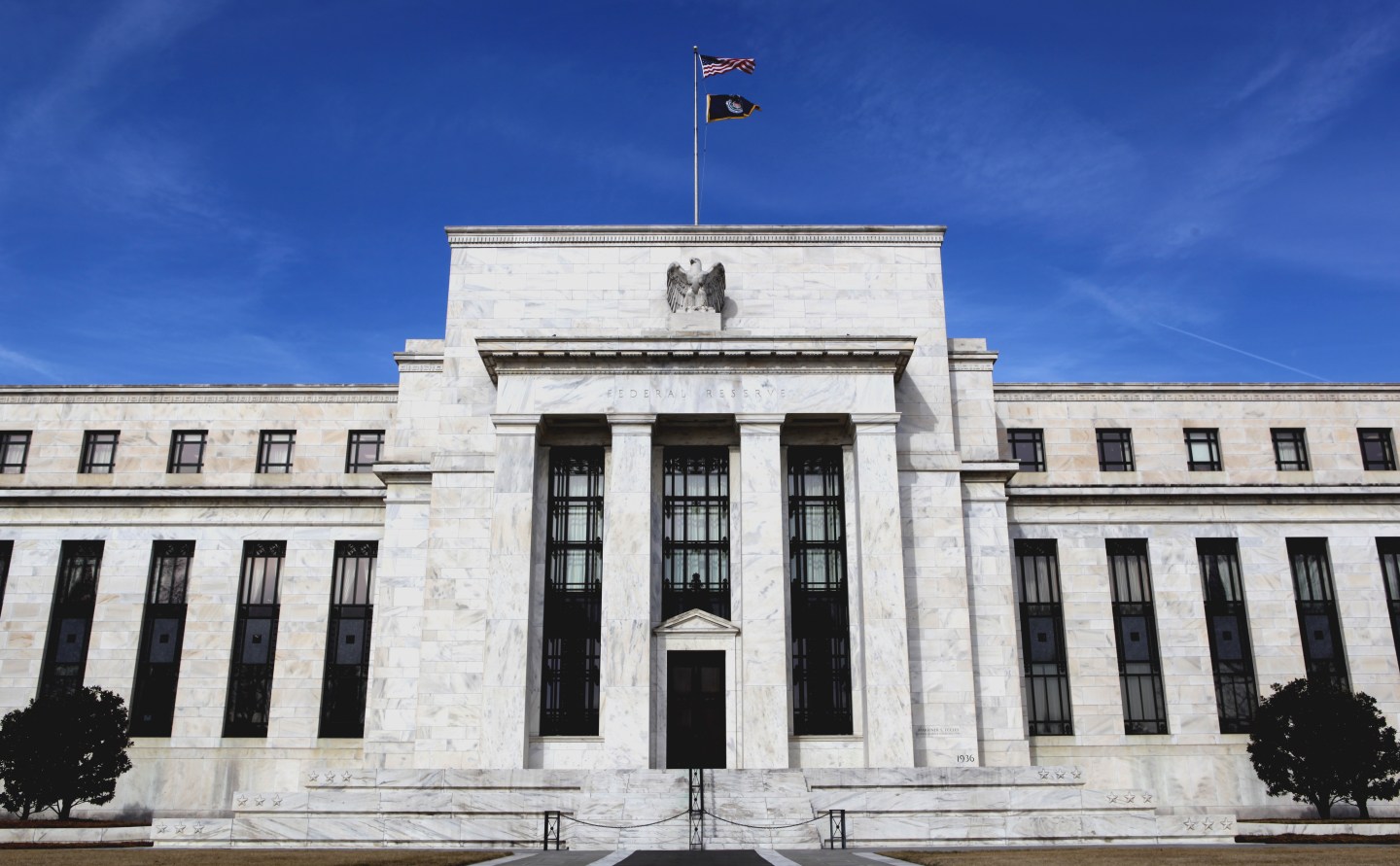
On Thursday, the Federal Reserve released the results of its annual bank stress tests. Of the 31 banks the Fed tested—which included the largest U.S. banks, like Bank of America, Citi, and Wells Fargo—as well as some sizable regional banks and the U.S. divisions of large international banks, all were deemed strong enough to weather a severe economic meltdown without any help from the government.
Still, a number of banks, including Goldman Sachs (GS), weren’t far above levels that the Fed requires to pass its test. Regional bank Zions Bancorp, too, just cleared the Fed’s minimum on certain accounts. Zion was the only U.S. bank to fail the stress test last year.
Still, as was the case a year ago, the banks collectively cleared the test by a wider margin than they did in 2014. And the banks didn’t just have more capital — the amount of money they have in reserves to cover losses — than a year ago. The Fed also projected they would have fewer bad loans and fewer trading losses.
The positive stress test results serve as yet another example of how far the economy and the banking sector have recovered since the financial crisis. Lending in 2014 rose nearly twice as fast as it did in any year since the financial crisis. On Friday, the government’s employment report is expected to show that employers added 230,000 positions in February, which would be the 12th straight month in which that figure has surpassed 200,000.
Recently, though, U.S. banks have seen their bottom lines falter. That’s in part because of low interest rates, which has made lending less profitable. But some have wondered whether new regulations and other long-term changes to the financial system have made banks less profitable. Shares of the big banks have lagged the market for the past year.
Others stress the fact that the banks are now safer than they used to be, and that’s better for both the economy and investors. Some economists have even argued the shares of safer banks should be worth more.
All told, the Federal Reserve estimated that the 31 banks would lose just over $490 billion dollars if the economy were to enter a recession similar to the one we experienced in the late 2000s. That’s down from just over $500 billion in bank losses the Fed projected a year ago. Among the nation’s largest financial firms, Morgan Stanley (MS) came out looking the weakest. A key ratio the Fed looks at to measure financial strength, the so-called tier 1 common ratio, was projected to drop to the lowest level (among the U.S.’s six biggest banks) at Morgan Stanley. Goldman was in the second worst position. A Fed official said that the regulator included higher losses in stock and bond markets than in the past. That might have hurt Morgan Stanley and Goldman more than the other banks because both banks are more closely tied to trading markets than their immediate competitors.
The initial results appear to be a win for Citigroup (C) and CEO Michael Corbat. Among the big banks, Citi had the highest tier one common ratio, though the Fed still said that bank would suffer large losses in a downturn. JPMorgan Chase(JPM), again, had relatively disappointing results in the Fed’s stress test, coming out only slightly above Morgan Stanley and Goldman. JPMorgan’s large investment bank and trading operations could have hurt the bank’s performance.
The Fed conducted its stress test by looking at how much the banks could stand to lose in their loan portfolios and trading books under an adverse economic scenario. The scenario included a rise in the unemployment rate to 10%, a 60% drop in the Dow Jones industrial average, and a 25% drop in housing prices.
After simulating those losses, the Fed then figured how much capital a bank would have left as a percentage of its remaining loans and investments, weighted for risk. The Fed generally deems a bank healthy if it has enough capital to cover a 5% drop in its assets. At the worst of the financial crisis, the average so-called capital ratio at the largest banks dropped to 5.6%. But the Fed said the average capital ratios of the big banks would only dip to 8.2% in this year’s stress test. That was up from 7.6% a year ago.
This year’s results, though, were skewed by particularly strong results from Deutsche Bank, which scored a tier 1 common ratio of nearly 35% under the Fed’s severely adverse scenario. Then again, Fed officials said that only a small part, perhaps 15%, of Deutsche’s U.S. operations were examined in the test.
Besides the main test, the Fed also tested how banks would do under an economic scenario that was less severe but one that included quickly rising interest rates. The banks weathered that scenario as well.
A Fed official cautioned that while all the banks met the minimum capital levels, the regulator might still reject a bank’s request to increase dividends based on qualitative factors. The Fed will release those results next week.