There was a lot of buzz about diversity and inclusion leading up to—and after—the 2015 Academy Awards because, as is often the case, there was a glaring whiteness to the nominees in nearly every category.
In the acting categories, no actor of color was nominated. While Selma was nominated for Best Picture, director Ava DuVernay was not nominated for Best Director despite overwhelming critical acclaim for her work on the movie. Mexican writer/director Alejandro González Iñárritu was nominated in several categories for Birdman, as a sole beacon of diversity and even then, he was being recognized for telling a white man’s story. Yet again, it was frustrating to see excellence from people of color largely overlooked.
During the Oscars ceremony, that glaring whiteness was on full display as host Neil Patrick Harris made things even more awkward with jokes about the lack of diversity in the nominees. It’s not that Harris was expected to solve a longstanding cultural problem with a few jokes but it adds insult to injury to be reminded with pithy humor that the artistic contributions of people of color don’t matter.
Then there was a running gag where Harris charged Oscar winner Octavia Spencer with watching a clear briefcase containing his Oscar predictions. The bit lasted for nearly three hours, continued falling flat and was, at best, tone deaf. When Sean Penn presented Alejandro González Iñárritu with the Oscar for Best Picture, he made a joke about green cards, as if to remind everyone that Iñárritu was different and how. This all made for a very long night.
A lack of diversity and a constant barrage of microaggressions are matters of accretion. It’s not the individual slight but rather the sum of so many slights, great and small. It’s the significance of seeing excellence and valuable contributions from marginalized people unrecognized. It’s seeing stories by and about marginalized people unrecognized. It’s having difference exploited and mocked when it is recognized. It’s realizing that in all realms, we’re not just dealing with a glass ceiling; we are dealing with an impenetrable iron ceiling.
Nonetheless, there were glimmers of hope during the Oscars. Several of the acceptance speeches were heartfelt, moving, and demanded social consciousness and political action. When they accepted the Oscar for Best Song, John Legend and Common spoke of the importance of freedom of expression and highlighted the appalling reality of the number of imprisoned African Americans when John Legend said, “There are more black men under correctional control today than were under slavery in 1850.” Graham Moore, who won for Best Adapted Screenplay, reminded viewers of the importance of embracing difference and what impact that can have on young lives as he shared a story of his attempted suicide at sixteen.
Patricia Arquette, though, had the most rousing speech, where, after winning for Best Actress for her turn in Boyhood, she said, among other things, “It’s our time to have wage equality once and for all and equal rights for women in the United States of America.” Actor Meryl Streep was so galvanized, she stood in the audience and pointed at Arquette enthusiastically. She highlighted a critically important issue but then backstage, things took a sour turn when Arquette told reporters, “It’s inexcusable we go around the world talking about equal rights for women in other countries… and we don’t have equal rights for women in America. The truth is even though we sort of feel like we have equal rights in America, there are huge issues that are at play that really do affect women. It’s time for all… the gay people and people of color that we’ve all fought for to fight for us now.”
The comments were strange in that Arquette implied that “gay people and people of color” were somehow historically uninterested in gender equality or, worse yet, that one could not be gay and/or a person of color and/or a woman.
We were so close to having a moment. Alas. Arquette is absolutely right that wage and gender inequality are criticial issues right here in the United States. There is even evidence that addressing gender equality makes economic sense. Christine Lagarde, the managing director of the International Monetary Fund (IMF), recently discussed a newly released report from the IMF with Ariana Huffington. She noted, “It’s a moral issue, it’s a moral imperative, I would say but beyond that when you demonstrate to policy makers, to members of government, that it actually makes economic sense and it can bring more growth, it can bring a more diverse society which is more inclusive, and it can be bottom lime much more profitable from the global economic point of view then you cross over to them and you bridge this gap of ‘not so sure about the business case’.”
We know equality matters. We have proof that gender equality will benefit the bottom line. Another recent study revealed that movies featuring diverse casts produce robust box office results. An American Sociological Association study finds that, “for every 1 per cent rise in the rate of gender diversity and ethnic diversity in a workforce there is a 3 and 9 per cent rise in sales revenue, respectively.” The moral imperative will rarely rouse people to change, but the financial imperative will.
It was wonderful to see someone with such a visible platform as the Oscars advocate for gender equality. But Arquette’s backstage comments reveal why we cannot consider diversity by addressing gender, race and ethnicity, sexuality, class, ability, or other markers of identity, in isolation. Women of color, for example, don’t go to work one day as women and the next day as people of color, leaving their gender at home in a cabinet. We carry all aspects of our identity with us at all times. When we talk about diversity and equality, we need to consider the whole of a person and how the whole of a person is affected by the inequalities of this world.
There is, for example, a wage gap, but when we also consider race, there are significant variations in that gap. As Bryce Covert noted in an article for Think Progress, “While white women experienced that 78 percent figure, Native Hawaiian and Pacific Islander women made 65 percent of what white men made in 2013, African-American women made 64 percent, American Indian and Alaska Native women made 59 percent, and Hispanic women made just 54 percent. Asian-American women are the only group doing better than white women, making 90 percent of white men’s earnings.” Even discrimination refuses to apply itself with equity.
The Oscars are just an awards show for a rather select group of people but there are workplace lessons to be learned, both from the way such awards shows tend to value only one kind of art and artist to the ways in which several of the speeches revealed the importance of diversity and inclusivity. When you allow a diverse range of people to be seen and heard, they will rise to the occasion.
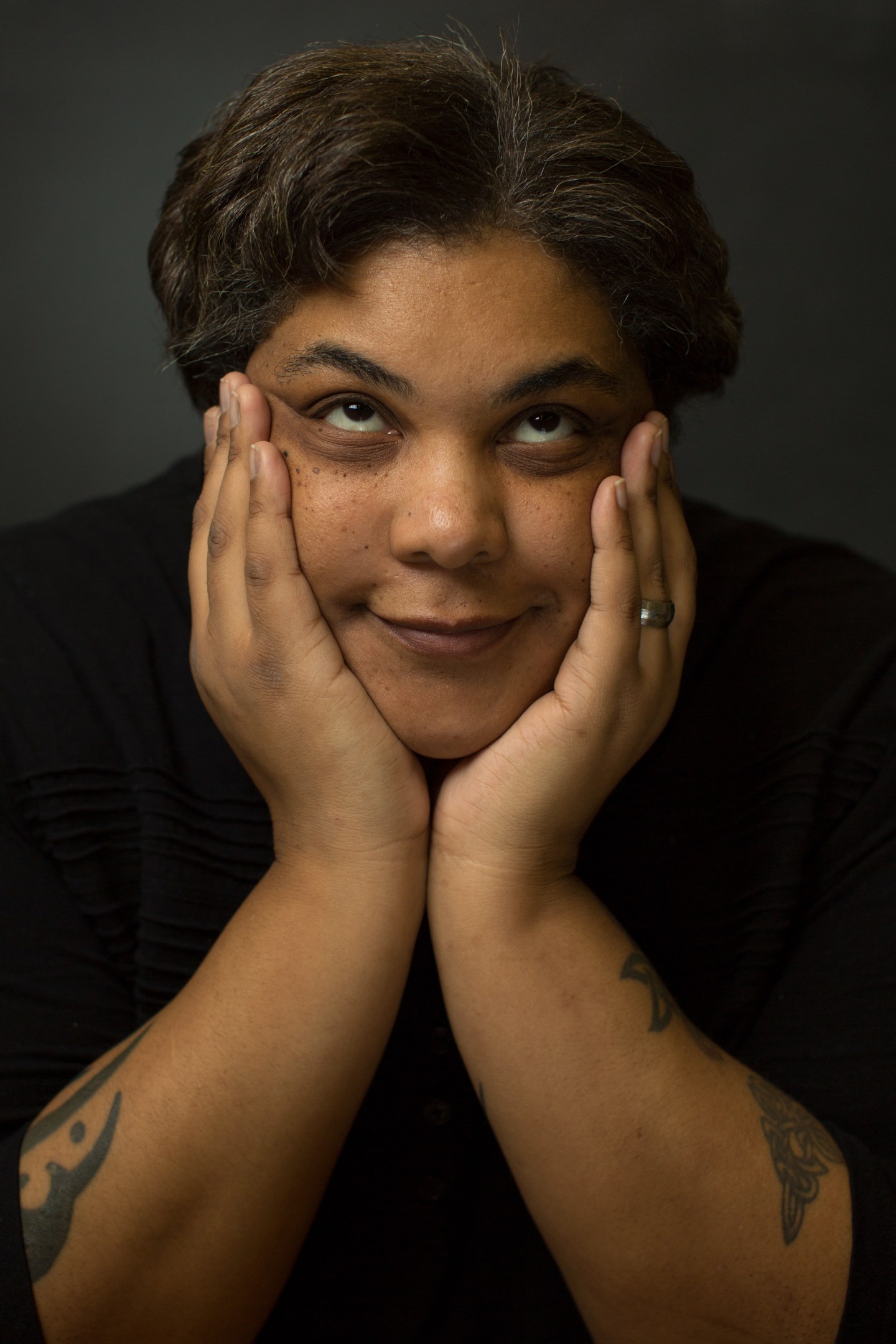
Roxane Gay is an English professor at Purdue University and a New York Times best-selling author. She’s written Ayiti, An Untamed State, Bad Feminist, and the forthcoming Hunger. She is also editor of The Butter. Roxane’s column for Fortune, “Beyond the Workplace,” will delve into why corporate America should care about the social issues happening outside of the office. Follow her at @rgay.