In the spring of 1950, General Electric Chairman Phil Reed was asked how a young person could get ahead in America. The answer was breathtakingly simple: Land a job and watch your fortunes rise, whether you had much schooling or not, whether you were inclined to use your head or your hands.
“There’s no lack of opportunity,” Reed said, “whether a boy graduates from college or follows some less educationally demanding career.”
Sixty-five years later, we live in a radically different world. It’s beyond question that higher levels of education translate into steadier employment and better wages. As the Urban Institute’s Sandy Baum has written, “It is increasingly difficult to maintain a middle-class lifestyle without a postsecondary credential.”
By 2020, it’s projected that two-thirds of all jobs in the United States will require an education beyond high school. And yet fewer than 40% of adults in this country currently get that far.
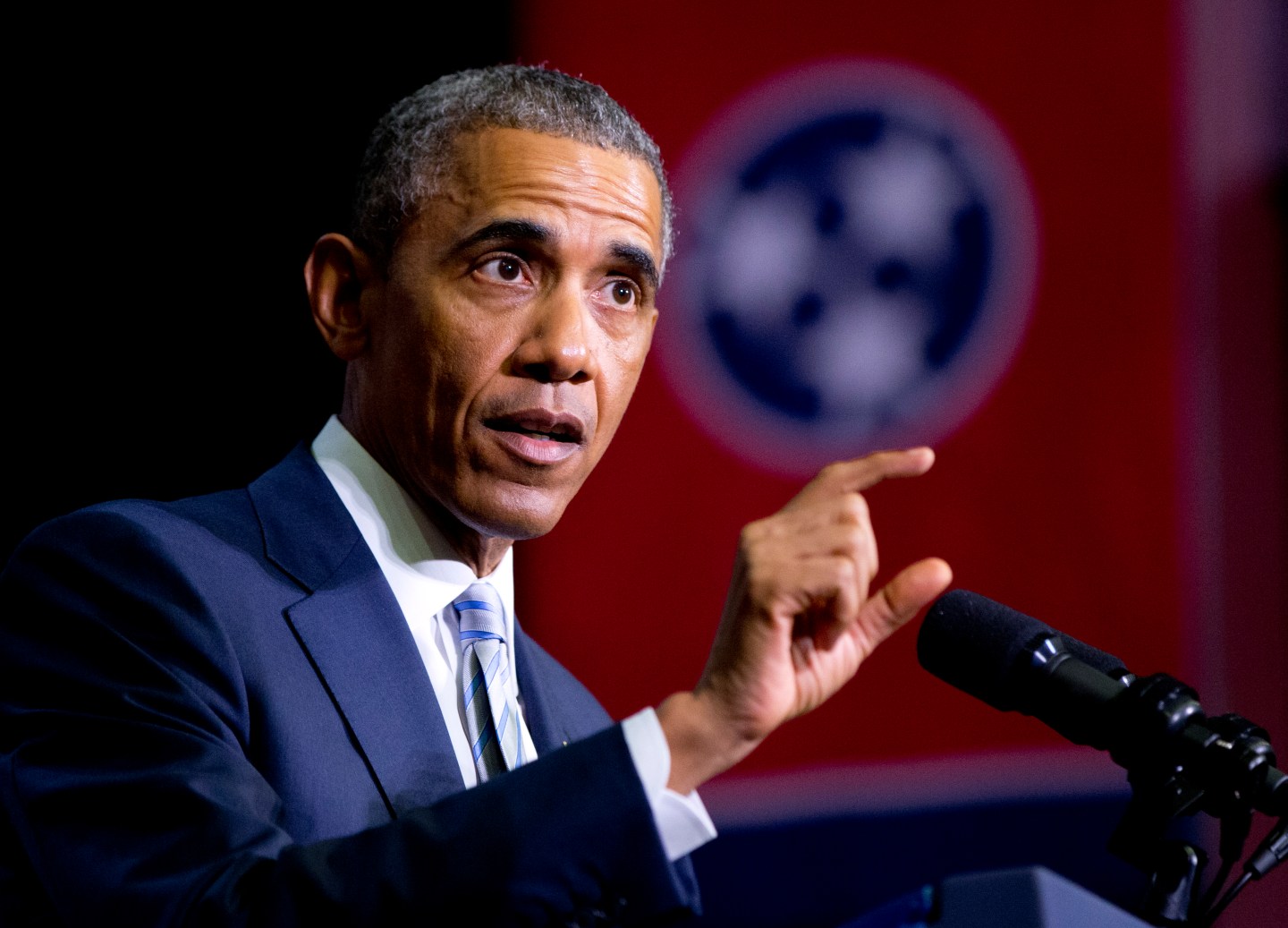
This shortfall threatens the strength of our economy and the health of our society. And it highlights why business leaders should be racing to embrace President Obama’s vision to make community college free.
In the few weeks since the president announced his plan, critics have found no shortage of faults with it. They’ve carped about the cost ($80 billion over 10 years); have suggested that a giant influx of enrollees might overwhelm the system; and have pointed to problems that Obama has not addressed, such as how to ensure that low-income students have sufficient bus fare and childcare so they can attend class.
While it will be critical to get the details of the plan right, the larger significance of Obama’s proposal—and the thing that business should be 100% behind—is the underlying principle: We have no choice but to find new ways for more people to acquire more knowledge and more skills.
“Talking about postsecondary education as a universal need is a big deal,” says Mary Alice McCarthy, a senior policy analyst at the New America Foundation, who has long explored the nexus between college and workforce development. “This is a very important reframing of the discussion.”
Obama has created the perfect moment to showcase how corporate America—especially those industries that gripe about how hard it is to hire amid a so-called skills gap—can be part of the solution.
First, companies must invest more in educating their own workers. In recent years, federal funding for key workforce training programs has shrunk by more than $1 billion, or 30%. Obama’s plan would help to reverse this drift. But businesses must step up as well, lest they be accused of trying to shift all of the responsibility onto the shoulders of government.
The need is great. While nearly three-quarters of executives in a 2013 Accenture study identified training as one of the top avenues for their people to develop new skills, only about half of those employed by their companies actually received any classes. And when corporations face cutbacks, “training is often the first thing to go,” notes Donna Wells, the CEO of Mindflash, which provides an online platform for companies to offer courses to their workers.
Second, it’s imperative that more companies forge strong relationships with community colleges. This means making information available to students and schools on which occupations and skills are hot and which positions are about to become obsolete. “Business has a lot of the answers,” says Anthony Carnevale, director of the Georgetown University Center on Education and the Workforce. “If the head of the local hospital says, ‘We’re not hiring nurses with associates degrees here,’ believe him.”
Companies can also supply colleges with equipment at a discount and share their expertise. “Business partners should be infusing their knowledge right into the curriculum,” says Jennifer Worth, who oversees workforce and economic development initiatives at the American Association of Community Colleges.
Snap-on Inc., the Wisconsin tool manufacturer, has devised an excellent model. It started an alliance with Gateway Technical College eight years ago, and the effort has evolved into the National Coalition of Certification Centers, which fosters curriculum development and access to skills credentials across several industries. Businesses and educators collaborate to develop these programs of study.
Finally, companies need to raise their voices more. “It’s going to be interesting to see if industry takes a leadership role or a backseat role in all this,” says Jason Scales, a welding education specialist at Lincoln Electric, which is working with community colleges to help them improve the way they train tomorrow’s workers.
Executives must insist on high standards, not only at the community-college level but in K-12 education as well. Harvard economist Claudia Goldin, co-author of the influential book The Race Between Education and Technology, has shown that putting large numbers of Americans through high school was a huge factor in the nation’s economic success in the 20th century. In the 21st, the focus has to change. “Pushing on the quantity lever did us a lot of good,” she says. “But it’s the quality lever we have to push on now.”
At the same time, we shouldn’t be overly preoccupied with every statistic. Under Obama’s plan, students must make steady progress toward finishing their program—and that has led many to observe that the completion rate at community colleges stands at only 20% or so. But “saying that community colleges have terrible graduation rates misses the point,” McCarthy asserts.
Many people go to community college to learn something new, she says, and that should be encouraged. Indeed, corporations can play a meaningful part in the debate by articulating what they’re truly hungry for: individuals who are forever upgrading their skills, even if they don’t necessarily earn a certificate or diploma.
The nation’s goal should be the same as it is at any smart business today: to build a culture of lifelong learning.
Rick Wartzman is the executive director of the Drucker Institute at Claremont Graduate University. Author or editor of five books, he is currently writing a narrative history of how the social contract between employer and employee in America has changed since the end of World War II.