• Home
  • Latest
  • Fortune 500
  • Finance
  • Tech
  • Leadership
  • Lifestyle
  • Rankings
  • Multimedia
CommentaryCommentary

What the rise of retirees and minorities mean for U.S. business

By
Bruce Katz
Bruce Katz
Down Arrow Button Icon
By
Bruce Katz
Bruce Katz
Down Arrow Button Icon
December 17, 2014, 8:51 AM ET
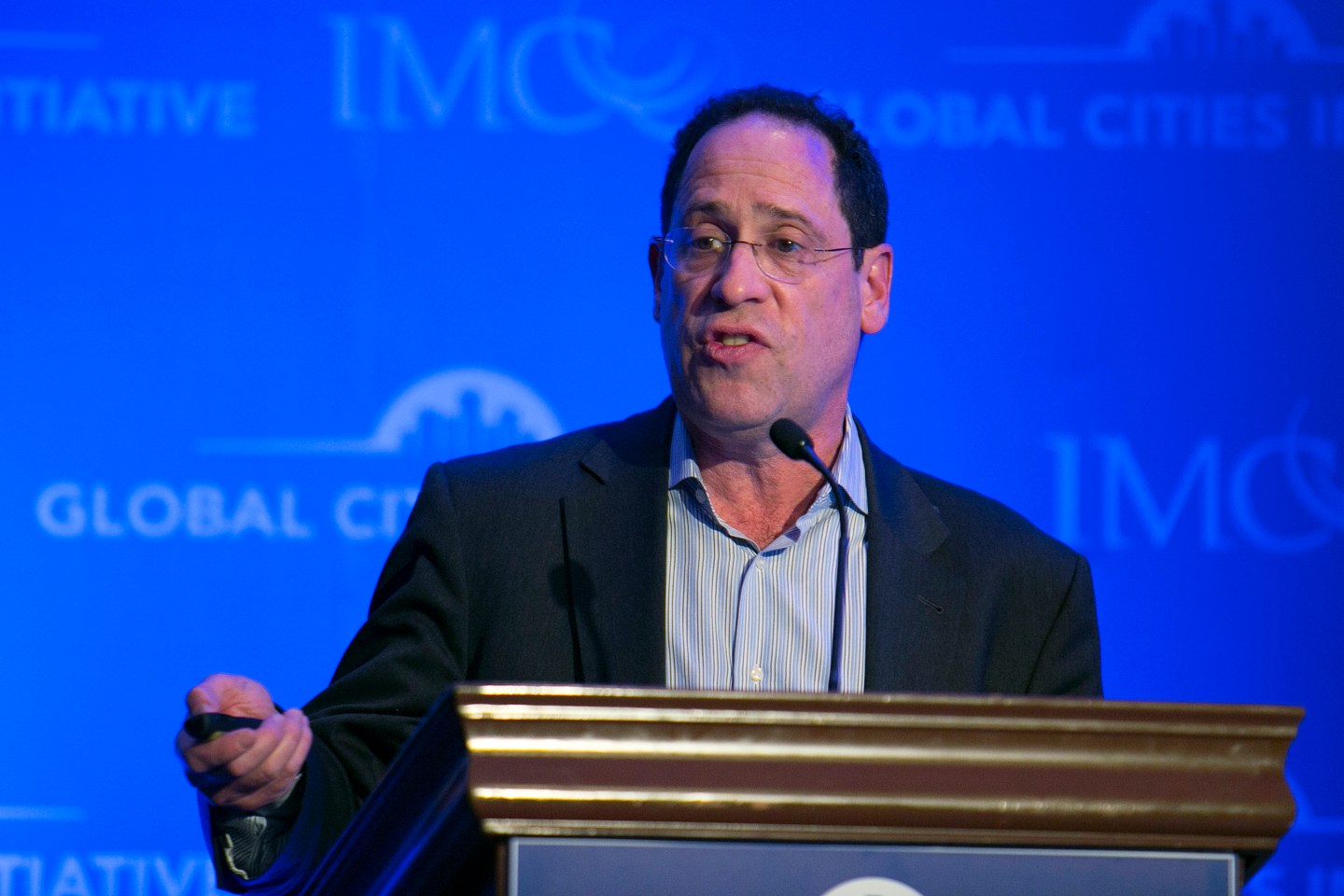
Global Cities Initiative Conference in Mexico
Bruce Katz, vice president and founding director of the Metropolitan Policy Program at the Brookings Institution.Photograph by Bloomberg — Getty Images

Two seemingly opposite trends are driving the most dramatic demographic transformation in U.S. history: While the “greying” of the Baby Boom generation continues, at the other end of the spectrum younger minority groups are growing dramatically.

The aging of our society is well known. By 2030, roughly 20% of Americans will be 65 and older, up from 13% in 2010. At the same time, we are undergoing what my colleague Bill Frey calls a Diversity Explosion, the title of his recent book. He estimates that sometime after 2040, the United States will be a no-majority nation due to the doubling of rapidly growing minority groups—particularly Hispanics, Asians and multiracial populations—over the next 40 years. At the same time, the white population is shrinking due to relatively low birth rates, low immigration and mortality.

These twinned trends have mostly been analyzed through the lens of political contest and policy conflict. Frey points to an emerging “cultural generation gap” in which age groups are pitted against each other over the allocation of resources for retirement support, housing, health care, education and child care.

But the impact of these demographic shifts will play out beyond just the political and societal arena. There are huge market implications—altering how we build our communities, the products and services we buy and the composition of our workforce.

First, the physical environment in our communities must reflect demographic preferences. Take housing, for example: seniors overwhelmingly prefer to remain in their homes as they age, with only 4% living in institutions, such as nursing homes and assisted living facilities. But, as Henry Cisneros, former U.S. Housing and Urban Development secretary and mayor of San Antonio, rightly observes in Independent for Life, seniors are choosing to age-in-place in “homes, neighborhoods and communities that were designed for yesterday’s demographic realities.” We need a multigenerational approach to housing and community development that enables our growing senior population to age-in-place, while maintaining a mobile, active lifestyle.

This demands retrofitting existing housing stock to meet the needs of the elderly and prioritizing universal design and lifelong use in the development of new housing. At the community level, local leaders are looking at ways to create inclusive physical environments. In Philadelphia, with one of the largest proportions of elderly residents among large cities, Age-Friendly Philadelphia debuted in 2009 to address neighborhood infrastructure, housing accessibility and mobility by bringing together policy makers and practitioners from multiple disciplines. Among its recent contributions, the program integrated aging-focused guidelines into a rewrite of the city’s zoning laws.

Second, America’s demographic tumult will also alter consumer demand for products and services. By virtue of sheer size, today’s growing senior population holds more wealth than earlier generations at the same age. Their spending power is expected to soon exceed that of the coveted 18 to 39-year-old consumer group. Bank of America Merrill Lynch estimates that seniors account for nearly 60% of total U.S. consumer spending, and companies are taking note — especially of the specialized services this generation will require. For example, as of 2011, the Congressional Budget Office estimated the economic value of community-based care for elderly people to be $58 billion. This is fueled in part by businesses like Comfort Keepers, a Sodexo company, which provides customized personal care services in over 700 locations. In fact, one of the fastest growing franchise companies in the United States is a similar company called Home Instead Senior Care, which has more than 900 franchises worldwide and employs nearly 65,000 trained caregivers.

At the same time, minority consumer demand is also booming. Current projections forecast that from 2000 to 2017, the purchasing power of Asians and Hispanics will have increased by 370% and 350%, respectively. We are headed toward an increasingly multi-cultural economy, in which the implications are similarly profound.

Finally, this multi-cultural economy will be powered by an increasingly diverse workforce. Minorities make up roughly one-third of the entire labor force and their shares will keep growing. By 2022, the number of Hispanic, Asian and black workers will rise 28%, 24% and 10%, respectively. Over the same period, the white workforce will shrink by roughly 2%.

This demographic growth is an economic blessing. While peer nations such as Italy, Japan and Germany suffer from declining workforces, the U.S. labor force is projected to grow more than 5% over the next two decades. Without minority growth, it would shrink by 8%, putting the United States in the same position as many stagnating European countries.

Thus, it is imperative that we correct racial and ethnic disparities in our educational and skills systems—from reducing segregation in low-quality schools to increasing access to post-secondary education and targeted skills training programs to improving English-language instruction. Our education system must respond; employers also have a role. McDonald’s (MCD) “English Under the Arches” program is one helpful example, where, during work hours, shift managers have access, via teleconferencing services, to community college ESL instructors. These types of programs can be mutually beneficial, improving employee performance and providing the skills necessary to move into higher-wage jobs.

By 2020, the under 18 age group will be a “no-majority” population. Between 2010 and 2035, America’s over 65 population will have nearly doubled. Our future prosperity will depend upon seeing these new demographic realities, as the opportunities for growth and shared prosperity that they are.

Bruce Katz is a vice president at the Brookings Institution and co-director of the Metropolitan Policy Program.


About the Author
By Bruce Katz
See full bioRight Arrow Button Icon

Latest in Commentary

Finance
Lorem ipsum dolor sit amet, consectetur adipiscing elit, sed do eiusmod tempor incididunt ut labore et dolore magna aliqua. Ut enim ad minim veniam
By Fortune Editors
October 20, 2025
Finance
Lorem ipsum dolor sit amet, consectetur adipiscing elit, sed do eiusmod tempor incididunt ut labore et dolore magna aliqua. Ut enim ad minim veniam
By Fortune Editors
October 20, 2025
Finance
Lorem ipsum dolor sit amet, consectetur adipiscing elit, sed do eiusmod tempor incididunt ut labore et dolore magna aliqua. Ut enim ad minim veniam
By Fortune Editors
October 20, 2025
Finance
Lorem ipsum dolor sit amet, consectetur adipiscing elit, sed do eiusmod tempor incididunt ut labore et dolore magna aliqua. Ut enim ad minim veniam
By Fortune Editors
October 20, 2025
Finance
Lorem ipsum dolor sit amet, consectetur adipiscing elit, sed do eiusmod tempor incididunt ut labore et dolore magna aliqua. Ut enim ad minim veniam
By Fortune Editors
October 20, 2025
Finance
Lorem ipsum dolor sit amet, consectetur adipiscing elit, sed do eiusmod tempor incididunt ut labore et dolore magna aliqua. Ut enim ad minim veniam
By Fortune Editors
October 20, 2025

Most Popular

Finance
Lorem ipsum dolor sit amet, consectetur adipiscing elit, sed do eiusmod tempor incididunt ut labore et dolore magna aliqua. Ut enim ad minim veniam
By Fortune Editors
October 20, 2025
Finance
Lorem ipsum dolor sit amet, consectetur adipiscing elit, sed do eiusmod tempor incididunt ut labore et dolore magna aliqua. Ut enim ad minim veniam
By Fortune Editors
October 20, 2025
Finance
Lorem ipsum dolor sit amet, consectetur adipiscing elit, sed do eiusmod tempor incididunt ut labore et dolore magna aliqua. Ut enim ad minim veniam
By Fortune Editors
October 20, 2025
Finance
Lorem ipsum dolor sit amet, consectetur adipiscing elit, sed do eiusmod tempor incididunt ut labore et dolore magna aliqua. Ut enim ad minim veniam
By Fortune Editors
October 20, 2025
Finance
Lorem ipsum dolor sit amet, consectetur adipiscing elit, sed do eiusmod tempor incididunt ut labore et dolore magna aliqua. Ut enim ad minim veniam
By Fortune Editors
October 20, 2025
Finance
Lorem ipsum dolor sit amet, consectetur adipiscing elit, sed do eiusmod tempor incididunt ut labore et dolore magna aliqua. Ut enim ad minim veniam
By Fortune Editors
October 20, 2025
Fortune Secondary Logo
Rankings
  • 100 Best Companies
  • Fortune 500
  • Global 500
  • Fortune 500 Europe
  • Most Powerful Women
  • Future 50
  • World’s Most Admired Companies
  • See All Rankings
Sections
  • Finance
  • Fortune Crypto
  • Features
  • Leadership
  • Health
  • Commentary
  • Success
  • Retail
  • Mpw
  • Tech
  • Lifestyle
  • CEO Initiative
  • Asia
  • Politics
  • Conferences
  • Europe
  • Newsletters
  • Personal Finance
  • Environment
  • Magazine
  • Education
Customer Support
  • Frequently Asked Questions
  • Customer Service Portal
  • Privacy Policy
  • Terms Of Use
  • Single Issues For Purchase
  • International Print
Commercial Services
  • Advertising
  • Fortune Brand Studio
  • Fortune Analytics
  • Fortune Conferences
  • Business Development
  • Group Subscriptions
About Us
  • About Us
  • Editorial Calendar
  • Press Center
  • Work At Fortune
  • Diversity And Inclusion
  • Terms And Conditions
  • Site Map
Fortune Secondary Logo
  • About Us
  • Editorial Calendar
  • Press Center
  • Work At Fortune
  • Diversity And Inclusion
  • Terms And Conditions
  • Site Map
  • Facebook icon
  • Twitter icon
  • LinkedIn icon
  • Instagram icon
  • Pinterest icon

Latest in Commentary

fleet
CommentaryMiddle East
The shadow fleet and illegal oil are still moving through the Strait of Hormuz
By Charles Edward GehrkeMarch 11, 2026
2 hours ago
trump
CommentaryMilitary
There’s one particular way the Iran War is different from all the others in American history
By Charles Walldorf and The ConversationMarch 11, 2026
6 hours ago
hyams
CommentaryHBCUs
AI is the most important civil and human rights issue of our time — HBCUs need to be in the driver’s seat
By Chris Hyams and Meme StylesMarch 11, 2026
14 hours ago
tax
CommentaryTaxes
How the ultrawealthy use smartphone apps to avoid millions in taxes
By Jose AtilesMarch 11, 2026
14 hours ago
tired
CommentaryProductivity
AI can double output. Human biology can’t
By Scott HutchesonMarch 10, 2026
2 days ago
sharma
CommentaryRisk
The AI risk that few organizations are governing
By Raj SharmaMarch 10, 2026
2 days ago

Most Popular

placeholder alt text
Economy
'This cannot be sustainable': The U.S. borrowed $50 billion a week for the past five months, the CBO says
By Eleanor PringleMarch 10, 2026
1 day ago
placeholder alt text
Big Tech
Big tech has defeated everything for 30 years, but for the first time faces something it can't control: a jury
By Carolina Rossini and The ConversationMarch 10, 2026
1 day ago
placeholder alt text
Future of Work
Shark Tank's Kevin O'Leary doesn't care if you work from your basement. He just wants to know if you can ‘execute’
By Marco Quiroz-GutierrezMarch 10, 2026
2 days ago
placeholder alt text
Politics
Washington state wants to keep employers from microchipping workers, before anyone even gets the idea
By Catherina GioinoMarch 10, 2026
1 day ago
placeholder alt text
Success
Citi CEO Jane Fraser swears by Warren Buffett's golden rule for dealing with conflict at work: 'Never, ever respond to that email in anger'
By Preston ForeMarch 10, 2026
1 day ago
placeholder alt text
Personal Finance
Retirees wait for the day they can sell their homes and cash in—but there's a secret Medicare 'trap' that could stop them in their tracks
By Sydney LakeMarch 11, 2026
17 hours ago

© 2026 Fortune Media IP Limited. All Rights Reserved. Use of this site constitutes acceptance of our Terms of Use and Privacy Policy | CA Notice at Collection and Privacy Notice | Do Not Sell/Share My Personal Information
FORTUNE is a trademark of Fortune Media IP Limited, registered in the U.S. and other countries. FORTUNE may receive compensation for some links to products and services on this website. Offers may be subject to change without notice.