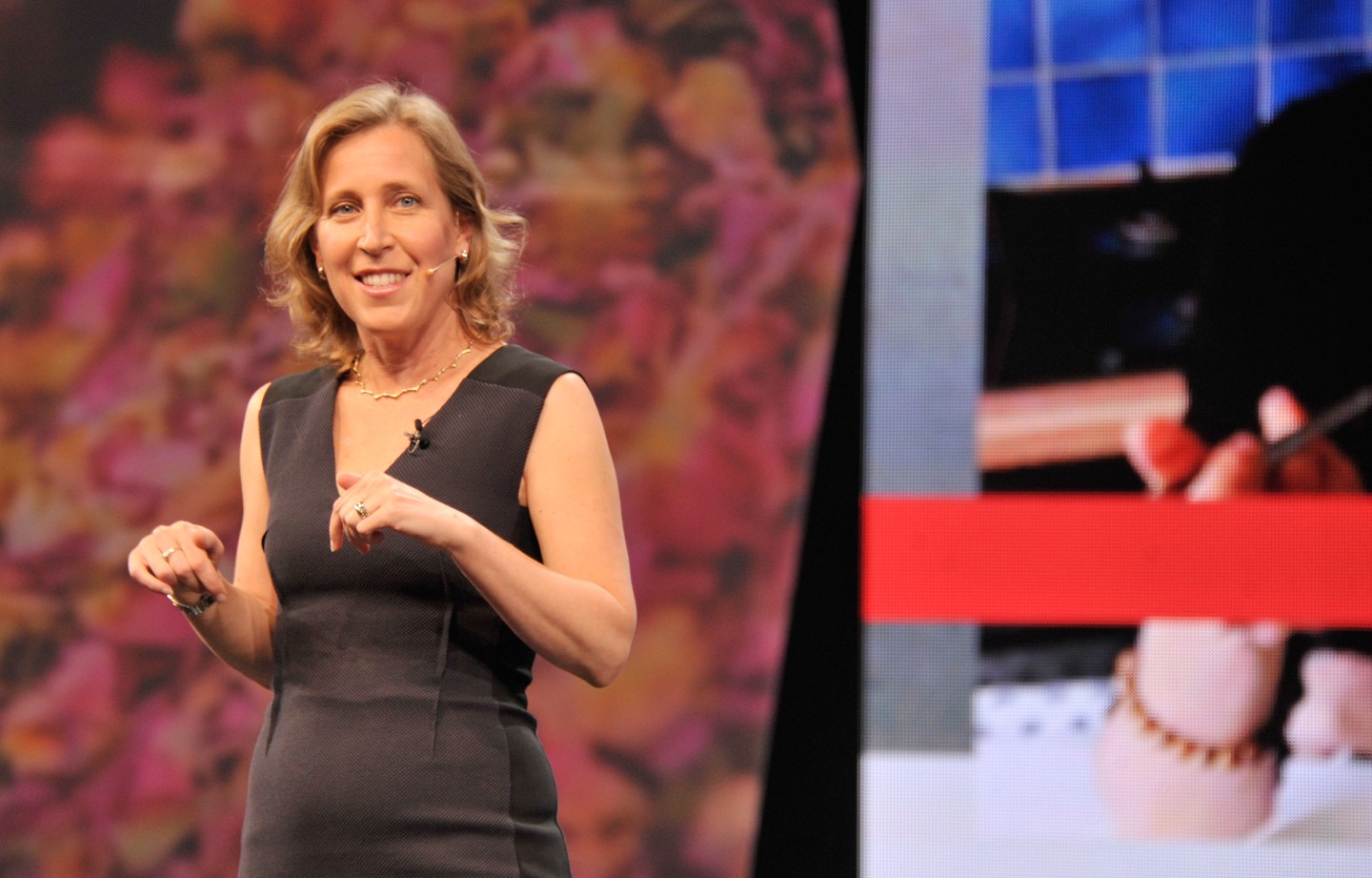
Susan Wojcicki leads YouTube, a multi-billion dollar Google subsidiary. That perch gives her insight into many things: the future of media, the nature of modern fame, how to manage high-performing employees.
But Wojcicki is also expecting her fifth child any day. So in her recent interview with Maria Shriver from NBC, guess what got emphasized? We learned that Wojcicki is home for dinner every night, and while YouTube offers 18 weeks of paid maternity leave, she’s not sure how long she’ll take.
In other words, the mom part trumps the CEO part. For a woman, having 5 kids and a job seems like such a crazy undertaking that it’s the combining of the two that we want to hear about, more than the (huge) nature of the job itself.
It’s a bizarre phenomenon, if you think about it. Plenty of male leaders have big families. So why is Wojcicki being asked about family dinner? Is there sexism at work?
Well, yes, but it’s also fascinating. I find it so fascinating that I spend my life writing about this topic. I’m intrigued by this undeniable fact: Successful, productive people have the exact same 24 hours in a day as the rest of us. Whatever advantages they have, they still need to put in long hours at work and they still, generally, want to see their families.
Indeed, how these puzzle pieces fit is so intriguing a topic that, even though the how-do-you-balance question is rooted in assumptions about what women should care about, people are starting to ask male leaders these questions too. Given what that implies about our evolving thoughts on family life, that’s probably a good thing.
As part of my writing about how successful people spend their time, I’ve had hundreds of people keep track of their hours for me. I ask about how much time they spend at work, and with family. Looking at this whole conversation, I can say this for sure: powerful people — including powerful women with kids — have lots of help. A part-time housekeeper might do the laundry and prepare meals. A lead nanny covers major childcare tasks, and if our high-powered parent has multiple school-aged kids who need to be shuttled places, the family will employ additional nannies to cover afternoons. A personal assistant may round out the mix.
When a female CEO of a big company comes home for dinner, someone else has likely cooked it. But that doesn’t change that she has to walk out of the office at a time that people are still asking for her attention. She has to tell her assistant to tell people she cannot schedule phone calls or respond to their questions during her device-free time at night. She can’t outsource exercising, or date night with her husband. So if she wants to do those things, she must manage the other demands on her time. Given that CEOs have more professional demands than the rest of us, these strategies for setting boundaries and making time for personal activities offer lessons for those of us trying to navigate our own balancing acts.
To be sure, the how-do-you-balance question is rooted in the assumption that women should be spending lots of time with their kids. Whatever else she’s doing in the larger world, we assume a female CEO will meet her kids’ teachers and have a passing familiarity with the bedtime routine. But men aren’t exempt from the absolutely limited nature of time, either. And the question of how to move around the tiles of one’s time to create a compelling mosaic is starting to be asked of high-powered men as well.
In October, Microsoft CEO Satya Nadella sat for a wide-ranging interview with USA Today’s Marco della Cava. Yes, della Cava asked about cloud computing and business strategy, but he also asked Nadella the same balance questions that Shriver asked Wojcicki.
Wrote della Cava, “The tech world never turns off, but Nadella confesses he tries to do just that whenever he can, especially when it comes time to focusing on his wife, Anupama, and their three elementary school-age kids. ‘I would say it’s a constant struggle, but I prefer not to think of work-life balance as a balancing equation, but just something where you find harmony,’ he says. ‘When I am with my kids at home, I am really there.’”
Is it true? Who knows? But given how tone-deaf Nadella was in telling a female audience shortly before that it wasn’t good karma to ask for raises, I find it interesting that he didn’t say “I’ve got balance all figured out. My wife deals with everything on the home front!” He knew he needed to use words like “struggle.” He knew he needed to say that spending time with his young children was as important as whatever conference calls and emails might follow him home.
Looking at the broad picture of how work and life fit together, that’s a positive thing. Female CEOs may be expected home for dinner, but the world’s most powerful men are at least expected to lament missing soccer games, even if they inevitably do. It means that family life is seen as important. In the broader context of creating a working world that’s hospitable to people with lives outside of work, that’s something to celebrate.
Laura Vanderkam is the author of 168 Hours, and the forthcoming book Their Own Sweet Time: How Successful Women Build Lives That Work.