• Home
  • Latest
  • Fortune 500
  • Finance
  • Tech
  • Leadership
  • Lifestyle
  • Rankings
  • Multimedia
FinanceRussia

Russian ruble’s fall: A classic ‘currency collapse’

By
Chris Matthews
Chris Matthews
Down Arrow Button Icon
By
Chris Matthews
Chris Matthews
Down Arrow Button Icon
December 16, 2014, 2:29 PM ET
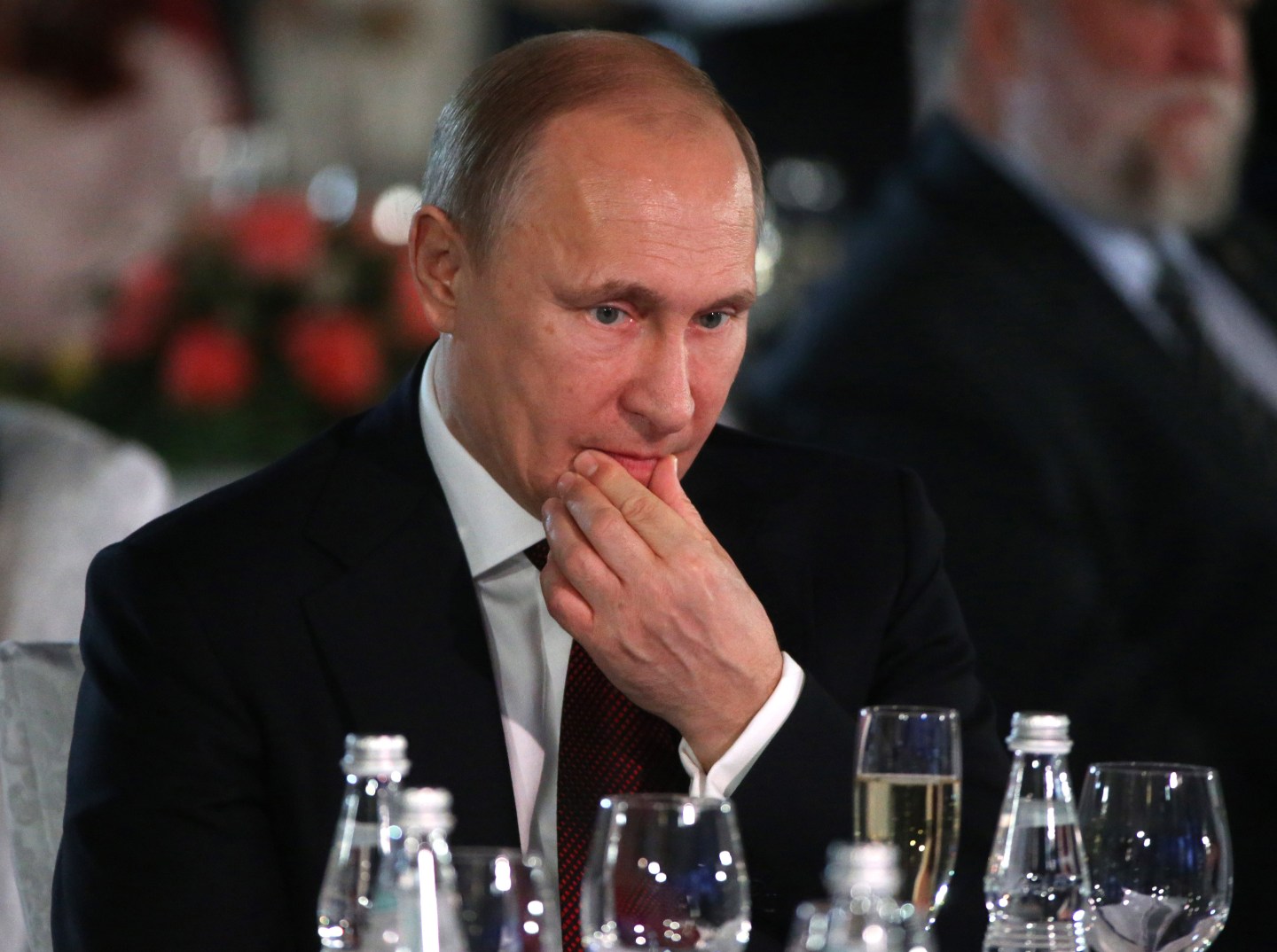
Vladimir Putin Speaks At Russian Geographic Society
MOSCOW, RUSSIA - DECEMBER 9: Russian President Vladimir Putin attends an annual award ceremony at the Russian Geographic Society on December 9, 2014 in Moscow, Russia. (Photo by Sasha Mordovets/Getty Images)Sasha Mordovets — Getty Images

The Russian economy was already in the running for having the worst year in 2014, sandwiched somewhere between Congressional Democrats and Sony Entertainment Pictures.

Then the price of oil—the commodity upon which the Russian economy is built—began to fall sharply, draining the nation’s economy of foreign money and crimping its growth. This dynamic drove the ruble sharply lower, culminating in an 11% drop on Monday, which forced Russia’s central bank to raise interest rates by a whopping 650 basis points, all but assuring a deep and painful recession in 2015.

But with strict sanctions in place against Russian companies—in response to Russia’s annexation of Crimea and hostilities with Ukraine earlier this year—and the continuous fall in oil prices, the interest rate hike did not satisfy traders, who sent the the ruble tumbling another 8% following the announcement.

The fall of the ruble has been swift and devastating. Carl Weinberg, chief economist at High Frequency Economics, referred to the currency’s plummet as “an unrecoverable spiral” in a note to clients on Tuesday. He argues that what we are seeing now is a classic “currency collapse,” brought on by both economic factors like sanctions and falling oil prices as well as financial factors like the Russian central bank printing money to help state-owned oil company Rosneft cover its debt denominated in foreign currencies.

What makes the situation in Russia that much worse is that the nation’s companies, both private and state-owned, hold $670 billion in debt denominated in foreign currencies. This debt is about one-third the size of the entire Russian economy, and it will become impossible for Russian companies to service it if the ruble continues to fall. Writes Weinberg:

The amount of rubles local borrowers have to give up to pay off foreign debt obligations just increased by 20 percent overnight, by 50 percent since the start of this month, and by 90% since the start of November…. The effective interest rate on foreign borrowing for Russians is over 6000%, enough to kill any economy.

Normally, when countries find themselves in a situation like Russia’s, they turn to the IMF, which would provide funding and debt restructuring in exchange for the enactment of economic reforms. But as University of Oregon economist Tim Duy writes, it’s tough to see either the IMF swooping in to help an international pariah like Russia or Vladimir Putin submitting to any reforms imposed by the West.

So, how will Russia’s currency crisis affect the U.S.? It’s tough to say for sure. A recession in Russia won’t have much of an effect on the American economy, as the two nations conduct very little trade with each other. But make no mistake, the crisis in Russia today is at least partially a result of the diplomatic policies of the United States. We are seeing the kind of economic misery the U.S. and Europe aimed to inflict on Russia as a result of its aggression in Ukraine.

The question now is whether the economic pain will convince Russia to back down, or double down, in Eastern Europe. Weinberg, for one, worries that Putin will instruct Russian companies to renege on their foreign obligations. This could spell bad news for banks and investors across Europe and the U.S. that have loaned money to Russian companies, and it could allow Russia’s financial instability to infect other emerging markets and the already shaky E.U. economy.


About the Author
By Chris Matthews
See full bioRight Arrow Button Icon

Latest in Finance

InvestingSports
Big 12 in advanced talks for deal with RedBird-backed fund
By Giles Turner and BloombergDecember 13, 2025
8 hours ago
Spanish Prime Minister Pedro Sánchez often praises the financial and social benefits that immigrants bring to the country.
EuropeSpain
In a continent cracking down on immigration and berated by Trump’s warnings of ‘civilizational erasure,’ Spain embraces migrants
By Suman Naishadham and The Associated PressDecember 13, 2025
9 hours ago
EconomyAgriculture
More financially distressed farmers are expected to lose their property soon as loan repayments and incomes continue to falter
By Jason MaDecember 13, 2025
10 hours ago
InvestingStock
There have been head fakes before, but this time may be different as the latest stock rotation out of AI is just getting started, analysts say
By Jason MaDecember 13, 2025
14 hours ago
Politicsdavid sacks
Can there be competency without conflict in Washington?
By Alyson ShontellDecember 13, 2025
14 hours ago
Investingspace
SpaceX sets $800 billion valuation, confirms 2026 IPO plans
By Loren Grush, Edward Ludlow and BloombergDecember 13, 2025
15 hours ago

Most Popular

placeholder alt text
Success
Apple cofounder Ronald Wayne sold his 10% stake for $800 in 1976—today it’d be worth up to $400 billion
By Preston ForeDecember 12, 2025
2 days ago
placeholder alt text
Economy
Tariffs are taxes and they were used to finance the federal government until the 1913 income tax. A top economist breaks it down
By Kent JonesDecember 12, 2025
2 days ago
placeholder alt text
Success
40% of Stanford undergrads receive disability accommodations—but it’s become a college-wide phenomenon as Gen Z try to succeed in the current climate
By Preston ForeDecember 12, 2025
2 days ago
placeholder alt text
Economy
The Fed just ‘Trump-proofed’ itself with a unanimous move to preempt a potential leadership shake-up
By Jason MaDecember 12, 2025
1 day ago
placeholder alt text
Success
Apple CEO Tim Cook out-earns the average American’s salary in just 7 hours—to put that into context, he could buy a new $439,000 home in just 2 days
By Emma BurleighDecember 12, 2025
2 days ago
placeholder alt text
Economy
For the first time since Trump’s tariff rollout, import tax revenue has fallen, threatening his lofty plans to slash the $38 trillion national debt
By Sasha RogelbergDecember 12, 2025
1 day ago
Rankings
  • 100 Best Companies
  • Fortune 500
  • Global 500
  • Fortune 500 Europe
  • Most Powerful Women
  • Future 50
  • World’s Most Admired Companies
  • See All Rankings
Sections
  • Finance
  • Leadership
  • Success
  • Tech
  • Asia
  • Europe
  • Environment
  • Fortune Crypto
  • Health
  • Retail
  • Lifestyle
  • Politics
  • Newsletters
  • Magazine
  • Features
  • Commentary
  • Mpw
  • CEO Initiative
  • Conferences
  • Personal Finance
  • Education
Customer Support
  • Frequently Asked Questions
  • Customer Service Portal
  • Privacy Policy
  • Terms Of Use
  • Single Issues For Purchase
  • International Print
Commercial Services
  • Advertising
  • Fortune Brand Studio
  • Fortune Analytics
  • Fortune Conferences
  • Business Development
About Us
  • About Us
  • Editorial Calendar
  • Press Center
  • Work At Fortune
  • Diversity And Inclusion
  • Terms And Conditions
  • Site Map

© 2025 Fortune Media IP Limited. All Rights Reserved. Use of this site constitutes acceptance of our Terms of Use and Privacy Policy | CA Notice at Collection and Privacy Notice | Do Not Sell/Share My Personal Information
FORTUNE is a trademark of Fortune Media IP Limited, registered in the U.S. and other countries. FORTUNE may receive compensation for some links to products and services on this website. Offers may be subject to change without notice.