• Home
  • News
  • Fortune 500
  • Tech
  • Finance
  • Leadership
  • Lifestyle
  • Rankings
  • Multimedia

How to protect yourself from ‘SpoofedMe,’ a social login attack

Robert Hackett
By
Robert Hackett
Robert Hackett
Down Arrow Button Icon
Robert Hackett
By
Robert Hackett
Robert Hackett
Down Arrow Button Icon
December 7, 2014, 10:05 AM ET
LinkedIn Corp. Expands in China With Local Site Limiting Content
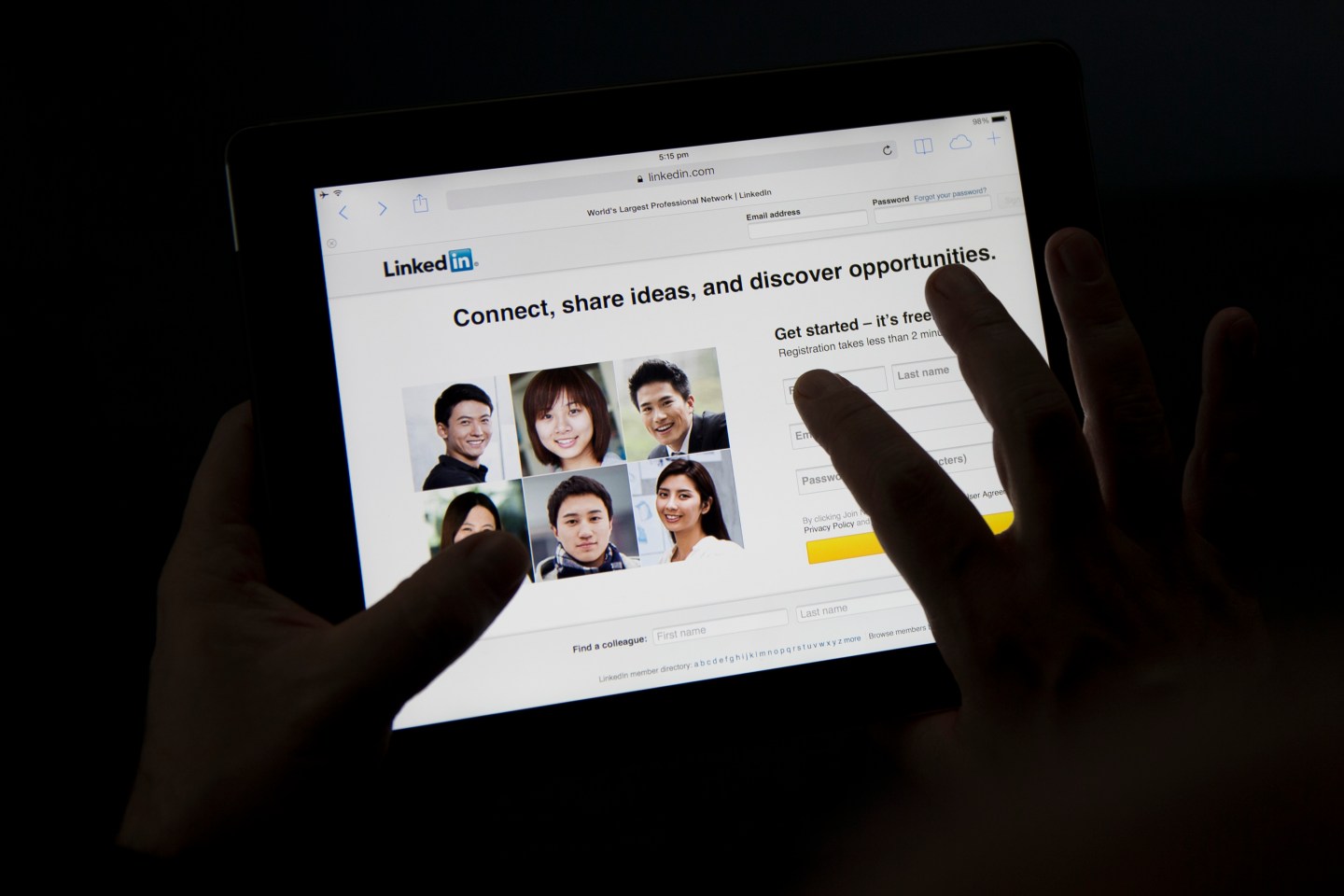
The LinkedIn Corp. website is displayed on an Apple Inc. iPad Air in an arranged photograph in Hong Kong, China, on Tuesday, Feb. 25, 2014. LinkedIn is establishing a Chinese-language website that will restrict some content to adhere to state censorship rules, moving to expand in a country where U.S. technology companies have clashed with the government. Photographer: Brent Lewin/Bloomberg via Getty ImagesPhotograph by Brent Lewin — Bloomberg via Getty Images

An IBM security team announced on Thursday that it had discovered a new website vulnerability that enables attackers to assume the identity of users on websites such as Nasdaq.com and Slashdot.com using identity providers such as LinkedIn (LNKD), Amazon (AMZN), and Mydigipass.com. Before publishing the news, IBM contacted the identity providers to allow them to patch the problem.

The hack is incredibly simple. First, an attacker signs up for a social login account at LinkedIn or Amazon using the victim’s email account. (Stipulation: the victim must not already have an account with that identity provider.) The victim then receives an email to verify the new account.

Here’s the catch: email verification is not needed to pull of the second phase of the hack. The attacker instead heads over to a website that supports logging in using a social account and selects “Sign In with LinkedIn” or “Log In with Amazon” or whatever relevant choice. If the attacker selects the just-created but not verified account and the victim already has a profile on the site in question—both associated with the same email address—vulnerable sites will authenticate the attacker, enabling him or her to assume the victim’s identity.

And that’s where the real trouble starts. An attacker could masquerade as a public-company executive on Nasdaq.com and comment on stocks, impacting the company’s stock performance. An attacker could post malicious links on the site under the assumed identity, subjecting anyone inquisitive enough to click to a phishing attack that allows the hacker to obtain sensitive information (that could quickly cascade into many more compromises).

“That’s a huge gaping security hole,” says Marla Hay, a senior product manager at Janrain, a company that connects websites to identity providers with social logins. (Some of the vulnerable sites—including Nasdaq.com and Slashdot.com—use the Janrain’s services.) “This is a super easy attack to make,” she adds.

Jamie Beckland, vice president of marketing at Janrain, says the onus falls on third-party websites to ensure that they’re implementing social logins securely. Even so, when Beckland’s team learned of the vulnerability through a VentureBeat article, it reached out to its clients within an hour to help them fix the flaw.

Hay recommends that companies with websites incorporating social login—so-called relying websites—take several measures. First, they should make sure to set up a field requesting a verified email address—not just any old unverified email address. Second, they should bar users from authenticating without first having verified email addresses. Lastly, they should consider accepting only identity providers that require users to verify email addresses before enabling validation through social login.

In a blog post, Or Peles, an IBM security researcher who co-authored the whitepaper describing the attack (which has been dubbed “SpoofedMe”), writes: “While fixing the identity provider vulnerability would be enough for this attack to be blocked…it is important for websites that are vulnerable to fix the website design problem because it may expose their users to similar attacks.”

Below, a video demonstration of the attack compiled by the researchers:

[youtube https://www.youtube.com/watch?v=kC0s3S00Dmk?rel=0&showinfo=0]

Next, read:This company wants to end web anonymity

About the Author
Robert Hackett
By Robert Hackett
Instagram iconLinkedIn iconTwitter icon
See full bioRight Arrow Button Icon

Latest in

Personal Financemortgages
Home equity loan vs. home equity line of credit (HELOC)
By Joseph HostetlerDecember 3, 2025
3 hours ago
picture of two bitcoins
CryptoBitcoin
Bitcoin bounces back more than 10% after brutal week
By Carlos GarciaDecember 3, 2025
4 hours ago
Rich woman lounging on boat
SuccessWealth
The wealthy 1% are turning to new status symbols that can’t be bought—and it’s hurting Dior, Versace, and Burberry
By Emma BurleighDecember 3, 2025
4 hours ago
satellite
AIData centers
Google’s plan to put data centers in the sky faces thousands of (little) problems: space junk
By Mojtaba Akhavan-TaftiDecember 3, 2025
4 hours ago
Wrapped
Arts & EntertainmentMarketing
Why Spotify Wrapped understands the genius of ‘optimal distinctiveness theory’
By Ishani Banerji and The ConversationDecember 3, 2025
4 hours ago
Mark Zuckerberg, chief executive officer of Meta Platforms Inc., during the Meta Connect event in Menlo Park, California, US, on Wednesday, Sept. 25, 2024.
AIMeta
Inside Silicon Valley’s ‘soup wars’: Why Mark Zuckerberg and OpenAI are hand-delivering soup to poach talent
By Eva RoytburgDecember 3, 2025
5 hours ago

Most Popular

placeholder alt text
North America
Jeff Bezos and Lauren Sánchez Bezos commit $102.5 million to organizations combating homelessness across the U.S.: ‘This is just the beginning’
By Sydney LakeDecember 2, 2025
1 day ago
placeholder alt text
Economy
Ford workers told their CEO 'none of the young people want to work here.' So Jim Farley took a page out of the founder's playbook
By Sasha RogelbergNovember 28, 2025
5 days ago
placeholder alt text
North America
Anonymous $50 million donation helps cover the next 50 years of tuition for medical lab science students at University of Washington
By The Associated PressDecember 2, 2025
1 day ago
placeholder alt text
C-Suite
MacKenzie Scott's $19 billion donations have turned philanthropy on its head—why her style of giving actually works
By Sydney LakeDecember 2, 2025
2 days ago
placeholder alt text
Innovation
Google CEO Sundar Pichai says we’re just a decade away from a new normal of extraterrestrial data centers
By Sasha RogelbergDecember 1, 2025
2 days ago
placeholder alt text
Law
Netflix gave him $11 million to make his dream show. Instead, prosecutors say he spent it on Rolls-Royces, a Ferrari, and wildly expensive mattresses
By Dave SmithDecember 2, 2025
1 day ago
Rankings
  • 100 Best Companies
  • Fortune 500
  • Global 500
  • Fortune 500 Europe
  • Most Powerful Women
  • Future 50
  • World’s Most Admired Companies
  • See All Rankings
Sections
  • Finance
  • Leadership
  • Success
  • Tech
  • Asia
  • Europe
  • Environment
  • Fortune Crypto
  • Health
  • Retail
  • Lifestyle
  • Politics
  • Newsletters
  • Magazine
  • Features
  • Commentary
  • Mpw
  • CEO Initiative
  • Conferences
  • Personal Finance
  • Education
Customer Support
  • Frequently Asked Questions
  • Customer Service Portal
  • Privacy Policy
  • Terms Of Use
  • Single Issues For Purchase
  • International Print
Commercial Services
  • Advertising
  • Fortune Brand Studio
  • Fortune Analytics
  • Fortune Conferences
  • Business Development
About Us
  • About Us
  • Editorial Calendar
  • Press Center
  • Work At Fortune
  • Diversity And Inclusion
  • Terms And Conditions
  • Site Map

© 2025 Fortune Media IP Limited. All Rights Reserved. Use of this site constitutes acceptance of our Terms of Use and Privacy Policy | CA Notice at Collection and Privacy Notice | Do Not Sell/Share My Personal Information
FORTUNE is a trademark of Fortune Media IP Limited, registered in the U.S. and other countries. FORTUNE may receive compensation for some links to products and services on this website. Offers may be subject to change without notice.