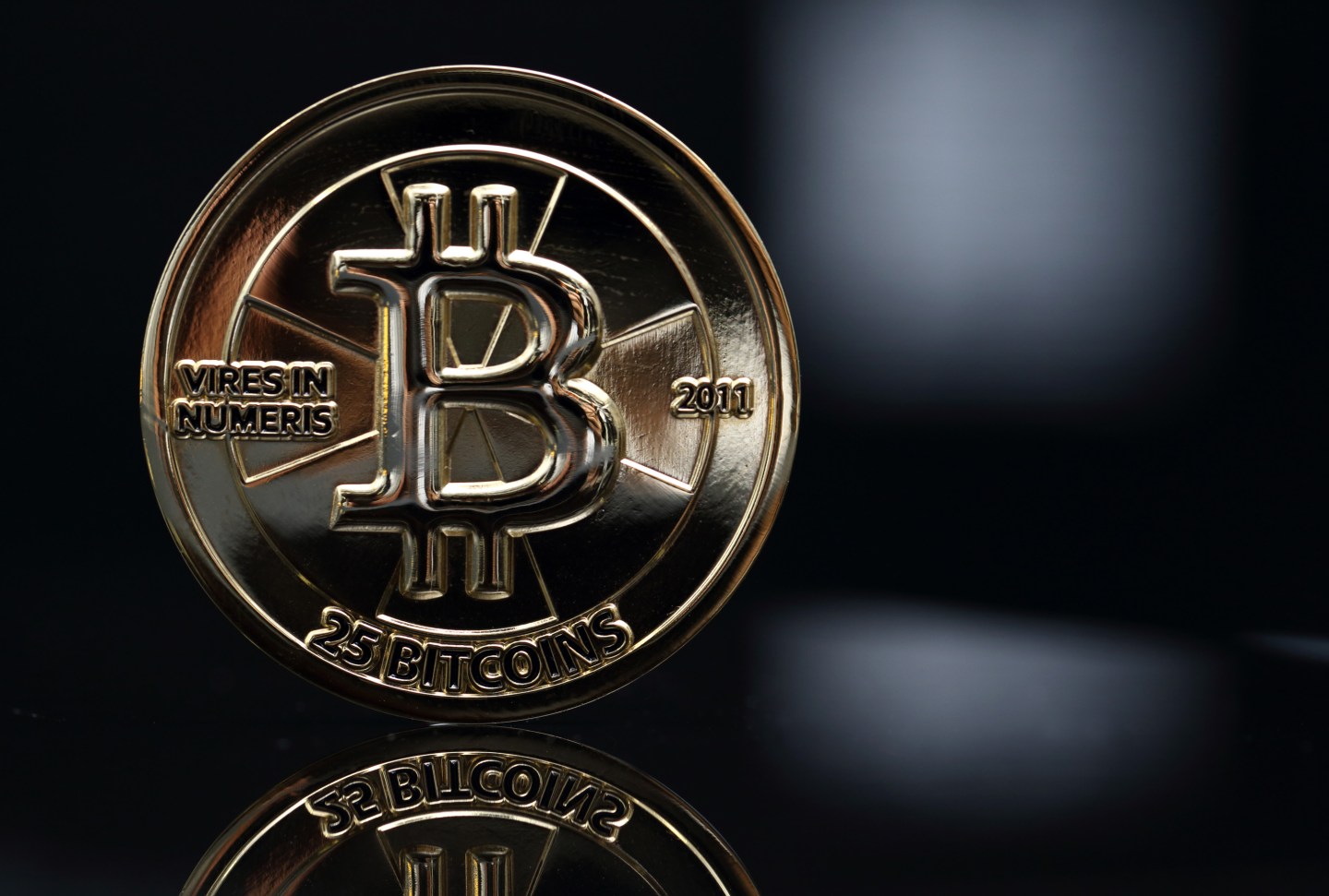
Bitcoin heralds a new age more disruptive than that of today’s Internet. Disruption can be a good thing, especially when it affects banking, a failing set of business models which, for all the tweaks, have been virtually unchanged for millennia. Paradoxically, some banks are afraid of Bitcoin because it would force them to innovate.
Bitcoin is but the most famous example of an emerging technology network with the potential to improve banking. It belongs to the new type of financial animal called crypto currencies, i.e. decentralized, secure money storage and money transfer enabled by the Internet. What Bitcoin, and the even more promising Ripple network do, is not to poke a hole in banking’s basic business models—lending, deposits, trading, and money exchange—but to create the embryos for entirely new markets typically referred to as the Internet of Value. That is, a way for regular folks, as well as specialists, to potentially monetize everything, regardless of location, traditional market access and jurisdiction.
Cryptocurrencies have been with us for over five years, an eternity by Internet time. Using the elegance of mathematics they enable almost instant transfer of value at almost no cost between two parties without the need for a trusted third party. The disruption lies exactly there: in disrupting the intermediaries.
For a few years already, we have been talking about the sharing economy. Companies like AirBnb and Uber have enabled previously untapped, idle assets such as your empty bedroom or your second car to be mobilized for financial gain. Liquidizing such stale assets has added convenience in the utterly inefficient markets of room rentals and transportation services.
The Internet of Value would go a few steps further. Imagine a world where you can literally become your own market maker; you can create markets for any of your own assets—which could be thought of as anything you own, think or do, or can influence others to do.
[youtube https://www.youtube.com/watch?v=BGsb39c7KtM&w=560&h=315]
In contrast, and to the great disappointment of many financial tech (‘fintech’) startups, the Financial Crimes Enforcement Network (FinCEN) last month released new guidance for virtual currency exchanges and payment processors, ruling that such companies may be considered money services businesses under US law and would be subject to new regulations. The ruling is well meaning, but quite contradictory, and, more importantly, wrongheaded. Prematurely imposing such limitations will have little long term impact beyond dulling the US’s innovative edge.
In the 2001 book, The Architecture of Market, my former UC Berkeley colleague Neil Fligstein makes the excellent point that markets cannot be thought of as automatically or magically appearing on their own, neither by individuals acting alone nor by structures and established institutions acting in concert. Rather, markets are elaborate and complex creations by communities with a joint purpose, and they must be sustained by those who use them in order to survive.
In the case of Bitcoin, what is being enabled here is not merely a new market, but a market of markets; a platform for all kinds of new markets to emerge. In it, lies the promise of a transformation, as strange as it sounds, greater than the Internet. Denying such a potential is equal to denying the reality of globalization.
This is why banks had better embrace the experimentation around crypto technologies and business models—in consortia rather than alone, in order to reduce risks and in order to foster and shape the set of appropriate platform innovations that will come over the next decade, one way or another.
Why are bankers afraid of Bitcoin’s impact? Easy, it will lead to ripples across the financial sector, it will create new winners and losers, and it will likely decentralize banking services and create micro markets to an extent not seen since the advances of the barter economy and the market economy combined. In fact, this is what the Internet of Value is all about—erasing the distinction between bartering, money and service exchange in any market. Once each potential good has a financially tradable and storable equivalent, “a bitcoin,” if you will, trade will explode in a myriad of directions impossible to predict by current algorithms. Intermediaries will come and go, and the end points of exchange nodes will become more important. To many bankers, this is a scary thought. To everyone else it is likely quite liberating.
Clearly, there must be regulation. Without regulation, markets are unstable. However, countries that over-regulate a disruptive innovation in its infancy will only lose out on the first waves of that innovation. Several countries seem to be heading that way, and the US is now in the front seat of that wagon. What a pity. The urge to cripple crypto based currencies is futile.
Trond Undheim is Senior Lecturer in Global Economics and Management at the MIT Sloan School of Management. Undheim is also founder of Yegii.com, an insight network that connects companies to global expertise.