
• Home
  • Latest
  • Fortune 500
  • Finance
  • Tech
  • Leadership
  • Lifestyle
  • Rankings
  • Multimedia
Techenterprise technology

The problem with acquisitions? Tying the technology together

Andrew Nusca
By
Andrew Nusca
Andrew Nusca
Editorial Director, Brainstorm and author of Fortune Tech
Down Arrow Button Icon
Andrew Nusca
By
Andrew Nusca
Andrew Nusca
Editorial Director, Brainstorm and author of Fortune Tech
Down Arrow Button Icon
November 5, 2014, 12:06 PM ET
Technology
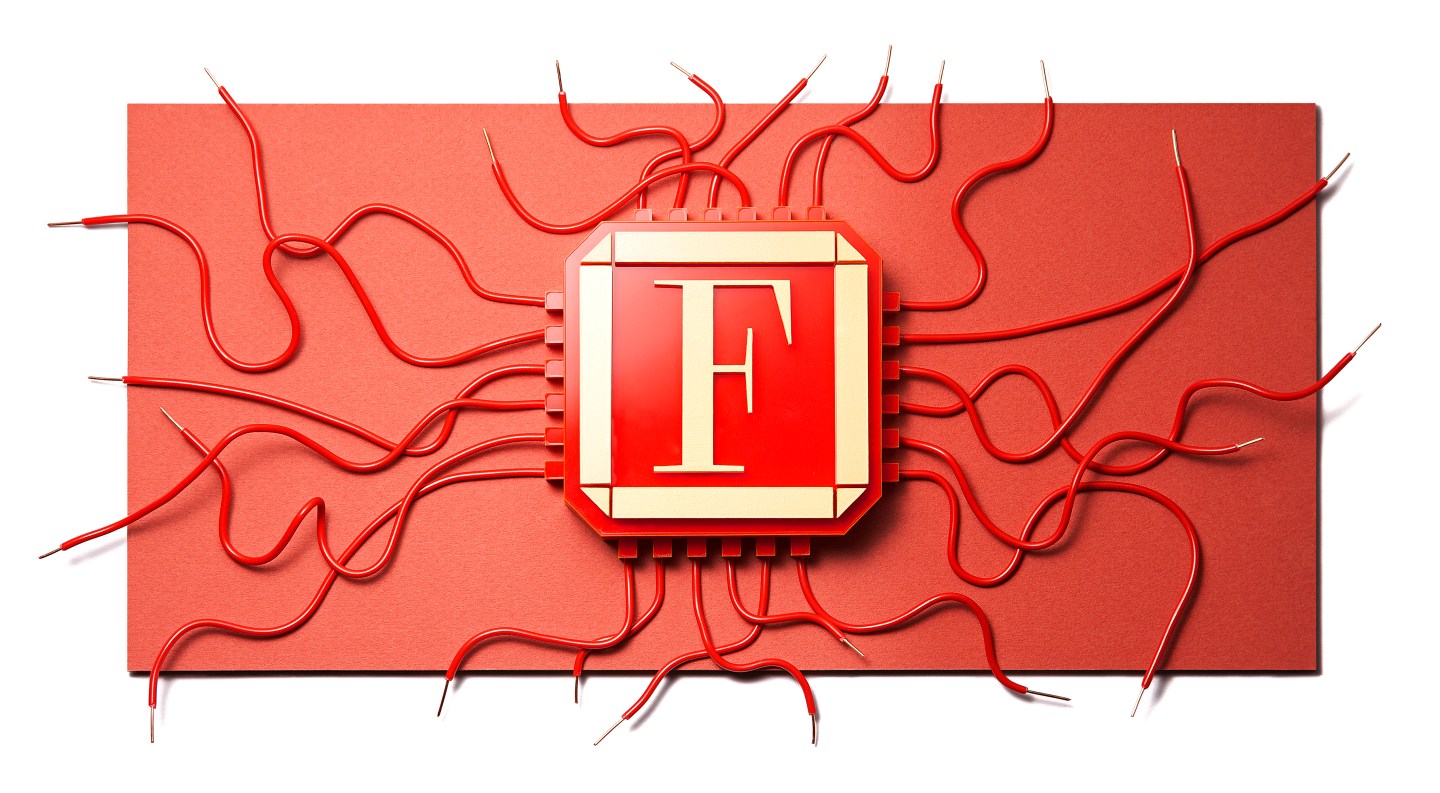
contract Armin Harris. Kyle Bean for FortuneKyle Bean for Fortune

Many companies underestimate the full plate of challenges that come with acquisitions. Immediately, those challenges are financial and logistical. Then they become cultural, organizational, and technological. (Hopefully they avoid becoming existential.)

It’s been a banner year for corporate break-ups, but there are plenty of tech companies acquiring, too. You may not be familiar with Aptean, a business software company headquartered in Atlanta, but I recently learned that it went through this process in a big way. The 1,500-person company is the product of a 2012 merger of two firms (CDC Software and Consona) that each had a string of its own acquisitions. When their executives put ’em together, they had a real mess on their hands, said Chris Thornhill, Aptean’s chief architect.

“The result was 30 companies that were really never integrated with each other—never combined into a single company,” he told me. “We had 30 vertically organized separate companies doing their own things, with their own tools. Everything from HR to software delivery and launch was in the hands of the product teams. There were attempts to try and solve that but there was really no interest. The management of the time was focused on quarterly EBITDA and the short term.”

If you’re a seasoned executive, you know how this story goes. When the companies merged, management decided it was high time to rip off the Band-Aid, so to speak, and begin a major effort to fully integrate the companies. It would be drastic: the company decided to focus on just 10 of its 30 product lines, for example. Thornhill was tasked with integrating its technology systems and business applications. Step one, he said, was integrating all of the various reporting and project management systems so management could receive one set of numbers and, with hope, gain the confidence to continue down the path they had laid out.

“You could run reports from each of them but the numbers weren’t defined the same way. A bug wasn’t defined the same way,” he said. “It was a big cultural shift to use the same definition and the same vocabulary.”

The same thing applies to “source control,” the management of engineers’ code. Aptean had at least six different repositories for code, which proved to be a problem. “That’s our intellectual property, our business,” he said. “It needs to be backed up. We need to maintain it. So we moved that to one central location.”

Thornhill said he definitely didn’t want to get the entire company on the same technology stack right away; it would be too disruptive. But he did want to achieve some commonality in an organization where each “silo” was choosing its own technology, from ASP and JSP to Ruby on Rails and Google Web Toolkit. “We wanted the freedom to move developers between products. We wanted to rebalance our internal portfolio and move resources,” he said. “The functional organization was one step toward that, but then we ran into the technical challenge: training people on all these projects.”

For the user interface function, for example, Thornhill chose an HTML5 application development framework from Sencha, a company based in Redwood City, Calif. “We wanted as few technologies as possible,” he said. “HTML5 is pretty damn close to write once, deploy everywhere.”

How can you be sure that one technology is better than many? I asked Thornhill to elaborate. “Why would you buy all the pieces of the car you liked and try to make them work together?” he asked. “It’s going to be ugly and not fit together. When you buy a car, it’s preassembled. All the pieces are made to fit together. If you try and do this piece by piece, you’re going to get mismatches. You have to solve those problems and maintain them. The technologies are all changing and upgrading independently of each other. That’s a challenge.”

And, he added, do you really want to be in that business in the first place? “You don’t want to reinvent the wheel,” he said. “You want to focus on choosing technologies that are already there for you. You don’t want your developers focusing on what they like to do, which is start from scratch.”

Fair enough. I rung up Sencha’s CEO, Art Landro, to get his take. He used a similar metaphor and likened a company’s collection of technologies and business applications to “1.4 million parts in boxes in a warehouse.” Sure, you could put together the teams to figure out how to turn those parts into a fully functioning airplane. But why wouldn’t you just buy one from Boeing and focus on your original business of flying your customers to places?

“It is going to get worse before it gets better,” Landro said. “In my last company, we worked with a major automobile parts supplier. They had 6,000 applications, through multiple acquisitions all over the world. They were trying to get down to 1,000 and they put a five-year plan in place to do it.” He added: “The problem is real and it’s out there.”

Should we be bearish on the value of business applications? Absolutely not, Landro said. They’ll remain a competitive differentiator in any industry. But your engineers are best used to make those applications better, not maintain them. “CIOs and lines of business want to do things better, faster, cheaper,” he said.

Thornhill agrees. “The hardest part is committing to doing it,” he said. “Technology is moving so fast. If you don’t keep up, you’ll be left behind. You’ll just fade away.”

This item first appeared in the Nov. 5, 2014 edition of Data Sheet, Fortune’s daily newsletter on the business of technology. Sign up here.


About the Author
Andrew Nusca
By Andrew NuscaEditorial Director, Brainstorm and author of Fortune Tech
Instagram iconLinkedIn iconTwitter icon

Andrew Nusca is the editorial director of Brainstorm, Fortune's innovation-obsessed community and event series. He also authors Fortune Tech, Fortune’s flagship tech newsletter.

See full bioRight Arrow Button Icon

Latest in Tech

Finance
Lorem ipsum dolor sit amet, consectetur adipiscing elit, sed do eiusmod tempor incididunt ut labore et dolore magna aliqua. Ut enim ad minim veniam
By Fortune Editors
October 20, 2025
Finance
Lorem ipsum dolor sit amet, consectetur adipiscing elit, sed do eiusmod tempor incididunt ut labore et dolore magna aliqua. Ut enim ad minim veniam
By Fortune Editors
October 20, 2025
Finance
Lorem ipsum dolor sit amet, consectetur adipiscing elit, sed do eiusmod tempor incididunt ut labore et dolore magna aliqua. Ut enim ad minim veniam
By Fortune Editors
October 20, 2025
Finance
Lorem ipsum dolor sit amet, consectetur adipiscing elit, sed do eiusmod tempor incididunt ut labore et dolore magna aliqua. Ut enim ad minim veniam
By Fortune Editors
October 20, 2025
Finance
Lorem ipsum dolor sit amet, consectetur adipiscing elit, sed do eiusmod tempor incididunt ut labore et dolore magna aliqua. Ut enim ad minim veniam
By Fortune Editors
October 20, 2025
Finance
Lorem ipsum dolor sit amet, consectetur adipiscing elit, sed do eiusmod tempor incididunt ut labore et dolore magna aliqua. Ut enim ad minim veniam
By Fortune Editors
October 20, 2025

Most Popular

Finance
Lorem ipsum dolor sit amet, consectetur adipiscing elit, sed do eiusmod tempor incididunt ut labore et dolore magna aliqua. Ut enim ad minim veniam
By Fortune Editors
October 20, 2025
Finance
Lorem ipsum dolor sit amet, consectetur adipiscing elit, sed do eiusmod tempor incididunt ut labore et dolore magna aliqua. Ut enim ad minim veniam
By Fortune Editors
October 20, 2025
Finance
Lorem ipsum dolor sit amet, consectetur adipiscing elit, sed do eiusmod tempor incididunt ut labore et dolore magna aliqua. Ut enim ad minim veniam
By Fortune Editors
October 20, 2025
Finance
Lorem ipsum dolor sit amet, consectetur adipiscing elit, sed do eiusmod tempor incididunt ut labore et dolore magna aliqua. Ut enim ad minim veniam
By Fortune Editors
October 20, 2025
Finance
Lorem ipsum dolor sit amet, consectetur adipiscing elit, sed do eiusmod tempor incididunt ut labore et dolore magna aliqua. Ut enim ad minim veniam
By Fortune Editors
October 20, 2025
Finance
Lorem ipsum dolor sit amet, consectetur adipiscing elit, sed do eiusmod tempor incididunt ut labore et dolore magna aliqua. Ut enim ad minim veniam
By Fortune Editors
October 20, 2025
Fortune Secondary Logo
Rankings
  • 100 Best Companies
  • Fortune 500
  • Global 500
  • Fortune 500 Europe
  • Most Powerful Women
  • Future 50
  • World’s Most Admired Companies
  • See All Rankings
Sections
  • Finance
  • Fortune Crypto
  • Features
  • Leadership
  • Health
  • Commentary
  • Success
  • Retail
  • Mpw
  • Tech
  • Lifestyle
  • CEO Initiative
  • Asia
  • Politics
  • Conferences
  • Europe
  • Newsletters
  • Personal Finance
  • Environment
  • Magazine
  • Education
Customer Support
  • Frequently Asked Questions
  • Customer Service Portal
  • Privacy Policy
  • Terms Of Use
  • Single Issues For Purchase
  • International Print
Commercial Services
  • Advertising
  • Fortune Brand Studio
  • Fortune Analytics
  • Fortune Conferences
  • Business Development
  • Group Subscriptions
About Us
  • About Us
  • Editorial Calendar
  • Press Center
  • Work At Fortune
  • Diversity And Inclusion
  • Terms And Conditions
  • Site Map
  • About Us
  • Editorial Calendar
  • Press Center
  • Work At Fortune
  • Diversity And Inclusion
  • Terms And Conditions
  • Site Map
  • Facebook icon
  • Twitter icon
  • LinkedIn icon
  • Instagram icon
  • Pinterest icon

Latest in Tech

These startups are racing to make AI safe for the Pentagon’s most closely guarded secrets
AIDefense
These startups are racing to make AI safe for the Pentagon’s most closely guarded secrets
By Erik GermanApril 11, 2026
21 hours ago
karp
Future of Workpalantir
Palantir CEO says AI ‘will destroy’ humanities jobs but there will be ‘more than enough jobs’ for people with vocational training
By Jacqueline MunisApril 11, 2026
22 hours ago
A Starbucks barista stands behind a cash register.
RetailFood and drink
Starbucks’ game plan to roll out AI chatbots at cafés could serve as a ‘litmus test’ for the industry, analyst says
By Sasha RogelbergApril 11, 2026
22 hours ago
The ‘Tuscan Mom’ aesthetic is taking over TikTok as Gen Z glamorize McMansions and reject millennial gray
Travel & LeisureGen Z
The ‘Tuscan Mom’ aesthetic is taking over TikTok as Gen Z glamorize McMansions and reject millennial gray
By Sydney LakeApril 11, 2026
22 hours ago
dalmation
AIHealth
Man’s best friend may soon live a little longer thanks to a new pill promising to extend your pup’s lifespan
By Catherina GioinoApril 11, 2026
24 hours ago
hunt
CommentaryMedia
OpenAI’s TBPN deal shows how talent, media, and influence are collapsing into one
By Jonathan HuntApril 11, 2026
1 day ago

Most Popular

'This is the last warning.' Iran threatens U.S. warships after they throw down the gauntlet for winner-take-all Strait of Hormuz
Politics
'This is the last warning.' Iran threatens U.S. warships after they throw down the gauntlet for winner-take-all Strait of Hormuz
By Fortune EditorsApril 11, 2026
10 hours ago
The 'affordability economy' has created a housing market nobody predicted: Prices collapsing in the Sun Belt, soaring in the Rust Belt
Real Estate
The 'affordability economy' has created a housing market nobody predicted: Prices collapsing in the Sun Belt, soaring in the Rust Belt
By Fortune EditorsApril 11, 2026
1 day ago
Palantir CEO says AI ‘will destroy’ humanities jobs but there will be ‘more than enough jobs’ for people with vocational training
Future of Work
Palantir CEO says AI ‘will destroy’ humanities jobs but there will be ‘more than enough jobs’ for people with vocational training
By Fortune EditorsApril 11, 2026
22 hours ago
Warren Buffett says 'accumulating great amounts of money' doesn’t achieve greatness—He still lives in a $31,500 Nebraska home and clipped coupons
Success
Warren Buffett says 'accumulating great amounts of money' doesn’t achieve greatness—He still lives in a $31,500 Nebraska home and clipped coupons
By Fortune EditorsApril 11, 2026
22 hours ago
Scottie Scheffler joined Tiger Woods and Rory McIlroy in golf's $100M club—and donated his entire Ryder Cup stipend to charity
Success
Scottie Scheffler joined Tiger Woods and Rory McIlroy in golf's $100M club—and donated his entire Ryder Cup stipend to charity
By Fortune EditorsApril 10, 2026
2 days ago
Navy tests Hormuz blockade as expert says U.S. military prepares for round 2 and could degrade Iran's hold over the strait to a 'manageable level'
Politics
Navy tests Hormuz blockade as expert says U.S. military prepares for round 2 and could degrade Iran's hold over the strait to a 'manageable level'
By Fortune EditorsApril 11, 2026
16 hours ago

© 2026 Fortune Media IP Limited. All Rights Reserved. Use of this site constitutes acceptance of our Terms of Use and Privacy Policy | CA Notice at Collection and Privacy Notice | Do Not Sell/Share My Personal Information
FORTUNE is a trademark of Fortune Media IP Limited, registered in the U.S. and other countries. FORTUNE may receive compensation for some links to products and services on this website. Offers may be subject to change without notice.