• Home
  • Latest
  • Fortune 500
  • Finance
  • Tech
  • Leadership
  • Lifestyle
  • Rankings
  • Multimedia
Leadership

Why do American CEOs make twice as much as German CEOs?

By
Ryan Derousseau
Ryan Derousseau
Down Arrow Button Icon
By
Ryan Derousseau
Ryan Derousseau
Down Arrow Button Icon
November 4, 2014, 5:00 AM ET
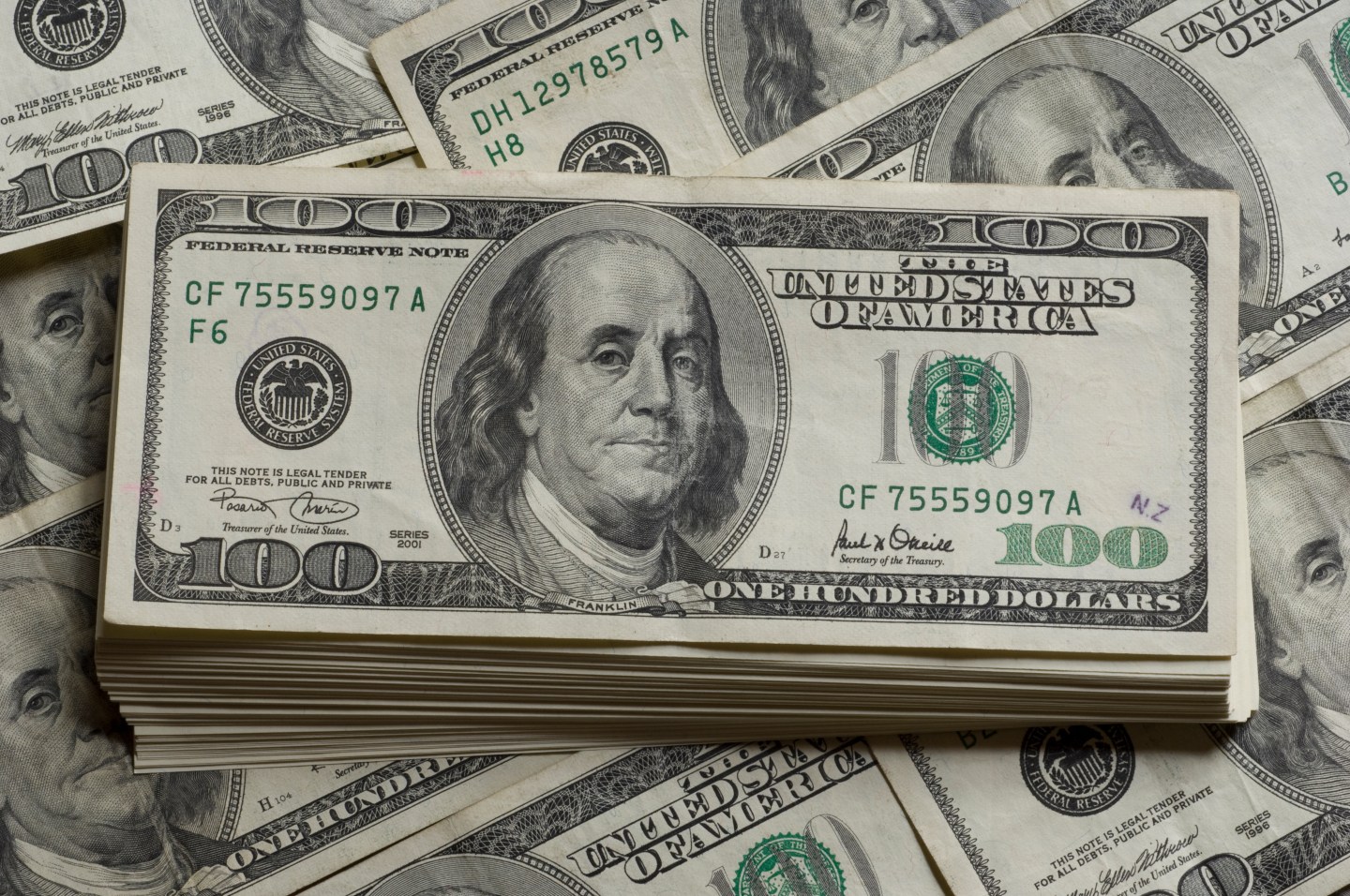
Photo courtesy: Joel Sartore Getty Images/National Geographic RF

Seeing chief executives like Microsoft’s Satya Nadella make $84 million a year has become so commonplace in the U.S that it’s easy to glaze over and ignore it altogether. That’s especially the case for those approving such steep pay, Microsoft’s board of directors, who are comprised entirely of CEOs, chairmen of other organizations, chief financial officers, Nadella himself, and the president of Harvey Mudd College.

It’s easy to recognize the accomplishments of a peer. But the rank-and-file, on the other hand, has no voice in these discussions.

Microsoft isn’t unique on this account. In fact, the tech giant’s employees are likely paid better than those who work for most other companies. But the lack of a say on CEO pay among workers has played a major part in the sky high pay of American CEOs, who, on average, make twice as much as their German counterparts.

Chulalongkorn University’s Sorapop Kiatpongsan and Harvard Business School’s Michael Norton recently published an analysis of what people from different nations believe CEOs are paid in their respective countries and how much CEOs should be paid compared to the average worker. The researchers found that CEOs are paid extravagantly more than both what survey respondents believe they are paid and should be paid.

The researchers also broke out the average CEO-to-worker-pay ratio for 16 countries, using AFL-CIO data. For the U.S., the ratio is 354-to-1. Germany comes in third highest with a ratio of 147-to-1. It’s still a large figure, but should the ratio in the U.S. be more than double that of economic stalwart Germany?

The difference comes down to two issues.

U.S. CEOs take more risk

On average, a German CEO at a large company made about $5.9 million in 2013, while U.S. CEOs in the S&P 500 made an average of $12.3 million. That’s because U.S. chief executive pay is intimately tied to their company’s share price through stock option compensation and other forms of equity pay.

Pedro Matos, a professor at the University of Virginia Business School, and his fellow researchers found that once you account for the size of the company (U.S. has more large firms than Germany), industry, whether the company is family owned, and the fact that U.S. CEOs are often paid more in equity, U.S. CEOs are paid on par with German CEOs. “U.S. CEOs weren’t more qualified or less qualified,” said Matos. “You’re giving them more incentives because the board and owner are asking for the CEO to align [priorities] with the company.”

The discrepancy is due to the stock that the board gives U.S. CEOs to ensure they will act in the best interest of the organization. Since most U.S. CEOs aren’t the founder or part of a family-run company, boards look to give the new boss incentives by connecting the CEO’s success to that of the business. When the stock goes up, the CEO will make more. German CEOs have fixed pay structures, so there are fewer highs and fewer lows.

In Germany, labor has a seat at the table

In the U.S., average annual worker pay is $34,645. A German worker receives $40,223 a year on average.

In the U.S., there have been several attempts to close the CEO-worker pay gap through an increase in the minimum wage. The issue has found its way to the ballot box in several states in the 2014 midterm elections. The federal government plans to raise the pay of anyone working on a construction or service contract to $10.10, while 38 states introduced minimum wage bills in 2014 with 11 (including Washington, D.C.) have enacted boosts in pay this year. Seattle went the farthest, passing a $15 minimum wage in June.

Then again, Germany doesn’t have a minimum wage at all.

Maybe it has to do with the difference in labor rights between Germany and the U.S. In the U.S., union strength has been depleted. Earlier this year, the International Trade Union Confederation scored countries based on the level of support governments provide their trade unions. On a one-to-five scale, the U.S. scored a four, indicating “systematic violations of rights,” from governments or companies engaged in “serious efforts” to prevent improvement in labor conditions. That put the U.S. on par with Iran, Iraq, Mexico, and Hong Kong.

Germany scored a one, a rating that indicates that “collective labor rights are typically guaranteed.” At the same time, Germany has seen labor union participation drop considerably over the years.

Most important of all, representation on German corporate boards of directors is split between labor and shareholders through an executive board and a non-executive board. This has given workers the ability to raise employee pay along with overseeing CEO salaries.

Whether it’s through minimum wage hikes or acceptance of labor unions, for the U.S. CEO-to-worker pay ratio to decrease, workers will need a seat at the table. This would not only help improve worker pay, it could also provide a much-needed counterpoint during CEO salary discussions.

Most U.S. companies leave workers out of boardroom conversations, so it’s not surprising that executives primarily focus on CEO pay incentives and fail to recognize the necessity to do the same for the rank-and-file.

Without those kinds of conversations during board meetings, American CEO pay will likely continue to skyrocket.
About the Author
By Ryan Derousseau
See full bioRight Arrow Button Icon

Latest in Leadership

Finance
Lorem ipsum dolor sit amet, consectetur adipiscing elit, sed do eiusmod tempor incididunt ut labore et dolore magna aliqua. Ut enim ad minim veniam
By Fortune Editors
October 20, 2025
Finance
Lorem ipsum dolor sit amet, consectetur adipiscing elit, sed do eiusmod tempor incididunt ut labore et dolore magna aliqua. Ut enim ad minim veniam
By Fortune Editors
October 20, 2025
Finance
Lorem ipsum dolor sit amet, consectetur adipiscing elit, sed do eiusmod tempor incididunt ut labore et dolore magna aliqua. Ut enim ad minim veniam
By Fortune Editors
October 20, 2025
Finance
Lorem ipsum dolor sit amet, consectetur adipiscing elit, sed do eiusmod tempor incididunt ut labore et dolore magna aliqua. Ut enim ad minim veniam
By Fortune Editors
October 20, 2025
Finance
Lorem ipsum dolor sit amet, consectetur adipiscing elit, sed do eiusmod tempor incididunt ut labore et dolore magna aliqua. Ut enim ad minim veniam
By Fortune Editors
October 20, 2025
Finance
Lorem ipsum dolor sit amet, consectetur adipiscing elit, sed do eiusmod tempor incididunt ut labore et dolore magna aliqua. Ut enim ad minim veniam
By Fortune Editors
October 20, 2025

Most Popular

Finance
Lorem ipsum dolor sit amet, consectetur adipiscing elit, sed do eiusmod tempor incididunt ut labore et dolore magna aliqua. Ut enim ad minim veniam
By Fortune Editors
October 20, 2025
Finance
Lorem ipsum dolor sit amet, consectetur adipiscing elit, sed do eiusmod tempor incididunt ut labore et dolore magna aliqua. Ut enim ad minim veniam
By Fortune Editors
October 20, 2025
Finance
Lorem ipsum dolor sit amet, consectetur adipiscing elit, sed do eiusmod tempor incididunt ut labore et dolore magna aliqua. Ut enim ad minim veniam
By Fortune Editors
October 20, 2025
Finance
Lorem ipsum dolor sit amet, consectetur adipiscing elit, sed do eiusmod tempor incididunt ut labore et dolore magna aliqua. Ut enim ad minim veniam
By Fortune Editors
October 20, 2025
Finance
Lorem ipsum dolor sit amet, consectetur adipiscing elit, sed do eiusmod tempor incididunt ut labore et dolore magna aliqua. Ut enim ad minim veniam
By Fortune Editors
October 20, 2025
Finance
Lorem ipsum dolor sit amet, consectetur adipiscing elit, sed do eiusmod tempor incididunt ut labore et dolore magna aliqua. Ut enim ad minim veniam
By Fortune Editors
October 20, 2025
Rankings
  • 100 Best Companies
  • Fortune 500
  • Global 500
  • Fortune 500 Europe
  • Most Powerful Women
  • Future 50
  • World’s Most Admired Companies
  • See All Rankings
Sections
  • Finance
  • Leadership
  • Success
  • Tech
  • Asia
  • Europe
  • Environment
  • Fortune Crypto
  • Health
  • Retail
  • Lifestyle
  • Politics
  • Newsletters
  • Magazine
  • Features
  • Commentary
  • Mpw
  • CEO Initiative
  • Conferences
  • Personal Finance
  • Education
Customer Support
  • Frequently Asked Questions
  • Customer Service Portal
  • Privacy Policy
  • Terms Of Use
  • Single Issues For Purchase
  • International Print
Commercial Services
  • Advertising
  • Fortune Brand Studio
  • Fortune Analytics
  • Fortune Conferences
  • Business Development
About Us
  • About Us
  • Editorial Calendar
  • Press Center
  • Work At Fortune
  • Diversity And Inclusion
  • Terms And Conditions
  • Site Map

© 2025 Fortune Media IP Limited. All Rights Reserved. Use of this site constitutes acceptance of our Terms of Use and Privacy Policy | CA Notice at Collection and Privacy Notice | Do Not Sell/Share My Personal Information
FORTUNE is a trademark of Fortune Media IP Limited, registered in the U.S. and other countries. FORTUNE may receive compensation for some links to products and services on this website. Offers may be subject to change without notice.


Latest in Leadership

Photo of Scott Galloway
SuccessCareer Advice
Scott Galloway says the key to landing jobs is be as social as possible: ‘70% of the time, the person they pick is someone with an internal advocate’
By Dave SmithDecember 27, 2025
11 hours ago
SuccessCareer Advice
Cisco’s top exec and Amazon’s Andy Jassy share the same hiring red flag—and it’s something that can’t be taught
By Orianna Rosa RoyleDecember 27, 2025
11 hours ago
Malcolm Gladwell, sitting behind a microphone, holds his hand up next to him.
Future of WorkEducation
Malcolm Gladwell tells young people if they want a STEM degree, ‘don’t go to Harvard.’ You may end up at the bottom of your class and drop out
By Sasha RogelbergDecember 27, 2025
15 hours ago
work
Future of WorkManagement
Management professors who studied the dreaded work offsite say think twice about skipping it this year
By Madeline Kneeland, Adam M. Kleinbaum and The ConversationDecember 27, 2025
15 hours ago
glasses
Successart
Meet a colorblind painter who’s been using special glasses since the 1980s to see nearly two-thirds of the spectrum
By Cody Jackson and The Associated PressDecember 27, 2025
16 hours ago
Employee is applauded at office
SuccessCareers
The ‘occupations most exposed to AI automation’ actually outperform the rest of the job market, new research reveals
By Emma BurleighDecember 27, 2025
17 hours ago

Most Popular

placeholder alt text
Retail
Trump just declared December 26th a national holiday. What's open and closed?
By Dave SmithDecember 26, 2025
2 days ago
placeholder alt text
Success
As millions of Gen Zers face unemployment, CEOs of Amazon, Walmart, and McDonald's say opportunity is still there—if you have the right mindset
By Preston ForeDecember 26, 2025
2 days ago
placeholder alt text
Europe
Christmas 500 years ago was a drunken 6-week feast that may have been considerably better than the modern holiday, medieval historian says
By Bobbi Sutherland and The ConversationDecember 25, 2025
3 days ago
placeholder alt text
Future of Work
Malcolm Gladwell tells young people if they want a STEM degree, 'don’t go to Harvard.' You may end up at the bottom of your class and drop out
By Sasha RogelbergDecember 27, 2025
15 hours ago
placeholder alt text
Success
Billionaire philanthropy's growing divide: Mark Zuckerberg stops funding immigration reform as MacKenzie Scott doubles down on DEI
By Ashley LutzDecember 22, 2025
5 days ago
placeholder alt text
Commentary
Why over 80% of America's top CEOs think Trump would be wrong not to pick Chris Waller for Fed chair
By Jeffrey Sonnenfeld and Steven TianDecember 27, 2025
13 hours ago