• Home
  • Latest
  • Fortune 500
  • Finance
  • Tech
  • Leadership
  • Lifestyle
  • Rankings
  • Multimedia
Finance

7 economists worth their weight in gold

By
Chris Matthews
Chris Matthews
Down Arrow Button Icon
By
Chris Matthews
Chris Matthews
Down Arrow Button Icon
October 9, 2014, 11:36 AM ET
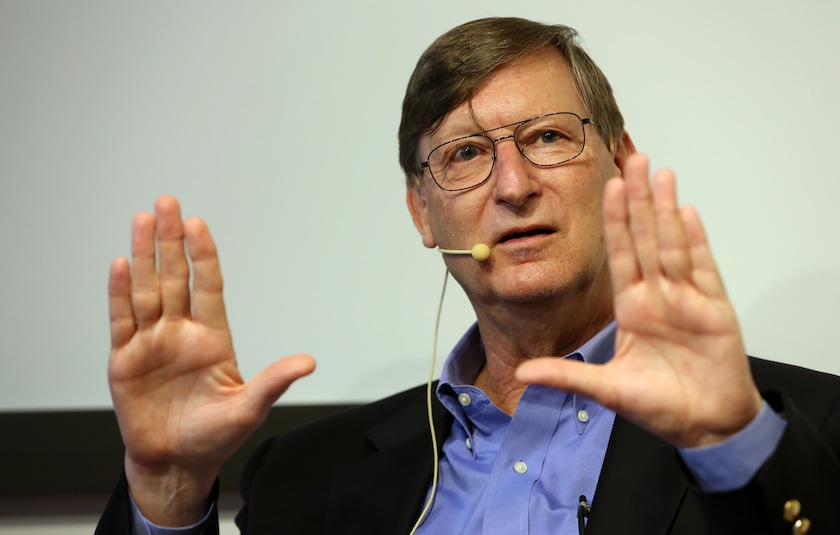
Google Chief Economist Hal Varian Speaks To The Media
Google Chief Economist Hal Varian speaks to journalists on August 21, 2014 in Berlin, Germany. Google reported last month nearly $16 billion in earnings in its second-quarter, a 22% increase from a year earlier, though spending on driverless cars, Google Glass Internet-connected eyewear and hiring more employees brought earnings for the quarter down below expectations. *** Local Caption *** Hal VarianPhotograph by Adam Berry—Getty Images

To put it mildly, you can say that the financial crisis has shaken the public’s faith in economics.

After all, how useful could this science be if it couldn’t predict or save us from a calamity of that magnitude? That question has been asked by economists and the economics press ad nauseum since 2008, with no satisfactory answer in sight. In short, macroeconomic forecasting is really difficult to do, and we shouldn’t expect to be able to predict when economic convulsions will happen.

At the same time, macroeconomic forecasting is just one small slice of what economists do. In a new book Trillion Dollar Economists, author (and economist) Robert Litan attempts to honor the many economists throughout the decades who have focused on helping businesses reach their customers more efficiently or teaching average individuals how to invest more wisely, to name just two examples. While macroeconomic forecasters get a lot of attention from the press because of both the political implications of their ideas and the gravity of the tasks they undertake, Litan argues that it’s these lesser-known economists who actually make the biggest contributions to the profession.

Here are seven examples of economists working in the private sector who helped transform how business is done in America:

1. Julian Simon: Simon helped revolutionize the airline industry by popularizing the idea that carriers should stop randomly removing passengers from overbooked flights and instead auction off the right to be bumped by offering vouchers that go up in value until all the necessary seats have been reassigned. Simon came up with the idea for these auctions in the 1960s, but he wasn’t able to get regulators interested in allowing it until the 1970s. Up until that time, Litan writes, “airlines deliberately did not fill their planes and thus flew with less capacity than they do now, a circumstance that made customers more comfortable, but reduced profits for airlines.” And this, of course, meant they had to charge passengers more to compensate.

By auctioning off overbooked seats, economist James Heins estimates that $100 billion has been saved by the airline industry and its customers in the 30-plus years since the practice was introduced.

2. Hal Varian: As Google’s chief economist, Varian joined a company that was already keen on using ideas from academic economics to make money. Google famously made use of the Dutch Auction for its 2004 IPO, and sold its ads using an auction style first designed by economist William Vickery, which caused the winner to pay one penny more than the second-highest bid, in order to encourage bidders to not fear overbidding. Varian helped fine tune these auctions as an adviser to the company in its early days, and when he joined the firm full-time he helped develop the Google Trends tool and the use of A/B testing to improve the launch of other new services.

3. Vernon Smith: An economic iconoclast, Smith won the Nobel Prize in economics in 2002 for his contributions in helping economics become a more experimental science that relied on laboratory testing to understand human behavior. As Litan writes:

It is difficult to overstate the extent to which Smith’s work was long viewed to be out of the mainstream by the rest of the profession…. The notion that lessons could be drawn from a laboratory setting where individuals were given play (or even small amounts of real) money and then tasked with spending it or using it in some fashion or for purposes designed by the experimenters was … looked down on by many mainstream economists—until Smith was awarded the Nobel Prize, of course.

Smith’s ideas have influenced business leaders, who have used his ideas in focus group settings. Energy companies around the world have also used Smith’s work. His experiments proved that through careful deregulation of energy markets, electricity companies could become more efficient and still sell energy at fair prices. Such reforms were introduced in New Zealand and Australia in the 1990s, and by Ohio Edison in the U.S.

4. Frank Ramsey: One of the most important concepts in economics is the demand curve, which is basically a series of numbers describing what different people are willing to pay for the same product. When plotted on a graph, the demand curve usually slopes downwards, showing that more people are willing to buy a product when the price is low. In the 1920s, economist Frank Ramsey formally proved that rather than charging one price, firms ought to discriminate against customers based on where they fall on the demand curve. In other words, companies should charge the most any particular customer is willing to pay, rather than one price for all.

The results of the insight are seen everywhere in business today. One of the most salient examples of price discrimination is in the airline and hotel industries. These companies use all kinds of methods, like the time you purchase your seat or room to what sort of computer you’re using making the purchase, to estimate where on the demand curve you reside.

5/6. Lloyd Shapely and Alan Roth: These 2012 Nobel Prize winners were honored for their contribution to what economists call “market design.” As any businessperson knows, the market is a great way to match buyers and sellers of a product. But what is not necessarily apparent at first glance is that some marketplaces are much better than others. Shapley and Roth spent their careers working on how to design markets to attract enough buyers and sellers, to give those participants enough time and information to make rational choices, and to do it in a way that prevents fraud or the leaking of confidential information. Shapley and Roth’s work in market design has helped revolutionize the way we match buyers and sellers in many different markets, from the matching process of doctoral residents at hospitals, to pairing kidney donors with patients.

7. Burton Malkiel: Conventional financial wisdom holds that investors do better when they diversify. But this idea wasn’t always so widespread. In the early part of the 20th century it was often thought that successful investors picked one or two companies to invest in and then learned everything they can about those businesses. But as the decades wore on, financial economists worked to prove that an investor is better off diversifying. It wasn’t until economists and op-ed writer Burton Malkiel published the best-selling “A Random Walk Down the Street” that the idea really started to catch on.

Malkiel inspired entrepreneurs like Jack Bogle, the founder of Vanguard, to write his senior thesis at Princeton on index funds, thinking that they would be a cheap way for the average investor to diversify. Bogle launched his first fund in 1976, and nearly 40 years later, index funds now play a major role in everyday investors’ portfolios.


About the Author
By Chris Matthews
See full bioRight Arrow Button Icon

Latest in Finance

Finance
Lorem ipsum dolor sit amet, consectetur adipiscing elit, sed do eiusmod tempor incididunt ut labore et dolore magna aliqua. Ut enim ad minim veniam
By Fortune Editors
October 20, 2025
Finance
Lorem ipsum dolor sit amet, consectetur adipiscing elit, sed do eiusmod tempor incididunt ut labore et dolore magna aliqua. Ut enim ad minim veniam
By Fortune Editors
October 20, 2025
Finance
Lorem ipsum dolor sit amet, consectetur adipiscing elit, sed do eiusmod tempor incididunt ut labore et dolore magna aliqua. Ut enim ad minim veniam
By Fortune Editors
October 20, 2025
Finance
Lorem ipsum dolor sit amet, consectetur adipiscing elit, sed do eiusmod tempor incididunt ut labore et dolore magna aliqua. Ut enim ad minim veniam
By Fortune Editors
October 20, 2025
Finance
Lorem ipsum dolor sit amet, consectetur adipiscing elit, sed do eiusmod tempor incididunt ut labore et dolore magna aliqua. Ut enim ad minim veniam
By Fortune Editors
October 20, 2025
Finance
Lorem ipsum dolor sit amet, consectetur adipiscing elit, sed do eiusmod tempor incididunt ut labore et dolore magna aliqua. Ut enim ad minim veniam
By Fortune Editors
October 20, 2025

Most Popular

Finance
Lorem ipsum dolor sit amet, consectetur adipiscing elit, sed do eiusmod tempor incididunt ut labore et dolore magna aliqua. Ut enim ad minim veniam
By Fortune Editors
October 20, 2025
Finance
Lorem ipsum dolor sit amet, consectetur adipiscing elit, sed do eiusmod tempor incididunt ut labore et dolore magna aliqua. Ut enim ad minim veniam
By Fortune Editors
October 20, 2025
Finance
Lorem ipsum dolor sit amet, consectetur adipiscing elit, sed do eiusmod tempor incididunt ut labore et dolore magna aliqua. Ut enim ad minim veniam
By Fortune Editors
October 20, 2025
Finance
Lorem ipsum dolor sit amet, consectetur adipiscing elit, sed do eiusmod tempor incididunt ut labore et dolore magna aliqua. Ut enim ad minim veniam
By Fortune Editors
October 20, 2025
Finance
Lorem ipsum dolor sit amet, consectetur adipiscing elit, sed do eiusmod tempor incididunt ut labore et dolore magna aliqua. Ut enim ad minim veniam
By Fortune Editors
October 20, 2025
Finance
Lorem ipsum dolor sit amet, consectetur adipiscing elit, sed do eiusmod tempor incididunt ut labore et dolore magna aliqua. Ut enim ad minim veniam
By Fortune Editors
October 20, 2025
Rankings
  • 100 Best Companies
  • Fortune 500
  • Global 500
  • Fortune 500 Europe
  • Most Powerful Women
  • Future 50
  • World’s Most Admired Companies
  • See All Rankings
Sections
  • Finance
  • Leadership
  • Success
  • Tech
  • Asia
  • Europe
  • Environment
  • Fortune Crypto
  • Health
  • Retail
  • Lifestyle
  • Politics
  • Newsletters
  • Magazine
  • Features
  • Commentary
  • Mpw
  • CEO Initiative
  • Conferences
  • Personal Finance
  • Education
Customer Support
  • Frequently Asked Questions
  • Customer Service Portal
  • Privacy Policy
  • Terms Of Use
  • Single Issues For Purchase
  • International Print
Commercial Services
  • Advertising
  • Fortune Brand Studio
  • Fortune Analytics
  • Fortune Conferences
  • Business Development
About Us
  • About Us
  • Editorial Calendar
  • Press Center
  • Work At Fortune
  • Diversity And Inclusion
  • Terms And Conditions
  • Site Map
  • Facebook icon
  • Twitter icon
  • LinkedIn icon
  • Instagram icon
  • Pinterest icon

Latest in Finance

CryptoCryptocurrency
TradFi firms are increasingly warming to cryptocurrencies, says Bybit CEO Ben Zhou
By Angelica AngJanuary 22, 2026
14 hours ago
dimon
BankingWhite House
Trump sues Jamie Dimon, JPMorgan for $5 billion over claims that his politics got him debanked in 2021
By Ken Sweet and The Associated PressJanuary 22, 2026
14 hours ago
macron
EuropeFrance
Macron says Europe forced Trump to back down: ‘Europe can make itself be respected, and that’s a very good thing’
By Lorne Cook, Sam McNeil and The Associated PressJanuary 22, 2026
14 hours ago
reagan
EconomyWealth
How the middle class was hollowed out from 1979 to 2022, according to new federal data
By Nick LichtenbergJanuary 22, 2026
15 hours ago
Personal FinanceGold
Best gold IRA companies 2026: Clear winners among the sea of options
By Joseph HostetlerJanuary 22, 2026
16 hours ago
CryptoCrypto Playbook
Key crypto bill appears bogged down—but one insider says Clarity Act still in strong position to pass
By Leo SchwartzJanuary 22, 2026
16 hours ago

Most Popular

placeholder alt text
Economy
'Some form of crisis is almost inevitable': The $38 trillion national debt will soon be growing faster than the U.S. economy itself, watchdog warns
By Nick LichtenbergJanuary 22, 2026
19 hours ago
placeholder alt text
Success
Nvidia CEO Jensen Huang says ‘a lot’ of six-figure jobs in plumbing and construction are about to be unlocked because someone needs to build all these new AI centers
By Preston ForeJanuary 21, 2026
2 days ago
placeholder alt text
Politics
Jamie Dimon tells Davos: ‘You didn’t do a particularly good job making the world a better place’
By Eleanor PringleJanuary 21, 2026
2 days ago
placeholder alt text
Energy
Elon Musk warns the U.S. could soon be producing more chips than we can turn on. And China doesn’t have the same issue
By Sasha RogelbergJanuary 22, 2026
19 hours ago
placeholder alt text
Economy
Jamie Dimon says he’d have no issue paying higher taxes if it actually went to people who need it. Right now it just goes to the Washington ‘swamp’
By Eleanor PringleJanuary 21, 2026
2 days ago
placeholder alt text
Success
McDonald’s CEO shares tough love career advice he’d give Gen Z and young millennial workers: ‘No one cares about your career’
By Orianna Rosa RoyleJanuary 22, 2026
22 hours ago

© 2026 Fortune Media IP Limited. All Rights Reserved. Use of this site constitutes acceptance of our Terms of Use and Privacy Policy | CA Notice at Collection and Privacy Notice | Do Not Sell/Share My Personal Information
FORTUNE is a trademark of Fortune Media IP Limited, registered in the U.S. and other countries. FORTUNE may receive compensation for some links to products and services on this website. Offers may be subject to change without notice.