• Home
  • Latest
  • Fortune 500
  • Finance
  • Tech
  • Leadership
  • Lifestyle
  • Rankings
  • Multimedia
FinanceFederal Reserve

Why the Fed should raise interest rates soon

By
Sanjay Sanghoee
Sanjay Sanghoee
Down Arrow Button Icon
By
Sanjay Sanghoee
Sanjay Sanghoee
Down Arrow Button Icon
October 8, 2014, 1:02 PM ET
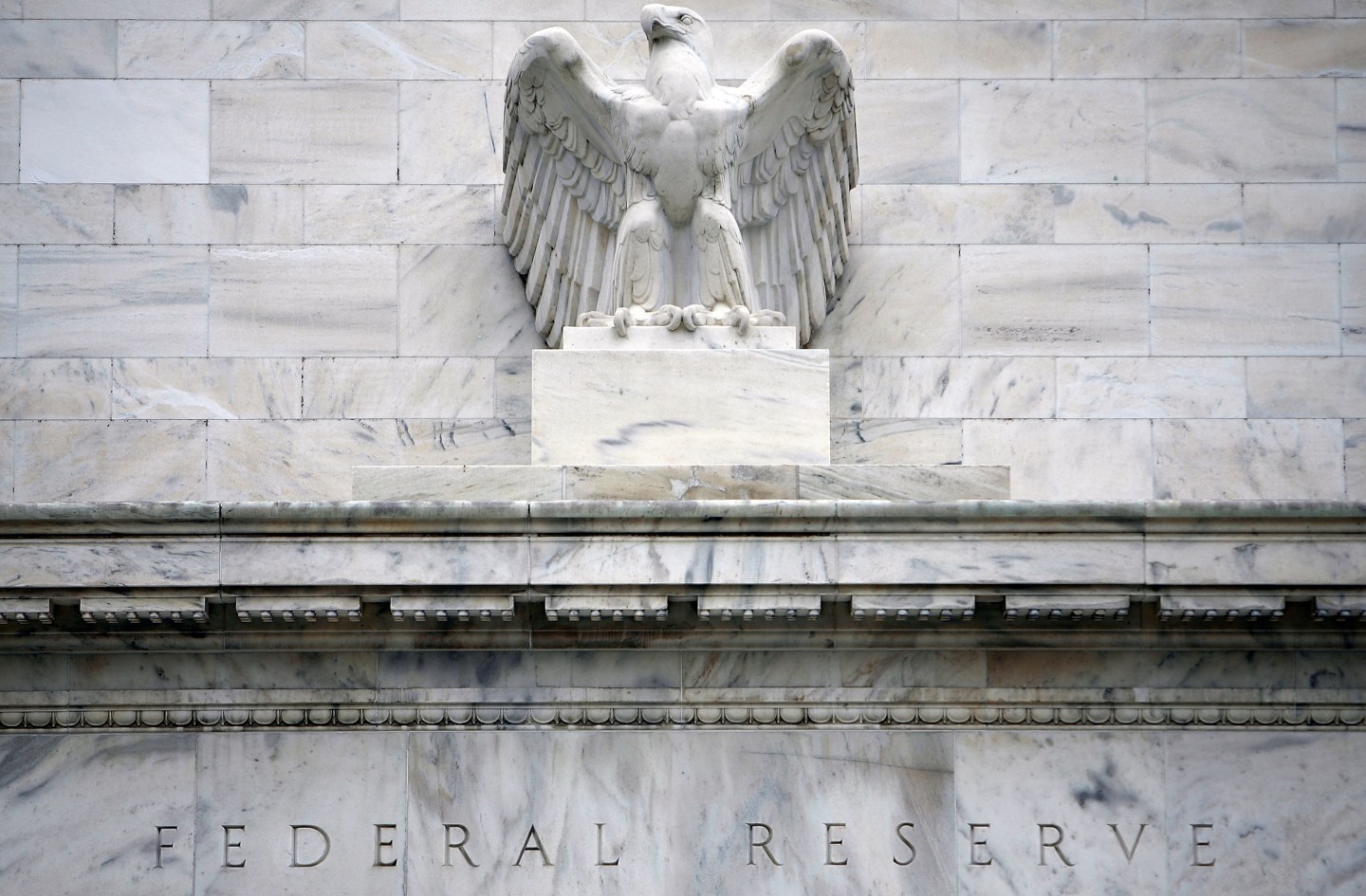
Federal Reserve Lowers Key Rate By Three Quarters Of A Point
WASHINGTON - JANUARY 22: The Federal Reserve building is seen January 22, 2008 in Washington, DC. The Fed cut its benchmark interest rate by three-quarters of a percentage point after two days of tumult in international markets due to fear of a recession in the United States. (Photo by Chip Somodevilla/Getty Images)Photo by Chip Somodevilla—Getty Images

The jobs report last week brought plenty of good news. The economy added 248,000 jobs in September, beating expectations; unemployment ticked down from 6.1% to 5.9%. The August jobs numbers were also revised upwards from 142,000 to 180,000, and the private sector has added 10.3 million new jobs over 55 months of job growth, according to The New York Times.

Some countervailing factors still prevail. The labor force participation rate has been steadily declining over the past decade and dipped again in September to 62.7%, suggesting that even though unemployment is declining, there are still plenty of people in the background who have simply stopped looking for work. The other big concern is that wage levels are not rising, putting a damper on financial prosperity even for the people who manage to find jobs.

The Federal Reserve, which has indicated before that it would consider raising interest rates once the job market improves, is now at a crucial crossroads in this process and needs to decide which aspects of America’s economy will have greater impact on the future and should determine interest rates. Despite the conventional wisdom that the Fed should keep rates low well into next year to avoid derailing the recovery, waiting too long would be a serious mistake.

For one thing, the Fed can’t really influence wage levels. It’s true that cheap money makes it easier for companies to pay higher wages, but even that money must eventually be repaid and can also be put to other uses – such as developing new products, which can boost a company’s profits and be preferable from a long-term view. In addition, wages are based on supply and demand, and the supply of labor could outpace demand for some time due to a slower growing economy. Put another way, a rise in interest rates could certainly lead to a drop in new hiring or expansion plans, but static interest rates aren’t likely to spur wage growth.

The other, and more compelling, reason for the Fed to reconsider its wait-and-see strategy is that low interest rates can lead to a disastrous asset bubble. In fact, the Fed has expressed concern about the formation of a bubble in high-risk leveraged loans after banks ignored industry guidelines, and is stepping up its scrutiny of the $800 billion arena. The problem, as a report from Bloomberg points out, is that no matter how diligent Fed Chair Janet Yellen’s team is about identifying risks, it can’t rein in an overheated market that can make handsome profits from trading. In a hyper-low interest rate environment, asset bubbles are inevitable, uncontrollable, and most importantly, can build up fast.

The Fed should, then, weigh the risks posed by an overheated market on the economic recovery in the future, and consider that any benefits accruing to workers today may well be reversed by the rapid decline in asset prices, tightening of credit, spillover effect on corporate profits, and subsequently on wages, hiring, and consumer spending when the bubble bursts. A certain amount of fiscal discipline is required to ensure that the hard-won economic gains of the past few years are preserved for many years, and that requires increasing interest rates sooner rather than later.

There are signs that the Fed gets this, saying in its last policy meeting that it will scale back its bond-buying program from $85 billion a month to $15 billion a month in October to reduce the artificial stimulus to the economy. However, it also indicated that it has no timeline for reduction of its benchmark short-term interest rate and that it expects the rate to remain at zero for a “considerable time”. Forecasts indicate that the rate could reach between 1% and 2% by the end of 2015, which means a very slow uptick and one that is unlikely to cool down overheated markets after it’s priced in.

When the Fed releases the minutes of its last policy meeting on Wednesday, market watchers will assess the Fed’s likely direction and bet accordingly, but that is also part of the problem. Instead of forcing investors to read between the lines, which only encourages more market speculation, Yellen should get out ahead of the process and lay out a clear-cut strategy and timeline that will keep the markets stable and growing gradually. When it comes to the economic impact of Fed guidance, decisiveness is key.

Given the overall healthy state of our economy now, the fear of a downturn caused by higher interest rates is overblown and needs to be balanced against the very real danger of new asset bubbles forming that can reverse our progress if they burst.

Sanjay Sanghoee is a political and business commentator. He has worked at investment banks Lazard Freres and Dresdner Kleinwort Wasserstein, as well as at hedge fund Ramius. Sanghoee sits on the Board of Davidson Media Group, a mid-market radio station operator. He has an MBA from Columbia Business School and is also the author of two thriller novels. Follow him @sanghoee.
About the Author
By Sanjay Sanghoee
See full bioRight Arrow Button Icon

Latest in Finance

PoliticsElections
The first-term congressman leading the GOP’s midterm House campaign says Trump is intimately involved in recruitment decisions
By Bill Barrow and The Associated PressDecember 14, 2025
25 minutes ago
CARACAS, VENEZUELA - A member of the Bolivarian National Armed Forces holds an "Igla-S" rocket launcher during a military ceremony commemorating the 200th anniversary of the presentation of the 'Sword of Peru' to Venezuelan independence hero Simón Bolívar on November 25, 2025, in Caracas, Venezuela. The United States recently designated the "Cartel De Los Soles" (Cartel of The Suns) as a foreign terrorist organization, a group allegedly led by the president of Venezuela, Nicolas Maduro, and which, it is presumed, includes high-ranking members of the Venezuelan government.
EnergyBig Oil
Everything the Trump administration is doing in Venezuela involves oil and regime change—even if the White House won’t admit it
By Jordan BlumDecember 14, 2025
4 hours ago
JPMorganChase CEO Jamie Dimon says AI will eliminate jobs—and that soft skills will be more important than ever.
Future of WorkTech
Jamie Dimon says soft skills like emotional intelligence and communication are vital as AI eliminates roles
By Nino PaoliDecember 14, 2025
7 hours ago
InvestingSports
Big 12 in advanced talks for deal with RedBird-backed fund
By Giles Turner and BloombergDecember 13, 2025
17 hours ago
Spanish Prime Minister Pedro Sánchez often praises the financial and social benefits that immigrants bring to the country.
EuropeSpain
In a continent cracking down on immigration and berated by Trump’s warnings of ‘civilizational erasure,’ Spain embraces migrants
By Suman Naishadham and The Associated PressDecember 13, 2025
18 hours ago
EconomyAgriculture
More financially distressed farmers are expected to lose their property soon as loan repayments and incomes continue to falter
By Jason MaDecember 13, 2025
19 hours ago

Most Popular

placeholder alt text
Economy
Tariffs are taxes and they were used to finance the federal government until the 1913 income tax. A top economist breaks it down
By Kent JonesDecember 12, 2025
2 days ago
placeholder alt text
Success
Apple cofounder Ronald Wayne sold his 10% stake for $800 in 1976—today it’d be worth up to $400 billion
By Preston ForeDecember 12, 2025
2 days ago
placeholder alt text
Success
40% of Stanford undergrads receive disability accommodations—but it’s become a college-wide phenomenon as Gen Z try to succeed in the current climate
By Preston ForeDecember 12, 2025
2 days ago
placeholder alt text
Economy
The Fed just ‘Trump-proofed’ itself with a unanimous move to preempt a potential leadership shake-up
By Jason MaDecember 12, 2025
2 days ago
placeholder alt text
Success
Apple CEO Tim Cook out-earns the average American’s salary in just 7 hours—to put that into context, he could buy a new $439,000 home in just 2 days
By Emma BurleighDecember 12, 2025
2 days ago
placeholder alt text
Uncategorized
Transforming customer support through intelligent AI operations
By Lauren ChomiukNovember 26, 2025
18 days ago
Rankings
  • 100 Best Companies
  • Fortune 500
  • Global 500
  • Fortune 500 Europe
  • Most Powerful Women
  • Future 50
  • World’s Most Admired Companies
  • See All Rankings
Sections
  • Finance
  • Leadership
  • Success
  • Tech
  • Asia
  • Europe
  • Environment
  • Fortune Crypto
  • Health
  • Retail
  • Lifestyle
  • Politics
  • Newsletters
  • Magazine
  • Features
  • Commentary
  • Mpw
  • CEO Initiative
  • Conferences
  • Personal Finance
  • Education
Customer Support
  • Frequently Asked Questions
  • Customer Service Portal
  • Privacy Policy
  • Terms Of Use
  • Single Issues For Purchase
  • International Print
Commercial Services
  • Advertising
  • Fortune Brand Studio
  • Fortune Analytics
  • Fortune Conferences
  • Business Development
About Us
  • About Us
  • Editorial Calendar
  • Press Center
  • Work At Fortune
  • Diversity And Inclusion
  • Terms And Conditions
  • Site Map

© 2025 Fortune Media IP Limited. All Rights Reserved. Use of this site constitutes acceptance of our Terms of Use and Privacy Policy | CA Notice at Collection and Privacy Notice | Do Not Sell/Share My Personal Information
FORTUNE is a trademark of Fortune Media IP Limited, registered in the U.S. and other countries. FORTUNE may receive compensation for some links to products and services on this website. Offers may be subject to change without notice.