• Home
  • Latest
  • Fortune 500
  • Finance
  • Tech
  • Leadership
  • Lifestyle
  • Rankings
  • Multimedia
FinanceTaxes

Buffett’s distasteful bite of the Burger King deal

By
Allan Sloan
Allan Sloan
Down Arrow Button Icon
By
Allan Sloan
Allan Sloan
Down Arrow Button Icon
August 26, 2014, 3:09 PM ET
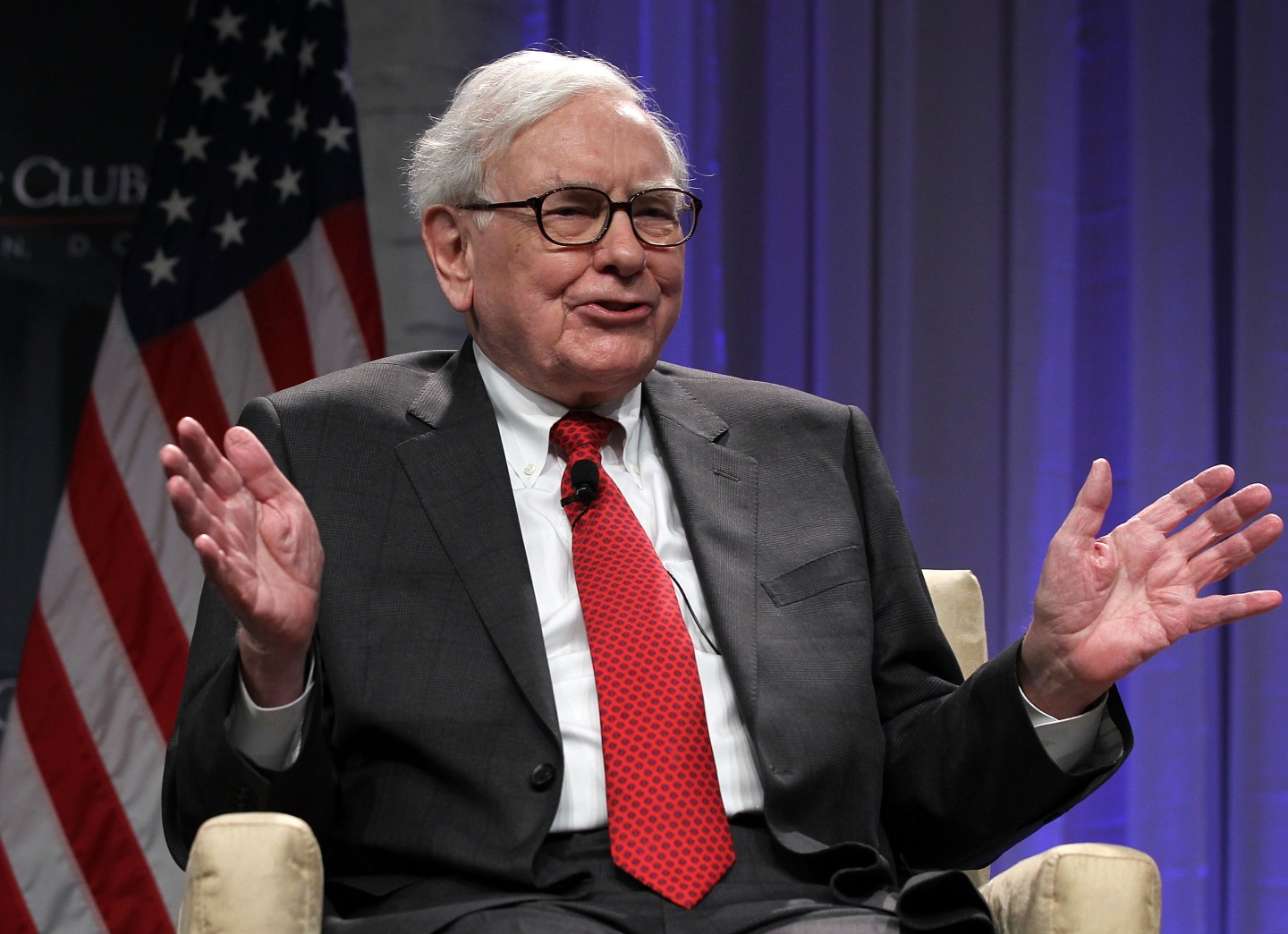
Warren Buffett Speaks At Economic Club Of Washington
WASHINGTON, DC - JUNE 05: Warren Buffett, chairman and CEO of Berkshire Hathaway Inc. participates in a discussion during the 25th anniversary celebration dinner of the Economic Club of Washington June 5, 2012 in Washington, DC. The Economic Club celebrated its 25th anniversary for its role as a forum for the exploration of national and global public policy issues and as important networking connections for business leaders in Washington. (Photo by Alex Wong/Getty Images)Alex Wong — Getty Images

There’s no escape from corporate inversions even if, like me, you’re on vacation at the beach. U.S. icon Burger King announced today that it will buy Canadian donut and coffee icon Tim Horton and become a Canadian company. When you’ve written about inversions—which I called “desertions” well before President Obama did—you can’t let a deal like this one go by without saying something.

That’s especially true because of the role played by another American icon, Warren Buffett, who is lending both his imprimatur and Berkshire Hathaway’s money to the deal.

As a Berkshire shareholder, I hope Buffett has extracted fabulous terms in return for his blessing and the $3 billion of Berkshire money he has committed to the deal. (Detailed terms aren’t available as I write this, and Buffett has declined to comment to Fortune.)

But as a U.S. citizen, I find this deal—and Buffett’s participation in it—as distasteful as a Whopper that’s spent too many hours sitting in the food chute.

I’ve known Buffett for more than 30 years, and generally like and admire him. Warren Buffett, the person who preaches that the rich should pay more in taxes, doesn’t come close to using all his available personal tax deductions. But Warren Buffett the chief executive of Berkshire makes every reasonable effort to hold down the company’s taxes.

But unlike the other Berkshire tax avoidance deals that I’ve written about—such as its “cash-rich split-off” with Graham Holdings (formerly The Washington Post Co.) that I discussed in April and found amusing—seeing Berkshire facilitate the Burger King-Horton deal turns my stomach. (The food metaphor is intentional.)

Split-offs and similar games like the one exercised by Buffett and Graham are one-off transactions, specifically allowed by the tax code, with no patriotism involved. They aren’t the same as inversions, in which companies act as if they’re no longer American when it comes to tax obligations, but continue to operate in this country and receive all the benefits of our great nation: deep and liquid financial markets, rule of law, great places to live and work, the protection accorded to their U.S. and overseas operations by our military.

I’m sure that the people involved in this deal—and possibly Buffett himself—have talked or soon will about how Burger King will keep paying U.S. taxes on its U.S. profits even after it inverts. What they won’t tell you is that inverting makes it far easier to siphon profits out of the U.S. into lower-tax (or sometimes non-tax) places. So that even though inverters/deserters will pay U.S. tax, they will pay far less than if they didn’t invert. The details are too complicated to get into today.

There are plenty of arguments from Wall Street and the rest of the pro-inversion lobby, about corporate taxes really being paid by customers and workers, not shareholders (yeah, right!); Judge Learned Hand’s famous opinion about not having to pay more taxes than you owe (remember Plessy v. Ferguson?); and such. I hope to discuss these—and demolish them—in Fortune later this year.

Until then, I’d like to leave you one thing to ponder: if you’re an individual with a net worth of $2 million or more, you have to pay an exit fee if you decide to give up your U.S. citizenship and move to a lower-tax locale. If you’re a multi-billion-dollar corporation you can avoid exit fees (although your long-time shareholders are likely to get whacked), if you bail on the U.S. Maybe that feels okay to you—it sure doesn’t feel okay to me.

And on that note: happy rest of the summer. I’m heading back to the beach. See you in September.

More about tax inversions
  • Positively un-American tax dodges
  • Fortune’s Allan Sloan and Stephen Colbert talk tax inversions
  • Allan Sloan’s congressional testimony on tax inversions

About the Author
By Allan Sloan
See full bioRight Arrow Button Icon

Latest in Finance

InvestingStock
There have been head fakes before, but this time may be different as the latest stock rotation out of AI is just getting started, analysts say
By Jason MaDecember 13, 2025
42 minutes ago
Politicsdavid sacks
Can there be competency without conflict in Washington?
By Alyson ShontellDecember 13, 2025
1 hour ago
Investingspace
SpaceX sets $800 billion valuation, confirms 2026 IPO plans
By Loren Grush, Edward Ludlow and BloombergDecember 13, 2025
2 hours ago
PoliticsAffordable Care Act (ACA)
With just days to go before ACA subsidies expire, Congress is about to wrap up its work with no consensus solution in sight
By Kevin Freking, Lisa Mascaro and The Associated PressDecember 13, 2025
2 hours ago
InnovationRobots
Even in Silicon Valley, skepticism looms over robots, while ‘China has certainly a lot more momentum on humanoids’
By Matt O'Brien and The Associated PressDecember 13, 2025
3 hours ago
HealthAffordable Care Act (ACA)
A Wisconsin couple was paying $2 a month for an ACA health plan. But as subsidies expire, it’s soaring to $1,600, forcing them to downgrade
By Ali Swenson and The Associated PressDecember 13, 2025
3 hours ago

Most Popular

placeholder alt text
Economy
Tariffs are taxes and they were used to finance the federal government until the 1913 income tax. A top economist breaks it down
By Kent JonesDecember 12, 2025
1 day ago
placeholder alt text
Success
Apple cofounder Ronald Wayne sold his 10% stake for $800 in 1976—today it’d be worth up to $400 billion
By Preston ForeDecember 12, 2025
1 day ago
placeholder alt text
Success
40% of Stanford undergrads receive disability accommodations—but it’s become a college-wide phenomenon as Gen Z try to succeed in the current climate
By Preston ForeDecember 12, 2025
1 day ago
placeholder alt text
Economy
The Fed just ‘Trump-proofed’ itself with a unanimous move to preempt a potential leadership shake-up
By Jason MaDecember 12, 2025
21 hours ago
placeholder alt text
Economy
For the first time since Trump’s tariff rollout, import tax revenue has fallen, threatening his lofty plans to slash the $38 trillion national debt
By Sasha RogelbergDecember 12, 2025
23 hours ago
placeholder alt text
Success
At 18, doctors gave him three hours to live. He played video games from his hospital bed—and now, he’s built a $10 million-a-year video game studio
By Preston ForeDecember 10, 2025
3 days ago
Rankings
  • 100 Best Companies
  • Fortune 500
  • Global 500
  • Fortune 500 Europe
  • Most Powerful Women
  • Future 50
  • World’s Most Admired Companies
  • See All Rankings
Sections
  • Finance
  • Leadership
  • Success
  • Tech
  • Asia
  • Europe
  • Environment
  • Fortune Crypto
  • Health
  • Retail
  • Lifestyle
  • Politics
  • Newsletters
  • Magazine
  • Features
  • Commentary
  • Mpw
  • CEO Initiative
  • Conferences
  • Personal Finance
  • Education
Customer Support
  • Frequently Asked Questions
  • Customer Service Portal
  • Privacy Policy
  • Terms Of Use
  • Single Issues For Purchase
  • International Print
Commercial Services
  • Advertising
  • Fortune Brand Studio
  • Fortune Analytics
  • Fortune Conferences
  • Business Development
About Us
  • About Us
  • Editorial Calendar
  • Press Center
  • Work At Fortune
  • Diversity And Inclusion
  • Terms And Conditions
  • Site Map

© 2025 Fortune Media IP Limited. All Rights Reserved. Use of this site constitutes acceptance of our Terms of Use and Privacy Policy | CA Notice at Collection and Privacy Notice | Do Not Sell/Share My Personal Information
FORTUNE is a trademark of Fortune Media IP Limited, registered in the U.S. and other countries. FORTUNE may receive compensation for some links to products and services on this website. Offers may be subject to change without notice.