
• Home
  • Latest
  • Fortune 500
  • Finance
  • Tech
  • Leadership
  • Lifestyle
  • Rankings
  • Multimedia
Retail

Wal-Mart again finds U.S. growth elusive as shoppers stay away

Phil Wahba
By
Phil Wahba
Phil Wahba
Senior Writer
Down Arrow Button Icon
Phil Wahba
By
Phil Wahba
Phil Wahba
Senior Writer
Down Arrow Button Icon
August 14, 2014, 8:42 AM ET
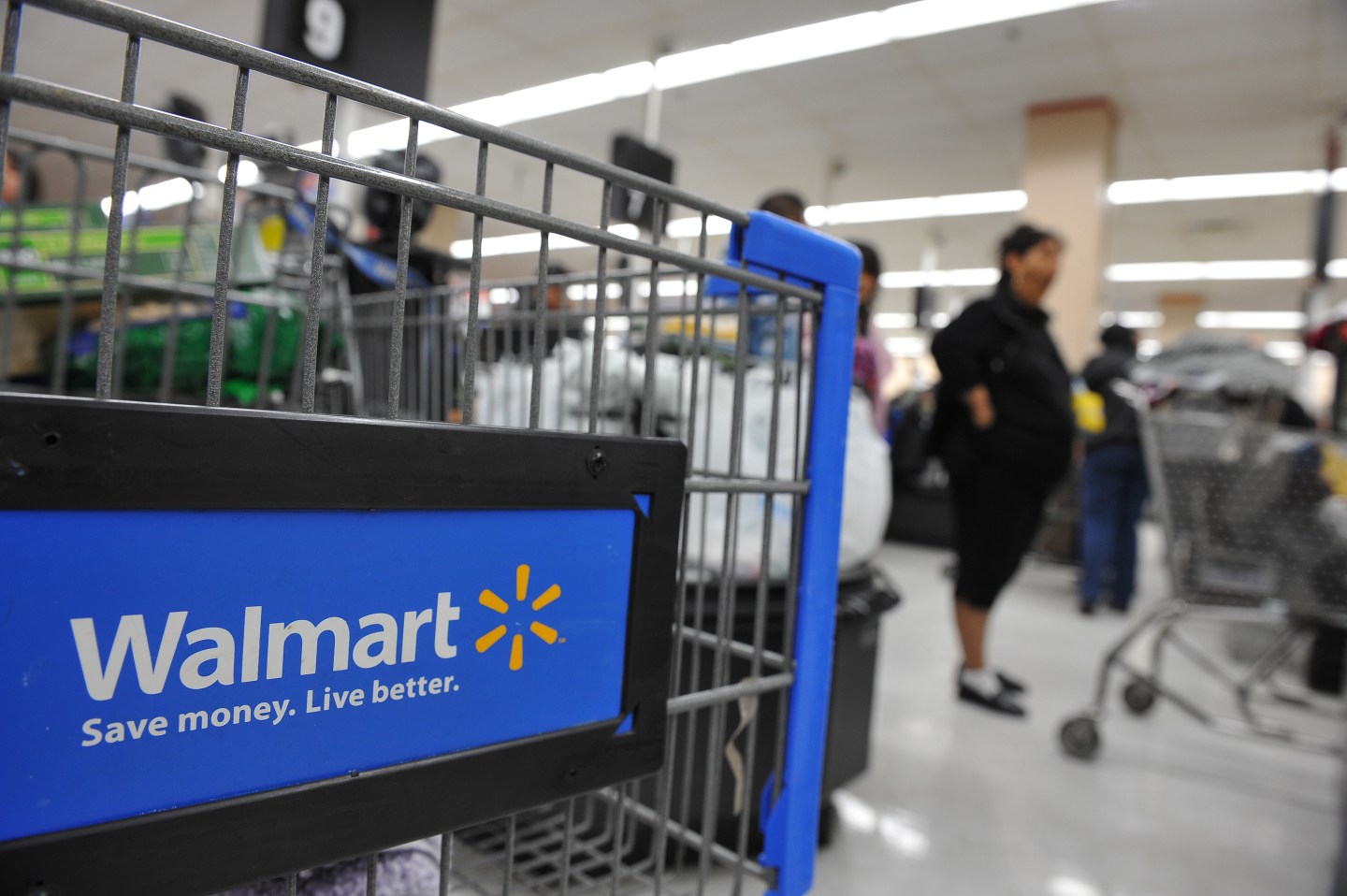
Photograph by Robyn Beck — AFP/Getty Images

Wal-Mart Stores’ (WMT) U.S. shoppers just won’t budge.

The discount chain is still feeling the pinch of shoppers pulling back on trips to its stores and cuts to food stamp programs many of its customers rely on.

Wal-Mart on Thursday reported comparable U.S. sales were unchanged in the three months ended July 31, extending a streak of quarters without growth to six in the key metric, which blends e-commerce with sales at stores open at least a year. (They had actually declined in each of the previous five quarters, if that’s any consolation to the company. And overall U.S. sales grew thanks to new store openings.)

The world’s largest retailer also cut its profit forecast for the year, blaming higher than expected health care costs for employees and saying it would ramp up its spending on its e-commerce capacity.

Despite some bright spots, like solid sales gains at its growing fleet small-format neighborhood stores, improvements in international markets like Canada, Britain and Mexico, and a 24% rise in e-commerce, Wal-Mart again found itself beset with big challenges at home: shopper traffic in the U.S. fell 1.1%, food stamp cuts enacted last year by the U.S. government continued to hurt its grocery sales (which generate more than half of its revenue) and force Wal-Mart to cut prices, and uninspired results at Sam’s Club (which quarter after quarter gets beaten by Costco Wholesale (COST)).

“We wanted to see stronger comps overall in Walmart U.S. and Sam’s Club,” Wal-Mart CEO Doug McMillan said on a pre-recorded conference call. “In an environment where customers have so many choices about where to shop and how to buy, and many of them are feeling pressure on their budgets, we have to be at our best.”

Some 20% of Wal-Mart shoppers rely on food stamps, according to a Cowen study this year. In addition, Wal-Mart is facing intense competition from dollar stores such as Dollar General (DG) and Family Dollar (FDO), which are lowering their prices on all manner of merchandise this year to win those shoppers still pinching pennies in an environment of anemic wage growth.

So Wal-Mart is trying to revive its U.S. sales by accelerating its rollout of small-format neighborhood stores, which reported a 5.6% increase in comparable sales. But there are only 400 of those locations, compared to more than 4,000 supercenters. It is also putting more resources into its e-commerce, which only generates about 3% of sales.

Wal-Mart’s tepid sales growth comes a day after department store chain Macy’s (M) lowered its sales forecast, saying shoppers were holding back on spending in the face of slow economic growth. Retailers from Kate Spade to Family Dollar have said the same thing in recent weeks. Kohl’s (KSS), a mid-tier department store chain, on Thursday reported disappointing comparable sales for the second quarter, posting a 1.3% decline, while Wall Street was projecting a smaller decline of 0.6%.

Overall revenue in the quarter grew rose 2.8% to $119.3 billion, a hair below analyst estimates of $120 billion. But earnings from continuing operations came in at $1.21, in line with analyst estimates. Wal-Mart now expects a profit for the full year of $4.90 to $5.15, down from its previous range of $5.10 to $5.45 per share.

About the Author
Phil Wahba
By Phil WahbaSenior Writer
LinkedIn iconTwitter icon

Phil Wahba is a senior writer at Fortune primarily focused on leadership coverage, with a prior focus on retail.

See full bioRight Arrow Button Icon

Latest in Retail

millennial
CommentaryConsumer Spending
Meet the 2025 holiday white whale: the millennial dad spending $500+ per kid
By Phillip GoerickeDecember 12, 2025
14 hours ago
McDonald
RetailRetail
Lululemon CEO Calvin McDonald to step down as quarterly profit dips 13%
By Anne D'Innocenzio and The Associated PressDecember 12, 2025
15 hours ago
Sarandos
CommentaryAntitrust
Netflix, Warner, Paramount and antitrust: Entertainment megadeal’s outcome must follow the evidence, not politics or fear of integration
By Satya MararDecember 12, 2025
15 hours ago
InvestingMarkets
Retail investors drive stocks to a pre-Christmas all-time high—and Wall Street sees a moment to sell
By Jim EdwardsDecember 12, 2025
16 hours ago
Five panelists seated; two women and five men.
AIBrainstorm AI
The race to deploy an AI workforce faces one important trust gap: What happens when an agent goes rogue?
By Amanda GerutDecember 11, 2025
1 day ago
Oreo
RetailFood and drink
Zero-sugar Oreos headed to America for first time
By Dee-Ann Durbin and The Associated PressDecember 11, 2025
2 days ago

Most Popular

placeholder alt text
Economy
Tariffs are taxes and they were used to finance the federal government until the 1913 income tax. A top economist breaks it down
By Kent JonesDecember 12, 2025
17 hours ago
placeholder alt text
Success
At 18, doctors gave him three hours to live. He played video games from his hospital bed—and now, he’s built a $10 million-a-year video game studio
By Preston ForeDecember 10, 2025
3 days ago
placeholder alt text
Success
Palantir cofounder calls elite college undergrads a ‘loser generation’ as data reveals rise in students seeking support for disabilities, like ADHD
By Preston ForeDecember 11, 2025
2 days ago
placeholder alt text
Success
Apple cofounder Ronald Wayne sold his 10% stake for $800 in 1976—today it’d be worth up to $400 billion
By Preston ForeDecember 12, 2025
13 hours ago
placeholder alt text
Success
40% of Stanford undergrads receive disability accommodations—but it’s become a college-wide phenomenon as Gen Z try to succeed in the current climate
By Preston ForeDecember 12, 2025
13 hours ago
placeholder alt text
Arts & Entertainment
'We're not just going to want to be fed AI slop for 16 hours a day': Analyst sees Disney/OpenAI deal as a dividing line in entertainment history
By Nick LichtenbergDecember 11, 2025
1 day ago
Rankings
  • 100 Best Companies
  • Fortune 500
  • Global 500
  • Fortune 500 Europe
  • Most Powerful Women
  • Future 50
  • World’s Most Admired Companies
  • See All Rankings
Sections
  • Finance
  • Leadership
  • Success
  • Tech
  • Asia
  • Europe
  • Environment
  • Fortune Crypto
  • Health
  • Retail
  • Lifestyle
  • Politics
  • Newsletters
  • Magazine
  • Features
  • Commentary
  • Mpw
  • CEO Initiative
  • Conferences
  • Personal Finance
  • Education
Customer Support
  • Frequently Asked Questions
  • Customer Service Portal
  • Privacy Policy
  • Terms Of Use
  • Single Issues For Purchase
  • International Print
Commercial Services
  • Advertising
  • Fortune Brand Studio
  • Fortune Analytics
  • Fortune Conferences
  • Business Development
About Us
  • About Us
  • Editorial Calendar
  • Press Center
  • Work At Fortune
  • Diversity And Inclusion
  • Terms And Conditions
  • Site Map

© 2025 Fortune Media IP Limited. All Rights Reserved. Use of this site constitutes acceptance of our Terms of Use and Privacy Policy | CA Notice at Collection and Privacy Notice | Do Not Sell/Share My Personal Information
FORTUNE is a trademark of Fortune Media IP Limited, registered in the U.S. and other countries. FORTUNE may receive compensation for some links to products and services on this website. Offers may be subject to change without notice.