• Home
  • Latest
  • Fortune 500
  • Finance
  • Tech
  • Leadership
  • Lifestyle
  • Rankings
  • Multimedia
mobility

Forget the iWatch. Headphones are the original wearable tech

By
David Z. Morris
Down Arrow Button Icon
By
David Z. Morris
Down Arrow Button Icon
June 24, 2014, 4:20 PM ET
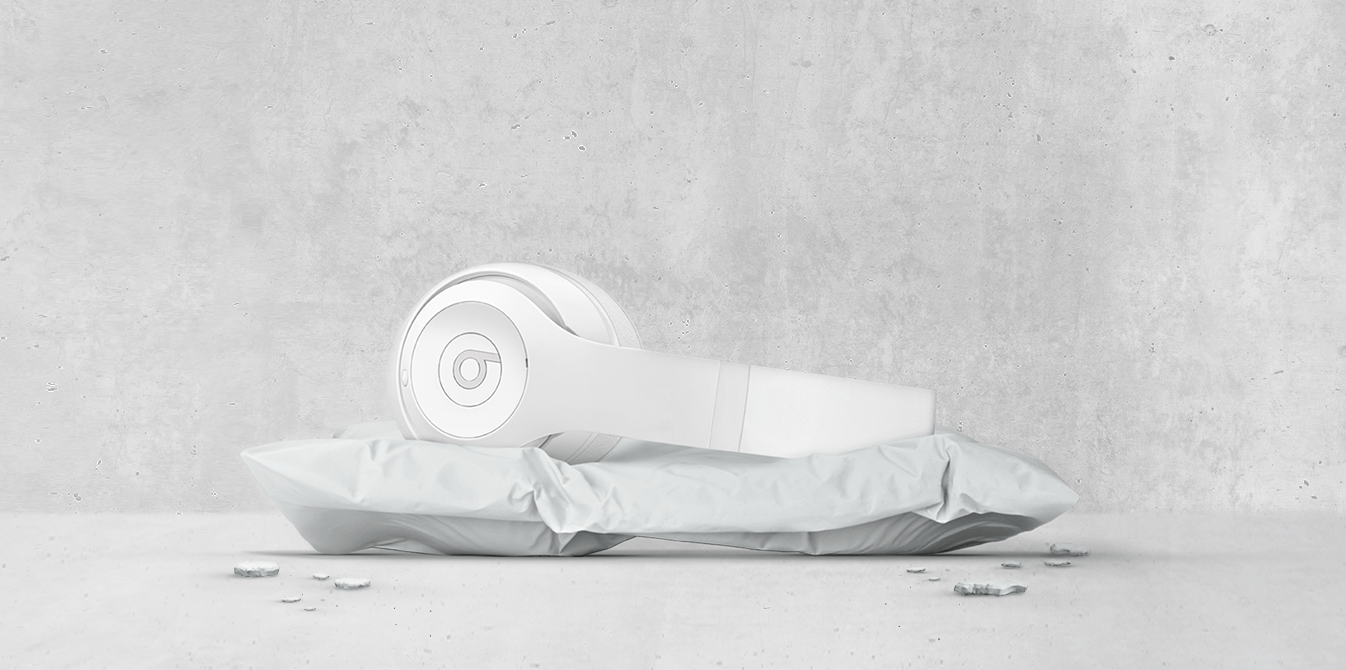
A pair of Beats Studio headphones designed in collaboration with the Brooklyn firm Snarkitecture.
A pair of Beats Studio headphones designed in collaboration with the Brooklyn firm Snarkitecture.Courtesy: Beats

With Apple’s acquisition of Beats this year, headphones have suddenly become a focal point for the consumer technology industry. If you look closely, though, you’ll realize that they’ve always been there.

We take headphones for granted. We forget they’re jammed in our ears or hanging around our neck. They were “wearable” back when the term meant the shirt at the top of the laundry pile. They have been feeding us data from our smartphones since smartphones existed. Yet they have remained at the margins of the wearable tech rush. Until Apple’s $3 billion buy, that is.

Apple (AAPL), as the company is wont to do, has said little about whether its acquisition was driven by talent (namely co-founders Jimmy Iovine and Dr. Dre), technology, or something else entirely. All CEO Tim Cook seems to talk about is how much he loves music. Yet in interviews with Fortune, leaders in headphone design and biometric research say that headphones have the ability to be much more than mere private audio listening devices.

Technophiles have spent the last couple of years obsessing about wearable technology—things like fitness bands, smart watches, and funny-looking glasses intended to give the wearer easier access to information about themselves and the world around them. For headphones, their pre-existing normality may be smart headphones’ ace in the competitive hole.

“Headphones were the first mass-accepted wearables,” says Noel Lee, founder and CEO of headphone maker Monster and the lead sound engineer for the original Beats headphones. Beats took that normality a step further by turning high-end headphones into fashion accessories fit for a rock or rap star.

But ears also happen to be great sources of biometric information. In many ways, headphones are a more logical place for digital health and sports functions than the electronic wristbands currently in vogue. “You can measure a lot more at the ear than at other parts of the body,” says Steven LeBoeuf, a specialist in ear biometrics at the sensor-design firm Valencell. That includes blood pressure, heart rate, ECG, and core body temperature, which is particularly tough to get from a wristband. Headphones may also be better at health monitoring than wristbands because putting them on is already a part of many people’s daily routines.

By combining biometric data with other sensors—GPS, an accelerometer, or an advanced sound processing unit—headphones could become a new kind of performance enhancer. “[Your headphones] could figure out if you’re cycling, or hunting, or golfing,” says I.P. Park, CTO of the audio device manufacturer Harman (HAR). “Based on the situation, maybe there are features and services these headphones could provide you.”

For instance, when you get on your bicycle, your headphones could automatically let you hear the sounds of nearby cars through your electronic dance music, solving one of the major conflicts between safety and enjoyment for cyclists. Hunters could use specialty headphones to separate game noises from environmental sound. A headphone worn by a football or soccer player could filter out crowd noise and amplify teammates’ voices— a serious blow to Seattle’s “12th Man” or any other deafening fan bases, and a potentially thorny issue for sports commissioners.

Miniaturization has already nearly made it possible for headphones to pack in all that capability. The recent Kickstarter project for Dash earbuds, a wireless pair of earphones made by a company called Bragi, already cram some biometric sensors, a microphone, Bluetooth, and 4GB of storage into a device meant to fit inside a user’s ear. Park predicts that wireless technology will be typical of future headphones as LTE and Wi-Fi connections spread to smaller electronic devices.

Biometrics could also make headphones even more central to the gaming world. There’s what LeBeouf calls “relaxation gaming,” which would use sound feedback to train a user, such as a therapy patient, to enter a relaxed state. LeBoeuf also imagines using headphone biometrics to affect play in more traditional video games. A biofeedback-enabled game might require you to actually get angry to transform from Bruce Banner into the Incredible Hulk, or a character in a social game could be given a different appearance based on the users’ own fitness.

Music and games may be the gateway drugs, but smart headphones could also make sound the basis for information services of a sort we’ve never seen before. Spike Jonze’s 2013 film Her depicted a close relationship between a user and his artificial intelligence-equipped personal assistant, who interacts with him only through an earpiece. Harman’s Park thinks that’s prophetic. “Earphones or headphones are going to become major information hubs, just like smartphones now.”

“But,” he adds, “a lot of things have to be done along the way.” That includes pushing voice recognition and response technologies much further. “How many people use Google Voice as their dominant interface? It has to be 100% accurate.” The same thing goes for Apple’s Siri.

Still, no matter how good natural language processing gets, a full-fledged headphone interface would likely combine voice with gestures through touchpads on the headphones’ surface. Input may also come from head movement, such as nodding your head to one side to skip to the next song.

Smart headphones would be most useful when driven by context rather than command, Park said. He envisions headphones able to anticipate and provide for a user’s needs “based on where you are, based on the current context of your situation. We call it augmented hearing.” That could include things like providing a tour of a museum or describing landmarks in a new city.

And let’s not forget what headphones were originally designed for. With greater context awareness, connectedness, and processing power, “smart” headphones could enhance the audio listening experience. With biometric and location data, smart headphones could tailor music to moods and moments: heavy metal or dance music for the gym, ambient or modal jazz for the wee hours of the morning.

“The way music gets consumed, we’re slaves to convenience. It’s always on the go, really low fidelity, high noise,” says Marko Plevnik of U.K. consumer research and technology design firm PDD. “It’s almost an add-on to another experience. If headphones can add extra poignancy or meaning to music. That’s a good thing.”

About the Author
By David Z. Morris
See full bioRight Arrow Button Icon

Latest in

Finance
Lorem ipsum dolor sit amet, consectetur adipiscing elit, sed do eiusmod tempor incididunt ut labore et dolore magna aliqua. Ut enim ad minim veniam
By Fortune Editors
October 20, 2025
Finance
Lorem ipsum dolor sit amet, consectetur adipiscing elit, sed do eiusmod tempor incididunt ut labore et dolore magna aliqua. Ut enim ad minim veniam
By Fortune Editors
October 20, 2025
Finance
Lorem ipsum dolor sit amet, consectetur adipiscing elit, sed do eiusmod tempor incididunt ut labore et dolore magna aliqua. Ut enim ad minim veniam
By Fortune Editors
October 20, 2025
Finance
Lorem ipsum dolor sit amet, consectetur adipiscing elit, sed do eiusmod tempor incididunt ut labore et dolore magna aliqua. Ut enim ad minim veniam
By Fortune Editors
October 20, 2025
Finance
Lorem ipsum dolor sit amet, consectetur adipiscing elit, sed do eiusmod tempor incididunt ut labore et dolore magna aliqua. Ut enim ad minim veniam
By Fortune Editors
October 20, 2025
Finance
Lorem ipsum dolor sit amet, consectetur adipiscing elit, sed do eiusmod tempor incididunt ut labore et dolore magna aliqua. Ut enim ad minim veniam
By Fortune Editors
October 20, 2025

Most Popular

Finance
Lorem ipsum dolor sit amet, consectetur adipiscing elit, sed do eiusmod tempor incididunt ut labore et dolore magna aliqua. Ut enim ad minim veniam
By Fortune Editors
October 20, 2025
Finance
Lorem ipsum dolor sit amet, consectetur adipiscing elit, sed do eiusmod tempor incididunt ut labore et dolore magna aliqua. Ut enim ad minim veniam
By Fortune Editors
October 20, 2025
Finance
Lorem ipsum dolor sit amet, consectetur adipiscing elit, sed do eiusmod tempor incididunt ut labore et dolore magna aliqua. Ut enim ad minim veniam
By Fortune Editors
October 20, 2025
Finance
Lorem ipsum dolor sit amet, consectetur adipiscing elit, sed do eiusmod tempor incididunt ut labore et dolore magna aliqua. Ut enim ad minim veniam
By Fortune Editors
October 20, 2025
Finance
Lorem ipsum dolor sit amet, consectetur adipiscing elit, sed do eiusmod tempor incididunt ut labore et dolore magna aliqua. Ut enim ad minim veniam
By Fortune Editors
October 20, 2025
Finance
Lorem ipsum dolor sit amet, consectetur adipiscing elit, sed do eiusmod tempor incididunt ut labore et dolore magna aliqua. Ut enim ad minim veniam
By Fortune Editors
October 20, 2025
Rankings
  • 100 Best Companies
  • Fortune 500
  • Global 500
  • Fortune 500 Europe
  • Most Powerful Women
  • Future 50
  • World’s Most Admired Companies
  • See All Rankings
Sections
  • Finance
  • Leadership
  • Success
  • Tech
  • Asia
  • Europe
  • Environment
  • Fortune Crypto
  • Health
  • Retail
  • Lifestyle
  • Politics
  • Newsletters
  • Magazine
  • Features
  • Commentary
  • Mpw
  • CEO Initiative
  • Conferences
  • Personal Finance
  • Education
Customer Support
  • Frequently Asked Questions
  • Customer Service Portal
  • Privacy Policy
  • Terms Of Use
  • Single Issues For Purchase
  • International Print
Commercial Services
  • Advertising
  • Fortune Brand Studio
  • Fortune Analytics
  • Fortune Conferences
  • Business Development
About Us
  • About Us
  • Editorial Calendar
  • Press Center
  • Work At Fortune
  • Diversity And Inclusion
  • Terms And Conditions
  • Site Map

© 2025 Fortune Media IP Limited. All Rights Reserved. Use of this site constitutes acceptance of our Terms of Use and Privacy Policy | CA Notice at Collection and Privacy Notice | Do Not Sell/Share My Personal Information
FORTUNE is a trademark of Fortune Media IP Limited, registered in the U.S. and other countries. FORTUNE may receive compensation for some links to products and services on this website. Offers may be subject to change without notice.


Most Popular

placeholder alt text
Economy
America's $38 trillion national debt 'exacerbates generational imbalances' with Gen Z and millennials paying the price, warns think tank
By Eleanor PringleDecember 16, 2025
1 day ago
placeholder alt text
Success
Meetings are not work, says Southwest Airlines CEO—and he’s taking action, by blocking his calendar every afternoon from Wednesday to Friday 
By Preston ForeDecember 15, 2025
2 days ago
placeholder alt text
Success
'I had to take 60 meetings': Jeff Bezos says 'the hardest thing I've ever done' was raising the first million dollars of seed capital for Amazon
By Dave SmithDecember 15, 2025
2 days ago
placeholder alt text
Innovation
An MIT roboticist who cofounded bankrupt Roomba maker iRobot says Elon Musk's vision of humanoid robot assistants is 'pure fantasy thinking'
By Marco Quiroz-GutierrezDecember 16, 2025
22 hours ago
placeholder alt text
Future of Work
The job market is so bad, people in their 40s are resorting to going back to school instead of looking for work
By Sydney LakeDecember 16, 2025
1 day ago
placeholder alt text
Politics
Exclusive: After citations against Elon Musk’s Boring Company were suddenly withdrawn, federal regulators are now investigating Nevada OSHA
By Jessica MathewsDecember 16, 2025
12 hours ago

Latest in

Jerome Powell, chairman of the US Federal Reserve
Economyunemployment
Red flags in U.S. data will justify ‘insurance’ interest rate cuts from the Fed next year, says UBS
By Eleanor PringleDecember 17, 2025
19 minutes ago
Innovationquantum computing
Quantum computing could be a $198 billion industry in the next 15 years, Jefferies analyst says
By Jim EdwardsDecember 17, 2025
43 minutes ago
Databricks co-founder and CEO Ali Ghodsi (left) with Fortune editorial director Andrew Nusca at Fortune Brainstorm AI 2025 in San Francisco. (Photo: Stuart Isett/Fortune)
NewslettersFortune Tech
Databricks is now worth $134 billion
By Andrew NuscaDecember 17, 2025
1 hour ago
NewslettersCEO Daily
Why more boards are taking a chance on outsider CEOs
By Geoff ColvinDecember 17, 2025
1 hour ago
Norbert Jung
Commentary
Factory 2030 runs on more than code. As a CEO, I see the power of agentic AI—and the trust gap that we must close
By Norbert JungDecember 17, 2025
2 hours ago
Qualcomm Executive Vice President Nakul Duggal says the company's AI features in cars will be found in 100 countries by the end of next year.
AIRobots
‘Robots are going to be amongst us’: Qualcomm exec says buckle up for the next 5 years. Your car is going to be the first shoe to drop
By Nino PaoliDecember 17, 2025
2 hours ago