• Home
  • Latest
  • Fortune 500
  • Finance
  • Tech
  • Leadership
  • Lifestyle
  • Rankings
  • Multimedia
FinanceMinimum Wage

Minimum wage hike: A weak economic antidote Obama can’t ignore

By
Christopher Matthews
Down Arrow Button Icon
By
Christopher Matthews
Down Arrow Button Icon
June 11, 2014, 4:00 PM ET
Win McNamee / Getty Images

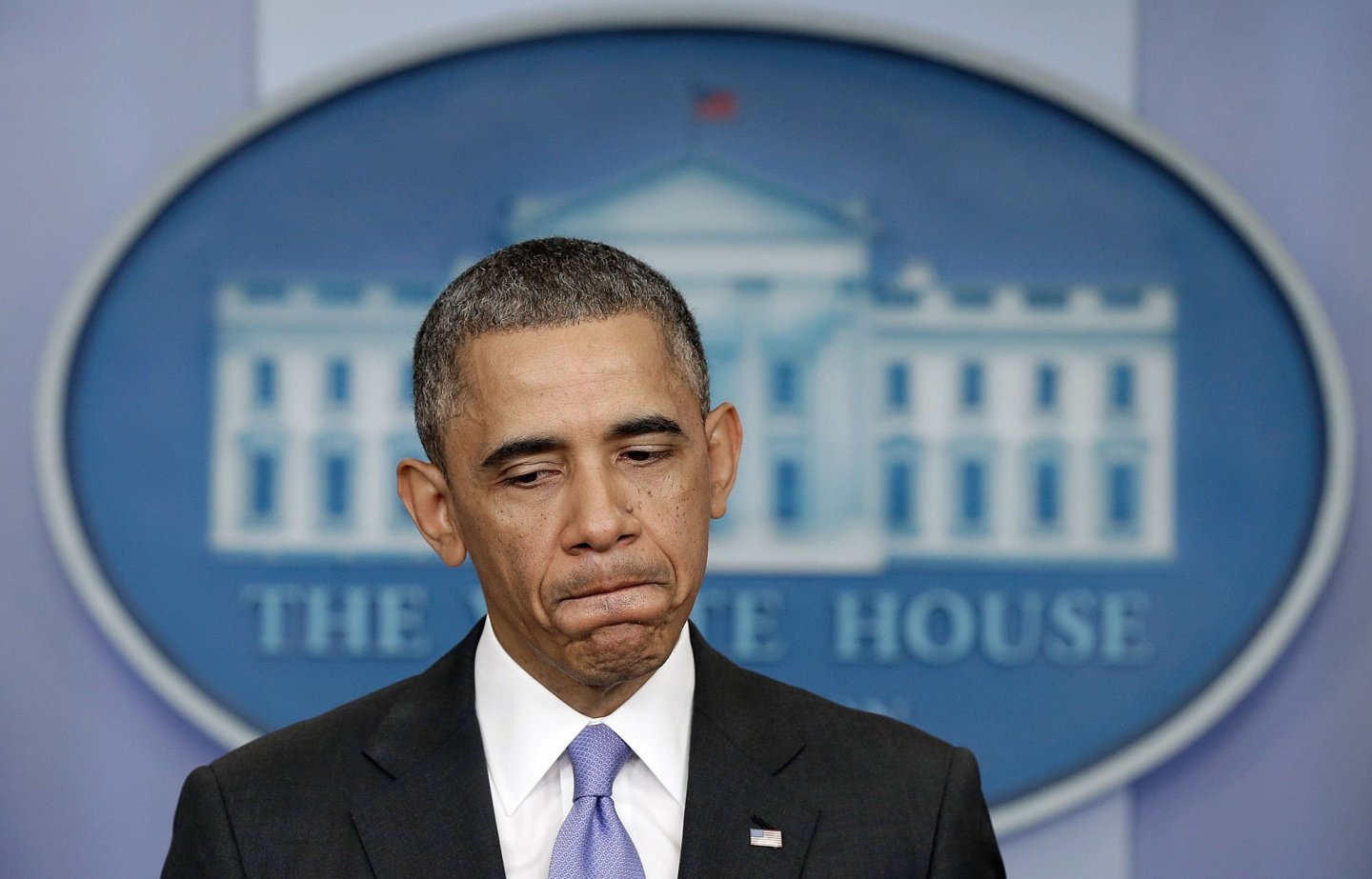
Ever since the February 2013 State of the Union address, when President Obama announced his support for a higher minimum wage, the issue has captivated a nation worried over stagnating middle-class wages and income inequality.

It’s no surprise that Democrats across the country have clung to the issue, as it’s quite popular. A CNNMoney poll released Tuesday showed that 71% of Americans favor raising the minimum wage, including 54% of Republicans. Heck, even former Republican presidential hopefuls Mitt Romney and Rick Santorum have come out in favor of raising the wage floor.

But policy experts are less enthusiastic about the move. At a Fortune event on Monday, economists Peter Henry and Glen Hubbard (former Obama and George W. Bush advisors, respectively) agreed that there are more effective ways to help the working poor than raising the minimum wage.

And at a policy speech to business leaders on Wednesday morning, Treasury Secretary Jack Lew laid out a comprehensive plan for moving economic recovery into the next gear, making only passing reference to a minimum wage increase. Instead, Lew spent the majority of his time arguing that the main challenges facing the economy are slow growth within the labor force, a lack of business investment, and the deceleration of productivity growth and technological innovation. “Growth in our labor force has slowed considerably … since 2008 the labor force participation rate has actually fallen by 2.7 percentage points,” Lew said. “We need to do a better jobs helping workers who want to re-enter the workforce.”

Statements like these seem to bolster the case against raising the minimum wage, a policy that will almost certainly lead to a dip in employment. The Congressional Budget Office, for instance, estimated earlier this year that raising the minimum wage would lead to a total decrease of 500,000 jobs.

What will help boost wages without shedding jobs? A more robust Earned Income Tax Credit (EITC) as well as federal programs that help working parents like funding for early childhood education could help. A strengthened EITC would also provide workers with higher pay and thus give low wage earners more spending power, decreasing the need for a minimum wage hike altogether.

But advocating for larger refundable tax credits, as opposed to a higher minimum wage, is difficult for two reasons. One is that a higher minimum wage is simple for voters to understand and overwhelmingly popular. The other is that the costs of a higher minimum wage–like lower profit margins, higher prices, and lower employment–are shouldered by the entire economy and make no direct appearance on the federal budget. An expanded EITC, on the other hand, would have to be paid for with higher taxes or by adding to the deficit.

As Glen Hubbard said at the Fortune event on Monday:

“Reasonable people can disagree on employment effects of raising the minimum wage … some would suggest large [employment] losses, others negligible losses. If you really wanted to empower low income people, you would expand and make more work- oriented things like the earned income credit, because you’re not losing jobs when you do that.”

Hubbard said that minimum wage efforts distract politicians from more effective solutions for helping those at the bottom of the income scale. And listening to Lew’s 3,500-plus-word speech on Wednesday (of which he devoted just 20 words to the minimum wage) you get the sense that he doesn’t want policymakers to be focusing too much on minimum wage efforts, either. The popularity of a minimum wage hike makes it impossible for the Obama administration to ignore it as a political tool, but such raises won’t be all that effective at addressing what the Treasury Secretary says are our economy’s biggest challenges.

About the Author
By Christopher Matthews
See full bioRight Arrow Button Icon

Latest in Finance

Investingspace
SpaceX sets $800 billion valuation, confirms 2026 IPO plans
By Loren Grush, Edward Ludlow and BloombergDecember 13, 2025
49 minutes ago
PoliticsAffordable Care Act (ACA)
With just days to go before ACA subsidies expire, Congress is about to wrap up its work with no consensus solution in sight
By Kevin Freking, Lisa Mascaro and The Associated PressDecember 13, 2025
1 hour ago
InnovationRobots
Even in Silicon Valley, skepticism looms over robots, while ‘China has certainly a lot more momentum on humanoids’
By Matt O'Brien and The Associated PressDecember 13, 2025
2 hours ago
HealthAffordable Care Act (ACA)
A Wisconsin couple was paying $2 a month for an ACA health plan. But as subsidies expire, it’s soaring to $1,600, forcing them to downgrade
By Ali Swenson and The Associated PressDecember 13, 2025
2 hours ago
Julian Braithwaite is the Director General of the International Alliance for Responsible Drinking
CommentaryProductivity
Gen Z is drinking 20% less than Millennials. Productivity is rising. Coincidence? Not quite
By Julian BraithwaiteDecember 13, 2025
3 hours ago
carbon
Commentaryclimate change
Banking on carbon markets 2.0: why financial institutions should engage with carbon credits
By Usha Rao-MonariDecember 13, 2025
4 hours ago

Most Popular

placeholder alt text
Economy
Tariffs are taxes and they were used to finance the federal government until the 1913 income tax. A top economist breaks it down
By Kent JonesDecember 12, 2025
1 day ago
placeholder alt text
Success
Apple cofounder Ronald Wayne sold his 10% stake for $800 in 1976—today it’d be worth up to $400 billion
By Preston ForeDecember 12, 2025
1 day ago
placeholder alt text
Success
40% of Stanford undergrads receive disability accommodations—but it’s become a college-wide phenomenon as Gen Z try to succeed in the current climate
By Preston ForeDecember 12, 2025
1 day ago
placeholder alt text
Economy
For the first time since Trump’s tariff rollout, import tax revenue has fallen, threatening his lofty plans to slash the $38 trillion national debt
By Sasha RogelbergDecember 12, 2025
21 hours ago
placeholder alt text
Economy
The Fed just ‘Trump-proofed’ itself with a unanimous move to preempt a potential leadership shake-up
By Jason MaDecember 12, 2025
19 hours ago
placeholder alt text
Success
At 18, doctors gave him three hours to live. He played video games from his hospital bed—and now, he’s built a $10 million-a-year video game studio
By Preston ForeDecember 10, 2025
3 days ago
Rankings
  • 100 Best Companies
  • Fortune 500
  • Global 500
  • Fortune 500 Europe
  • Most Powerful Women
  • Future 50
  • World’s Most Admired Companies
  • See All Rankings
Sections
  • Finance
  • Leadership
  • Success
  • Tech
  • Asia
  • Europe
  • Environment
  • Fortune Crypto
  • Health
  • Retail
  • Lifestyle
  • Politics
  • Newsletters
  • Magazine
  • Features
  • Commentary
  • Mpw
  • CEO Initiative
  • Conferences
  • Personal Finance
  • Education
Customer Support
  • Frequently Asked Questions
  • Customer Service Portal
  • Privacy Policy
  • Terms Of Use
  • Single Issues For Purchase
  • International Print
Commercial Services
  • Advertising
  • Fortune Brand Studio
  • Fortune Analytics
  • Fortune Conferences
  • Business Development
About Us
  • About Us
  • Editorial Calendar
  • Press Center
  • Work At Fortune
  • Diversity And Inclusion
  • Terms And Conditions
  • Site Map

© 2025 Fortune Media IP Limited. All Rights Reserved. Use of this site constitutes acceptance of our Terms of Use and Privacy Policy | CA Notice at Collection and Privacy Notice | Do Not Sell/Share My Personal Information
FORTUNE is a trademark of Fortune Media IP Limited, registered in the U.S. and other countries. FORTUNE may receive compensation for some links to products and services on this website. Offers may be subject to change without notice.