• Home
  • Latest
  • Fortune 500
  • Finance
  • Tech
  • Leadership
  • Lifestyle
  • Rankings
  • Multimedia
FinanceEconomy

Orszag: Why the 2011 outlook is dismal

By
Howard Penney
Howard Penney
Down Arrow Button Icon
By
Howard Penney
Howard Penney
Down Arrow Button Icon
November 16, 2010, 8:00 AM ET

Many of the tailwinds that helped the economy during the past 18 months will turn into headwinds, leaving us little hope but for 0%-2% GDP growth.


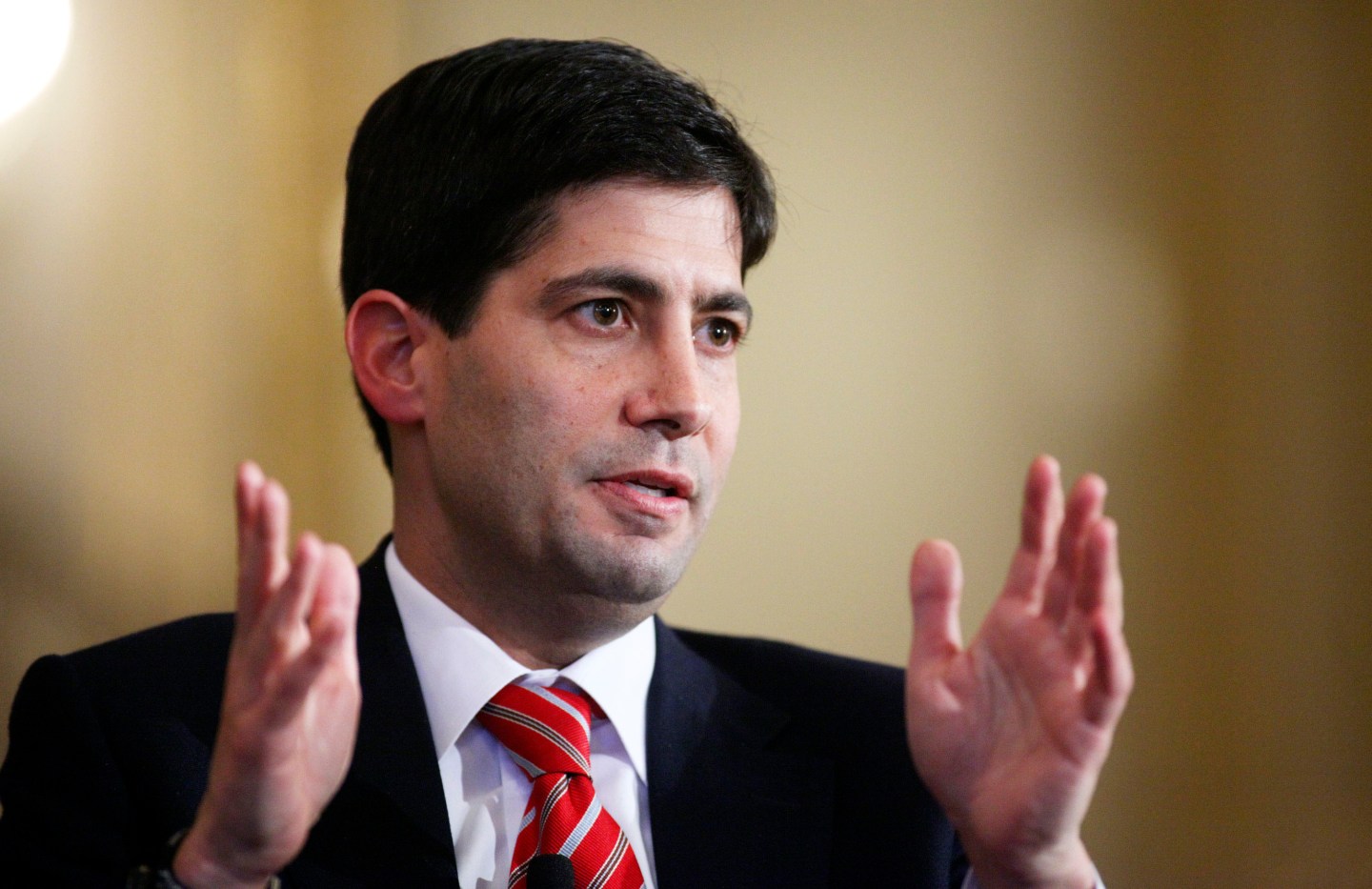
Peter Orszag sees continued sluggishnesss in the economy.

Having escaped the quagmire that is Washington’s bureaucracy, Peter Orszag provided some very interesting commentary during our conference call last week titled, “Out with the Rhetoric and In With the Facts on the Budget.” Orszag, who was President Obama’s director of the Office of Management and Budget until July, offered his insights on the general outlook for the U.S. economy.

In terms of GDP, the bottom line is that there are many headwinds coming into play. Furthermore, if the Federal Reserve’s $600 billion plan for quantitative easing does not work, the outlook will become even less promising.

First, we’ll provide some context around where we have been. Total private sector borrowing amounted to almost 30% of GDP in 2007 and in 2009 it had fallen to less than minus 15% of GDP, so we saw a swing in GDP of roughly 45% of private sector borrowing over a two-year period. This was a traumatic hit to the nation’s economy — one not seen in generations.

The tectonic shifts in the financial sector, housing market, and subsequent (and ongoing) consumer deleveraging pose drastically difficult obstacles for the Federal Reserve. Orszag noted that, unlike slowdowns that are associated with monetary policy being tweaked in order to address inflation concerns, downturns triggered by the financial sector tend to take result in longer and more sluggish recoveries.

A recent study by Reinhart and Reinhart of roughly 30 similar instances of economic downturns triggered by difficulty in the financial sector suggests the following: that the average unemployment rate in the decade following such crises is 5% higher than immediately pre-crisis, that housing prices are 15-20% lower over the entire subsequent decade versus pre-crisis levels, and that government debt as a percentage of GDP is 90% higher than the pre-crisis level. The increase in debt, according to Orszag, reflects the downturn itself and the policy measures that are taken to offset it.

So what does the next 12-to 24 months look like? First the positives:

  1. Real exports are growing quite rapidly (aided by the weakened U.S. Dollar).
  2. Investment in equipment and software has been growing nicely and firms are making significant investments in short-term assets. The problem on the investment side is in the long-term — assets with longer depreciation schedules are seeing a historically low share of investment allocation.
  3. Corporate profits have improved. They were ~12% of GDP in 2006 and 2007, falling to 9% in 2009 and are now back up to ~11% of GDP on 2010. The difference between 9% and 11% represents $300 billion in GDP, so it’s significant step up.

One caveat pertaining to point #3 is that the surge in corporate profits is not resulting in significant hiring or long-term investments. Rather the profits are being retained as liquid assets. The psychological impact of the Great Recession is clearly impacting the behavior of both the consumer and corporate America. The effectiveness, or lack thereof, of the Federal Reserve’s actions is leaving a huge question mark over the economic outlook.

Now the negatives. The factors that supported growth in late 2009 and 2010 will become significant headwinds in 2011.

  1. The inventory cycle is going the wrong way in the first part of 2011; moving to net-neutrality towards impact on GDP growth. As a side note, Orszag noted that the sequential improvement in GDP in the third quarter was unintentional as some firms were caught out by the slump in demand during the summer and unintentionally built up inventories. That trend, Orszag expects, will reverse itself in the fourth quarter and the early part of 2011.
  2. The Recovery Act, despite the controversy, added 2% or more to GDP in the first half of 2010. By design, the act called for all the money to be “out the door” by the end of September. Going forward, the cost of the Recovery Act will be net neutral and eventually – in terms of cash flow – will be net negative to GDP growth.
  3. The final factor is state and local deficits, which are projected to be $100 to $150 billion a year for the next two tears. Going forward, a much smaller share of them will be offset by federal subsidies, therefore a much larger share of the deficits will need to be reduced through tax increases and spending cuts at the state and local level.

Taking points two and three together added a net 2% to GDP in first half of 2010 and will be a negative 2% to growth in the first half of 2011. If you then add the positive inventory cycle of 3.4% in the first half of 2010, you get the total contribution to GDP growth from the three factors of 5.4% during the first half of the year.

Depending on your view of the inventory cycle, we are looking at a potential year-over-year swing in GDP in the first half of 2011 of around 5.4%, which becomes a headwind in the next 12 to 24 months. At best, we are looking at 0%-2% GDP growth for the next 12-24 months.

What does all this mean for the consumer and the unemployment rate? Under a good scenario, it’s going to be a hard slog of 1-2% GDP growth, which will prove to be inadequate to reduce the unemployment rate. Here’s Orszag’s rule of thumb on this: Take whatever the GDP growth rate is, subtract 2.5%, and divide by two to get to the percentage change in unemployment. So, to get a 1% reduction in the unemployment rate you need GDP growth of 4.5% for one year (4.5 minus 2.5 divided by 2).

Given the GDP headwinds outlined on the call, it seems unlikely that the unemployment rate will improve meaningfully any time soon. This is particularly problematic for U.S. corporations levered to domestic demand.
About the Author
By Howard Penney
See full bioRight Arrow Button Icon

Latest in Finance

Finance
Lorem ipsum dolor sit amet, consectetur adipiscing elit, sed do eiusmod tempor incididunt ut labore et dolore magna aliqua. Ut enim ad minim veniam
By Fortune Editors
October 20, 2025
Finance
Lorem ipsum dolor sit amet, consectetur adipiscing elit, sed do eiusmod tempor incididunt ut labore et dolore magna aliqua. Ut enim ad minim veniam
By Fortune Editors
October 20, 2025
Finance
Lorem ipsum dolor sit amet, consectetur adipiscing elit, sed do eiusmod tempor incididunt ut labore et dolore magna aliqua. Ut enim ad minim veniam
By Fortune Editors
October 20, 2025
Finance
Lorem ipsum dolor sit amet, consectetur adipiscing elit, sed do eiusmod tempor incididunt ut labore et dolore magna aliqua. Ut enim ad minim veniam
By Fortune Editors
October 20, 2025
Finance
Lorem ipsum dolor sit amet, consectetur adipiscing elit, sed do eiusmod tempor incididunt ut labore et dolore magna aliqua. Ut enim ad minim veniam
By Fortune Editors
October 20, 2025
Finance
Lorem ipsum dolor sit amet, consectetur adipiscing elit, sed do eiusmod tempor incididunt ut labore et dolore magna aliqua. Ut enim ad minim veniam
By Fortune Editors
October 20, 2025

Most Popular

Finance
Lorem ipsum dolor sit amet, consectetur adipiscing elit, sed do eiusmod tempor incididunt ut labore et dolore magna aliqua. Ut enim ad minim veniam
By Fortune Editors
October 20, 2025
Finance
Lorem ipsum dolor sit amet, consectetur adipiscing elit, sed do eiusmod tempor incididunt ut labore et dolore magna aliqua. Ut enim ad minim veniam
By Fortune Editors
October 20, 2025
Finance
Lorem ipsum dolor sit amet, consectetur adipiscing elit, sed do eiusmod tempor incididunt ut labore et dolore magna aliqua. Ut enim ad minim veniam
By Fortune Editors
October 20, 2025
Finance
Lorem ipsum dolor sit amet, consectetur adipiscing elit, sed do eiusmod tempor incididunt ut labore et dolore magna aliqua. Ut enim ad minim veniam
By Fortune Editors
October 20, 2025
Finance
Lorem ipsum dolor sit amet, consectetur adipiscing elit, sed do eiusmod tempor incididunt ut labore et dolore magna aliqua. Ut enim ad minim veniam
By Fortune Editors
October 20, 2025
Finance
Lorem ipsum dolor sit amet, consectetur adipiscing elit, sed do eiusmod tempor incididunt ut labore et dolore magna aliqua. Ut enim ad minim veniam
By Fortune Editors
October 20, 2025
Rankings
  • 100 Best Companies
  • Fortune 500
  • Global 500
  • Fortune 500 Europe
  • Most Powerful Women
  • Future 50
  • World’s Most Admired Companies
  • See All Rankings
Sections
  • Finance
  • Leadership
  • Success
  • Tech
  • Asia
  • Europe
  • Environment
  • Fortune Crypto
  • Health
  • Retail
  • Lifestyle
  • Politics
  • Newsletters
  • Magazine
  • Features
  • Commentary
  • Mpw
  • CEO Initiative
  • Conferences
  • Personal Finance
  • Education
Customer Support
  • Frequently Asked Questions
  • Customer Service Portal
  • Privacy Policy
  • Terms Of Use
  • Single Issues For Purchase
  • International Print
Commercial Services
  • Advertising
  • Fortune Brand Studio
  • Fortune Analytics
  • Fortune Conferences
  • Business Development
About Us
  • About Us
  • Editorial Calendar
  • Press Center
  • Work At Fortune
  • Diversity And Inclusion
  • Terms And Conditions
  • Site Map
  • Facebook icon
  • Twitter icon
  • LinkedIn icon
  • Instagram icon
  • Pinterest icon

© 2026 Fortune Media IP Limited. All Rights Reserved. Use of this site constitutes acceptance of our Terms of Use and Privacy Policy | CA Notice at Collection and Privacy Notice | Do Not Sell/Share My Personal Information
FORTUNE is a trademark of Fortune Media IP Limited, registered in the U.S. and other countries. FORTUNE may receive compensation for some links to products and services on this website. Offers may be subject to change without notice.


Most Popular

placeholder alt text
North America
'I meant what I said in Davos': Carney says he really is planning a Canada split with the U.S. along with 12 new trade deals
By Rob Gillies and The Associated PressJanuary 28, 2026
3 days ago
placeholder alt text
Politics
The American taxpayer spent nearly half a billion dollars deploying federal troops to U.S. cities in 2025, CBO finds
By Nick LichtenbergJanuary 28, 2026
3 days ago
placeholder alt text
Economy
Right before Trump named Warsh to lead the Fed, Powell seemed to respond to some of his biggest complaints about the central bank
By Jason MaJanuary 30, 2026
18 hours ago
placeholder alt text
AI
Top engineers at Anthropic, OpenAI say AI now writes 100% of their code—with big implications for the future of software development jobs
By Beatrice NolanJanuary 29, 2026
2 days ago
placeholder alt text
Investing
Jerome Powell got a direct question about the U.S. ‘losing credibility’ and the soaring price of gold and silver. He punted
By Eva RoytburgJanuary 29, 2026
2 days ago
placeholder alt text
C-Suite
Fortune 500 CEOs are no longer giving employees an A for effort. Now they want proof of impact
By Claire ZillmanJanuary 28, 2026
3 days ago

Latest in Finance

EconomyFederal Government
Meet the first CEO of the IRS: A Jamie Dimon protege facing a $5 trillion test this tax season
By Lee CliffordJanuary 31, 2026
9 minutes ago
EconomyU.S. economy
Kevin Warsh will inherit a challenge no Fed chief has faced since post-World War II regarding the spiraling $31 trillion national debt
By Shawn TullyJanuary 31, 2026
17 minutes ago
Jerome Powell leaving the Fed is a key concern for Claudia Sahm.
EconomyLabor
‘I just don’t have a good feeling about this’: Top economist Claudia Sahm says the economy quietly shifted and everyone’s now looking at the wrong alarm
By Eleanor PringleJanuary 31, 2026
3 hours ago
United States President Donald Trump
EconomyInflation
Trump’s unlikely promise to ‘end inflation’ still saw families paying an extra $2,120 for goods and services in 2025
By Eleanor PringleJanuary 30, 2026
14 hours ago
Personal Financemortgages
How is interest on a personal loan calculated?
By Joseph HostetlerJanuary 30, 2026
14 hours ago
Personal FinanceLoans
Are there personal loans for veterans and military members?
By Joseph HostetlerJanuary 30, 2026
14 hours ago