• Home
  • Latest
  • Fortune 500
  • Finance
  • Tech
  • Leadership
  • Lifestyle
  • Rankings
  • Multimedia
Some Fortune Crypto pricing data is provided by Binance.
Cryptocyber

The AI arms race in cybersecurity has started. Most companies aren’t ready

By
Philip Martin
Philip Martin
Down Arrow Button Icon
By
Philip Martin
Philip Martin
Down Arrow Button Icon
May 29, 2026, 12:00 PM ET
Coinbase head of security, Philip Martin
Coinbase head of security, Philip MartinCoinbase
Add Fortune on Google for similar content.

In 2019, sophisticated hackers spent weeks targeting Coinbase employees with emails from compromised Cambridge University accounts. The attackers patiently built trust before deploying a pair of chained zero-day exploits—a term that describes undiscovered software vulnerabilities—that took aim at the Firefox browser. One exploit sought to break into the browser, and the other sought to execute malicious code on the host machine. At the time, it was among the most advanced attacks ever directed at the corporate sector. 

The Coinbase security team caught it within hours after an employee report and automated alerts fired simultaneously. This allowed us to identify the malicious behavior. Response times measured in minutes, no customer funds lost. But I think about that incident differently now. The attacker needed weeks of social engineering and rare zero-days to get one shot at us. An AI-driven adversary wouldn’t need weeks. It might not even need hours. And that’s the world I’m preparing for today.

The last few months have made something clear that security teams across industries have been quietly preparing for: AI is and will continue to change how cyberattacks occur. Since the form of this change is still taking shape, the hardest part of my job right now is planning for threat models that don’t fully exist yet.

Frontier AI models, such as those being built by Anthropic, OpenAI, and others, have crossed a capability threshold in cybersecurity that would have seemed speculative eighteen months ago. These systems can read a codebase the way an experienced auditor reads a codebase, but with the speed, memory and focus of a machine. One recent model found a 27-year-old bug in OpenBSD, one of the most audited codebases on the planet. That’s a structural shift in what’s possible.

Today, that shift favors the defender. 

Security is, in large part, a context problem. Defenders usually know more about their own systems than attackers: the code, logs, architecture, and history. Give a strong model that context and it can become a powerful tool for finding weaknesses faster and more thoroughly. At Coinbase, we already use AI across security work, including application security, launching simulated attacks on our own system (a process known as red teaming), and infrastructure hardening. In environments where defenders can deploy these tools first and at scale, they should win.

But where attackers and defenders share equal context, the problem is more significant.

One example is Decentralized Finance (DeFi), where code runs in the open. Attackers have the same access a smart contract audit does. It becomes a race of model capability and focus to see who will find bugs first. AI will also lead to a compression of the normal attack timeline, taking something that would have spanned weeks and compressing it to hours. This is likely to make exploits faster, cheaper and more frequent.

AI threatens the backbone of global software

The issue here, of course, extends well beyond DeFi and into the open source code that forms the backbone of the world of software. Much of that code is in the open on platforms such as GitHub, available for review by attacker and defender alike. In security, we call this kind of risk a supply chain attack. They’re not new, they are incredibly hard to detect and defend against, and they are about to get faster and easier than ever before.

The frontier models that can find long hidden bugs like the OpenBSD one today require enormous hardware to run. Anthropic and its peers are releasing these capabilities carefully, giving defenders a head start. That’s the right approach, and it’s a real benefit to the ecosystem. But it’s a temporary one. 

These models are getting cheaper to run. Researchers are improving efficiency, experimenting with ways to run larger models with less hardware, and steadily pushing performance forward. 

What might cost $10 million in hardware to run today could cost closer to $100,000 a year or two from now. Models like Mythos are unique today, but history is clear that open-weight equivalents will follow. When that happens, capabilities available now limited to a handful of labs will be within reach of any well-resourced attacker group.

This is what security teams should be planning for now. 

Incidents are going to move faster. Supply chain attacks will become much more common; lateral movement, privilege escalation, data exfiltration, exploitation of discovered vulnerabilities will happen at a speed that human responders will struggle to match. The scariest part of all is that’s all imagining an AI assisted attack as a regular attack, just faster. We fundamentally don’t know the ways AI will change the attack and defense side of cybersecurity in the coming years.

Preparing for threats you can’t fully specify is uncomfortable, but it’s not new. It’s most of what security work actually is. What is new is the speed. 

So what should companies do?

Companies that want to address these threats can start by using AI aggressively on the defensive side. There is no virtue in falling behind on tools your adversaries will eventually have. Don’t wait on vendors or a third party. Instead, make a point to experiment, and demand that your people engage with AI as much as possible.

That alone isn’t enough. Companies need to manage their third parties with the same intensity, especially the software libraries they depend on. Simple steps like version pinning or requiring a cool-down period before new library releases are available to developers can go a very long way toward blunting the supply chain attacks that are about to become far more common.

Most critically, rebuild your incident response around the assumption that the attacker is operating at machine speed, because soon enough, they will be. “Assume compromise” has been an ongoing slogan in security for years, but AI makes it viscerally real. The attacker on your network may not pause to sleep, strategize, or second-guess. Your playbooks need to account for that.

And through all of this, resist the temptation to treat any specific model release as the problem to solve. A year later, there will be a more capable model, and the cycle will reset. The goal isn’t to defend against one tool. It’s to build an organization that adapts faster than the threat evolves.

The last decade taught me that the crypto industry evolves faster than any sector I’ve ever worked in. The next decade, shaped by AI, will be faster still. This is not a fight defenders win once. It’s an arms race. Attackers will eventually get many of the same tools defenders have. What we can do, and what we have to do, is stay ahead long enough to matter. You may lose some battles along the way, the important thing is not to lose the war.


Explore the Fortune Crypto 100, our global ranking of the companies leading the digital asset industry across 10 categories. Plus, our Fortune Crypto Innovators list recognizes 30 firms shaping what’s next.
About the Author
By Philip Martin
See full bioRight Arrow Button Icon
Add Fortune on Google for similar content.

Latest in Crypto

Finance
Lorem ipsum dolor sit amet, consectetur adipiscing elit, sed do eiusmod tempor incididunt ut labore et dolore magna aliqua. Ut enim ad minim veniam
By Fortune Editors
October 20, 2025
Finance
Lorem ipsum dolor sit amet, consectetur adipiscing elit, sed do eiusmod tempor incididunt ut labore et dolore magna aliqua. Ut enim ad minim veniam
By Fortune Editors
October 20, 2025
Finance
Lorem ipsum dolor sit amet, consectetur adipiscing elit, sed do eiusmod tempor incididunt ut labore et dolore magna aliqua. Ut enim ad minim veniam
By Fortune Editors
October 20, 2025
Finance
Lorem ipsum dolor sit amet, consectetur adipiscing elit, sed do eiusmod tempor incididunt ut labore et dolore magna aliqua. Ut enim ad minim veniam
By Fortune Editors
October 20, 2025
Finance
Lorem ipsum dolor sit amet, consectetur adipiscing elit, sed do eiusmod tempor incididunt ut labore et dolore magna aliqua. Ut enim ad minim veniam
By Fortune Editors
October 20, 2025
Finance
Lorem ipsum dolor sit amet, consectetur adipiscing elit, sed do eiusmod tempor incididunt ut labore et dolore magna aliqua. Ut enim ad minim veniam
By Fortune Editors
October 20, 2025

Most Popular

Finance
Lorem ipsum dolor sit amet, consectetur adipiscing elit, sed do eiusmod tempor incididunt ut labore et dolore magna aliqua. Ut enim ad minim veniam
By Fortune Editors
October 20, 2025
Finance
Lorem ipsum dolor sit amet, consectetur adipiscing elit, sed do eiusmod tempor incididunt ut labore et dolore magna aliqua. Ut enim ad minim veniam
By Fortune Editors
October 20, 2025
Finance
Lorem ipsum dolor sit amet, consectetur adipiscing elit, sed do eiusmod tempor incididunt ut labore et dolore magna aliqua. Ut enim ad minim veniam
By Fortune Editors
October 20, 2025
Finance
Lorem ipsum dolor sit amet, consectetur adipiscing elit, sed do eiusmod tempor incididunt ut labore et dolore magna aliqua. Ut enim ad minim veniam
By Fortune Editors
October 20, 2025
Finance
Lorem ipsum dolor sit amet, consectetur adipiscing elit, sed do eiusmod tempor incididunt ut labore et dolore magna aliqua. Ut enim ad minim veniam
By Fortune Editors
October 20, 2025
Finance
Lorem ipsum dolor sit amet, consectetur adipiscing elit, sed do eiusmod tempor incididunt ut labore et dolore magna aliqua. Ut enim ad minim veniam
By Fortune Editors
October 20, 2025
Fortune Secondary Logo
Rankings
  • 100 Best Companies
  • Fortune 500
  • Global 500
  • Fortune 500 Europe
  • Most Powerful Women
  • World's Most Admired Companies
  • See All Rankings
  • Lists Calendar
Sections
  • Finance
  • Fortune Crypto
  • Features
  • Leadership
  • Health
  • Commentary
  • Success
  • Retail
  • Mpw
  • Tech
  • Lifestyle
  • CEO Initiative
  • Asia
  • Politics
  • Conferences
  • Europe
  • Newsletters
  • Personal Finance
  • Environment
  • Magazine
  • Education
Customer Support
  • Frequently Asked Questions
  • Customer Service Portal
  • Privacy Policy
  • Terms Of Use
  • Single Issues For Purchase
  • International Print
Commercial Services
  • Advertising
  • Fortune Brand Studio
  • Fortune Analytics
  • Fortune Conferences
  • Business Development
  • Group Subscriptions
About Us
  • About Us
  • Press Center
  • Work At Fortune
  • Terms And Conditions
  • Site Map
  • About Us
  • Press Center
  • Work At Fortune
  • Terms And Conditions
  • Site Map
  • Facebook icon
  • Twitter icon
  • LinkedIn icon
  • Instagram icon
  • Pinterest icon

Latest in Crypto

Exclusive: Son of pro-crypto New York Senator Kirsten Gillibrand raises $30 million to launch a derivatives exchange
CryptoPolitics
Exclusive: Son of pro-crypto New York Senator Kirsten Gillibrand raises $30 million to launch a derivatives exchange
By Ben WeissJune 18, 2026
9 hours ago
Kevin Warsh, chairman of the US Federal Reserve, during a news conference following a Federal Open Market Committee (FOMC) meeting in Washington, DC, US, on Wednesday, June 17, 2026.
EconomyKevin Warsh
Kevin Warsh’s first Fed meeting sees rates hold steady and makes outright promise to deliver price stability—but don’t expect many details on when
By Eleanor PringleJune 17, 2026
1 day ago
Samuel-Bankman-Fried leaving a Manhattan federal court amid his bail conditions hearing in 2023.
CryptoSam Bankman-Fried
Sam Bankman-Fried’s pardon bid faces bipartisan pushback in Congress: ‘Keep him locked up’
By Camila Grigera NaónJune 17, 2026
1 day ago
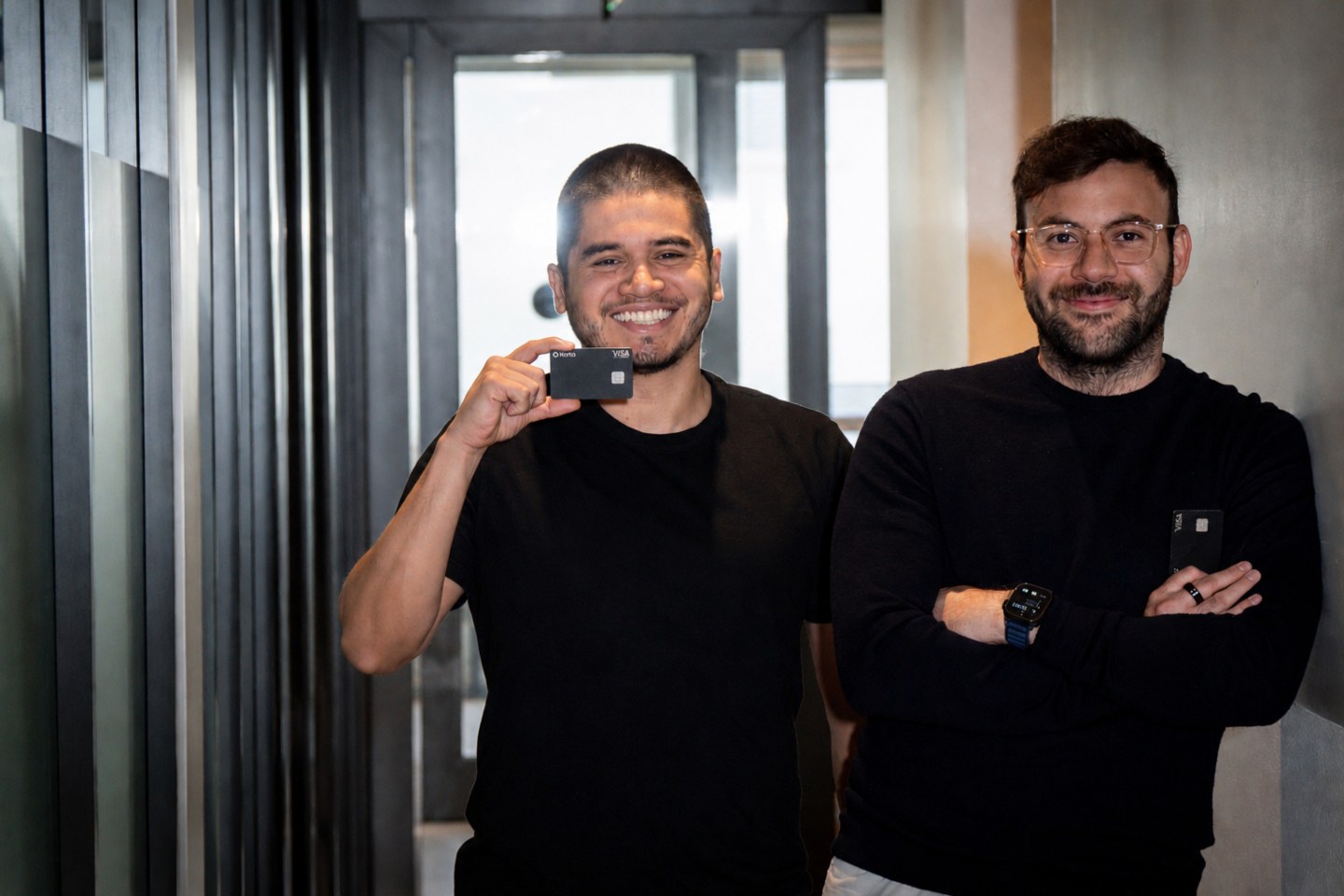
Karta founders Orlando Espinoza and Freddy Juez smile at the camera while holding up Karta cards.
Startups & VentureCompanies
Exclusive: Karta raises $15 million to bring WhatsApp-run U.S. credit cards to global travelers
By Camila Grigera NaónJune 17, 2026
2 days ago
Robinhood CEO Vladimir Tenev smiles during the ringing of the Opening Bell at the New York Stock Exchange last March.
CryptoCryptocurrency
Robinhood announces it will reduce headcount by 10%, CEO seeks to avoid ‘heavily-layered’ organization
By Camila Grigera NaónJune 16, 2026
2 days ago
President Donald Trump shakes hands with American mixed martial artist Josh Hokit as Hokit stands on the edge of the UFC ring during a championship event at the White House.
CryptoDonald Trump
UFC fighters at the White House got paid with Trump family stablecoins—but an ethics expert says a gap in the law allows this
By Camila Grigera NaónJune 15, 2026
3 days ago

Most Popular

Anne Hathaway says she was spammed with ChatGPT-written thank you notes after hiring for a recent role: ‘Nobody on that list gets that job’
Success
Anne Hathaway says she was spammed with ChatGPT-written thank you notes after hiring for a recent role: ‘Nobody on that list gets that job’
By Orianna Rosa RoyleJune 18, 2026
19 hours ago
The affordability crisis is so bad that, for the first time ever, both mom and dad are working full-time in most American families
Economy
The affordability crisis is so bad that, for the first time ever, both mom and dad are working full-time in most American families
By Jacqueline MunisJune 17, 2026
1 day ago
Current price of oil as of June 18, 2026
Personal Finance
Current price of oil as of June 18, 2026
By Joseph HostetlerJune 18, 2026
14 hours ago
Current price of oil as of June 17, 2026
Personal Finance
Current price of oil as of June 17, 2026
By Joseph HostetlerJune 17, 2026
2 days ago
Hundreds of Stanford students walked out of their grad ceremony to protest Google CEO’s commencement speech. It wasn’t all about AI
Big Tech
Hundreds of Stanford students walked out of their grad ceremony to protest Google CEO’s commencement speech. It wasn’t all about AI
By Tristan BoveJune 15, 2026
3 days ago
Microsoft boss Steve Ballmer publicly dismissed Chrome as a 'rounding error'—but Google’s CEO says he used the jab as fuel to win the browser-wars
Success
Microsoft boss Steve Ballmer publicly dismissed Chrome as a 'rounding error'—but Google’s CEO says he used the jab as fuel to win the browser-wars
By Preston ForeJune 17, 2026
1 day ago

© 2026 Fortune Media IP Limited. All Rights Reserved. Use of this site constitutes acceptance of our Terms of Use and Privacy Policy | CA Notice at Collection and Privacy Notice | Do Not Sell/Share My Personal Information
FORTUNE is a trademark of Fortune Media IP Limited, registered in the U.S. and other countries. FORTUNE may receive compensation for some links to products and services on this website. Offers may be subject to change without notice.