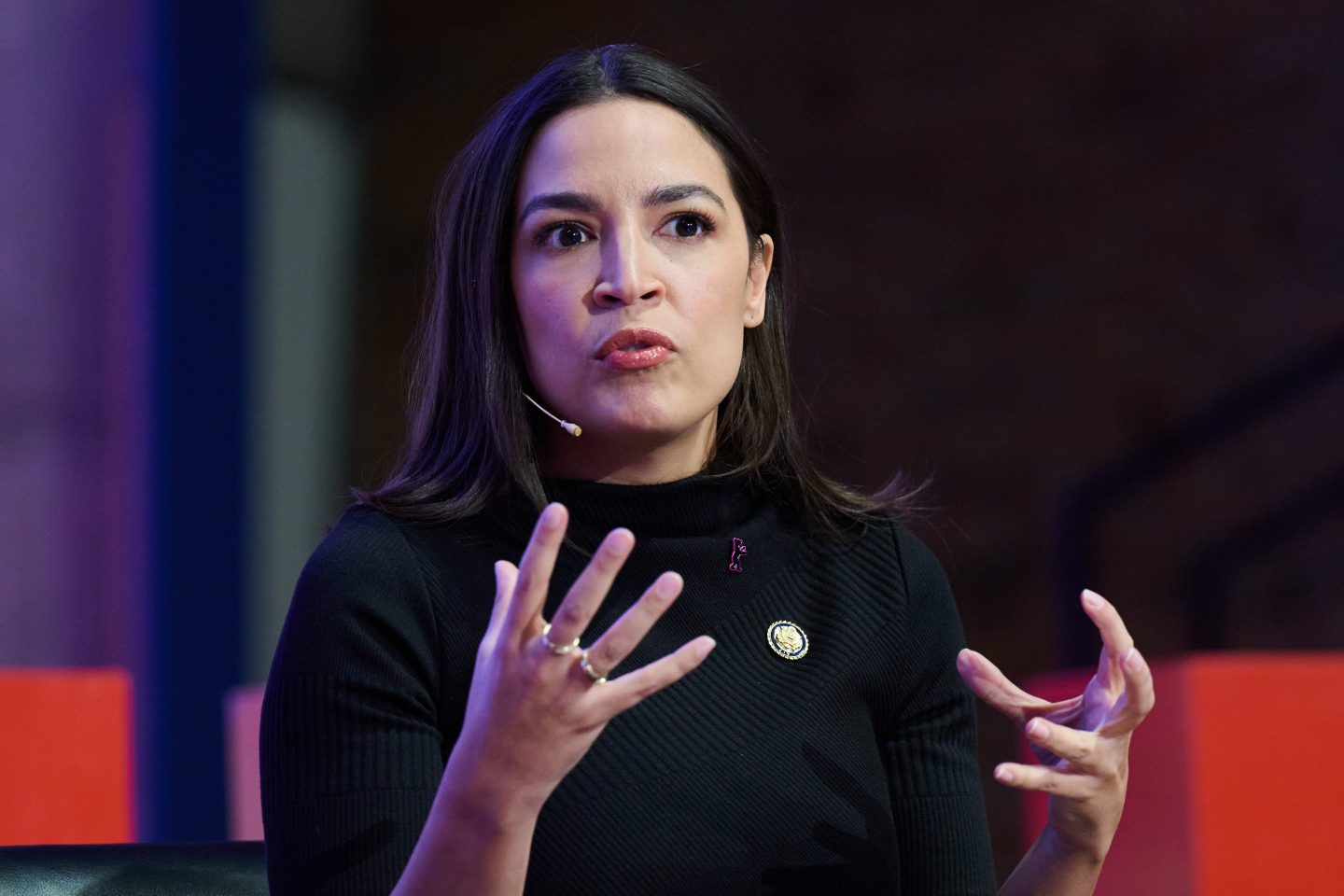
Democratic presidential candidate Elizabeth Warren rolled out a proposal on Thursday to levy a 7 percent tax on corporate profits above $100 million, which if enacted would raise an estimated $1 trillion from the country’s wealthiest businesses.
There would be “no loopholes or exemptions” for the so-called Real Corporate Profits Tax, Warren said, and it would be paid on top of what corporations owe under U.S. tax law and apply to profits earned domestically and abroad, preventing companies from shifting profits offshore to avoid the tax.
The Massachusetts senator’s plan is part of her initiative to claim the mantle of progressive policy visionary in the large and diverse primary field, and to put meat on the bones of her populist message that corporations and financial elites are rigging the rules at the expense of ordinary Americans.
By pitching a wave of new taxes early in her campaign, Warren is trying to convey that she’s serious about her plans to dramatically expand the economic safety net, including by making health insurance and child care accessible to all Americans.
“Amazon reported more than $10 billion in profits and paid zero federal corporate income taxes. Occidental Petroleum reported $4.1 billion in profits and paid zero federal corporate income taxes,” she wrote in a blog post for Medium.com, where she will unveil her plan. “In fact, year after year, some of the biggest corporations in the country make huge profits but pay zero federal corporate income taxes on those profits.”
Using a surtax, rather than raising the corporate rate, would allow the tax code to target larger, more profitable companies.
Warren said the tax code is “so littered with loopholes that simply raising the regular corporate tax rate alone is not enough” to combat the “armies of lawyers and accountants” that large businesses have to lower their tax bills. The tax code has an array of breaks for corporations to lower their liability — by, say, depreciating their buildings and machinery, deducting interest on debt and taking tax credits for research costs.
Under her plan, Amazon.com Inc. would pay a tax of $698 million and Occidental Petroleum Corp. would pay $280 million, Warren’s policy team estimated.
The senator’s tax proposal is estimated to raise $1.05 trillion over the next decade, according to an analysis by University of California, Berkeley economists Emmanuel Saez and Gabriel Zucman that was provided by the campaign.
The plan is unlikely to go anywhere while President Donald Trump is in office and Republicans control the U.S. Senate. It’s not clear the Democratic-led House will consider it, either. Yet it could influence the political debate in a country where most people believe corporations don’t pay enough in taxes.
A Gallup poll in April 2018 found that 66 percent of the country believes corporations pay “too little” in taxes, while just 7 percent believe they pay “too much”; 24 percent said they pay their “fair share.”
The 2017 Republican tax overhaul slashed the corporate tax rate to 21 percent from 35 percent. Democrats have criticized the overhaul for reducing the levy too much.
Warren’s tax plan would effectively increase that rate for many publicly traded companies on profits of more than $100 million to 28 percent, a rate that other prominent Democrats, including former President Barack Obama, have backed.
Amazon has faced public criticism for using the U.S. tax code to get a refund for 2017 and 2018, even as it made hundreds of billions in revenue and about $10 billion in profits in 2018. The online retail giant gets both the benefits usually used by technology companies — deductions for paying employees in stock — as well as the write-offs for companies that rely heavily on building physical infrastructure.
Too many wealthy American companies “seek to cash in on all the benefits of America while skipping out on the bill,” Warren said in defense of her corporate tax plan. “It’s not right — and we cannot afford to let it continue.”
The 2017 tax law also eliminated the corporate alternative minimum tax, a calculation that prohibited companies from taking too many tax breaks to reduce their liability. Warren’s plan would be a backstop for savvy corporations who are now able to use the full force of the tax law to cut down their tax bills.
This wouldn’t be the first time the U.S. has tried a temporary corporate surtax to raise additional revenue. In 1968, President Lyndon B. Johnson enacted a 10 percent additional tax on individuals and companies to help pay for the cost of fighting the Vietnam War.
France has also recently experimented with a surtax. In 2018, the country had a 15 percent tax on companies with revenue between $1 billion and $3 billion. The levy increases on 30 percent for revenue above $3 billion. The country also had a corporate surtax in 2014.
For Warren, a former Harvard law professor, the new corporate tax plan is the latest in a series of policy blueprints she has released, including proposals to annually tax wealth above $50 million, make child care universally accessible, break up big technology companies and cutting rent costs with federal investments to raise the supply of housing.
Still, she has struggled to break into the top three in many national Democratic primary polls, and raised $6 million in the first quarter for her campaign, a number that lagged behind rivals like Senator Bernie Sanders of Vermont, who hauled in $18.2 million in the same period.