• Home
  • Latest
  • Fortune 500
  • Finance
  • Tech
  • Leadership
  • Lifestyle
  • Rankings
  • Multimedia

Trendingnow

1

Jensen Huang says ‘a lot’ of six-figure jobs in plumbing and construction will soon be unlocked because someone needs to build new AI centers

2

Millennials say they’ll refuse to care for aging boomer parents—but they’ll be forced to as their inheritance shrinks to 40 cents on the dollar

3

The rise of 'conspicuous waiting': The 19th-century economic theory that explains why Gen Z posts their place in line

1

Jensen Huang says ‘a lot’ of six-figure jobs in plumbing and construction will soon be unlocked because someone needs to build new AI centers

2

Millennials say they’ll refuse to care for aging boomer parents—but they’ll be forced to as their inheritance shrinks to 40 cents on the dollar

3

The rise of 'conspicuous waiting': The 19th-century economic theory that explains why Gen Z posts their place in line
Financeearnings

CAPE Fear: The Bulls Are Wrong. Shiller’s Measure Is the Real Deal

Shawn Tully
By
Shawn Tully
Shawn Tully
Senior Editor-at-Large
Down Arrow Button Icon
Shawn Tully
By
Shawn Tully
Shawn Tully
Senior Editor-at-Large
Down Arrow Button Icon
February 15, 2019, 10:13 AM ET
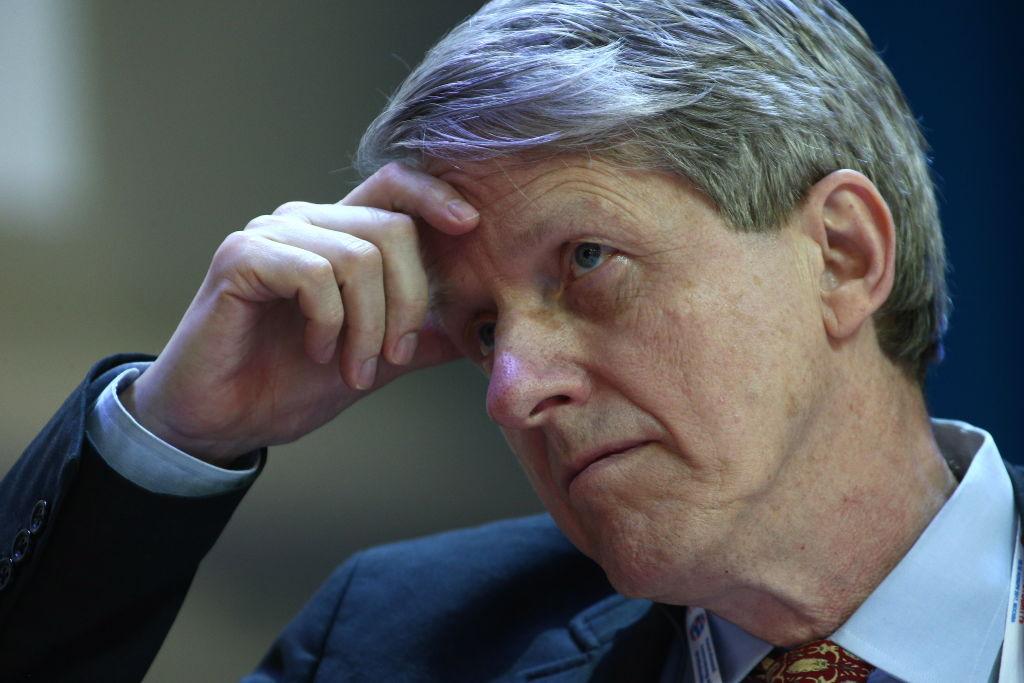
Russian Financial University holds international forum Who Knows What Tomorrow Holds
Mikhail Tereshchenko Mikhail Tereshchenko/TASS
Add Fortune on Google for similar content.

For the past half-decade, a controversial yardstick called the CAPE has been flashing red, warning that stock prices are extremely rich, and vulnerable to a sharp correction. And over the same period, the Wall Street bulls and a number of academics led by Jeremy Siegel of the Wharton School, have been claiming that CAPE is a kind of fun house mirror that makes reasonable valuations appear grotesquely stretched.

CAPE, an acronym “Cyclically-adjusted price-to-earnings ratio,” was developed by economist Robert Shiller of Yale to correct for a flaw in judging where stock prices stand on the continuum from dirt cheap to highly expensive based on the current P/E ratio. The problem: Reported earnings careen from lofty peaks to deep troughs, so that when they’re in a funk, multiples jump so high that shares appear overpriced when they’re really reasonable, and when profits explode, they can skew the P/E by creating the false signal that they’re a great buy.

The CAPE aims to correct for those distortions. It smooths the denominator by using not current profits, but a ten-year average, of S&P 500 earnings-per-share, adjusted for inflation. Today, the CAPE for the 500 reads 29.7. It’s only been that high in two previous periods: Before the crash of 1929, and during the tech bubble from 1998 to 2001, suggesting that when stocks are this expensive, a downturn may be at hand.

The CAPE’s critics argue that its adjusted PE is highly inflated, because the past decade includes a portion of the financial crisis that decimated earnings. That period was so unusual, their thinking goes, that it makes the ten-year average denominator much too low, producing what looks like a dangerous number when valuations are actually reasonable by historical norms. They point to the traditional P/E based on 12-month trailing, GAAP profits. By that yardstick today’s multiple is 19.7, a touch above the 20-year average of 19, though exceeding the century-long norm of around 16.

I’ve run some numbers, and my analysis indicates that the CAPE doesn’t suffer from those alleged shortcoming, and presents a much truer picture than today’s seemingly reassuring P/E. Here’s why. Contrary to its opponents’ assertions, the CAPE’s earnings number is not artificially depressed. I calculated ten year average of real profits for six decade-long periods starting in February of 1959 and ending today, (the last one running from 2/2009 to 2/2019). On average, the adjusted earnings number rose 22% from one period to the next. The biggest leap came from 1999 to 2009, when the 10-year average of real earnings advanced 42%.

So did profits since then languish to the point where the current CAPE figure is unrealistically big? Not at all. The Shiller profit number of $91 per share is 36.1% higher than the reading for the 1999 to 2009 period, when it had surged a record 40%-plus over the preceding decade. If anything, today’s denominator looks high, meaning the CAPE of almost 30 is at least reasonable, and if anything overstates what today’s investors will reap from each dollar they’ve invested in stocks.

Indeed, in the latest ten-year span, adjusted profits have waxed at a 3.2% annual pace, slightly below the 3.6% from 1999 to 2009, but far above the average of 1.6% from 1959 to 1999.

Here’s the problem that the CAPE highlights. Earnings in the past two decades have been far outpacing GDP; in the current decade, they’ve beaten growth in national income by 1.2 points (3.2% versus 2%). That’s a reversal of long-term trends. Over our entire 60 year period, GDP rose at 3.3% annually, and profits trailed by 1.3 points, advancing at just 2%. So the rationale that P/Es are modest is based on the assumption that today’s earnings aren’t unusually high at all, and should continue growing from here, on a trajectory that outstrips national income.

It won’t happen. It’s true that total corporate profits follow GDP over the long term, though they fluctuate above and below that benchmark along the way. Right now, earnings constitute an unusually higher share of national income. That’s because record-low interest rates have restrained cost of borrowing for the past several years, and companies have managed to produce more cars, steel and semiconductors while shedding workers and holding raises to a minimum. Now, rates are rising and so it pay and employment, forces that will crimp profits. It’s often overlooked that although profits grow in line with GDP, which by the way, is now expanding a lot more slowly than two decades ago, earnings per share grow a lot slower, as I’ve shown, lagging by 1.3 points over the past six decades. An influential study from 2003 by Rob Arnott, founder of Research Affiliates, and co-author William J. Bernstein, found that EPS typically trails overall profit and economic growth by even more, an estimated 2 points a year.

The reason is dilution. Companies are constantly issuing new shares, for everything from expensive acquisitions to stock option redemptions to secondary offerings. New enterprises are also challenging incumbents, raising the number of shares that divide up an industry’s profits faster than those profits are increasing. Since total earnings grow with GDP, and the share count grows faster than profits, it’s mathematically impossible for EPS growth to consistently rise in double digits, although it does over brief periods––followed by intervals of zero or minuscule increases.

The huge gap between the official PE of 19 and the CAPE at 30 signals that unsustainably high profits are artificially depressing the former. and that profits are bound to stagnate at best, and more likely decline. The retreat appears to have already started. The Wall Street “consensus” Wall Street earnings forecast compiled by FactSet calls for an EPS decline of 1.7% for the first quarter of 2017, and zero inflation-adjusted gains for the first nine months of the year. In an investing world dominated by hype, the CAPE is a rare truth-teller.


About the Author
Shawn Tully
By Shawn TullySenior Editor-at-Large

Shawn Tully is a senior editor-at-large at Fortune, covering the biggest trends in business, aviation, politics, and leadership.

See full bioRight Arrow Button Icon
Add Fortune on Google for similar content.

Latest in Finance

Finance
Lorem ipsum dolor sit amet, consectetur adipiscing elit, sed do eiusmod tempor incididunt ut labore et dolore magna aliqua. Ut enim ad minim veniam
By Fortune Editors
October 20, 2025
Finance
Lorem ipsum dolor sit amet, consectetur adipiscing elit, sed do eiusmod tempor incididunt ut labore et dolore magna aliqua. Ut enim ad minim veniam
By Fortune Editors
October 20, 2025
Finance
Lorem ipsum dolor sit amet, consectetur adipiscing elit, sed do eiusmod tempor incididunt ut labore et dolore magna aliqua. Ut enim ad minim veniam
By Fortune Editors
October 20, 2025
Finance
Lorem ipsum dolor sit amet, consectetur adipiscing elit, sed do eiusmod tempor incididunt ut labore et dolore magna aliqua. Ut enim ad minim veniam
By Fortune Editors
October 20, 2025
Finance
Lorem ipsum dolor sit amet, consectetur adipiscing elit, sed do eiusmod tempor incididunt ut labore et dolore magna aliqua. Ut enim ad minim veniam
By Fortune Editors
October 20, 2025
Finance
Lorem ipsum dolor sit amet, consectetur adipiscing elit, sed do eiusmod tempor incididunt ut labore et dolore magna aliqua. Ut enim ad minim veniam
By Fortune Editors
October 20, 2025

Most Popular

Finance
Lorem ipsum dolor sit amet, consectetur adipiscing elit, sed do eiusmod tempor incididunt ut labore et dolore magna aliqua. Ut enim ad minim veniam
By Fortune Editors
October 20, 2025
Finance
Lorem ipsum dolor sit amet, consectetur adipiscing elit, sed do eiusmod tempor incididunt ut labore et dolore magna aliqua. Ut enim ad minim veniam
By Fortune Editors
October 20, 2025
Finance
Lorem ipsum dolor sit amet, consectetur adipiscing elit, sed do eiusmod tempor incididunt ut labore et dolore magna aliqua. Ut enim ad minim veniam
By Fortune Editors
October 20, 2025
Finance
Lorem ipsum dolor sit amet, consectetur adipiscing elit, sed do eiusmod tempor incididunt ut labore et dolore magna aliqua. Ut enim ad minim veniam
By Fortune Editors
October 20, 2025
Finance
Lorem ipsum dolor sit amet, consectetur adipiscing elit, sed do eiusmod tempor incididunt ut labore et dolore magna aliqua. Ut enim ad minim veniam
By Fortune Editors
October 20, 2025
Finance
Lorem ipsum dolor sit amet, consectetur adipiscing elit, sed do eiusmod tempor incididunt ut labore et dolore magna aliqua. Ut enim ad minim veniam
By Fortune Editors
October 20, 2025
Fortune Secondary Logo
Rankings
  • 100 Best Companies
  • Fortune 500
  • Global 500
  • Fortune 500 Europe
  • Most Powerful Women
  • World's Most Admired Companies
  • See All Rankings
  • Lists Calendar
Sections
  • Finance
  • Fortune Crypto
  • Features
  • Leadership
  • Health
  • Commentary
  • Success
  • Retail
  • Mpw
  • Tech
  • Lifestyle
  • CEO Initiative
  • Asia
  • Politics
  • Conferences
  • Europe
  • Newsletters
  • Personal Finance
  • Environment
  • Magazine
  • Education
Customer Support
  • Frequently Asked Questions
  • Customer Service Portal
  • Privacy Policy
  • Terms Of Use
  • Single Issues For Purchase
  • International Print
Commercial Services
  • Advertising
  • Fortune Brand Studio
  • Fortune Analytics
  • Fortune Conferences
  • Business Development
  • Group Subscriptions
About Us
  • About Us
  • Press Center
  • Work At Fortune
  • Terms And Conditions
  • Site Map
  • About Us
  • Press Center
  • Work At Fortune
  • Terms And Conditions
  • Site Map
  • Facebook icon
  • Twitter icon
  • LinkedIn icon
  • Instagram icon
  • TikTok icon
  • YouTube icon

Latest in Finance

Fed Chair Kevin Warsh talks a big game, but this market indicator will tell you if Wall Street trusts him after he caused a ‘credibility shock’
EconomyFederal Reserve
Fed Chair Kevin Warsh talks a big game, but this market indicator will tell you if Wall Street trusts him after he caused a ‘credibility shock’
By Jason MaAugust 1, 2026
24 minutes ago
Welcome to the mega-war: Mideast and European conflicts merge, sucking in more countries along the way—even ones claiming neutrality
Middle EastIran
Welcome to the mega-war: Mideast and European conflicts merge, sucking in more countries along the way—even ones claiming neutrality
By Jason MaAugust 1, 2026
3 hours ago
Exxon, Chevron warn fuel prices to endure as war knocks refining
Energyfuel
Exxon, Chevron warn fuel prices to endure as war knocks refining
By Kevin Crowley and BloombergAugust 1, 2026
6 hours ago
Bessent joins Japan to help reverse months of yen losses
EconomyCurrency
Bessent joins Japan to help reverse months of yen losses
By Shintaro Inkyo, Masahiro Hidaka and BloombergAugust 1, 2026
6 hours ago
A dead SpaceX rocket that’s been adrift for over a year is about to slam into the moon, carving out a new crater with the equivalent of 3 tons of TNT
Innovationspace
A dead SpaceX rocket that’s been adrift for over a year is about to slam into the moon, carving out a new crater with the equivalent of 3 tons of TNT
By Marcia Dunn and The Associated PressAugust 1, 2026
6 hours ago
Inside Miami’s ‘Billionaire Bunker,’ a man-made island for the .01% where billionaires like Jeff Bezos and Mark Zuckerberg shell out for total privacy
Real EstateBillionaires
Inside Miami’s ‘Billionaire Bunker,’ a man-made island for the .01% where billionaires like Jeff Bezos and Mark Zuckerberg shell out for total privacy
By Marco Quiroz-GutierrezAugust 1, 2026
7 hours ago

Most Popular

Jensen Huang says ‘a lot’ of six-figure jobs in plumbing and construction will soon be unlocked because someone needs to build new AI centers
Success
Jensen Huang says ‘a lot’ of six-figure jobs in plumbing and construction will soon be unlocked because someone needs to build new AI centers
By Preston ForeAugust 1, 2026
7 hours ago
Millennials say they’ll refuse to care for aging boomer parents—but they’ll be forced to as their inheritance shrinks to 40 cents on the dollar
Personal Finance
Millennials say they’ll refuse to care for aging boomer parents—but they’ll be forced to as their inheritance shrinks to 40 cents on the dollar
By Nick LichtenbergJuly 31, 2026
2 days ago
The rise of 'conspicuous waiting': The 19th-century economic theory that explains why Gen Z posts their place in line
Retail
The rise of 'conspicuous waiting': The 19th-century economic theory that explains why Gen Z posts their place in line
By Tatiana SatauaJuly 31, 2026
2 days ago
'Retiring backwards': How cold economic reality forced Gen X into something like the reverse of baby boomers' golden years
Success
'Retiring backwards': How cold economic reality forced Gen X into something like the reverse of baby boomers' golden years
By Nick LichtenbergJuly 31, 2026
1 day ago
Jensen Huang says this is the greatest time in history to start a business—and his advice is to stop overthinking it: 'How hard can it be?’
Success
Jensen Huang says this is the greatest time in history to start a business—and his advice is to stop overthinking it: 'How hard can it be?’
By Preston ForeJuly 31, 2026
1 day ago
Polar bears roll in beds of ice cubes at Prague Zoo as Europe battles record heat
Environment
Polar bears roll in beds of ice cubes at Prague Zoo as Europe battles record heat
By The Associated PressJuly 30, 2026
2 days ago

© 2026 Fortune Media IP Limited. All Rights Reserved. Use of this site constitutes acceptance of our Terms of Use and Privacy Policy | CA Notice at Collection and Privacy Notice | Do Not Sell/Share My Personal Information
FORTUNE is a trademark of Fortune Media IP Limited, registered in the U.S. and other countries. FORTUNE may receive compensation for some links to products and services on this website. Offers may be subject to change without notice.