• Home
  • Latest
  • Fortune 500
  • Finance
  • Tech
  • Leadership
  • Lifestyle
  • Rankings
  • Multimedia
Commentary

The Fight Over High-Tech Supremacy Isn’t New. We Just Haven’t Learned Our Lesson

By
Mario Daniels
Mario Daniels
and
John Krige
John Krige
Down Arrow Button Icon
By
Mario Daniels
Mario Daniels
and
John Krige
John Krige
Down Arrow Button Icon
February 12, 2019, 10:07 AM ET
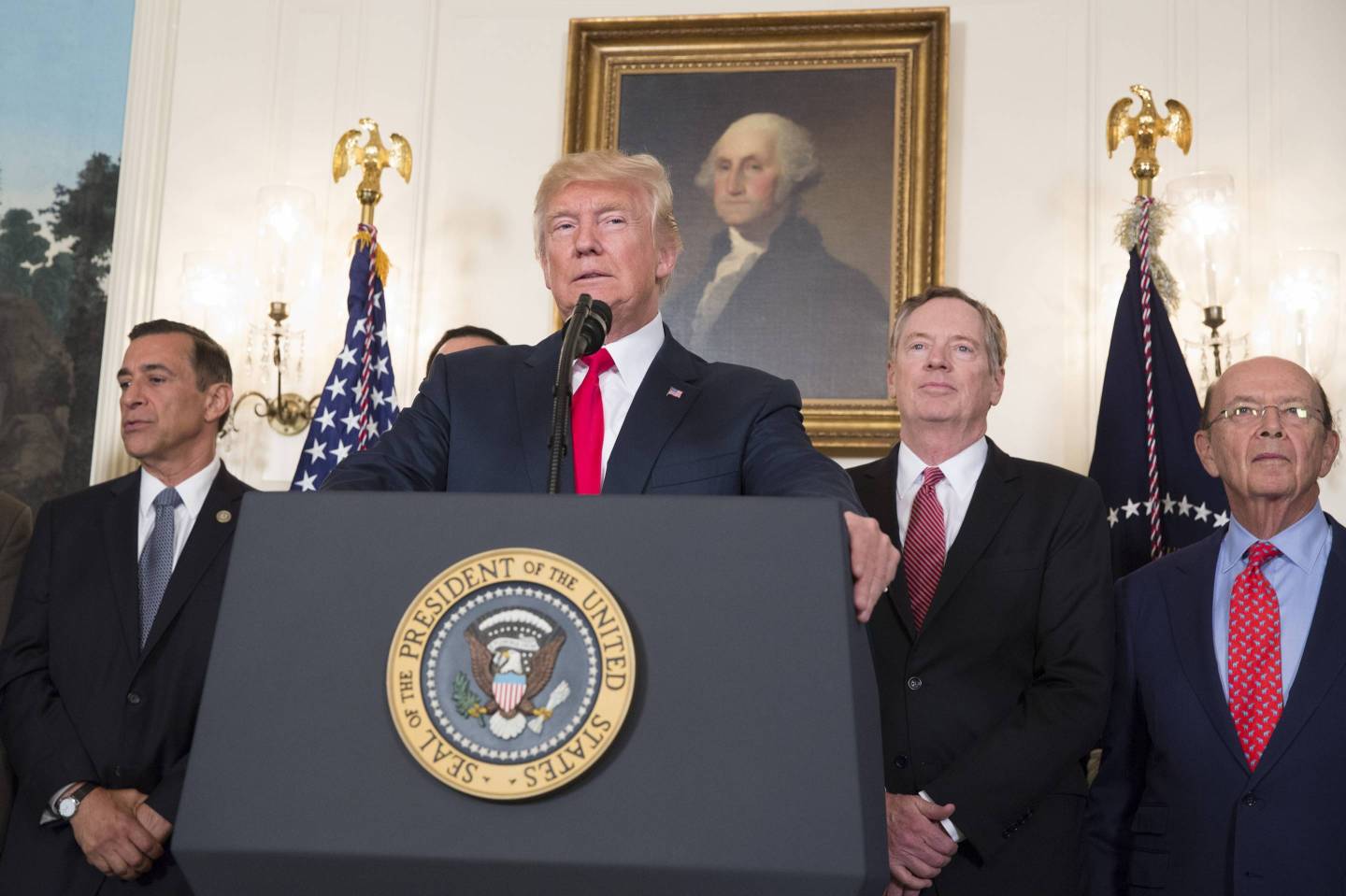
President Donald Trump speaks before signing a memorandum on addressing China's laws, policies, practices, and actions related to intellectual property, innovation, and technology at The White House on Aug. 14, 2017.
Chris Kleponis—Getty Images

The U.S. is intensifying its competition with China for high-tech supremacy. Just two weeks ago, the Department of Justice released a major indictment against Chinese telecommunications company Huawei for allegedly violating U.S. sanctions against Iran. But that’s just one piece of a much larger puzzle.

Over the last two years, the U.S. has invoked a wide range of instruments to restrict Chinese access to cutting edge technology. Conditions for foreign investment in U.S. based high-tech firms were tightened. It has become more difficult for Chinese graduate students to get visas to study in sensitive fields like robotics. And concerns about China acquiring more advanced A.I. have led to calls for stronger controls on exports of this technology.

But the confrontational approach the Trump administration is now using against China is not a new strategy. The current U.S. policies echo those of the 1980s when the national security threat posed by the Soviet Union’s illegal acquisition of Western technology converged with fears about Japan’s powerful economic competition. Back then, rapid technological evolution and economic globalization changed the way Americans thought about the relationship between trade, knowledge sharing, and national security, a shift which laid the groundwork for the U.S. policies towards China now.

Indeed, many of the elements of the current U.S. campaign against China were contested in Japanese-U.S. relations 30 years ago. Like today, the debate revolved around computer technology—especially computer chips. Rapid development in chip capabilities revolutionized commercial and national security technologies by creating hugely profitable new products (like the personal computer) and transforming high-tech weapons system in areas like missile guidance. Chips manufactured in Japan for civilian devices cost a fraction of those made in the U.S. for defense contractors, and Japanese firms like Toshiba and Fujitsu quickly dominated the global market.

The U.S. responded by accusing Japanese companies of using joint ventures with U.S. businesses to get access to commit industrial espionage, circumvent export controls against U.S. enemies, and engage in unfair trade practices.

Critics of Japanese market power advocated for placing restrictions on the sharing of knowledge with Japan, hoping to address what they saw as a twin crisis: the decline of America’s economic power and its military strength. National security, they argued, was not simply a matter of military preparedness. It also depended on dominating the market in emerging and powerful dual-use technologies. To achieve that domination, knowledge was the key resource and had to be shielded from Japanese competition: tariffs were introduced, as were special screenings of Japanese foreign direct investment by the Committee on Foreign Investment in the U.S. (CFIUS) and controls over information sharing.

This push for protectionism went against the grain of a global economy that was based on the principle of open knowledge sharing, and undermined American technological leadership by restricting access to the global pool of knowledge.

Similarly, the Trump administration’s “economic security” policies against China oversimplifies the reality of a world in which high-tech companies have become even more globalized and interdependent than in the 1980s. Ignoring that reality damages U.S. economic interests as well as national security.

National security depends on balancing the risks of technology loss against the need to stimulate entrepreneurship, penetrate global markets, secure access to the global pool of knowledge, and respect academic freedom. The government, corporations, and the research community have to work together to make the political and technical judgments needed to strike this balance. In a globalized economy, protectionism of our national knowledge cannot be the answer. Japan’s—and now China’s—economic rise should have made that abundantly clear.

Mario Daniels is the DAAD Visiting Professor at the BMW Center for German and European Studies at Georgetown University. John Krige is the Kranzberg Professor at the School of History and Sociology at Georgia Tech. Their work focuses on the history of the U.S. regulatory system.

About the Authors
By Mario Daniels
See full bioRight Arrow Button Icon
By John Krige
See full bioRight Arrow Button Icon

Latest in Commentary

Finance
Lorem ipsum dolor sit amet, consectetur adipiscing elit, sed do eiusmod tempor incididunt ut labore et dolore magna aliqua. Ut enim ad minim veniam
By Fortune Editors
October 20, 2025
Finance
Lorem ipsum dolor sit amet, consectetur adipiscing elit, sed do eiusmod tempor incididunt ut labore et dolore magna aliqua. Ut enim ad minim veniam
By Fortune Editors
October 20, 2025
Finance
Lorem ipsum dolor sit amet, consectetur adipiscing elit, sed do eiusmod tempor incididunt ut labore et dolore magna aliqua. Ut enim ad minim veniam
By Fortune Editors
October 20, 2025
Finance
Lorem ipsum dolor sit amet, consectetur adipiscing elit, sed do eiusmod tempor incididunt ut labore et dolore magna aliqua. Ut enim ad minim veniam
By Fortune Editors
October 20, 2025
Finance
Lorem ipsum dolor sit amet, consectetur adipiscing elit, sed do eiusmod tempor incididunt ut labore et dolore magna aliqua. Ut enim ad minim veniam
By Fortune Editors
October 20, 2025
Finance
Lorem ipsum dolor sit amet, consectetur adipiscing elit, sed do eiusmod tempor incididunt ut labore et dolore magna aliqua. Ut enim ad minim veniam
By Fortune Editors
October 20, 2025

Most Popular

Finance
Lorem ipsum dolor sit amet, consectetur adipiscing elit, sed do eiusmod tempor incididunt ut labore et dolore magna aliqua. Ut enim ad minim veniam
By Fortune Editors
October 20, 2025
Finance
Lorem ipsum dolor sit amet, consectetur adipiscing elit, sed do eiusmod tempor incididunt ut labore et dolore magna aliqua. Ut enim ad minim veniam
By Fortune Editors
October 20, 2025
Finance
Lorem ipsum dolor sit amet, consectetur adipiscing elit, sed do eiusmod tempor incididunt ut labore et dolore magna aliqua. Ut enim ad minim veniam
By Fortune Editors
October 20, 2025
Finance
Lorem ipsum dolor sit amet, consectetur adipiscing elit, sed do eiusmod tempor incididunt ut labore et dolore magna aliqua. Ut enim ad minim veniam
By Fortune Editors
October 20, 2025
Finance
Lorem ipsum dolor sit amet, consectetur adipiscing elit, sed do eiusmod tempor incididunt ut labore et dolore magna aliqua. Ut enim ad minim veniam
By Fortune Editors
October 20, 2025
Finance
Lorem ipsum dolor sit amet, consectetur adipiscing elit, sed do eiusmod tempor incididunt ut labore et dolore magna aliqua. Ut enim ad minim veniam
By Fortune Editors
October 20, 2025
Rankings
  • 100 Best Companies
  • Fortune 500
  • Global 500
  • Fortune 500 Europe
  • Most Powerful Women
  • Future 50
  • World’s Most Admired Companies
  • See All Rankings
Sections
  • Finance
  • Leadership
  • Success
  • Tech
  • Asia
  • Europe
  • Environment
  • Fortune Crypto
  • Health
  • Retail
  • Lifestyle
  • Politics
  • Newsletters
  • Magazine
  • Features
  • Commentary
  • Mpw
  • CEO Initiative
  • Conferences
  • Personal Finance
  • Education
Customer Support
  • Frequently Asked Questions
  • Customer Service Portal
  • Privacy Policy
  • Terms Of Use
  • Single Issues For Purchase
  • International Print
Commercial Services
  • Advertising
  • Fortune Brand Studio
  • Fortune Analytics
  • Fortune Conferences
  • Business Development
About Us
  • About Us
  • Editorial Calendar
  • Press Center
  • Work At Fortune
  • Diversity And Inclusion
  • Terms And Conditions
  • Site Map
  • Facebook icon
  • Twitter icon
  • LinkedIn icon
  • Instagram icon
  • Pinterest icon

© 2026 Fortune Media IP Limited. All Rights Reserved. Use of this site constitutes acceptance of our Terms of Use and Privacy Policy | CA Notice at Collection and Privacy Notice | Do Not Sell/Share My Personal Information
FORTUNE is a trademark of Fortune Media IP Limited, registered in the U.S. and other countries. FORTUNE may receive compensation for some links to products and services on this website. Offers may be subject to change without notice.


Most Popular

placeholder alt text
Economy
Right before Trump named Warsh to lead the Fed, Powell seemed to respond to some of his biggest complaints about the central bank
By Jason MaJanuary 30, 2026
23 hours ago
placeholder alt text
Economy
'I just don't have a good feeling about this': Top economist Claudia Sahm says the economy quietly shifted and everyone's now looking at the wrong alarm
By Eleanor PringleJanuary 31, 2026
8 hours ago
placeholder alt text
Politics
The American taxpayer spent nearly half a billion dollars deploying federal troops to U.S. cities in 2025, CBO finds
By Nick LichtenbergJanuary 28, 2026
3 days ago
placeholder alt text
AI
Top engineers at Anthropic, OpenAI say AI now writes 100% of their code—with big implications for the future of software development jobs
By Beatrice NolanJanuary 29, 2026
2 days ago
placeholder alt text
Big Tech
Microsoft’s $440 billion wipeout, and investors angry about OpenAI’s debt, explained
By Eva RoytburgJanuary 29, 2026
2 days ago
placeholder alt text
Asia
Trump’s Greenland play comes with Russia and China running circles around the US in the Arctic as expert sees ‘big game of catch-up’
By Tristan BoveJanuary 30, 2026
23 hours ago

Latest in Commentary

taxi
Commentaryregulation
America’s AI regulatory patchwork is crushing startups and helping China
By James Richardson and Eric TanenblattJanuary 30, 2026
1 day ago
EuropeLetter from London
Struggling to remain relevant during the AI watercooler chat? Talk about your latest ‘new collar’ hire
By Kamal AhmedJanuary 29, 2026
2 days ago
trump
Commentaryregulation
Trump is driving capital out of capitalism
By Andrew BeharJanuary 29, 2026
2 days ago
brooks
CommentaryInsurance
John Hancock CEO: We all have a role in driving better health outcomes for Americans
By Brooks TingleJanuary 29, 2026
2 days ago
wystrach
Commentarystart-ups
The real promise of AI isn’t fewer jobs, it’s cheaper thinking
By Michael WystrachJanuary 29, 2026
2 days ago
belichick
CommentarySports
Football snubs Bill Belichick, one of its greatest ever coaches—showing how his unapologetic leadership style came with a cost
By Nick LichtenbergJanuary 28, 2026
3 days ago