• Home
  • Latest
  • Fortune 500
  • Finance
  • Tech
  • Leadership
  • Lifestyle
  • Rankings
  • Multimedia
CommentaryCredit cards

How Reward Cards Encourage Merchants to Lower Prices

By
Steven Semeraro
Steven Semeraro
and
Bethany Cianciolo
Bethany Cianciolo
Down Arrow Button Icon
By
Steven Semeraro
Steven Semeraro
and
Bethany Cianciolo
Bethany Cianciolo
Down Arrow Button Icon
July 16, 2018, 5:02 PM ET
A  Supermarket Check-Out
BONN, GERMANY - JULY 04: A shopper paying at the supermarket check-out with a debit card pictured on July 04, 2013 in Bonn, Germany. (Photo by Ute Gabrowsky/Photothek via Getty Images)Ute Grabowsky Photothek via Getty Images

Earlier this year, Aaron Klein, a Brookings Institution fellow, argued that a variety of American banking practices exacerbate income inequality by effectively charging low-income people more than those with higher incomes. To the extent that he focuses on the time to clear checks and balance requirements for free checking accounts, income inequality likely plays some role in the allocation of the cost of banking services.

But Klein’s piece points the finger at reward credit cards. “Did you realize,” he asks rhetorically, “that working and middle class Americans subsidize the wealthy when they pay in cash or use debit cards?” To support his claim, he contends that economics dictates this result “[a]s long as merchants do not vary the price based on [a consumer’s chosen means of] payment.”

With respect to reward cards, Klein’s analysis doesn’t hold up. Economics will only dictate a reverse-Robin-Hood subsidy from low-income to high-income consumers if one assumes that merchant sales are effectively fixed, regardless of the types of payment mechanisms that a merchant accepts. That is, the merchant will make precisely the same number of sales in the same amounts regardless of whether it accepts reward credit cards.

To flush out Klein’s analysis, if sales are fixed and the merchant pays more to accept reward cards, then the merchant must increase its prices to cover the added fees. And if the merchant charges uniform prices, then all consumers pay a portion of the cost of accepting reward cards, while only those who use those cards get some money back. Since low-income consumers are more likely to use cash or debit cards, they effectively subsidize the high-income consumers who are more likely to pay with reward cards.

The problem with Klein’s analysis is that no rational merchant would accept reward cards if doing so would have no positive effect on the merchant’s sales. A merchant that took on additional costs without receiving a benefit that at least covers those new costs would not remain in business very long. Since most merchants are rational, they likely receive benefits from accepting reward cards that more than cover the merchant’s cost of accepting them.

The benefit leading merchants to accept reward cards must be increased sales. Like all credit cards, reward cards enable some consumers to make purchases when they don’t have cash readily available. Consumers who use a revolving balance are the obvious example. But many more simply won’t have the cash in their pocket when they consider making a purchase, even though they pay their bill in full without revolving credit.

And the bonuses that reward cards pay to cardholders adds an additional stimulus. First, the bonus constitutes an effective discount that has the standard demand-increasing effect that any price discount would have, so a consumer would likely buy more of the same product or other products and services if he or she is getting a discount. Second, rewards may stimulate sales beyond what traditional economics would predict because of the psychological allure of getting something for nothing. Because of this effect, paying a bonus may actually stimulate more spending than a similar point-of-sale discount would.

To the extent that reward cards increase a merchant’s revenue through increased sales, the merchant can spread its fixed costs more widely and thus increase its profits. In a competitive market, merchants would have an incentive to reduce prices, trying to capture still more sales.


To the extent that the additional sales generated by reward cards lead merchants to lower their prices, those using reward cards, in a sense, subsidize those who use other means of payment.

One cannot definitively predict the direction of the price change resulting from reward card acceptance. The cost of acceptance, as Klein assumes, would put upward pressure on prices. But the stimulating effect of reward cards on sales also puts downward pressure on prices. The precise effect in a particular industry is difficult to predict and will turn on a variety of factors that are not easy to measure. But merchants in competitive industries such as supermarkets and home improvement stores would be the most likely to have lower prices as a result of reward card acceptance because they would be forced by the market to compete away much of the benefit that they receive from accepting those cards.

Steven Semeraro is professor of law at Thomas Jefferson School of Law. During the late 1990s, the author was the lead attorney on an investigation of Visa and MasterCard when he served as a trial attorney with the United States Department of Justice, Antitrust Division.


About the Authors
By Steven Semeraro
See full bioRight Arrow Button Icon
By Bethany Cianciolo
See full bioRight Arrow Button Icon

Latest in Commentary

Finance
Lorem ipsum dolor sit amet, consectetur adipiscing elit, sed do eiusmod tempor incididunt ut labore et dolore magna aliqua. Ut enim ad minim veniam
By Fortune Editors
October 20, 2025
Finance
Lorem ipsum dolor sit amet, consectetur adipiscing elit, sed do eiusmod tempor incididunt ut labore et dolore magna aliqua. Ut enim ad minim veniam
By Fortune Editors
October 20, 2025
Finance
Lorem ipsum dolor sit amet, consectetur adipiscing elit, sed do eiusmod tempor incididunt ut labore et dolore magna aliqua. Ut enim ad minim veniam
By Fortune Editors
October 20, 2025
Finance
Lorem ipsum dolor sit amet, consectetur adipiscing elit, sed do eiusmod tempor incididunt ut labore et dolore magna aliqua. Ut enim ad minim veniam
By Fortune Editors
October 20, 2025
Finance
Lorem ipsum dolor sit amet, consectetur adipiscing elit, sed do eiusmod tempor incididunt ut labore et dolore magna aliqua. Ut enim ad minim veniam
By Fortune Editors
October 20, 2025
Finance
Lorem ipsum dolor sit amet, consectetur adipiscing elit, sed do eiusmod tempor incididunt ut labore et dolore magna aliqua. Ut enim ad minim veniam
By Fortune Editors
October 20, 2025

Most Popular

Finance
Lorem ipsum dolor sit amet, consectetur adipiscing elit, sed do eiusmod tempor incididunt ut labore et dolore magna aliqua. Ut enim ad minim veniam
By Fortune Editors
October 20, 2025
Finance
Lorem ipsum dolor sit amet, consectetur adipiscing elit, sed do eiusmod tempor incididunt ut labore et dolore magna aliqua. Ut enim ad minim veniam
By Fortune Editors
October 20, 2025
Finance
Lorem ipsum dolor sit amet, consectetur adipiscing elit, sed do eiusmod tempor incididunt ut labore et dolore magna aliqua. Ut enim ad minim veniam
By Fortune Editors
October 20, 2025
Finance
Lorem ipsum dolor sit amet, consectetur adipiscing elit, sed do eiusmod tempor incididunt ut labore et dolore magna aliqua. Ut enim ad minim veniam
By Fortune Editors
October 20, 2025
Finance
Lorem ipsum dolor sit amet, consectetur adipiscing elit, sed do eiusmod tempor incididunt ut labore et dolore magna aliqua. Ut enim ad minim veniam
By Fortune Editors
October 20, 2025
Finance
Lorem ipsum dolor sit amet, consectetur adipiscing elit, sed do eiusmod tempor incididunt ut labore et dolore magna aliqua. Ut enim ad minim veniam
By Fortune Editors
October 20, 2025
Fortune Secondary Logo
Rankings
  • 100 Best Companies
  • Fortune 500
  • Global 500
  • Fortune 500 Europe
  • Most Powerful Women
  • Future 50
  • World’s Most Admired Companies
  • See All Rankings
Sections
  • Finance
  • Fortune Crypto
  • Features
  • Leadership
  • Health
  • Commentary
  • Success
  • Retail
  • Mpw
  • Tech
  • Lifestyle
  • CEO Initiative
  • Asia
  • Politics
  • Conferences
  • Europe
  • Newsletters
  • Personal Finance
  • Environment
  • Magazine
  • Education
Customer Support
  • Frequently Asked Questions
  • Customer Service Portal
  • Privacy Policy
  • Terms Of Use
  • Single Issues For Purchase
  • International Print
Commercial Services
  • Advertising
  • Fortune Brand Studio
  • Fortune Analytics
  • Fortune Conferences
  • Business Development
  • Group Subscriptions
About Us
  • About Us
  • Editorial Calendar
  • Press Center
  • Work At Fortune
  • Diversity And Inclusion
  • Terms And Conditions
  • Site Map
  • About Us
  • Editorial Calendar
  • Press Center
  • Work At Fortune
  • Diversity And Inclusion
  • Terms And Conditions
  • Site Map
  • Facebook icon
  • Twitter icon
  • LinkedIn icon
  • Instagram icon
  • Pinterest icon

Latest in Commentary

justin
Commentaryregulation
I helped build Facebook and saw it go wrong. AI is headed the same way
By Justin RosensteinMarch 29, 2026
4 hours ago
shamny
CommentaryAI agents
AI agents are already driving 10% of revenue for some brands. Is yours invisible to them?
By Aviv ShamnyMarch 29, 2026
4 hours ago
haile
CommentaryJobs
America has a workforce crisis. The solution is already here — and it’s being wasted
By Gregory HaileMarch 29, 2026
6 hours ago
peter
CommentaryPatents and Trademarks
Former Trump official: the U.S. can win the AI race — if it gets patent policy right
By Laura PeterMarch 29, 2026
8 hours ago
dog
Commentarycorporate boards of directors
What avalanche safety training can teach corporate boards about bad decisions
By Jane SadowskyMarch 28, 2026
1 day ago
tomas
CommentaryColleges and Universities
Former Trump advisor: ‘Conservatives’ risk killing America’s golden goose by taxing university research
By Tomas J. PhilipsonMarch 28, 2026
1 day ago

Most Popular

Europe
413,793 KitKat bars stolen: 'Whilst we appreciate the criminals’ exceptional taste, the fact remains that cargo theft is an escalating issue'
By Fortune EditorsMarch 28, 2026
21 hours ago
Economy
U.S. debt suddenly draws weaker demand as $10 trillion must be rolled over this year amid Iran war. 'The bond market remains undefeated'
By Fortune EditorsMarch 28, 2026
1 day ago
Energy
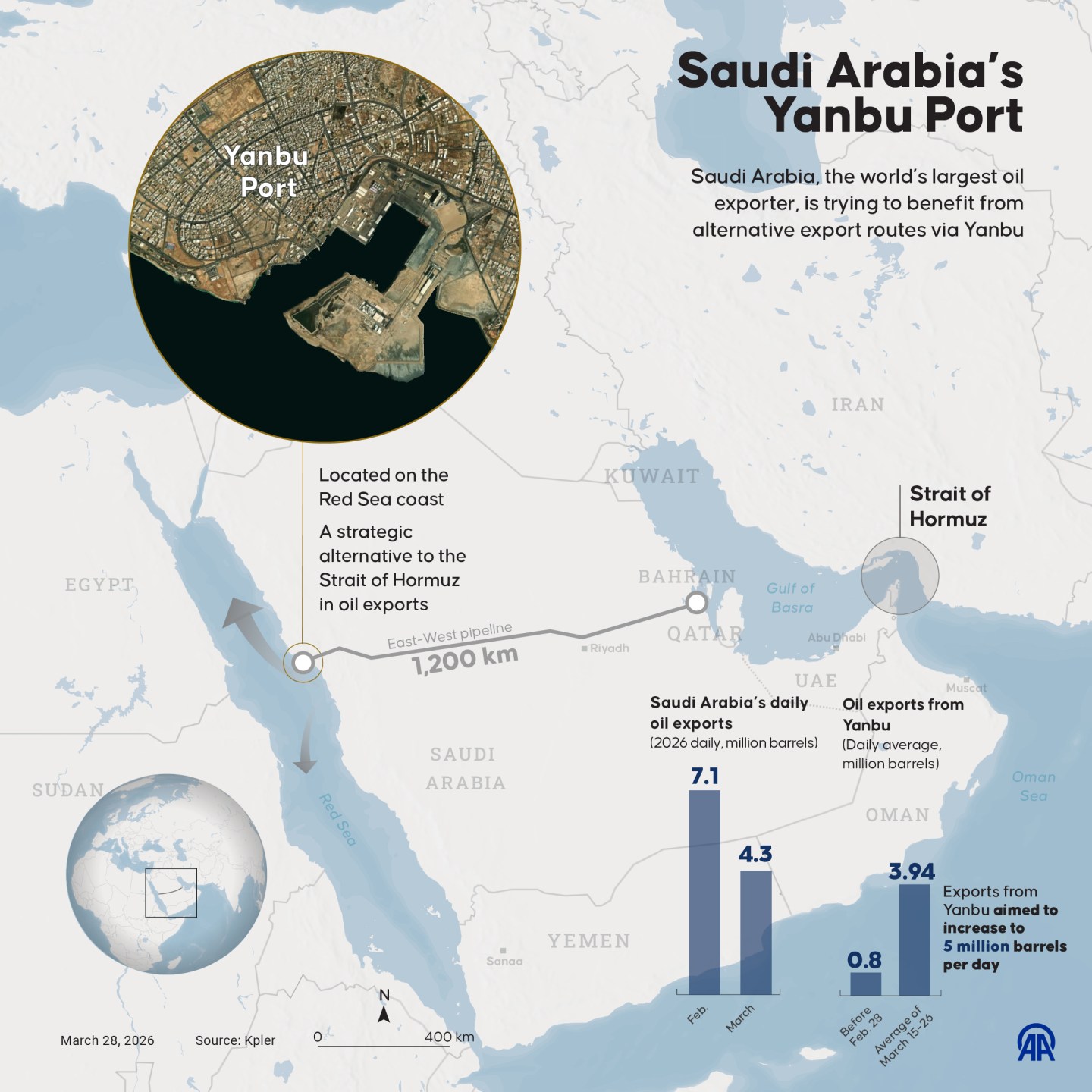
Saudi pipeline to bypass Hormuz hits 7 million barrel goal
By Fortune EditorsMarch 28, 2026
19 hours ago
Economy
The stay-at-home boyfriend is now an economic trend as more women than men go to work
By Fortune EditorsMarch 28, 2026
1 day ago
Success
Meetings are not work, says Southwest Airlines CEO—and he’s taking action by blocking his calendar every afternoon from Wednesday to Friday 
By Fortune EditorsMarch 27, 2026
2 days ago
Personal Finance
Current price of gold as of March 27, 2026
By Fortune EditorsMarch 27, 2026
2 days ago

© 2026 Fortune Media IP Limited. All Rights Reserved. Use of this site constitutes acceptance of our Terms of Use and Privacy Policy | CA Notice at Collection and Privacy Notice | Do Not Sell/Share My Personal Information
FORTUNE is a trademark of Fortune Media IP Limited, registered in the U.S. and other countries. FORTUNE may receive compensation for some links to products and services on this website. Offers may be subject to change without notice.