• Home
  • Latest
  • Fortune 500
  • Finance
  • Tech
  • Leadership
  • Lifestyle
  • Rankings
  • Multimedia
Commentary

It’s Time for Trump and Putin to Talk About Nukes

By
Lawrence Weiler
Lawrence Weiler
,
Daryl G. Kimball
Daryl G. Kimball
, and
Bethany Cianciolo
Bethany Cianciolo
Down Arrow Button Icon
By
Lawrence Weiler
Lawrence Weiler
,
Daryl G. Kimball
Daryl G. Kimball
, and
Bethany Cianciolo
Bethany Cianciolo
Down Arrow Button Icon
July 13, 2018, 4:56 PM ET
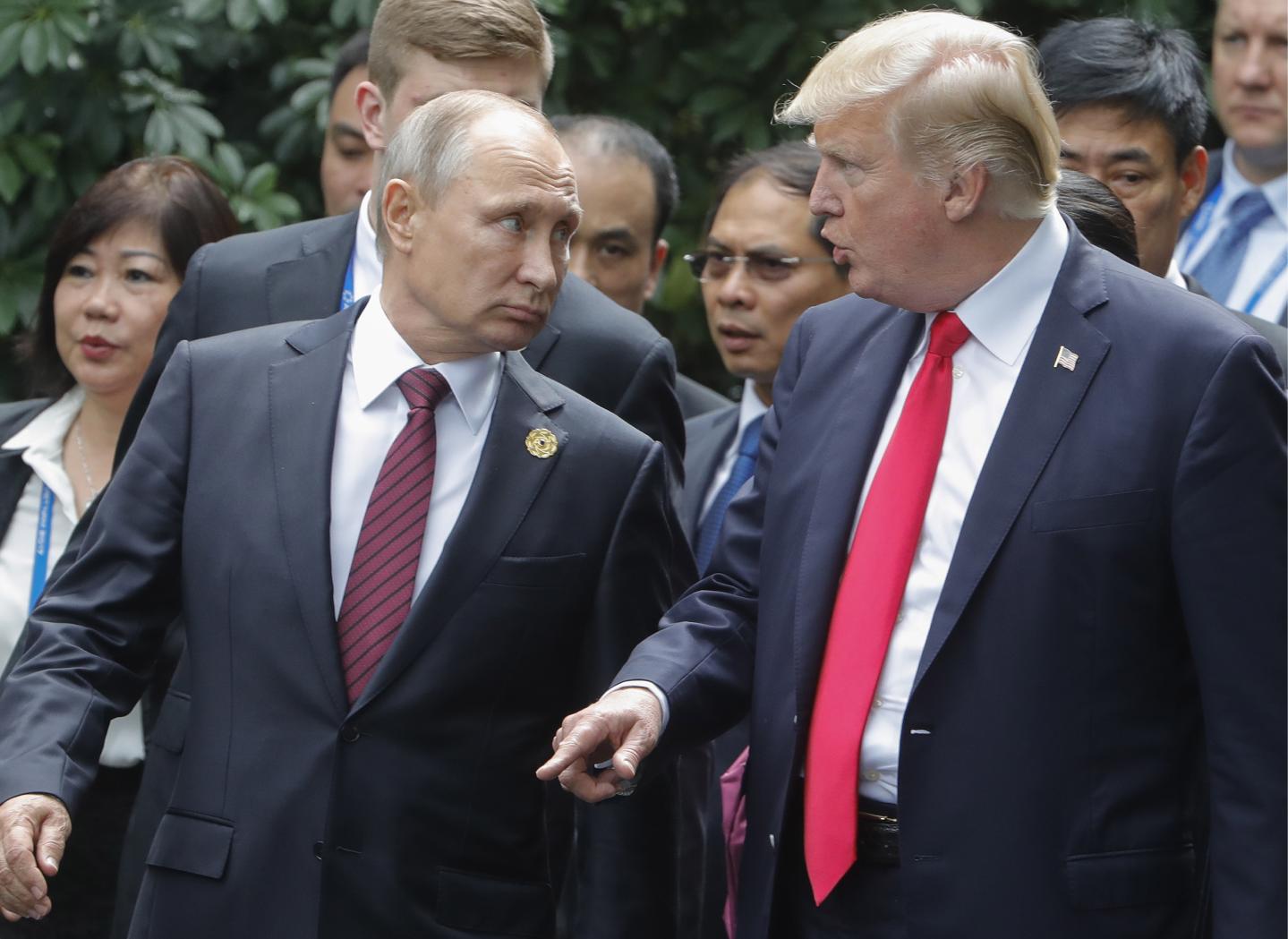
25th APEC Summit in Vietnam: Closing Day
DA NANG, VIETNAM - NOVEMBER 11, 2017: Russia's president Vladimir Putin (L) and US president Donald Trump during a photo session of world leaders on the closing day of the 25th APEC Summit. Mikhail Metzel/TASS (Photo by Mikhail MetzelTASS via Getty Images)Mikhail Metzel/TASS

Nuclear weapons have been a defining element—and a persistent danger—in the U.S.-Russian relationship. Progress on U.S. and Russian nuclear disarmament helps to lower tensions and maintain peace and stability, and is vital to prevent the spread of nuclear weapons.

Therefore, it is imperative that U.S. President Donald Trump and Russian President Vladimir Putin make progress on stalled nuclear arms control matters that are on the agenda when they meet in Helsinki, Finland on Monday.

Since the 1968 nuclear Non-Proliferation Treaty was signed 50 years ago, every U.S. president has engaged in nuclear arms control negotiations with Moscow to reduce the nuclear danger to the United States. While the size of Russia’s stockpiles has been reduced sharply as a result of these agreements, the catastrophic dangers posed by the U.S. and Russian nuclear arsenals is still too high.

Today, each side can launch as many as 800 city-killing nuclear weapons in a first strike within about 20 minutes of the “go” order from either president. Each side would have hundreds more nuclear weapons available in reserve for further counterstrikes. The result would be a global catastrophe. As then-presidents Ronald Reagan and Mikhail Gorbachev noted in their 1985 summit statement: “A nuclear war cannot be won and must never be fought.”

Clearly, it is vital that the world’s two largest nuclear-armed states maintain a stable relationship and avoid direct military conflict.

Unfortunately, relations between Washington and Moscow are at their lowest point since the mid-1980s, and their dialogue on nuclear arms control has been stalled since Russia rejected a 2013 offer from President Obama to negotiate further nuclear cuts, and since tensions arose over Russia’s 2014 invasion of Crimea. As the relationship with Russia has eroded, Russia has engaged in more assertive military exercises and more frequent overflights in or near Western airspace. As a result, there has been an increasing number of encounters between the Russian military and the U.S. and NATO forces. The risk of accidents and miscalculations that could escalate to an armed conflict is significant. Unfortunately, the latest round of U.S.-Russian strategic stability talks was postponed this year.

To make matters worse, the existing nuclear arms agreements already in place—the 1987 Intermediate-Range Nuclear Forces (INF) Treaty and the 2010 New Strategic Arms Reduction Treaty (START)—are now at risk and, at the same time, both sides have begun replacing and upgrading their Cold War-era strategic nuclear arsenals.

The INF Treaty helped end the Cold War by eliminating all U.S. and Russian ground-launched ballistic and cruise missiles with ranges between 500 and 5,500 kilometers. The U.S. has accused Russia in 2014 of violating the INF Treaty by testing a prohibited ground-launched cruise missile. In response, the Trump administration has proposed new, “more usable” low-yield nuclear options, some of which would also violate the treaty.

Meanwhile, the START agreement, which caps each side’s strategic deployed arsenals to no more than 1,550 warheads and 700 strategic delivery systems, will expire in February 2021 unless extended or replaced.

Without a positive decision to extend New START, there would be no legally binding limits on the world’s two largest nuclear superpowers for the first time since 1972. The risk of unconstrained U.S.-Russian nuclear competition, and even more fraught relations, would grow.

In a March interview with NBC, Putin voiced interest in an extension of New START or even possibly further cuts in warhead numbers. In April, the Trump administration announced it is pursuing a “whole-of-government review” about whether to extend the New START.

New START clearly serves U.S. and Russian security interests. The treaty imposes important bounds on the strategic nuclear competition between the two nuclear superpowers.

Failure to extend New START, on the other hand, would compromise U.S. intelligence on Russian nuclear forces, open the door to unconstrained nuclear competition, and undermine U.S. and allied security.

Fortunately, the treaty can be extended by up to five years (to 2026) by a simple agreement by the two presidents—without complex negotiations and without further approval from the U.S. Senate or Russian Duma, and without making an unwise concession to Moscow.

A resolution of the INF compliance dispute is a more complex but resolvable problem—but only with higher-level leadership from both the White House and the Kremlin. Trump and Putin could direct their teams to pursue special inspections to answer questions about the Russian ground-launched cruise missile of concern to the United States and develop solutions that resolve each country’s compliance concerns.


Some Republican lawmakers believe New START should not be extended so long as the INF dispute is unresolved. Sacrificing New START, given the transparency it provides, would only compound the problem and scuttle the chances of bringing Russia back into compliance with INF.

New START extension would also provide additional time for Trump, or his successor, to pursue negotiations on more far-reaching nuclear cuts involving strategic and tactical nuclear systems, an understanding about the limits of U.S. strategic missile defenses, and limitations on non-nuclear strategic strike weapons that both sides are beginning to develop.

If they achieve nothing else in Helsinki, Trump and Putin should relaunch the dialogue on strategic stability and pledge to reach early agreement to extend the New START agreement. If not, we may see the emergence of an even more dangerous phase in U.S.-Russian relations.

Lawrence Weiler is one of the U.S. negotiators of the 1968 Treaty on the Nonproliferation of Nuclear Weapons and the 1963 U.S.-Soviet Hotline Agreement. Daryl G. Kimball is executive director of the independent, non-partisan Arms Control Association.

About the Authors
By Lawrence Weiler
See full bioRight Arrow Button Icon
By Daryl G. Kimball
See full bioRight Arrow Button Icon
By Bethany Cianciolo
See full bioRight Arrow Button Icon

Latest in Commentary

Finance
Lorem ipsum dolor sit amet, consectetur adipiscing elit, sed do eiusmod tempor incididunt ut labore et dolore magna aliqua. Ut enim ad minim veniam
By Fortune Editors
October 20, 2025
Finance
Lorem ipsum dolor sit amet, consectetur adipiscing elit, sed do eiusmod tempor incididunt ut labore et dolore magna aliqua. Ut enim ad minim veniam
By Fortune Editors
October 20, 2025
Finance
Lorem ipsum dolor sit amet, consectetur adipiscing elit, sed do eiusmod tempor incididunt ut labore et dolore magna aliqua. Ut enim ad minim veniam
By Fortune Editors
October 20, 2025
Finance
Lorem ipsum dolor sit amet, consectetur adipiscing elit, sed do eiusmod tempor incididunt ut labore et dolore magna aliqua. Ut enim ad minim veniam
By Fortune Editors
October 20, 2025
Finance
Lorem ipsum dolor sit amet, consectetur adipiscing elit, sed do eiusmod tempor incididunt ut labore et dolore magna aliqua. Ut enim ad minim veniam
By Fortune Editors
October 20, 2025
Finance
Lorem ipsum dolor sit amet, consectetur adipiscing elit, sed do eiusmod tempor incididunt ut labore et dolore magna aliqua. Ut enim ad minim veniam
By Fortune Editors
October 20, 2025

Most Popular

Finance
Lorem ipsum dolor sit amet, consectetur adipiscing elit, sed do eiusmod tempor incididunt ut labore et dolore magna aliqua. Ut enim ad minim veniam
By Fortune Editors
October 20, 2025
Finance
Lorem ipsum dolor sit amet, consectetur adipiscing elit, sed do eiusmod tempor incididunt ut labore et dolore magna aliqua. Ut enim ad minim veniam
By Fortune Editors
October 20, 2025
Finance
Lorem ipsum dolor sit amet, consectetur adipiscing elit, sed do eiusmod tempor incididunt ut labore et dolore magna aliqua. Ut enim ad minim veniam
By Fortune Editors
October 20, 2025
Finance
Lorem ipsum dolor sit amet, consectetur adipiscing elit, sed do eiusmod tempor incididunt ut labore et dolore magna aliqua. Ut enim ad minim veniam
By Fortune Editors
October 20, 2025
Finance
Lorem ipsum dolor sit amet, consectetur adipiscing elit, sed do eiusmod tempor incididunt ut labore et dolore magna aliqua. Ut enim ad minim veniam
By Fortune Editors
October 20, 2025
Finance
Lorem ipsum dolor sit amet, consectetur adipiscing elit, sed do eiusmod tempor incididunt ut labore et dolore magna aliqua. Ut enim ad minim veniam
By Fortune Editors
October 20, 2025
Fortune Secondary Logo
Rankings
  • 100 Best Companies
  • Fortune 500
  • Global 500
  • Fortune 500 Europe
  • Most Powerful Women
  • Future 50
  • World’s Most Admired Companies
  • See All Rankings
Sections
  • Finance
  • Fortune Crypto
  • Features
  • Leadership
  • Health
  • Commentary
  • Success
  • Retail
  • Mpw
  • Tech
  • Lifestyle
  • CEO Initiative
  • Asia
  • Politics
  • Conferences
  • Europe
  • Newsletters
  • Personal Finance
  • Environment
  • Magazine
  • Education
Customer Support
  • Frequently Asked Questions
  • Customer Service Portal
  • Privacy Policy
  • Terms Of Use
  • Single Issues For Purchase
  • International Print
Commercial Services
  • Advertising
  • Fortune Brand Studio
  • Fortune Analytics
  • Fortune Conferences
  • Business Development
  • Group Subscriptions
About Us
  • About Us
  • Editorial Calendar
  • Press Center
  • Work At Fortune
  • Diversity And Inclusion
  • Terms And Conditions
  • Site Map
  • About Us
  • Editorial Calendar
  • Press Center
  • Work At Fortune
  • Diversity And Inclusion
  • Terms And Conditions
  • Site Map
  • Facebook icon
  • Twitter icon
  • LinkedIn icon
  • Instagram icon
  • Pinterest icon

Latest in Commentary

trump
CommentaryManufacturing
Tariffs alone won’t save American manufacturing — here’s what actually will
By Johan "Kip" EidebergApril 18, 2026
7 minutes ago
hormuz
CommentaryIran
With Hormuz under strain, a trade corridor built for resilience faces a real-world test
By Angela Chitkara and Samantha SuttonApril 17, 2026
19 hours ago
broker
CommentarySoftware
The 3 forces quietly dismantling the business model that made enterprise software fabulously profitable
By Michael Jacobides and Stefano PuntoniApril 17, 2026
21 hours ago
welti
CommentaryIran
Switzerland’s former ambassador to Iran: here’s how to end this war — and why Pakistan isn’t enough
By Philippe WeltiApril 17, 2026
1 day ago
Anita Beveridge-Raffo is Head of Retail and Consumer Goods at Palantir Technologies
CommentaryAI agents
Palantir exec: the biggest mistake retailers are making with AI? Trying to do it all with one agent
By Anita Beveridge-RaffoApril 16, 2026
2 days ago
wyle
CommentaryHealth
‘The Pitt’ reveals why healthcare desperately needs a new front door
By Jeremy MorganApril 16, 2026
2 days ago

Most Popular

Pope Leo warned the world is in ‘big trouble’ if Elon Musk becomes the first trillionaire
Success
Pope Leo warned the world is in ‘big trouble’ if Elon Musk becomes the first trillionaire
By Preston ForeApril 17, 2026
23 hours ago
A world going broke: IMF says America's $39 trillion national debt is actually a global problem—and AI may be the only rescue
Economy
A world going broke: IMF says America's $39 trillion national debt is actually a global problem—and AI may be the only rescue
By Nick LichtenbergApril 16, 2026
2 days ago
Jeff Bezos pledged $10 billion for climate change. With the 2030 clock ticking, his wife, Lauren Sánchez Bezos, is leading the charge to spend it
Environment
Jeff Bezos pledged $10 billion for climate change. With the 2030 clock ticking, his wife, Lauren Sánchez Bezos, is leading the charge to spend it
By Sydney LakeApril 15, 2026
3 days ago
Older millennials are starting to act like boomers in the housing market—and pulling away from the pack
Real Estate
Older millennials are starting to act like boomers in the housing market—and pulling away from the pack
By Nick LichtenbergApril 17, 2026
1 day ago
Iran has reopened the Strait of Hormuz—but experts say it now holds a card that works ‘almost like a nuclear deterrent’
Energy
Iran has reopened the Strait of Hormuz—but experts say it now holds a card that works ‘almost like a nuclear deterrent’
By Eva RoytburgApril 17, 2026
16 hours ago
Germany already told its workers to ditch four-day weeks and work-life balance. Now the government wants to cut their pay for calling in sick, too
Success
Germany already told its workers to ditch four-day weeks and work-life balance. Now the government wants to cut their pay for calling in sick, too
By Orianna Rosa RoyleApril 16, 2026
2 days ago

© 2026 Fortune Media IP Limited. All Rights Reserved. Use of this site constitutes acceptance of our Terms of Use and Privacy Policy | CA Notice at Collection and Privacy Notice | Do Not Sell/Share My Personal Information
FORTUNE is a trademark of Fortune Media IP Limited, registered in the U.S. and other countries. FORTUNE may receive compensation for some links to products and services on this website. Offers may be subject to change without notice.