• Home
  • Latest
  • Fortune 500
  • Finance
  • Tech
  • Leadership
  • Lifestyle
  • Rankings
  • Multimedia
Techthe future of work

The GDPR and Our Balkanized Internet

Jeff John Roberts
By
Jeff John Roberts
Jeff John Roberts
Editor, Finance and Crypto
Down Arrow Button Icon
Jeff John Roberts
By
Jeff John Roberts
Jeff John Roberts
Editor, Finance and Crypto
Down Arrow Button Icon
May 26, 2018, 6:30 AM ET
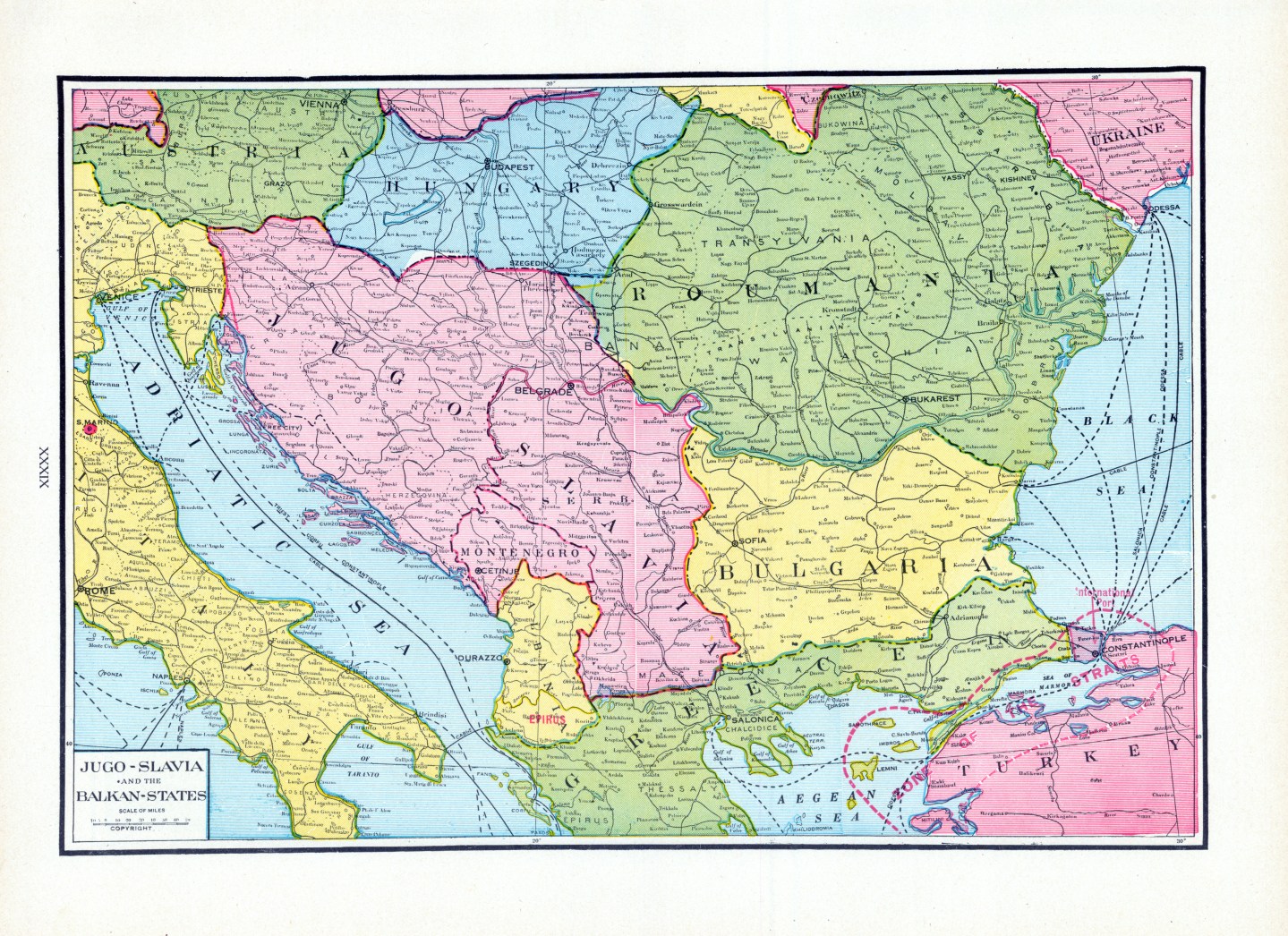
1925, Jugo-Slavia, the Balkan, States, World Atlas  from Prince Edward Island Atlas
1925, Jugo-Slavia, the Balkan, States, World Atlas from Prince Edward Island Atlas. Historic Map Works/Getty ImagesHistoric Map Works/Getty Images

The EU’s data privacy law went into force on Friday and U.S. companies leapt into action—by turning off their websites. Sites like the Chicago Tribune or A&E Networks, for instance, decided to show the digital version of a “closed” sign to European visitors rather than risk violating the law.

Other U.S. sites, however, chose to comply with the famous (or infamous) data directive known as the GDPR. But that doesn’t change the fact the Internet is smaller and different in Europe than it was last Thursday.

This isn’t the first time chunks of the Internet vanished for the hundreds of millions of people who live in Europe. In recent years, a growing number of web pages are also dropping out of site due to “right to be forgotten” laws, which let people scrub Google search results about themselves.

And it’s not only in Europe this is happening. The Supreme Court of Canada last year blessed a judge’s ruling in an intellectual property case that ordered Google to delete listings worldwide—meaning the content also disappeared for Internet users outside of Canada.

Call it the Balkanization of the Internet. Just as the Ottoman Empire and Yugoslavia fractured into a series of smaller states, the same thing is happening to what we once dubbed the “world wide web.” Instead of a common cyber space, the online world is starting to mirror the political and commercial contours of the physical world.

In the case of dictatorships, the divisions are especially stark. Think of the “Great Firewall of China” that blots out sites like the New York Times, or the religious tyrants in Iran who are trying to crush popular messaging apps like Telegram and hope to construct a “halal Internet.”

These attempts to ring-fence the Internet have been going on for years. The striking thing of late, though, is how this trend is being embraced by democratic nations like France and Canada.

This isn’t entirely a bad thing. The Internet we grew up with reflects certain distinctly American values—such as aggressive capitalism and a cavalier attitude to privacy—that many people find objectionable. Just as the people of Poland and Lithuania didn’t want to live under the Soviet empire, it’s no surprise Europeans don’t want to live under the thumb of Facebook and Google.

A little Balkanization of the web, in the other words, can be a healthy exercise of democratic power and pluralism. The trouble is deciding where to stop. In the near future, will there be one Internet for Americans who live in blue states and another for those in red states? (Alas, this is already the case in many respects given how sites like Facebook and Twitter create so-called “filter bubbles” that serve up news and opinions we already agree with).

More broadly, the latest fracturing of the web under the GDPR is a time to take stock of what we have lost.

In the exciting early days of the Internet, in the 1990s, the Internet was a like an undiscovered continent rich with new ideas and unfamiliar people. Anyone could explore a world beyond their own village or country, and where group identity could not be dictated by political or religious authorities.

This is still true today, of course. But much of the initial sense of discovery and global spirit is gone in part because the Internet is increasingly being defined by governments not people. The disappearance of U.S. websites may be a victory for E.U. regulators, but it’s also a further blow to diversity and freedom online.


About the Author
Jeff John Roberts
By Jeff John RobertsEditor, Finance and Crypto
LinkedIn iconTwitter icon

Jeff John Roberts is the Finance and Crypto editor at Fortune, overseeing coverage of the blockchain and how technology is changing finance.

See full bioRight Arrow Button Icon

Latest in Tech

Finance
Lorem ipsum dolor sit amet, consectetur adipiscing elit, sed do eiusmod tempor incididunt ut labore et dolore magna aliqua. Ut enim ad minim veniam
By Fortune Editors
October 20, 2025
Finance
Lorem ipsum dolor sit amet, consectetur adipiscing elit, sed do eiusmod tempor incididunt ut labore et dolore magna aliqua. Ut enim ad minim veniam
By Fortune Editors
October 20, 2025
Finance
Lorem ipsum dolor sit amet, consectetur adipiscing elit, sed do eiusmod tempor incididunt ut labore et dolore magna aliqua. Ut enim ad minim veniam
By Fortune Editors
October 20, 2025
Finance
Lorem ipsum dolor sit amet, consectetur adipiscing elit, sed do eiusmod tempor incididunt ut labore et dolore magna aliqua. Ut enim ad minim veniam
By Fortune Editors
October 20, 2025
Finance
Lorem ipsum dolor sit amet, consectetur adipiscing elit, sed do eiusmod tempor incididunt ut labore et dolore magna aliqua. Ut enim ad minim veniam
By Fortune Editors
October 20, 2025
Finance
Lorem ipsum dolor sit amet, consectetur adipiscing elit, sed do eiusmod tempor incididunt ut labore et dolore magna aliqua. Ut enim ad minim veniam
By Fortune Editors
October 20, 2025

Most Popular

Finance
Lorem ipsum dolor sit amet, consectetur adipiscing elit, sed do eiusmod tempor incididunt ut labore et dolore magna aliqua. Ut enim ad minim veniam
By Fortune Editors
October 20, 2025
Finance
Lorem ipsum dolor sit amet, consectetur adipiscing elit, sed do eiusmod tempor incididunt ut labore et dolore magna aliqua. Ut enim ad minim veniam
By Fortune Editors
October 20, 2025
Finance
Lorem ipsum dolor sit amet, consectetur adipiscing elit, sed do eiusmod tempor incididunt ut labore et dolore magna aliqua. Ut enim ad minim veniam
By Fortune Editors
October 20, 2025
Finance
Lorem ipsum dolor sit amet, consectetur adipiscing elit, sed do eiusmod tempor incididunt ut labore et dolore magna aliqua. Ut enim ad minim veniam
By Fortune Editors
October 20, 2025
Finance
Lorem ipsum dolor sit amet, consectetur adipiscing elit, sed do eiusmod tempor incididunt ut labore et dolore magna aliqua. Ut enim ad minim veniam
By Fortune Editors
October 20, 2025
Finance
Lorem ipsum dolor sit amet, consectetur adipiscing elit, sed do eiusmod tempor incididunt ut labore et dolore magna aliqua. Ut enim ad minim veniam
By Fortune Editors
October 20, 2025
Fortune Secondary Logo
Rankings
  • 100 Best Companies
  • Fortune 500
  • Global 500
  • Fortune 500 Europe
  • Most Powerful Women
  • Future 50
  • World’s Most Admired Companies
  • See All Rankings
Sections
  • Finance
  • Fortune Crypto
  • Features
  • Leadership
  • Health
  • Commentary
  • Success
  • Retail
  • Mpw
  • Tech
  • Lifestyle
  • CEO Initiative
  • Asia
  • Politics
  • Conferences
  • Europe
  • Newsletters
  • Personal Finance
  • Environment
  • Magazine
  • Education
Customer Support
  • Frequently Asked Questions
  • Customer Service Portal
  • Privacy Policy
  • Terms Of Use
  • Single Issues For Purchase
  • International Print
Commercial Services
  • Advertising
  • Fortune Brand Studio
  • Fortune Analytics
  • Fortune Conferences
  • Business Development
  • Group Subscriptions
About Us
  • About Us
  • Editorial Calendar
  • Press Center
  • Work At Fortune
  • Diversity And Inclusion
  • Terms And Conditions
  • Site Map
  • About Us
  • Editorial Calendar
  • Press Center
  • Work At Fortune
  • Diversity And Inclusion
  • Terms And Conditions
  • Site Map
  • Facebook icon
  • Twitter icon
  • LinkedIn icon
  • Instagram icon
  • Pinterest icon

Latest in Tech

LawElon Musk
Musk misled Twitter investors before 2022 buyout, jury says
By Isaiah Poritz, Jef Feeley and BloombergMarch 20, 2026
3 hours ago
bespectacled man scratches the back of his head during congressional hearing
CryptoCryptocurrency
Kalshi locks in $22 billion valuation, gaining slight edge over its rival Polymarket
By Carlos GarciaMarch 20, 2026
6 hours ago
Big TechEntrepreneurs
Mark Cuban reads 1,000 emails a day—now he’s using a Mac Mini to fight the AI-generated flood threatening his clean inbox obsession
By Marco Quiroz-GutierrezMarch 20, 2026
7 hours ago
Stressed out job seeker on laptop
Successjob hunting
Job seekers aren’t imagining things: the number of candidates ghosted by employers just reached a three-year high thanks to AI
By Emma BurleighMarch 20, 2026
10 hours ago
SuccessCareers
AI boom is fueling demand for skilled trades—and demand for technicians, HVAC workers, and electricians is soaring, with six-figure salaries to match
By Preston ForeMarch 20, 2026
11 hours ago
LawX
Three Tennessee teenagers are suing Elon Musk’s xAI for creating sexually explicit images of them
By The Associated Press and Travis LollerMarch 20, 2026
12 hours ago

© 2026 Fortune Media IP Limited. All Rights Reserved. Use of this site constitutes acceptance of our Terms of Use and Privacy Policy | CA Notice at Collection and Privacy Notice | Do Not Sell/Share My Personal Information
FORTUNE is a trademark of Fortune Media IP Limited, registered in the U.S. and other countries. FORTUNE may receive compensation for some links to products and services on this website. Offers may be subject to change without notice.