• Home
  • Latest
  • Fortune 500
  • Finance
  • Tech
  • Leadership
  • Lifestyle
  • Rankings
  • Multimedia
Commentaryclean energy

How Relying on Oil Makes Us More Vulnerable to Cyberattacks

By
Nathan Sproul
Nathan Sproul
and
Bethany Cianciolo
Bethany Cianciolo
Down Arrow Button Icon
By
Nathan Sproul
Nathan Sproul
and
Bethany Cianciolo
Bethany Cianciolo
Down Arrow Button Icon
May 10, 2018, 2:51 PM ET
U.S. Electricity Output Rose 6.2% From A Year Earlier
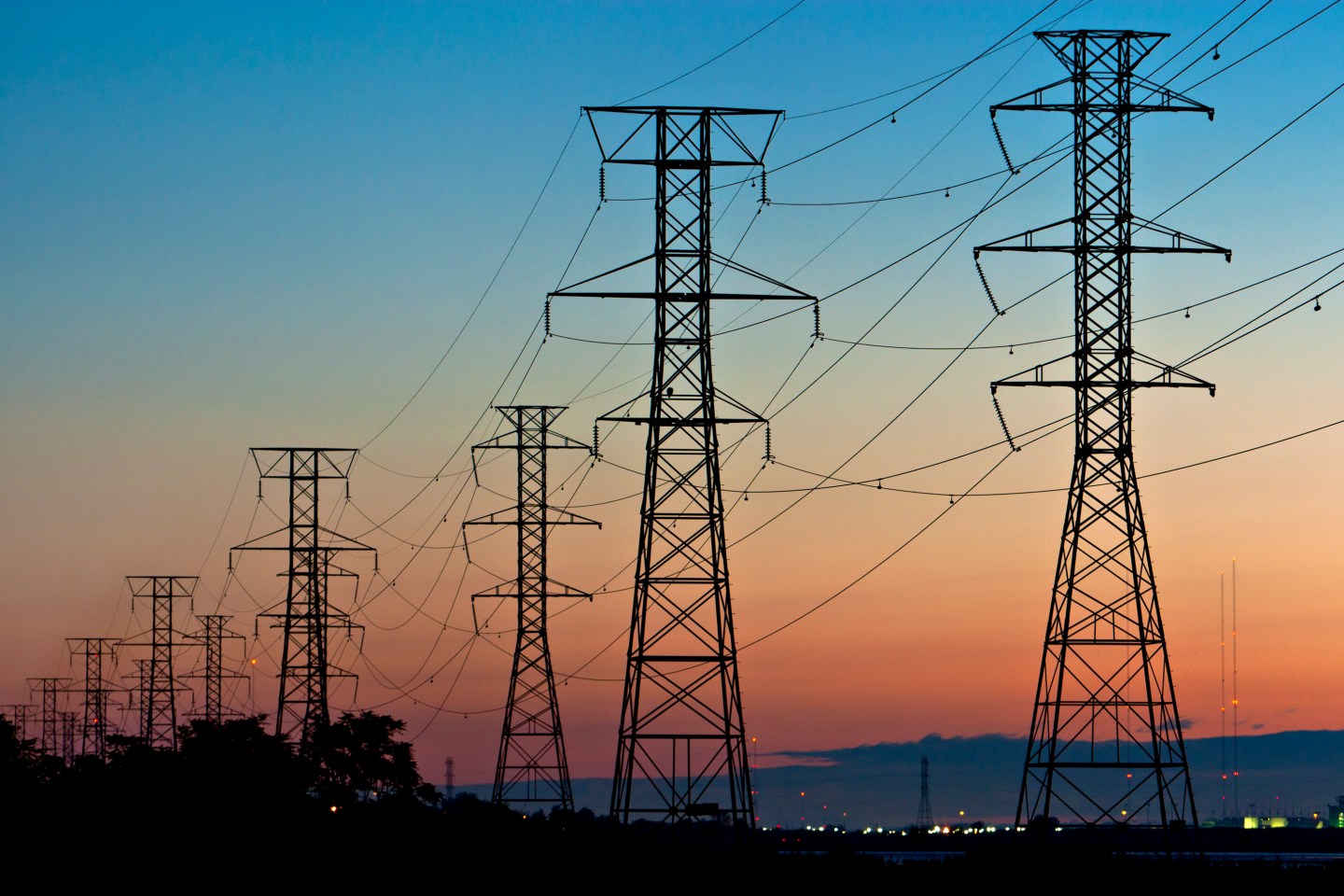
Power transmission lines are suspended from electricity pylons in Kearny, New Jersey, U.S., on Thursday, Aug. 26, 2010. U.S. electrical output rose 6.2 percent to 94,254 gigawatthours from a year earlier during the week ending Aug. 14. About 45 percent of U.S. electricity will come from coal plants and 22 percent from natural gas power facilities this year, according to the Energy Department. Photographer: Steve Hockstein/Bloomberg via Getty ImagesBloomberg Bloomberg via Getty Images

What’s the difference between a major American city and a wartorn country? Besides the matters of development, peace, and affluence, unobstructed access to resources may come to mind. The contrast is stark, but an American city could become like a war zone quicker than you’d imagine. All it would take is a successfully hacked electrical grid.

This type of event may seem inconceivable, but the concern is grounded in a painfully real threat that is only mounting in severity. According to U.S. officials, Russian hackers have targeted the U.S. energy grid as part of ongoing operations to penetrate our economy. “Since at least March 2016, Russian government cyber actors … targeted government entities and multiple U.S. critical infrastructure sectors, including the energy, nuclear, commercial facilities, water, aviation, and critical manufacturing sectors,” according to an alert issued by the Department of Homeland Security and the FBI.

According to Energy Secretary Rick Perry, these cyberattacks are “literally happening hundreds of thousands of times a day.” Bloomberg reports the group responsible has been known to breach systems to gather information that would allow “for a more advanced wave of attacks targeting industrial control systems that, if disabled, leave millions without power or water.”

That’s not to mention the extraordinary financial burden such an incident would create. According to a report by Lloyd’s and the University of Cambridge’s Centre for Risk Studies, a major attack on the U.S. electric grid could quickly cost the economy between $243 billion and $1 trillion dollars, which is equivalent to 40 to 50 major hurricanes.

When critical infrastructure is vulnerable to foreign influence, as it clearly is, better protection is not an option, but an imperative. But what is the bigger picture? Cyber attacks are only becoming more advanced and security is not keeping up. According to GovTech, “CEOs, CIOs, and CISOs pay billions for cybersecurity solutions only to discover that, at best, these technologies solely help in gathering information after an attack rather than stopping the attack from occurring.” Some call this approach “patch and pray,” a term that speaks soberly to the system’s inadequacies. We need a more proactive approach, and yet we’re still reliant on largely post-factum solutions.

At the same time, the electrical grid is becoming less reliable and less prudent—and not just because of vulnerability to hacking. As innovation spurs the development of renewable energy in America, consumers have more choice in how they power their lives than ever before. The rise of distributed energy sources (DES) like solar panels, home batteries, and electric vehicles has some questioning whether we ought to reimagine the grid all together.

Renewable energy’s implications for national security would be extraordinarily beneficial. Advanced battery power, for instance, could take homes off the grid, blunting the potential harm of cyber attacks and minimizing risks to America’s security. Renewable energy would also reduce our dependence on foreign energy sources: a boon to America’s economic and geopolitical stability.

Would it be better to become energy independent and secure through renewable energy, or stay embroiled in conflict overseas due to oil dependency? The answer seems clear, and though there are sure to be skeptics, experts on both sides of the political aisle have seen the metaphorical light.

According to a military advisory board, America’s reliance on foreign sources of oil constitute a “national vulnerability” for the economy as well as our armed forces, both of which depend on fossil fuels. The volatility of oil prices can negatively impact security, causing groups such as the Young Conservatives for Energy Reform to push for greater energy independence through renewable energy sources.

Renewables that decentralize energy consumption would decrease reliance on a grid that is outdated and increasingly unstable. The U.S. military is already transitioning to renewable power to prevent blackouts at its bases, and the logic of their shift applies on a grander scale.

Microgrids have risen to the forefront of the conversation as an attractive alternative to the traditional power grid. Microgrids are smart, efficient, self-contained power systems fueled primarily by renewable energy to serve one or more nearby buildings—most commonly hospitals, military bases, and other critical facilities. Because they’re local and can operate even when the main grid is down, they are far less susceptible to attacks like those attempted by Russia, in addition to outages caused by bad weather.


According to Boston’s NPR news station WBUR, “Advocates say the microgrid transformation of our electric infrastructure would make it more resilient to cyberattacks…and better able to handle electricity generated by renewable resources, such as wind and solar.” All signs point to decentralization for improved security, and renewable energy as the facilitator of this shift.

I would not be surprised if the grid as we know it goes the way of the horse and buggy before long, and I hope it does for the sake of our national security. There’s no reason to cling to relics of the past when innovation is a hallmark of our national identity. Politicians, citizens, and companies that support this shift will be on the brighter side of history, instead of left in the shadows.

Nathan Sproul is the founder and managing director of Lincoln Strategy Group.

About the Authors
By Nathan Sproul
See full bioRight Arrow Button Icon
By Bethany Cianciolo
See full bioRight Arrow Button Icon

Latest in Commentary

Finance
Lorem ipsum dolor sit amet, consectetur adipiscing elit, sed do eiusmod tempor incididunt ut labore et dolore magna aliqua. Ut enim ad minim veniam
By Fortune Editors
October 20, 2025
Finance
Lorem ipsum dolor sit amet, consectetur adipiscing elit, sed do eiusmod tempor incididunt ut labore et dolore magna aliqua. Ut enim ad minim veniam
By Fortune Editors
October 20, 2025
Finance
Lorem ipsum dolor sit amet, consectetur adipiscing elit, sed do eiusmod tempor incididunt ut labore et dolore magna aliqua. Ut enim ad minim veniam
By Fortune Editors
October 20, 2025
Finance
Lorem ipsum dolor sit amet, consectetur adipiscing elit, sed do eiusmod tempor incididunt ut labore et dolore magna aliqua. Ut enim ad minim veniam
By Fortune Editors
October 20, 2025
Finance
Lorem ipsum dolor sit amet, consectetur adipiscing elit, sed do eiusmod tempor incididunt ut labore et dolore magna aliqua. Ut enim ad minim veniam
By Fortune Editors
October 20, 2025
Finance
Lorem ipsum dolor sit amet, consectetur adipiscing elit, sed do eiusmod tempor incididunt ut labore et dolore magna aliqua. Ut enim ad minim veniam
By Fortune Editors
October 20, 2025

Most Popular

Finance
Lorem ipsum dolor sit amet, consectetur adipiscing elit, sed do eiusmod tempor incididunt ut labore et dolore magna aliqua. Ut enim ad minim veniam
By Fortune Editors
October 20, 2025
Finance
Lorem ipsum dolor sit amet, consectetur adipiscing elit, sed do eiusmod tempor incididunt ut labore et dolore magna aliqua. Ut enim ad minim veniam
By Fortune Editors
October 20, 2025
Finance
Lorem ipsum dolor sit amet, consectetur adipiscing elit, sed do eiusmod tempor incididunt ut labore et dolore magna aliqua. Ut enim ad minim veniam
By Fortune Editors
October 20, 2025
Finance
Lorem ipsum dolor sit amet, consectetur adipiscing elit, sed do eiusmod tempor incididunt ut labore et dolore magna aliqua. Ut enim ad minim veniam
By Fortune Editors
October 20, 2025
Finance
Lorem ipsum dolor sit amet, consectetur adipiscing elit, sed do eiusmod tempor incididunt ut labore et dolore magna aliqua. Ut enim ad minim veniam
By Fortune Editors
October 20, 2025
Finance
Lorem ipsum dolor sit amet, consectetur adipiscing elit, sed do eiusmod tempor incididunt ut labore et dolore magna aliqua. Ut enim ad minim veniam
By Fortune Editors
October 20, 2025
Fortune Secondary Logo
Rankings
  • 100 Best Companies
  • Fortune 500
  • Global 500
  • Fortune 500 Europe
  • Most Powerful Women
  • Future 50
  • World’s Most Admired Companies
  • See All Rankings
Sections
  • Finance
  • Fortune Crypto
  • Features
  • Leadership
  • Health
  • Commentary
  • Success
  • Retail
  • Mpw
  • Tech
  • Lifestyle
  • CEO Initiative
  • Asia
  • Politics
  • Conferences
  • Europe
  • Newsletters
  • Personal Finance
  • Environment
  • Magazine
  • Education
Customer Support
  • Frequently Asked Questions
  • Customer Service Portal
  • Privacy Policy
  • Terms Of Use
  • Single Issues For Purchase
  • International Print
Commercial Services
  • Advertising
  • Fortune Brand Studio
  • Fortune Analytics
  • Fortune Conferences
  • Business Development
About Us
  • About Us
  • Editorial Calendar
  • Press Center
  • Work At Fortune
  • Diversity And Inclusion
  • Terms And Conditions
  • Site Map
Fortune Secondary Logo
  • About Us
  • Editorial Calendar
  • Press Center
  • Work At Fortune
  • Diversity And Inclusion
  • Terms And Conditions
  • Site Map
  • Facebook icon
  • Twitter icon
  • LinkedIn icon
  • Instagram icon
  • Pinterest icon

Latest in Commentary

heitmann
CommentaryEntrepreneurship
Here’s how to build something that lasts, from the founder of a $300 million bootstrapped company that’s been growing for 28 years straight
By Tim HeitmannMarch 1, 2026
8 hours ago
world's fair
CommentaryRobots
Something big is happening in AI, but panic is the wrong reaction
By Peter CappelliFebruary 28, 2026
1 day ago
putin
CommentaryRussia
Exclusive analysis: we looked at the 400 western firms still in Russia. Their paltry size strips Putin’s bluff bare naked
By Jeffrey Sonnenfeld, Stephen Henriques, Jake Waldinger and Giuseppe ScottoFebruary 27, 2026
2 days ago
roth
CommentaryLeadership
The AI resource reallocation challenge: How can companies capture the value of time?
By Erik RothFebruary 27, 2026
2 days ago
will
CommentaryAdvertising
I’m one of America’s top pollsters and I’ve got a warning for the AI companies: customers aren’t sold on ads
By Will JohnsonFebruary 27, 2026
2 days ago
the pitt
CommentaryDEI
‘The Pitt’: a masterclass display of DEI in action 
By Robert RabenFebruary 26, 2026
3 days ago

Most Popular

placeholder alt text
Middle East
Iran is now on 'death ground' amid existential threat from U.S. attacks and could 'go big' in retaliation, former NATO commander warns
By Jason MaFebruary 28, 2026
1 day ago
placeholder alt text
Success
Japanese companies are paying older workers to sit by a window and do nothing—while Western CEOs demand super-AI productivity just to keep your job
By Orianna Rosa RoyleFebruary 27, 2026
2 days ago
placeholder alt text
AI
The week the AI scare turned real and America realized maybe it isn't ready for what's coming
By Nick LichtenbergFebruary 28, 2026
1 day ago
placeholder alt text
Success
Walmart exec says U.S. workforces needs to take inspiration from China where ‘5 year-olds are learning DeepSeek’
By Preston ForeFebruary 27, 2026
2 days ago
placeholder alt text
Economy
Your grandparents are the reason the U.S. isn't in a recession right now. That won't last forever
By Eleanor PringleMarch 1, 2026
8 hours ago
placeholder alt text
Middle East
Dubai’s worst nightmare unfolds as Iran strikes Gulf neighbors
By Dana Khraiche, Fiona MacDonald and BloombergFebruary 28, 2026
20 hours ago

© 2026 Fortune Media IP Limited. All Rights Reserved. Use of this site constitutes acceptance of our Terms of Use and Privacy Policy | CA Notice at Collection and Privacy Notice | Do Not Sell/Share My Personal Information
FORTUNE is a trademark of Fortune Media IP Limited, registered in the U.S. and other countries. FORTUNE may receive compensation for some links to products and services on this website. Offers may be subject to change without notice.