• Home
  • Latest
  • Fortune 500
  • Finance
  • Tech
  • Leadership
  • Lifestyle
  • Rankings
  • Multimedia
CommentaryData

Moody’s Analytics Economist: Why the LinkedIn Data Case Is a Lose-Lose Situation

By
Tony Hughes
Tony Hughes
and
Bethany Cianciolo
Bethany Cianciolo
Down Arrow Button Icon
By
Tony Hughes
Tony Hughes
and
Bethany Cianciolo
Bethany Cianciolo
Down Arrow Button Icon
March 16, 2018, 11:37 AM ET
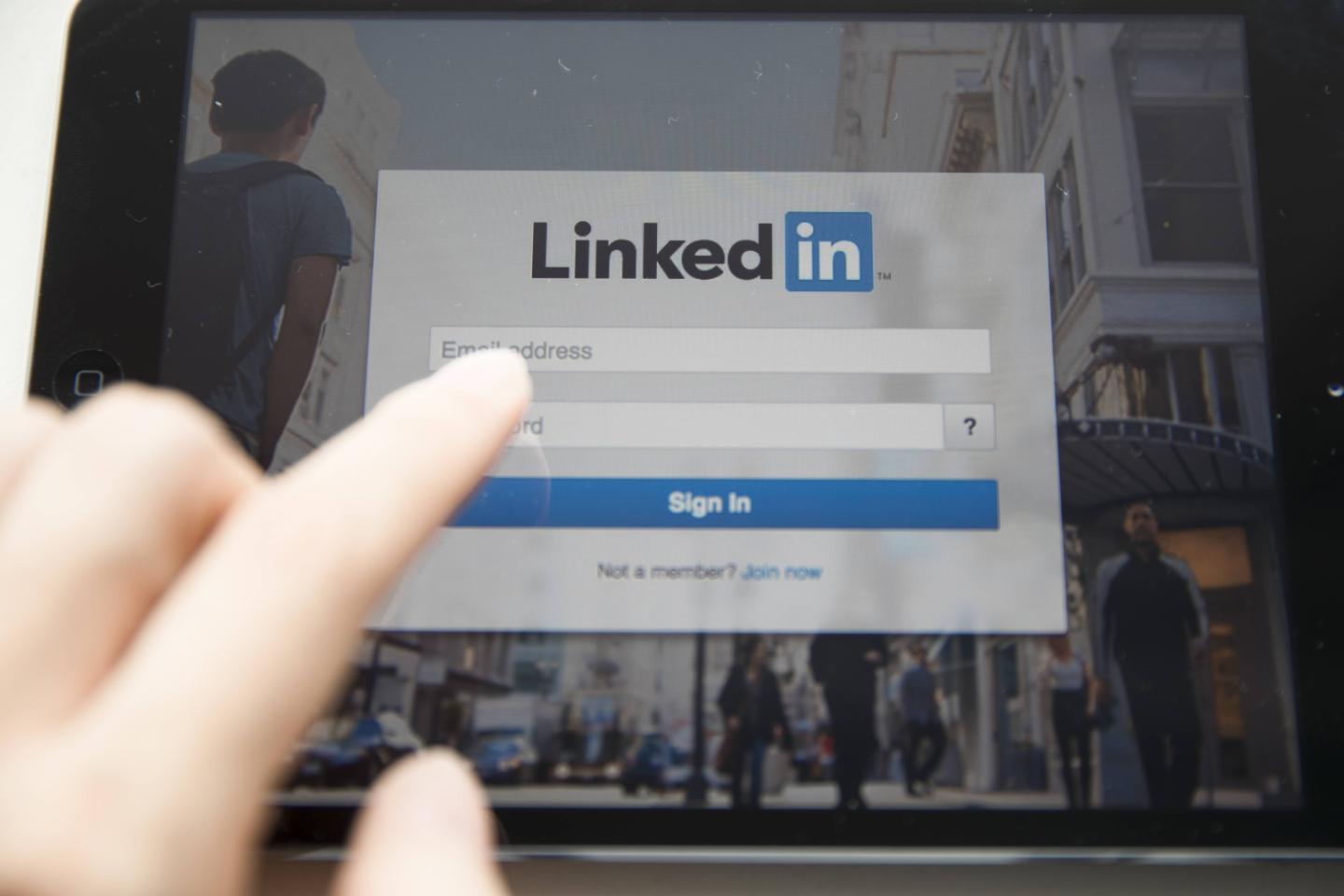
The LinkedIn Corp. app logo is displayed on an Apple Inc
A young man is using the LinkedIn Corp. app that is displayed on an Apple Inc. iPad the biggest online professional-networking service on October 20, 2017 in Hong Kong, Hong Kong. S3studio—Getty Images

As an economic statistician who analyzes data for a living, I have been fascinated to observe the recent court case involving hiQ Labs and LinkedIn. My job depends quite crucially on access to interesting databases, and LinkedIn has a remarkable one.

In August 2017, LinkedIn blocked hiQ from accessing its data available in public LinkedIn profiles of registered users, which hiQ had been using to build algorithms. HiQ took LinkedIn to court, and the case is currently mired in the appeals process after a U.S. district court judge in the Northern District of California granted a preliminary injunction against LinkedIn. LinkedIn’s attorneys subsequently filed an appeal to the Ninth Circuit Court of Appeals. Oral arguments were heard in San Francisco on Thursday.

The case hinges on questions of who owns a piece of data and the circumstances under which the information can be viewed as residing in the public domain, accessible by all and sundry. The appeals court judges may rule that LinkedIn owns exclusive rights to the data, which would not have been compiled without the entrepreneurial talents of LinkedIn’s founders. Conversely, the judges may conclude that since LinkedIn users set their profiles to “public,” placing them in full view of search engines and general web surfers, they are giving companies like hiQ free rein to view and use the data as they see fit.

It’s a knife-edge decision with strong arguments on both sides. Either ruling could have profound implications for how people like you and me interact with data in our daily lives.

If the case goes against LinkedIn, the company will likely have two potential responses: Keep the data public and actively compete in the analytics space, or make the data accessible only by those signed into the service, as the act of signing in would, in theory, limit broader public access to the data. The second of these is perhaps the most interesting.

Most LinkedIn users leverage the site to boost their profiles and careers by looking up and connecting with new business acquaintances or search for job opportunities. Personally, I never surf incognito and will normally invite the people I look up to connect. For LinkedIn, which was founded to enable these searches, such a change may be existential. If its data were made private so that LinkedIn profiles would not be searchable by search engines, the utility most users get from the service—to be “found”—would undoubtedly be disrupted and the network would hold much less appeal.

One can easily imagine rival startups, willing to live with open access to any data they collect, springing up to fill the void. Anyone who remembers MySpace, formerly the dominant player in social networking, will know that large networks can be usurped by upstarts with a more compelling value proposition for users. People like the ability to control the public nature of their LinkedIn profile and can be counted on to migrate in large numbers if the feature is ever withdrawn.

LinkedIn will then hold exclusive rights to a database of rapidly diminishing value.

If, on the contrary, LinkedIn prevails in the case, the implications will be monumental. One major positive outcome from such a result will be that social network entrepreneurs will be emboldened to start new and better websites and apps. The industry is only 15 years old, so considerable innovation is still possible. Holding exclusive data rights to a network can be viewed as akin to a patent on a new invention. Society bestows these rights to allow inventors to recoup the investments they made and to reward them for the risks they took to get their ideas into the marketplace. The prospect of holding monopoly-pricing power then encourages other individuals and organizations to expend energy to develop their own ideas. The same may well be true for social networks.

“Inventing” a new database is, generally, very hard. Those who come up with clever ways of extracting information, like building a social network, or who expend the laborious effort to collect data from primary sources, should be able to profit handsomely from their exertions. If such data were made public through judicial decree, free riders would abound and private enterprise would have no incentive to collect data in the future.


On the other hand, with LinkedIn in full control of the compiled information, society would suffer in other ways. The world is being flooded with data, and analysts around the world are grappling with ways to link disparate databases across cyberspace. One can posit that profound insights that could enhance social welfare lie at the intersections of these databases. Perhaps LinkedIn data could be tied to health statistics to yield a cure for cancer? This is a stretch, of course, though we can’t definitively rule it out until research is undertaken. Along the way, companies may identify less profound, but nonetheless useful, insights that allow them to profit by making life slightly better for their clients. These innovations would be greatly diminished if competitive pressures were removed.

So we, through our legislators and judges, face an especially cruel choice in cases like this. We can make our data freely available and have no one bother to collect it. Or, we can bestow ownership rights on the data and potentially miss out on beneficial insights gleaned from its analysis.

As a statistician, I hope that large databases continue to be collected so we can explore how this data can be used not only for private but also public benefit.

Tony Hughes is managing director at Moody’s Analytics.

About the Authors
By Tony Hughes
See full bioRight Arrow Button Icon
By Bethany Cianciolo
See full bioRight Arrow Button Icon

Latest in Commentary

Finance
Lorem ipsum dolor sit amet, consectetur adipiscing elit, sed do eiusmod tempor incididunt ut labore et dolore magna aliqua. Ut enim ad minim veniam
By Fortune Editors
October 20, 2025
Finance
Lorem ipsum dolor sit amet, consectetur adipiscing elit, sed do eiusmod tempor incididunt ut labore et dolore magna aliqua. Ut enim ad minim veniam
By Fortune Editors
October 20, 2025
Finance
Lorem ipsum dolor sit amet, consectetur adipiscing elit, sed do eiusmod tempor incididunt ut labore et dolore magna aliqua. Ut enim ad minim veniam
By Fortune Editors
October 20, 2025
Finance
Lorem ipsum dolor sit amet, consectetur adipiscing elit, sed do eiusmod tempor incididunt ut labore et dolore magna aliqua. Ut enim ad minim veniam
By Fortune Editors
October 20, 2025
Finance
Lorem ipsum dolor sit amet, consectetur adipiscing elit, sed do eiusmod tempor incididunt ut labore et dolore magna aliqua. Ut enim ad minim veniam
By Fortune Editors
October 20, 2025
Finance
Lorem ipsum dolor sit amet, consectetur adipiscing elit, sed do eiusmod tempor incididunt ut labore et dolore magna aliqua. Ut enim ad minim veniam
By Fortune Editors
October 20, 2025

Most Popular

Finance
Lorem ipsum dolor sit amet, consectetur adipiscing elit, sed do eiusmod tempor incididunt ut labore et dolore magna aliqua. Ut enim ad minim veniam
By Fortune Editors
October 20, 2025
Finance
Lorem ipsum dolor sit amet, consectetur adipiscing elit, sed do eiusmod tempor incididunt ut labore et dolore magna aliqua. Ut enim ad minim veniam
By Fortune Editors
October 20, 2025
Finance
Lorem ipsum dolor sit amet, consectetur adipiscing elit, sed do eiusmod tempor incididunt ut labore et dolore magna aliqua. Ut enim ad minim veniam
By Fortune Editors
October 20, 2025
Finance
Lorem ipsum dolor sit amet, consectetur adipiscing elit, sed do eiusmod tempor incididunt ut labore et dolore magna aliqua. Ut enim ad minim veniam
By Fortune Editors
October 20, 2025
Finance
Lorem ipsum dolor sit amet, consectetur adipiscing elit, sed do eiusmod tempor incididunt ut labore et dolore magna aliqua. Ut enim ad minim veniam
By Fortune Editors
October 20, 2025
Finance
Lorem ipsum dolor sit amet, consectetur adipiscing elit, sed do eiusmod tempor incididunt ut labore et dolore magna aliqua. Ut enim ad minim veniam
By Fortune Editors
October 20, 2025
Fortune Secondary Logo
Rankings
  • 100 Best Companies
  • Fortune 500
  • Global 500
  • Fortune 500 Europe
  • Most Powerful Women
  • World's Most Admired Companies
  • See All Rankings
  • Lists Calendar
Sections
  • Finance
  • Fortune Crypto
  • Features
  • Leadership
  • Health
  • Commentary
  • Success
  • Retail
  • Mpw
  • Tech
  • Lifestyle
  • CEO Initiative
  • Asia
  • Politics
  • Conferences
  • Europe
  • Newsletters
  • Personal Finance
  • Environment
  • Magazine
  • Education
Customer Support
  • Frequently Asked Questions
  • Customer Service Portal
  • Privacy Policy
  • Terms Of Use
  • Single Issues For Purchase
  • International Print
Commercial Services
  • Advertising
  • Fortune Brand Studio
  • Fortune Analytics
  • Fortune Conferences
  • Business Development
  • Group Subscriptions
About Us
  • About Us
  • Press Center
  • Work At Fortune
  • Terms And Conditions
  • Site Map
  • About Us
  • Press Center
  • Work At Fortune
  • Terms And Conditions
  • Site Map
  • Facebook icon
  • Twitter icon
  • LinkedIn icon
  • Instagram icon
  • Pinterest icon

Latest in Commentary

hollywood
CommentaryMarketing
I spent 20 years learning to navigate an industry. Then I built a campaign for the man who’s dismantling it
By Matti YahavApril 29, 2026
18 hours ago
aging
HealthLongevity
We’re the CEOs of Peloton and the Hospital for Special Surgery. Living longer isn’t enough, we need to live better, too
By Bryan T. Kelly and Peter SternApril 29, 2026
19 hours ago
gen z
Commentarydisruption
AI won’t kill your job — it will kill the path to your first one
By Jeffrey Sonnenfeld, Stephen Henriques, Johan Griesel, Andrew Alam-Nist and Peter YuApril 29, 2026
20 hours ago
greer
CommentaryTariffs
No, tariffs are not strengthening the economy
By Alex DuranteApril 29, 2026
21 hours ago
AI is changing who gets to be an expert. Are your colleagues ready to become ‘directors of intelligence’?
AIProductivity
AI is changing who gets to be an expert. Are your colleagues ready to become ‘directors of intelligence’?
By Bruce BroussardApril 29, 2026
22 hours ago
gen z
CommentaryEducation
Gen Z has the wrong idea about college. Your career doesn’t start after you graduate 
By Ashley BigdaApril 29, 2026
23 hours ago

Most Popular

Apple cofounder Ronald Wayne—whose stake would be worth up to $400 billion had he not sold it in 1976—says that at 91, he has no regrets
Success
Apple cofounder Ronald Wayne—whose stake would be worth up to $400 billion had he not sold it in 1976—says that at 91, he has no regrets
By Preston ForeApril 27, 2026
3 days ago
‘Take the money and run’: Johns Hopkins economist Steve Hanke on why the UAE quit OPEC
Energy
‘Take the money and run’: Johns Hopkins economist Steve Hanke on why the UAE quit OPEC
By Shawn TullyApril 29, 2026
1 day ago
‘The cost of compute is far beyond the costs of the employees’: Nvidia executive says right now AI is more expensive than paying human workers
AI
‘The cost of compute is far beyond the costs of the employees’: Nvidia executive says right now AI is more expensive than paying human workers
By Sasha RogelbergApril 28, 2026
2 days ago
Jamie Dimon gets candid about national debt: ‘There will be a bond crisis, and then we’ll have to deal with it’
Economy
Jamie Dimon gets candid about national debt: ‘There will be a bond crisis, and then we’ll have to deal with it’
By Eleanor PringleApril 29, 2026
21 hours ago
‘They left me no choice’: Powell isn’t going anywhere—blocking Trump from another Fed appointee
Banking
‘They left me no choice’: Powell isn’t going anywhere—blocking Trump from another Fed appointee
By Eva RoytburgApril 29, 2026
13 hours ago
More than two-thirds of U.S. schools say they’re unable to afford the cost of student free lunch—and MAHA’s dietary guidelines may make it worse
Economy
More than two-thirds of U.S. schools say they’re unable to afford the cost of student free lunch—and MAHA’s dietary guidelines may make it worse
By Sasha RogelbergApril 29, 2026
23 hours ago

© 2026 Fortune Media IP Limited. All Rights Reserved. Use of this site constitutes acceptance of our Terms of Use and Privacy Policy | CA Notice at Collection and Privacy Notice | Do Not Sell/Share My Personal Information
FORTUNE is a trademark of Fortune Media IP Limited, registered in the U.S. and other countries. FORTUNE may receive compensation for some links to products and services on this website. Offers may be subject to change without notice.