• Home
  • News
  • Fortune 500
  • Tech
  • Finance
  • Leadership
  • Lifestyle
  • Rankings
  • Multimedia
Commentarycongestion pricing

Commentary: Here’s Who Will Benefit Most From NYC’s Congestion Fees

By
Roderick M. Hills
Roderick M. Hills
,
Charles Komanoff
Charles Komanoff
and
Bethany Cianciolo
Bethany Cianciolo
Down Arrow Button Icon
By
Roderick M. Hills
Roderick M. Hills
,
Charles Komanoff
Charles Komanoff
and
Bethany Cianciolo
Bethany Cianciolo
Down Arrow Button Icon
January 25, 2018, 5:07 PM ET
US-LIFESTYLE-TOURISM-FEATURES
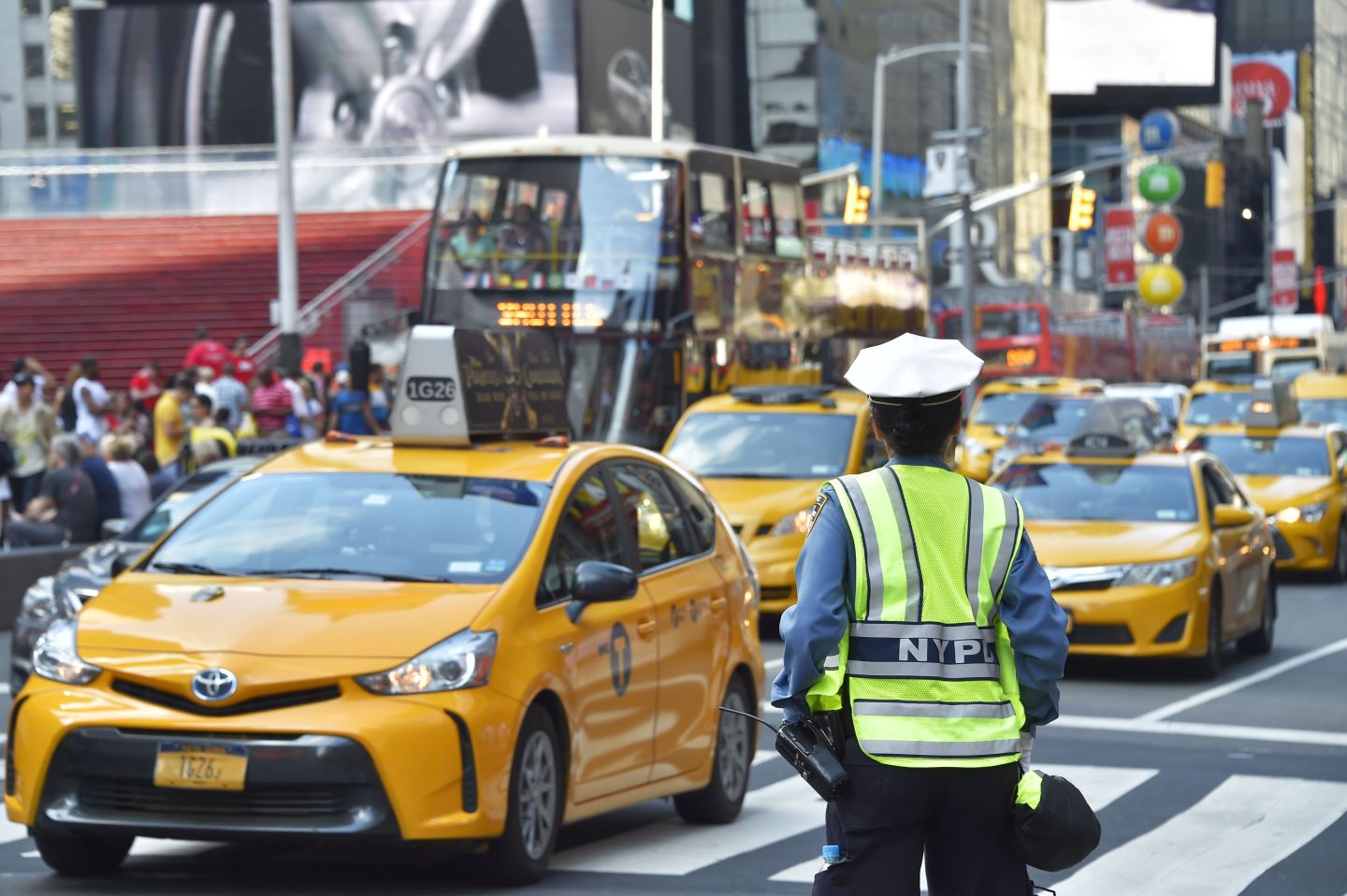
A police officer controls the traffic in Times Square, downtown Manhattan, on July 1, 2017 in New York City. / AFP PHOTO / LOIC VENANCE (Photo credit should read LOIC VENANCE/AFP/Getty Images)Loic Venance—AFP/Getty Images

Help is in sight for New York City’s beleaguered commuters. A state task force, “Fix NYC,” last week proposed a menu of options to fulfill Gov. Andrew Cuomo’s promise to implement “congestion fees”—tolls on autos and trucks entering New York City’s central business district, with surcharges on yellow cabs and Ubers that circulate in and near midtown.

The tolls would raise a billion dollars a year to modernize the city’s broken subways, according to Fix NYC, and their disincentives to drive would raise downtown traffic speeds by 9%—a figure that could eventually double as the subway investments bear fruit and attract more commuters from cars, cabs, and Ubers.

Opponents say that congestion fees are regressive, since they impose a uniform toll on rich and poor alike. But the evidence shows that the poorest New Yorkers would benefit the most from a congestion fee—and pay the smallest share—while wealthier New Yorkers would pay a larger share.

An analysis last fall by the pre-eminent organization representing low-income New Yorkers, the Community Service Society, showed that, of an estimated 118,000 outer-borough residents who drive each day to jobs in the central business district, only 5,000 are working poor. The vast majority of working-class commuters traveling into Manhattan use mass transit—buses and subways. CSS’s analysis accordingly found that only 2% of the city’s working poor would regularly pay the congestion fee.

Second, the lion’s share of the congestion revenues will be invested in improved transit. This will be a particular boon to poor and working New Yorkers, whom subway delays burden disproportionately with lost wages, missed work opportunities, and even fines from being late to court dates.

Third, the cost of traffic congestion is highest for those lower-income workers who do drive into the city. The lawyer or banker stuck in gridlock while riding in a taxi or Uber vehicle can at least make phone calls, read documents, or stage their commute a bit earlier to avoid the peak-hour toll. In contrast, the “man with van”—the tradesman who makes multiple stops over the course of the working day—pays the largest traffic tax, and thus has the most to gain from congestion pricing. A plumber or electrician who charges just $75 an hour (cheap for Manhattan) will recover his daily toll charge if he can spend an additional 20 minutes on the job earning money rather than be stuck in traffic—as predicted under the most conservative assumptions on tolling’s effect on vehicle flow. By improving traffic flow, the congestion fee will actually save low-income workers money.

Last, traffic imposes the harshest delays on commuters who travel by bus. According to a 2017 report by New York City Comptroller Scott Stringer, buses in New York City are the slowest among the biggest bus companies in the nation, averaging a glacial stop-and-go pace of 7.4 mph—5.5 mph in Manhattan. The poorest New Yorkers often stumble home hours after they’ve stepped onto a bus. By speeding up the buses by at least 9%, the congestion fee will save these commuters time without costing them money.

There is, in short, nothing “free” about roads without tolls. Unless your time is worthless, you pay a steep tax for every extra minute you’re stuck in gridlock. If fairness is your goal, a transparent congestion fee easily beats the hidden traffic tax that harms all commuters, especially the poorest.

Roderick Hills is the William T. Comfort III Professor of Law at NYU Law School. Charles Komanoff is a policy analyst based in New York City.
About the Authors
By Roderick M. Hills
See full bioRight Arrow Button Icon
By Charles Komanoff
See full bioRight Arrow Button Icon
By Bethany Cianciolo
See full bioRight Arrow Button Icon

Latest in Commentary

Matt Rogers
CommentaryInfrastructure
I built the first iPhone with Steve Jobs. The AI industry is at risk of repeating an early smartphone mistake
By Matt RogersDecember 4, 2025
7 hours ago
Jerome Powell
CommentaryFederal Reserve
Fed officials like the mystique of being seen as financial technocrats, but it’s time to demystify the central bank
By Alexander William SalterDecember 4, 2025
7 hours ago
Rakesh Kumar
CommentarySemiconductors
China does not need Nvidia chips in the AI war — export controls only pushed it to build its own AI machine
By Rakesh KumarDecember 3, 2025
1 day ago
Rochelle Witharana is Chief Financial and Investment Officer for The California Wellness Foundation
Commentarydiversity and inclusion
Fund managers from diverse backgrounds are delivering standout returns and the smart money is slowly starting to pay attention
By Rochelle WitharanaDecember 3, 2025
1 day ago
Ayesha and Stephen Curry (L) and Arndrea Waters King and Martin Luther King III (R), who are behind Eat.Play.Learn and Realize the Dream, respectively.
Commentaryphilanthropy
Why time is becoming the new currency of giving
By Arndrea Waters King and Ayesha CurryDecember 2, 2025
2 days ago
Trump
CommentaryTariffs and trade
The trade war was never going to fix our deficit
By Daniel BunnDecember 2, 2025
2 days ago

Most Popular

placeholder alt text
Economy
Two months into the new fiscal year and the U.S. government is already spending more than $10 billion a week servicing national debt
By Eleanor PringleDecember 4, 2025
10 hours ago
placeholder alt text
North America
Jeff Bezos and Lauren Sánchez Bezos commit $102.5 million to organizations combating homelessness across the U.S.: ‘This is just the beginning’
By Sydney LakeDecember 2, 2025
2 days ago
placeholder alt text
Economy
Ford workers told their CEO 'none of the young people want to work here.' So Jim Farley took a page out of the founder's playbook
By Sasha RogelbergNovember 28, 2025
6 days ago
placeholder alt text
Success
‘Godfather of AI’ says Bill Gates and Elon Musk are right about the future of work—but he predicts mass unemployment is on its way
By Preston ForeDecember 4, 2025
5 hours ago
placeholder alt text
North America
Anonymous $50 million donation helps cover the next 50 years of tuition for medical lab science students at University of Washington
By The Associated PressDecember 2, 2025
2 days ago
placeholder alt text
Economy
Scott Bessent calls the Giving Pledge well-intentioned but ‘very amorphous,’ growing from ‘a panic among the billionaire class’
By Nick LichtenbergDecember 3, 2025
1 day ago
Rankings
  • 100 Best Companies
  • Fortune 500
  • Global 500
  • Fortune 500 Europe
  • Most Powerful Women
  • Future 50
  • World’s Most Admired Companies
  • See All Rankings
Sections
  • Finance
  • Leadership
  • Success
  • Tech
  • Asia
  • Europe
  • Environment
  • Fortune Crypto
  • Health
  • Retail
  • Lifestyle
  • Politics
  • Newsletters
  • Magazine
  • Features
  • Commentary
  • Mpw
  • CEO Initiative
  • Conferences
  • Personal Finance
  • Education
Customer Support
  • Frequently Asked Questions
  • Customer Service Portal
  • Privacy Policy
  • Terms Of Use
  • Single Issues For Purchase
  • International Print
Commercial Services
  • Advertising
  • Fortune Brand Studio
  • Fortune Analytics
  • Fortune Conferences
  • Business Development
About Us
  • About Us
  • Editorial Calendar
  • Press Center
  • Work At Fortune
  • Diversity And Inclusion
  • Terms And Conditions
  • Site Map

© 2025 Fortune Media IP Limited. All Rights Reserved. Use of this site constitutes acceptance of our Terms of Use and Privacy Policy | CA Notice at Collection and Privacy Notice | Do Not Sell/Share My Personal Information
FORTUNE is a trademark of Fortune Media IP Limited, registered in the U.S. and other countries. FORTUNE may receive compensation for some links to products and services on this website. Offers may be subject to change without notice.