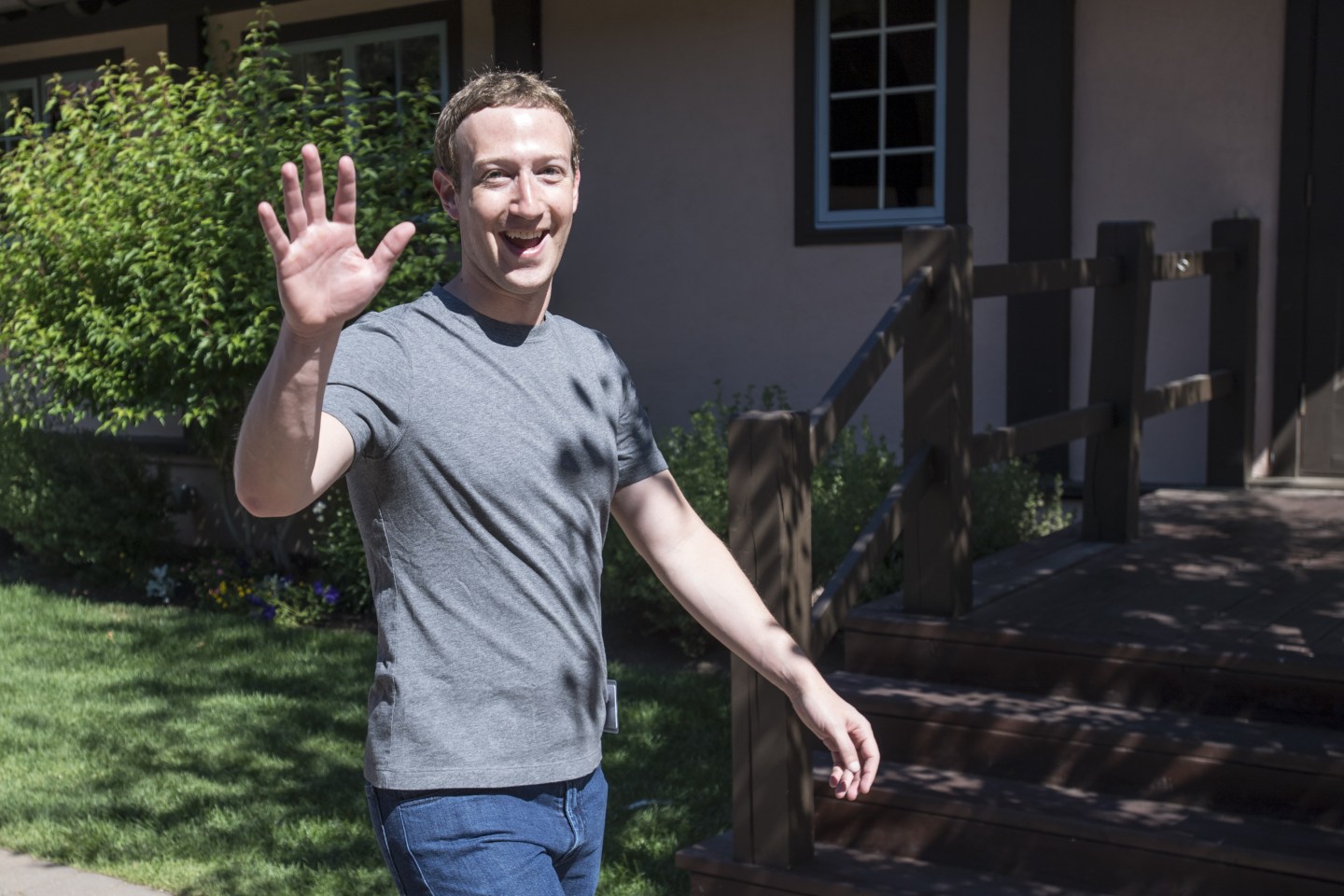
Facebook’s CEO is saying all the right things. In a series of public comments, Mark Zuckerberg acknowledged what many people already knew: Facebook has become an unpleasant place that can make users feel lonely and frustrated.
Zuckerberg has also resolved to do something about it. He’s made fixing Facebook his annual challenge for 2018 and, in a candid interview, described the project as a duty to his daughters.
“It’s important to me that when Max and August grow up that they feel like what their father built was good for the world,” Mr. Zuckerberg told the New York Times.
There’s no doubt Zuckerberg can make such changes—he’s a gifted CEO, beloved by his employees, who has total control over the company he started in a dorm room in 2004. The question is whether he’ll actually follow through, or if his grand plan will be just another marketing exercise.
Yes, Zuckerberg has already announced changes, such as favoring interaction with family and friends over businesses. But there are other big steps he could take to show us he’s sincere about fixing Facebook. Here are five:
1) Come clean about how Facebook finds “friends”
Facebook’s “People You May Know” algorithm is one of its most powerful tools, but also a big reason the social network can feel like it’s run by a sociopathic manipulator. As investigative journalist Kashmir Hill revealed, Facebook’s aggressive data-mining tactics have led to many unsettling situations.
These include an anonymous sperm donor seeing his daughter as a possible “friend” on Facebook, and patients in the same psychiatric office seeing others suggested as “people they may know.”
Facebook has resolutely refused to shed any light on how any of this works, or to give users more control over who can find them. If Zuckerberg really wants to make Facebook a more hospitable place, he can start by shedding light on one of its most unsettling features.
2) Give us a switch for babies and animals
I have nothing against babies but I don’t want them in my Facebook feed. Unfortunately, Facebook’s engagement-obsessed algorithm insists there’s nothing better than a baby—and shows a steady parade of children, often born to people I barely know. This is a minor nuisance to me, but it could be heart-breaking for those who’ve lost a child or want one badly.
Facebook’s artificial intelligence is certainly good enough to identify infant images, and let people choose to see fewer of them—or, if they wish, even more of them. Likewise, the pet-obsessed like to post photos of their puppies and kitties. Why not create a setting to let us see more or fewer animals?
3) Go speak before Congress
There’s plenty of evidence to suggest the Kremlin and other agitators used Facebook’s powerful viral machinery to sow discord among Americans: Posts intended to cause mischief about everything from Black Lives Matter to Texas secession helped exacerbate the country’s political divisions during a turbulent election year.
Zuckerberg has at least stopped saying it’s “crazy” to think none of this propaganda had any influence. But if he really wants to show the American people he cares about his company’s impact on democracy, he can testify in person—rather than sending lawyers or lieutenants—before one of the ongoing Congressional investigations. As early Facebook investor Roger McNamee recently wrote in Washington Monthly:
“While many of the folks who run Silicon Valley are extreme libertarians, the people who work there tend to be idealists. They want to believe what they’re doing is good. Forcing tech CEOs like Zuckerberg to justify the unjustifiable, in public—without the shield of spokespeople or PR spin—would go a long way to puncturing their carefully preserved cults of personality in the eyes of their employees.
4) Hire a public editor
Zuckerberg announced that Facebook intends to downplay posts by news publishers, but this doesn’t change the fact he runs the most powerful media and advertising company in history (don’t forget Facebook owns Instagram and WhatsApp too).
If he is sincere about reducing the fake and low-calorie news stories clogging up users’ Facebook feed, Zuckerberg could turn to the press for help. He could name a professional journalist as a public editor, and give him or her an inside view of Facebook’s media operations—and let them report on the company’s impact on the media.
Even better, he could appoint two such people—a liberal and a conservative—to help deflect accusations of political bias.
5) Let users be their own algorithm
This is easily the biggest thing Zuckerberg could do to improve Facebook: Turn over the keys for its all-powerful algorithms to the people who have to live under them. Instead of seeing a selection of posts curated by a Facebook programmer, users could select for themselves exactly what they want to see. For some, this might be news articles and, for others, it might be babies.
This element of choice would make the Facebook experience feel more dignified, and less manipulative. It would take some practice of course—the existing curation is useful because it lets users see a handful of items rather than the hundreds or thousands of things people post—but a company as clever as Facebook can surely provide tools to winnow down the scope on their own.
“The first four words of Facebook’s mission have always been ‘give people the power’,” Zuckerberg wrote this week. If he means what he says, he’ll acknowledge that control over the algorithm shouldn’t be wielded by him or any other executive, but by Facebook’s users.