• Home
  • Latest
  • Fortune 500
  • Finance
  • Tech
  • Leadership
  • Lifestyle
  • Rankings
  • Multimedia
Finance

The Obscure Investments That Paid Off Big for Warren Buffett—and How They Could Work For You

By
Ryan Derousseau
Down Arrow Button Icon
By
Ryan Derousseau
Down Arrow Button Icon
November 2, 2017, 2:18 PM ET

Warren Buffett often gets investment opportunities that mere mortals can’t attain. Still, sophisticated investors could have picked up a few pointers earlier this year, when Buffett cashed in $5 billion worth of Bank of America preferred shares.

In 2011, when Bank of America was struggling under the weight of problems related to the financial crisis, Buffett stepped up to help it with a $5 billion cash infusion. But his holding company, Berkshire Hathaway, took the stake in preferred stock. Preferred shareholders, earn a bond-like dividend—often, though not always, a higher dividend than owners of “common” stock can get.

Indeed, Berkshire (BRK-A) earned a 6% dividend—worth approximately $300 million a year—for the six years it held onto its BofA preferred shares. At the time, the Federal Reserve prevented the bank from paying even a much smaller dividend to its regular shareholders (in the wake of the crisis, the central bank was generally restricting banks’ dividends). Berkshire’s 6% also dwarfs the 1.26% yield investors receive today.

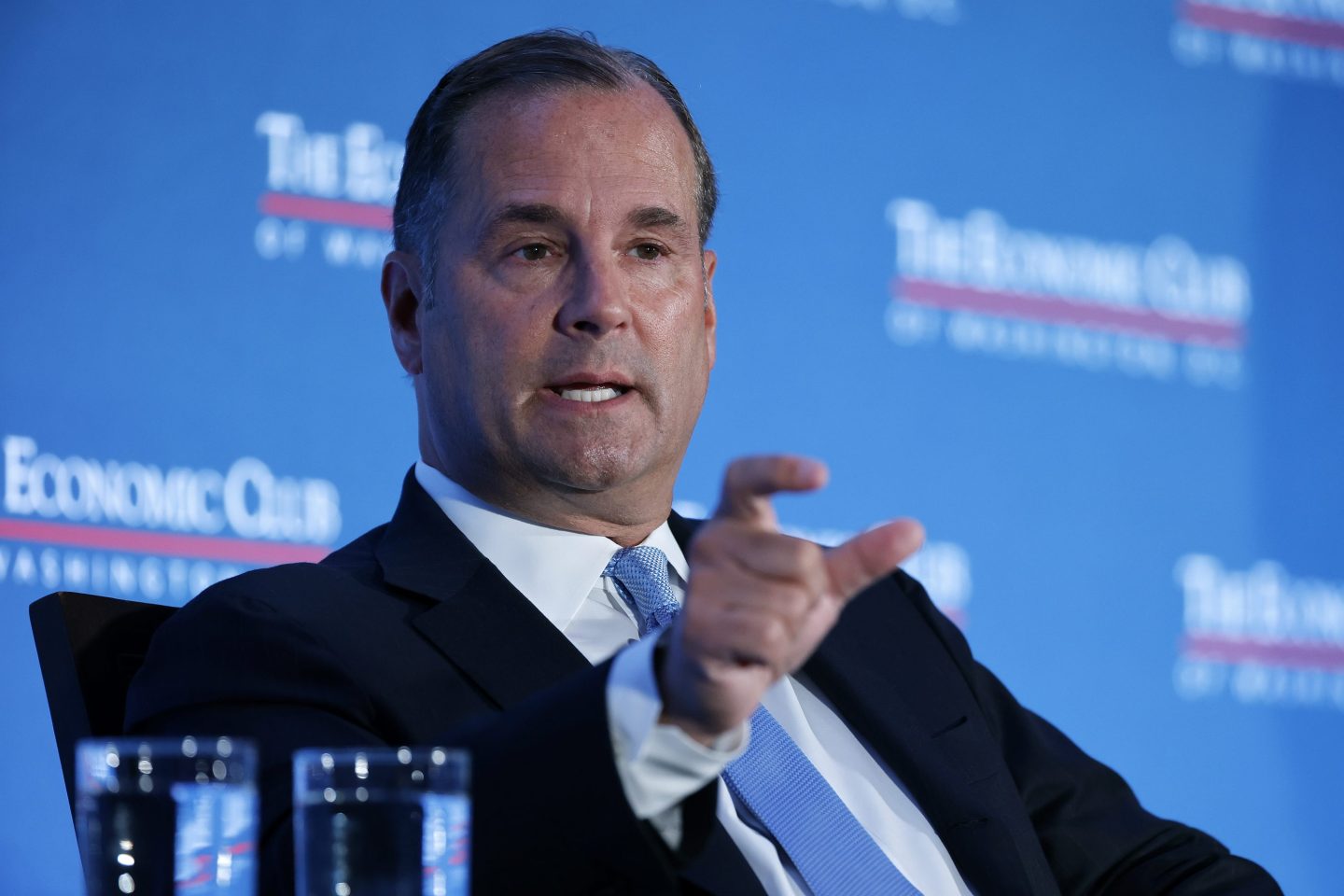
Warren Buffett, the chairman and CEO of Berkshire Hathaway.
Warren Buffett, chairman and chief executive officer of Berkshire Hathaway, which netted billions of dollars in gains from preferred shares in Bank of America.Bloomberg Bloomberg via Getty Images
Bloomberg Bloomberg via Getty Images

Of course, Buffett invests on a different playing field. But that doesn’t mean preferred shares can’t provide your portfolio with an income boost. It’s just of question of whether they’re worth it—since they have some disadvantages compared to either stocks or bonds.

“Preferreds” have definitely enjoyed a renaissance since the financial crisis. With interest rates at measly lows, investors looking for income turned away from savings accounts and bonds toward other sources of income. Dividend stocks have been one hot option (the S&P 500 High Dividend Index has risen 11% annually over the past five years). Preferred shares are another: These tools have the reputation of being a hybrid investment, with “characteristics of both bonds and stocks,” says Collin Martin, director of fixed income at the Charles Schwab Center for Financial Research.

Similar to bonds, preferred shares have a yield, which the company pays in the form of a dividend. They usually have a face-value “par” price, like a bond, and the dividend is typically a fixed percentage of that price. As with common stocks, the ability to pay that dividend may depend on the company’s performance.

The pros and cons of yield

The differences between preferred and common stock, however, can be more important than the similarities. Unlike with common stocks and most bonds, the company can typically buy preferred shares back at face value whenever it wants. If you bought the share at a premium to its par value, then you would absorb the difference as a loss. And preferred shares generally don’t track the ups and downs of common shares . If a company’s common stock doubles, for example, the preferred shareholder may see little or none of the appreciation, says Carol Hoffman, a financial adviser at Clear Perspectives Financial Planning, near Cincinnati.

So why do investors bother with preferred shares? It all comes down to the yield. The iShares U.S. Preferred Stock ETF, which has $18 billion in net assets, has a 12-month trailing yield of 5.7%. That’s far more appealing than the 2.9% yield on a 30-year Treasury bond or even the 4.1% yield from the S&P 500 High Dividend Index. Preferred shares also offer a little bit of protection to investors who want to gamble on a risky company: In bankruptcy or liquidation, in the hierarchy of payments to shareholders, companies pay bondholders first, preferred share dividends second, and common stock dividends third.

Investing in preferred shares largely means investing in financials. Banks and other financial companies like to use preferred shares to meet capital requirements levied by the Federal Reserve; preferred issues allow them to avoid loading their balance sheets with debt, and they also raise money without diluting the ownership rights of common shareholders. In the iShares ETF, 60% of the holdings are in the financial sector. “It’s really dominated by financial institutions,” says Martin. Of course, that played poorly in the crisis of 2008, when banks imploded and the value of the preferred shares ETF fell by 63%.

It’s fun to drive a convertible

Buffett’s investment in Bank of America stands out for another reason. The Oracle of Omaha had the option to convert the preferred shares into common ones at a price of $7.14 per share, roughly where BofA (BAC) traded when he made the deal. Buffett pulled the trigger on the conversion this summer, when Bank of America shares stood at just above $23. The deal netted Berkshire around $13 billion in gains on paper.

They aren’t always easy to find, but “convertible” preferred shares offer that protection to investors: They can enable sharp-eyed investors to essentially give up their yield in order to cash in on a common stock’s market gains.

Hoffman, the Cincinnati adviser, generally doesn’t recommend using preferred shares. But she has seen some of her clients benefit from them through their retirement plans, thanks to a convertible option. In 1989, Cincinnati-based Procter & Gamble funded an employee stock ownership plan that provided employees with company stock, including a chunk of preferred shares.

The headquarters complex of Procter & Gamble
The headquarters complex of Procter & Gamble in Cincinnati. In the past, P&G has issued preferred shares to some of its employees.Bloomberg Bloomberg via Getty Images
Bloomberg Bloomberg via Getty Images

When those employees leave P&G, Hoffman explains, they can convert these to common shares in an IRA. They get to use the original value—$6.82 a share—as their tax basis for calculating gains. So in essence, the retiree can then sell the shares, paying income tax on the proceeds up to $6.82 a share and the lower capital gains tax—up to 15%—on the rest of the share price.

That’s no small windfall, since the stock (PG) has recently traded in the mid-$80s. It’s a far cry from the upside Buffett realized, of course, but it’s still a nice perk.

About the Author
By Ryan Derousseau
See full bioRight Arrow Button Icon

Latest in Finance

Finance
Lorem ipsum dolor sit amet, consectetur adipiscing elit, sed do eiusmod tempor incididunt ut labore et dolore magna aliqua. Ut enim ad minim veniam
By Fortune Editors
October 20, 2025
Finance
Lorem ipsum dolor sit amet, consectetur adipiscing elit, sed do eiusmod tempor incididunt ut labore et dolore magna aliqua. Ut enim ad minim veniam
By Fortune Editors
October 20, 2025
Finance
Lorem ipsum dolor sit amet, consectetur adipiscing elit, sed do eiusmod tempor incididunt ut labore et dolore magna aliqua. Ut enim ad minim veniam
By Fortune Editors
October 20, 2025
Finance
Lorem ipsum dolor sit amet, consectetur adipiscing elit, sed do eiusmod tempor incididunt ut labore et dolore magna aliqua. Ut enim ad minim veniam
By Fortune Editors
October 20, 2025
Finance
Lorem ipsum dolor sit amet, consectetur adipiscing elit, sed do eiusmod tempor incididunt ut labore et dolore magna aliqua. Ut enim ad minim veniam
By Fortune Editors
October 20, 2025
Finance
Lorem ipsum dolor sit amet, consectetur adipiscing elit, sed do eiusmod tempor incididunt ut labore et dolore magna aliqua. Ut enim ad minim veniam
By Fortune Editors
October 20, 2025

Most Popular

Finance
Lorem ipsum dolor sit amet, consectetur adipiscing elit, sed do eiusmod tempor incididunt ut labore et dolore magna aliqua. Ut enim ad minim veniam
By Fortune Editors
October 20, 2025
Finance
Lorem ipsum dolor sit amet, consectetur adipiscing elit, sed do eiusmod tempor incididunt ut labore et dolore magna aliqua. Ut enim ad minim veniam
By Fortune Editors
October 20, 2025
Finance
Lorem ipsum dolor sit amet, consectetur adipiscing elit, sed do eiusmod tempor incididunt ut labore et dolore magna aliqua. Ut enim ad minim veniam
By Fortune Editors
October 20, 2025
Finance
Lorem ipsum dolor sit amet, consectetur adipiscing elit, sed do eiusmod tempor incididunt ut labore et dolore magna aliqua. Ut enim ad minim veniam
By Fortune Editors
October 20, 2025
Finance
Lorem ipsum dolor sit amet, consectetur adipiscing elit, sed do eiusmod tempor incididunt ut labore et dolore magna aliqua. Ut enim ad minim veniam
By Fortune Editors
October 20, 2025
Finance
Lorem ipsum dolor sit amet, consectetur adipiscing elit, sed do eiusmod tempor incididunt ut labore et dolore magna aliqua. Ut enim ad minim veniam
By Fortune Editors
October 20, 2025
Rankings
  • 100 Best Companies
  • Fortune 500
  • Global 500
  • Fortune 500 Europe
  • Most Powerful Women
  • Future 50
  • World’s Most Admired Companies
  • See All Rankings
Sections
  • Finance
  • Leadership
  • Success
  • Tech
  • Asia
  • Europe
  • Environment
  • Fortune Crypto
  • Health
  • Retail
  • Lifestyle
  • Politics
  • Newsletters
  • Magazine
  • Features
  • Commentary
  • Mpw
  • CEO Initiative
  • Conferences
  • Personal Finance
  • Education
Customer Support
  • Frequently Asked Questions
  • Customer Service Portal
  • Privacy Policy
  • Terms Of Use
  • Single Issues For Purchase
  • International Print
Commercial Services
  • Advertising
  • Fortune Brand Studio
  • Fortune Analytics
  • Fortune Conferences
  • Business Development
About Us
  • About Us
  • Editorial Calendar
  • Press Center
  • Work At Fortune
  • Diversity And Inclusion
  • Terms And Conditions
  • Site Map

Latest in Finance

zohran
PoliticsNew York City
Mamdani vows to ‘govern as a democratic socialist’ for every construction worker, halal cart vendor and spice-wielding cook in New York City
By Anthony Izaguirre and The Associated PressJanuary 1, 2026
6 hours ago
Personal FinanceSavings accounts
Today’s best high-yield savings account rates on Jan. 1, 2026: Earn up to 5.00% APY
By Glen Luke FlanaganJanuary 1, 2026
19 hours ago
Personal FinanceCertificates of Deposit (CDs)
Best CD rates today, Jan. 1, 2026: Earn up to 4.18% APY if you lock in now
By Glen Luke FlanaganJanuary 1, 2026
19 hours ago
Two gamer teenagers work on computers.
CybersecurityHacking
Feds are hunting teenage hacking groups like ‘Scattered Spider’ who have targeted $1 trillion worth of the Fortune 500 since 2022
By Amanda GerutJanuary 1, 2026
20 hours ago
A woman shopping inside a Walmart
RetailHolidays
It’s New Year’s Day 2026. What’s open and closed?
By Dave SmithJanuary 1, 2026
20 hours ago
Energyenergy prices
Negative prices for electricity are getting more common in Europe and consumer costs have dipped—while Americans face rising energy bills
By Jason MaJanuary 1, 2026
22 hours ago

Most Popular

placeholder alt text
Politics
Buddhist monks peace-walking from Texas to DC persist even after being run over on highway outside Houston
By The Associated PressDecember 30, 2025
3 days ago
placeholder alt text
Success
Melinda French Gates got her start at Microsoft because an IBM hiring manager told her to turn down its job offer—'It dumbfounded me'
By Emma BurleighDecember 31, 2025
2 days ago
placeholder alt text
Startups & Venture
Trump Mobile says its first-ever smartphone is delayed, and the government shutdown is to blame
By Dave SmithDecember 31, 2025
2 days ago
placeholder alt text
Success
Marriott’s CEO spoke out about DEI. The next day, he had 40,000 emails from his associates
By Ashley LutzJanuary 1, 2026
15 hours ago
placeholder alt text
Health
Lay's drastically rebrands after disturbing finding: 42% of consumers didn't know their chips were made out of potatoes
By Matty Merritt and Morning BrewDecember 31, 2025
2 days ago
placeholder alt text
C-Suite
Exiting CEO left each employee at his family-owned company a $443,000 gift—but they have to stay 5 more years to get all of it
By Nick LichtenbergDecember 30, 2025
3 days ago

© 2025 Fortune Media IP Limited. All Rights Reserved. Use of this site constitutes acceptance of our Terms of Use and Privacy Policy | CA Notice at Collection and Privacy Notice | Do Not Sell/Share My Personal Information
FORTUNE is a trademark of Fortune Media IP Limited, registered in the U.S. and other countries. FORTUNE may receive compensation for some links to products and services on this website. Offers may be subject to change without notice.