• Home
  • Latest
  • Fortune 500
  • Finance
  • Tech
  • Leadership
  • Lifestyle
  • Rankings
  • Multimedia
China

China’s Property Market Begins to Cool as Beijing Prices Drop for the First Time in Years

By
Reuters
Reuters
Down Arrow Button Icon
By
Reuters
Reuters
Down Arrow Button Icon
July 18, 2017, 2:45 AM ET
CHINA-ECONOMY
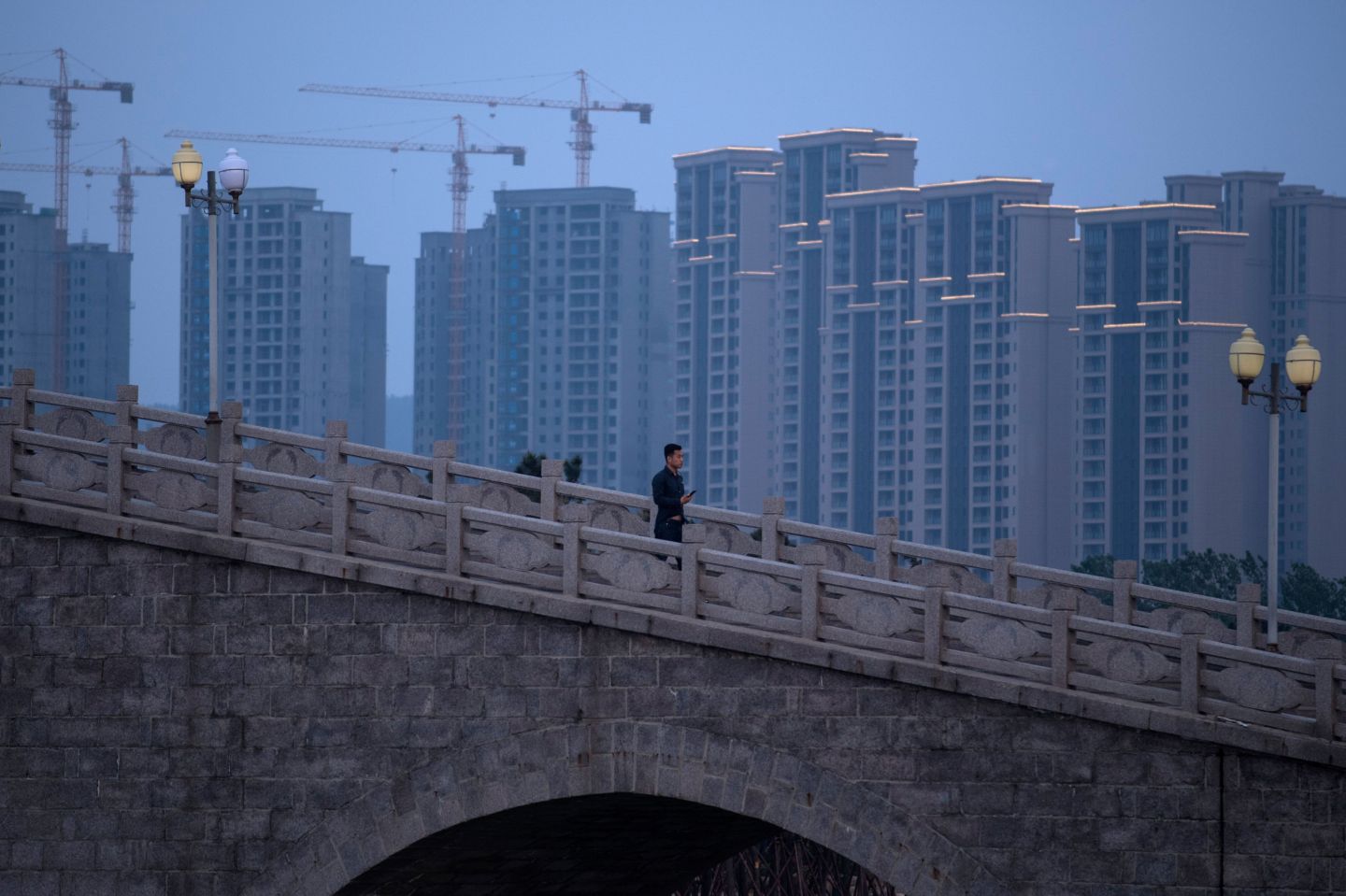
This picture taken on May 10, 2017 shows a man standing on a bridge in front of residential high-rise buildings in Weihai in Shandong province. / AFP PHOTO / Johannes EISELE (Photo credit should read JOHANNES EISELE/AFP/Getty Images)Johannes Eisele—AFP/Getty Images

Home property prices in Beijing fell for the first time in more than two years in June, while Shanghai further declined and Shenzhen stalled, pointing to significant cooling in China’s biggest real estate markets, official data showed.

Nationwide, home price growth slowed slightly in June as government efforts to keep prices in check weighed on larger cities, though smaller cities maintained rapid growth.

People in the industry expect home price growth in China’s largest cities to stay on a mild slowing trend for the next 12 months.

In June, average new home prices in China’s 70 major cities rose 10.2% from a year earlier, decelerating from May’s 10.4% gain, according to Reuters calculations based on an official survey out on Tuesday.

On a monthly basis, new home prices rose 0.7% in June, the same as the previous month’s reading, Reuters calculations based on data issued by the National Bureau of Statistics (NBS) showed.

“China’s 15 hottest property markets, mostly first- and second-tier cities, remained stable in June as a city-based property policy continued to take effect,” the NBS said in a statement accompanying the data release.

More than 45 cities, most of them top-tier cities with a sizable population, have imposed varying levels of restrictions since last October to curb fast-rising prices, with most of the latest measures introduced in late March.

These measures have started taking some heat out of the market, with sales and investment in property cooling slightly in the second quarter.

The cooling effect is most visible in China’s the biggest cities. Price growth in Shenzhen, Shanghai and Beijing slowed to 2.7%, 8.6% and 10.7%, respectively, from a year earlier.

From a month earlier, prices in Beijing fell 0.4%, marking the first fall since February 2015. Shanghai prices slipped by a further 0.2%, while Shenzhen prices remained unchanged.

Declining Sales

The value of new personal home mortgages in Beijing, Shanghai and Shenzhen in the first half of 2017 was equal to 30% of the total value of home loans in 2016, a Chinese state newspaper reported.

“Sales declines in the biggest cities were quite significant, so prices are certainly not going to rebound,” said Rosealea Yao, a property economist with Gavekal Dragonomics.

“I think the mild declining trend will continue through at least the first half of 2018,” Yao said.

For more on China, watch Fortune’s video:

Nonetheless, real estate investment and sales growth both sped up in June after slowing in May, most likely due to more robust demand in smaller centres that have been encouraged to reduce inventory and are not subject to the strict curbs at work in bigger cities.

Luoyang, a third-tier city in central Henan province, topped the list in June, with prices of new units up 2.3% on month, compared with a 1.3% gain in May, taking the annual growth to 10.2%.

That has also been reflected in stronger credit demand in the month from households.

Household loans – mostly mortgages – in June rose to 738.4 billion yuan from 610.6 billion yuan in May, according to Reuters calculations based on data released by China’s central bank.

Keeping a lid on price fluctuations has become a priority for policymakers in a politically important year, with a major leadership reshuffle expected this autumn.

But to make sure the market is neither too hot nor too cold, authorities have increasingly resorted to administrative measures that many analysts warn are anti-market in nature.

For example, sales prices for new units in a few cities like Zhengzhou – capital of Henan – are not allowed to be higher than the price level seen last October for new units in the vicinity.

Fading Affordability

The upsurge in house prices since 2001 in most major Chinese cities has spurred growing concerns about affordability.

A typical two-bedroom new home in Beijing now costs around 6 million yuan ($870,000), about 69 times the average per capita disposable income in the city, much higher than the ratio of less than 25 times for New York City.

Economists worry that slowing growth in incomes, which had been rising at double-digit rates for decades, will no longer be able to cushion financial risks in an extremely inflated housing market.

On average, China’s disposable income was up 8.1% on-year for city-dwellers in the first half of the year, official data showed, slower than the 10.2% annual property price growth in June.

About the Author
By Reuters
See full bioRight Arrow Button Icon
0

Most Popular

Finance
Lorem ipsum dolor sit amet, consectetur adipiscing elit, sed do eiusmod tempor incididunt ut labore et dolore magna aliqua. Ut enim ad minim veniam
By Fortune Editors
October 20, 2025
Finance
Lorem ipsum dolor sit amet, consectetur adipiscing elit, sed do eiusmod tempor incididunt ut labore et dolore magna aliqua. Ut enim ad minim veniam
By Fortune Editors
October 20, 2025
Finance
Lorem ipsum dolor sit amet, consectetur adipiscing elit, sed do eiusmod tempor incididunt ut labore et dolore magna aliqua. Ut enim ad minim veniam
By Fortune Editors
October 20, 2025
Finance
Lorem ipsum dolor sit amet, consectetur adipiscing elit, sed do eiusmod tempor incididunt ut labore et dolore magna aliqua. Ut enim ad minim veniam
By Fortune Editors
October 20, 2025
Finance
Lorem ipsum dolor sit amet, consectetur adipiscing elit, sed do eiusmod tempor incididunt ut labore et dolore magna aliqua. Ut enim ad minim veniam
By Fortune Editors
October 20, 2025
Finance
Lorem ipsum dolor sit amet, consectetur adipiscing elit, sed do eiusmod tempor incididunt ut labore et dolore magna aliqua. Ut enim ad minim veniam
By Fortune Editors
October 20, 2025
Rankings
  • 100 Best Companies
  • Fortune 500
  • Global 500
  • Fortune 500 Europe
  • Most Powerful Women
  • Future 50
  • World’s Most Admired Companies
  • See All Rankings
Sections
  • Finance
  • Leadership
  • Success
  • Tech
  • Asia
  • Europe
  • Environment
  • Fortune Crypto
  • Health
  • Retail
  • Lifestyle
  • Politics
  • Newsletters
  • Magazine
  • Features
  • Commentary
  • Mpw
  • CEO Initiative
  • Conferences
  • Personal Finance
  • Education
Customer Support
  • Frequently Asked Questions
  • Customer Service Portal
  • Privacy Policy
  • Terms Of Use
  • Single Issues For Purchase
  • International Print
Commercial Services
  • Advertising
  • Fortune Brand Studio
  • Fortune Analytics
  • Fortune Conferences
  • Business Development
About Us
  • About Us
  • Editorial Calendar
  • Press Center
  • Work At Fortune
  • Diversity And Inclusion
  • Terms And Conditions
  • Site Map
  • Facebook icon
  • Twitter icon
  • LinkedIn icon
  • Instagram icon
  • Pinterest icon

Most Popular

placeholder alt text
Economy
Elon Musk warns the U.S. is '1,000% going to go bankrupt' unless AI and robotics save the economy from crushing debt
By Jason MaFebruary 7, 2026
2 days ago
placeholder alt text
Economy
Russian officials are warning Putin that a financial crisis could arrive this summer, report says, while his war on Ukraine becomes too big to fail
By Jason MaFebruary 8, 2026
21 hours ago
placeholder alt text
Commentary
America marks its 250th birthday with a fading dream—the first time that younger generations will make less than their parents
By Mark Robert Rank and The ConversationFebruary 8, 2026
1 day ago
placeholder alt text
Commentary
We studied 70 countries' economic data for the last 60 years and something big about market crashes changed 25 years ago
By Josh Ederington, Jenny Minier and The ConversationFebruary 8, 2026
1 day ago
placeholder alt text
Success
Gen Z Patriots quarterback Drake Maye still drives a 2015 pickup truck even after it broke down on the highway—despite his $37 million contract
By Sasha RogelbergFebruary 7, 2026
2 days ago
placeholder alt text
Personal Finance
Tom Brady is making 15 times more as a commentator than he did playing in the big game thanks to $375 million contract 
By Eva RoytburgFebruary 8, 2026
1 day ago

© 2026 Fortune Media IP Limited. All Rights Reserved. Use of this site constitutes acceptance of our Terms of Use and Privacy Policy | CA Notice at Collection and Privacy Notice | Do Not Sell/Share My Personal Information
FORTUNE is a trademark of Fortune Media IP Limited, registered in the U.S. and other countries. FORTUNE may receive compensation for some links to products and services on this website. Offers may be subject to change without notice.