• Home
  • Latest
  • Fortune 500
  • Finance
  • Tech
  • Leadership
  • Lifestyle
  • Rankings
  • Multimedia

Trendingnow

1

Jensen Huang made his $172 billion fortune on AI chips. His family's $75 million gift to Vanderbilt argues art decides what technology is for

2

'The demographic dividend of the last 40 years is ending': J.P. Morgan says the world is running out of the two things that kept interest rates down

3

The $39 trillion U.S. national debt isn’t as high as Japan’s and Singapore’s relative to economy size—and yet it's still worse somehow

1

Jensen Huang made his $172 billion fortune on AI chips. His family's $75 million gift to Vanderbilt argues art decides what technology is for

2

'The demographic dividend of the last 40 years is ending': J.P. Morgan says the world is running out of the two things that kept interest rates down

3

The $39 trillion U.S. national debt isn’t as high as Japan’s and Singapore’s relative to economy size—and yet it's still worse somehow
Commentary

Why Don’t Twitter’s Employees and Customers Buy the Company?

By
Joseph Blasi
Joseph Blasi
,
Douglas Kruse
Douglas Kruse
, and
Bethany Cianciolo
Bethany Cianciolo
Down Arrow Button Icon
By
Joseph Blasi
Joseph Blasi
,
Douglas Kruse
Douglas Kruse
, and
Bethany Cianciolo
Bethany Cianciolo
Down Arrow Button Icon
July 9, 2017, 11:00 AM ET
Twitter Posts Better Than Expected Quarterly Earnings
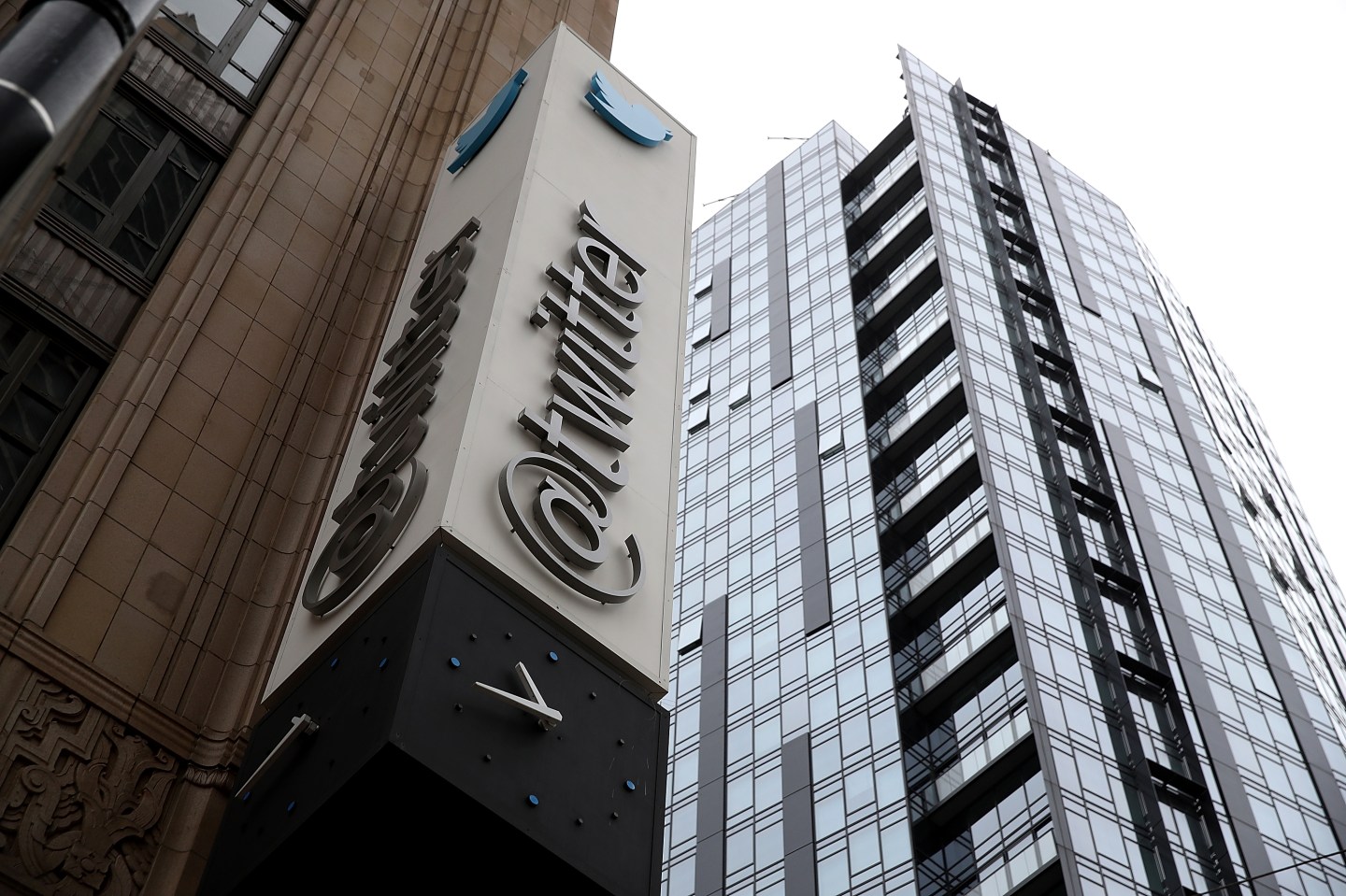
SAN FRANCISCO, CA - APRIL 26: A sign is posted on the exterior of Twitter headquarters on April 26, 2017 in San Francisco, California. Twitter reported better-than-expected first quarter earnings with revenue of $548 million, compared to analyst estimates of roughly $512 million. Monthly active users to jumped to 328 million, 7 million more than expected. (Photo by Justin Sullivan/Getty Images)Justin Sullivan Getty Images
Add Fortune on Google for similar content.

News reports have abounded for over a year that Twitter (TWTR) should be for sale, and that several bidders have been exploring a buy. As one of the iconic presences on the Internet, it would be sensible and more financially efficient if Twitter’s employees, executives, and several hundred million customers bought the company, an idea that was presented during Twitter’s shareholder meeting in May. If this sounds like an unrealistic idea, consider why it might actually work.

Employee-executive-customer ownership of Twitter would solve some of Twitter’s most intractable problems, such as the need to grow and nurture its customer base, and the huge expenses of its current employee equity compensation.

The arguments in favor of customer ownership are straightforward. Studies show that customers who own stock in a company are more loyal, use the company’s products more, talk up the company, pull in other customers, and are willing to be long-term patient shareholders. Twitter could benefit from a strong dose of deep commitment from its users as it rolls out new add-on products such as video. Proponents of these arguments point to the incredible loyalty displayed by the customer-shareholder owners of the National Football Leagues’ Green Bay Packers. Tens of thousands of fans own shares in the team, and they elect a large board of directors that selects an executive committee that actually manages the team. It’s the most famous national case of customer loyalty.

Critics might view the idea of Twitter as a giant cooperative of users as irrational because it might lack executive and board focus and seem too utopian, while ownership researchers like ourselves wish to point to the many customer-owned mutual insurance companies, such as Liberty Mutual Insurance, that have been household names in the U.S. for decades and are profitable and thriving ongoing concerns that make their corporate governance work. The Twitter customer ownership proposal received the support of less than 5% of Twitter’s shareholders at the shareholder meeting. But if linked to popular ideas in American society like mutual insurance companies, the idea might excite, and it might be even more popular if it were combined with a reinvigorated version of the company’s current employee share ownership plans, which now broadly grant stock options, restricted stock, and other equity grants to Twitter’s managers and employees.

The argument for employee share ownership is that it typically brings lower turnover, and greater employee loyalty, suggestions, innovation, and, on average, better firm performance. But it’s expensive. In a pointed discussion on this issue, CNBC reported that Twitter’s 2015 employee stock-based compensation was $682.1 million, or 18% of its revenue, more than any tech company with a market value of more than a billion dollars.

Twitter’s employee share ownership program could be overhauled using an employee stock ownership plan (ESOP). ESOPs are different than typical Silicon Valley employee share ownership plans, which literally give away a chunk of stock and stock options annually, diluting existing investors. An ESOP is an employee trust that borrows money to buy the shares of existing shareholders or purchases new shares at the full market price. The company slowly pays back the loan, and the employees get the shares for free. Because the federal government wants to encourage the idea, there are tax incentives for the company. If properly structured, an ESOP could slowly buy out some of Twitter’s large shareholders and potentially introduce a new form of employee share compensation that is less dilutive to other shareholders. The inventor of the ESOP designed a consumer stock ownership plan that also makes credit available to consumers to purchase stock in companies where they are customers.

Employee ownership could be transformed into a positive story at Twitter from a perceived burden on other shareholders. And it would be up to investment bankers to work out the details. Many Fortune 1000 companies have had ESOPs structured for them, so it is neither new idea nor unlikely. For example, Procter & Gamble (PG), one of America’s iconic consumer brands, has a large ESOP.


Twitter began as an innovation that captivated the world. A combination of customer and employee ownership could captivate the world again and make Twitter unique and the most talked/Twittered-about among tech companies. The idea could energize its customers and help stabilize an important benefit for its employees.

Joseph Blasi is the J. Robert Beyster Distinguished Professor at the Rutgers University School of Management and Labor Relations. Doug Kruse is Distinguished Professor at Rutgers School of Management and Labor Relations. Both are co-authors of Having a Stake. The article represents the authors’ personal opinions and not that of any institution.

About the Authors
By Joseph Blasi
See full bioRight Arrow Button Icon
By Douglas Kruse
See full bioRight Arrow Button Icon
By Bethany Cianciolo
See full bioRight Arrow Button Icon
Add Fortune on Google for similar content.

Latest in Commentary

Finance
Lorem ipsum dolor sit amet, consectetur adipiscing elit, sed do eiusmod tempor incididunt ut labore et dolore magna aliqua. Ut enim ad minim veniam
By Fortune Editors
October 20, 2025
Finance
Lorem ipsum dolor sit amet, consectetur adipiscing elit, sed do eiusmod tempor incididunt ut labore et dolore magna aliqua. Ut enim ad minim veniam
By Fortune Editors
October 20, 2025
Finance
Lorem ipsum dolor sit amet, consectetur adipiscing elit, sed do eiusmod tempor incididunt ut labore et dolore magna aliqua. Ut enim ad minim veniam
By Fortune Editors
October 20, 2025
Finance
Lorem ipsum dolor sit amet, consectetur adipiscing elit, sed do eiusmod tempor incididunt ut labore et dolore magna aliqua. Ut enim ad minim veniam
By Fortune Editors
October 20, 2025
Finance
Lorem ipsum dolor sit amet, consectetur adipiscing elit, sed do eiusmod tempor incididunt ut labore et dolore magna aliqua. Ut enim ad minim veniam
By Fortune Editors
October 20, 2025
Finance
Lorem ipsum dolor sit amet, consectetur adipiscing elit, sed do eiusmod tempor incididunt ut labore et dolore magna aliqua. Ut enim ad minim veniam
By Fortune Editors
October 20, 2025

Most Popular

Finance
Lorem ipsum dolor sit amet, consectetur adipiscing elit, sed do eiusmod tempor incididunt ut labore et dolore magna aliqua. Ut enim ad minim veniam
By Fortune Editors
October 20, 2025
Finance
Lorem ipsum dolor sit amet, consectetur adipiscing elit, sed do eiusmod tempor incididunt ut labore et dolore magna aliqua. Ut enim ad minim veniam
By Fortune Editors
October 20, 2025
Finance
Lorem ipsum dolor sit amet, consectetur adipiscing elit, sed do eiusmod tempor incididunt ut labore et dolore magna aliqua. Ut enim ad minim veniam
By Fortune Editors
October 20, 2025
Finance
Lorem ipsum dolor sit amet, consectetur adipiscing elit, sed do eiusmod tempor incididunt ut labore et dolore magna aliqua. Ut enim ad minim veniam
By Fortune Editors
October 20, 2025
Finance
Lorem ipsum dolor sit amet, consectetur adipiscing elit, sed do eiusmod tempor incididunt ut labore et dolore magna aliqua. Ut enim ad minim veniam
By Fortune Editors
October 20, 2025
Finance
Lorem ipsum dolor sit amet, consectetur adipiscing elit, sed do eiusmod tempor incididunt ut labore et dolore magna aliqua. Ut enim ad minim veniam
By Fortune Editors
October 20, 2025
Fortune Secondary Logo
Rankings
  • 100 Best Companies
  • Fortune 500
  • Global 500
  • Fortune 500 Europe
  • Most Powerful Women
  • World's Most Admired Companies
  • See All Rankings
  • Lists Calendar
Sections
  • Finance
  • Fortune Crypto
  • Features
  • Leadership
  • Health
  • Commentary
  • Success
  • Retail
  • Mpw
  • Tech
  • Lifestyle
  • CEO Initiative
  • Asia
  • Politics
  • Conferences
  • Europe
  • Newsletters
  • Personal Finance
  • Environment
  • Magazine
  • Education
Customer Support
  • Frequently Asked Questions
  • Customer Service Portal
  • Privacy Policy
  • Terms Of Use
  • Single Issues For Purchase
  • International Print
Commercial Services
  • Advertising
  • Fortune Brand Studio
  • Fortune Analytics
  • Fortune Conferences
  • Business Development
  • Group Subscriptions
About Us
  • About Us
  • Press Center
  • Work At Fortune
  • Terms And Conditions
  • Site Map
  • About Us
  • Press Center
  • Work At Fortune
  • Terms And Conditions
  • Site Map
  • Facebook icon
  • Twitter icon
  • LinkedIn icon
  • Instagram icon
  • TikTok icon
  • YouTube icon

Latest in Commentary

craig
CommentaryPharmaceutical Industry
Big pharma’s patent cliff meets a new biotech Cold War: We need to outrun China, not outlaw it
By Craig GarthwaiteJuly 24, 2026
9 hours ago
tim
Commentarysmartphones and mobile devices
NYU Stern pricing expert: There’s a hidden ‘AI tax’ hitting Apple, Dell — and your next phone
By Srikanth JagabathulaJuly 24, 2026
9 hours ago
nyse
CommentaryEconomics
AI doesn’t end scarcity. It relocates it
By François Candelon, Paul-Louis Andres and Augustin ManchonJuly 24, 2026
11 hours ago
Can Bangkok future-proof itself against the heat?
CommentaryThailand
Can Bangkok future-proof itself against the heat?
By Curtis S. Chin and Ella TanJuly 23, 2026
23 hours ago
mm
CommentaryLeadership
Michael Muthukrishna: The ‘lone genius’ myth is wrong and it’s holding back your business
By Michael MuthukrishnaJuly 23, 2026
1 day ago
Paul Keary (L) and Mike Sutcliff (R).
CommentaryAI agents
Teneo & Thoughtworks CEOs: the AI race will be won with governance, not speed 
By Paul Keary and Mike SutcliffJuly 23, 2026
1 day ago

Most Popular

Jensen Huang made his $172 billion fortune on AI chips. His family's $75 million gift to Vanderbilt argues art decides what technology is for
Big Tech
Jensen Huang made his $172 billion fortune on AI chips. His family's $75 million gift to Vanderbilt argues art decides what technology is for
By Sydney LakeJuly 23, 2026
2 days ago
'The demographic dividend of the last 40 years is ending': J.P. Morgan says the world is running out of the two things that kept interest rates down
Economy
'The demographic dividend of the last 40 years is ending': J.P. Morgan says the world is running out of the two things that kept interest rates down
By Eleanor PringleJuly 24, 2026
13 hours ago
The $39 trillion U.S. national debt isn’t as high as Japan’s and Singapore’s relative to economy size—and yet it's still worse somehow
Economy
The $39 trillion U.S. national debt isn’t as high as Japan’s and Singapore’s relative to economy size—and yet it's still worse somehow
By Sasha RogelbergJuly 23, 2026
1 day ago
The millennial generation has split, new Fed research shows: Those over 35 are edging toward boomer-style wealth, while everyone else falls behind
Real Estate
The millennial generation has split, new Fed research shows: Those over 35 are edging toward boomer-style wealth, while everyone else falls behind
By Nick LichtenbergJuly 22, 2026
2 days ago
Spain lifted the World Cup, but the IRS still gets a cut of its $50 million pay day as players, coaches and refs all face complex U.S. “jock taxes”
Personal Finance
Spain lifted the World Cup, but the IRS still gets a cut of its $50 million pay day as players, coaches and refs all face complex U.S. “jock taxes”
By Joshua HongJuly 23, 2026
2 days ago
Current price of oil as of July 24, 2026
Personal Finance
Current price of oil as of July 24, 2026
By Joseph HostetlerJuly 24, 2026
11 hours ago

© 2026 Fortune Media IP Limited. All Rights Reserved. Use of this site constitutes acceptance of our Terms of Use and Privacy Policy | CA Notice at Collection and Privacy Notice | Do Not Sell/Share My Personal Information
FORTUNE is a trademark of Fortune Media IP Limited, registered in the U.S. and other countries. FORTUNE may receive compensation for some links to products and services on this website. Offers may be subject to change without notice.