• Home
  • Latest
  • Fortune 500
  • Finance
  • Tech
  • Leadership
  • Lifestyle
  • Rankings
  • Multimedia
South Korea

Trump Is Creating More Uncertainty in South Korea Than Any of Kim’s Missile Tests

By
Reuters
Reuters
Down Arrow Button Icon
By
Reuters
Reuters
Down Arrow Button Icon
July 9, 2017, 11:26 PM ET
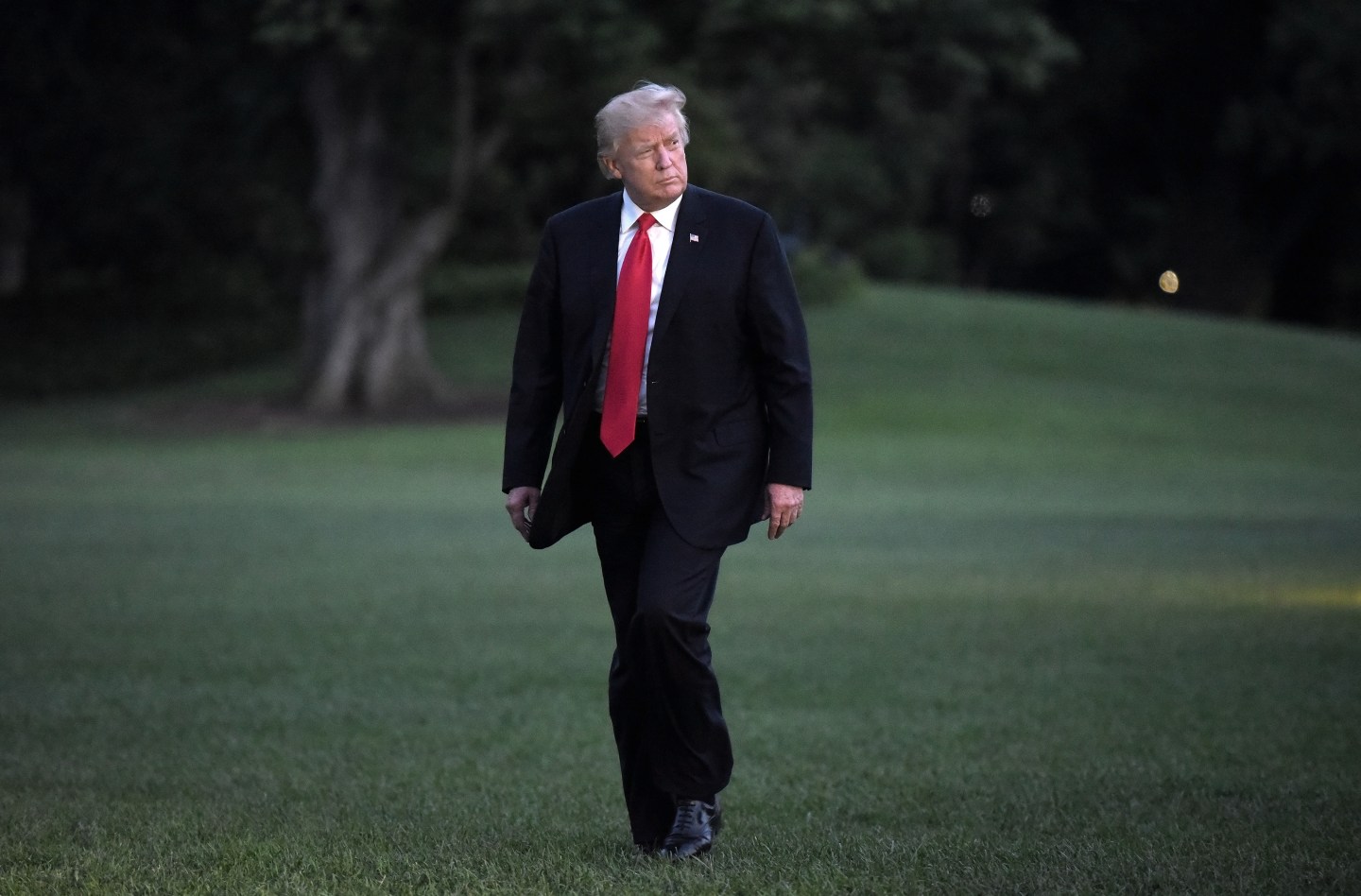
President Trump Returns To The White House After G-20 Summit
U.S. President Donald Trump returns to the White House in Washington, D.C., U.S., on Saturday, July 8, 2017. Home from the Group of 20 meeting, Trump tweeted that its time to begin working constructively with Russia, and that hed discussed creating a cybersecurity unit with Russian President Vladimir Putin. Photographer: /Pool via BloombergOlivier Douliery—Bloomberg Bloomberg/Getty Images

For years, investors in South Korea have become accustomed to belligerence and regular missile tests from the country’s hostile northern neighbor, but now there’s a new factor in their regional risk assessments — U.S. President Donald Trump.

Jolts to financial markets from North Korea’s military provocations are frequent but were until recently contained by an implicit expectation that global diplomatic efforts could limit Pyongyang’s aggression.

Now, however, there is as much market anxiety about Trump‘s unrestrained Tweets and a hawkish White House response as there is about North Korean agitations.

Since Trump‘s election in November, price reactions to North Korean long-range missile tests in credit and currency derivatives, typically used by traders to hedge geopolitical risk, have been distinctly sharper.

“Trump has moved markets and China more within months than (Barack) Obama in eight years,” said Cliff Tan, East Asian head of global markets research at Bank of Tokyo-Mitsubishi UFJ.

The reclusive North Korea has conducted five nuclear tests and a series of missile launches in defiance of U.N. resolutions for decades as it is still at war with South Korea after the 1950-53 conflict ended in a truce, not a peace treaty.

Before Trump‘s election, missile tests came with such regularity that markets learned to shrug them off.

This year, the options market shows the cost of insuring investments against North Korean-related risks has surged, with 3-month protection against a drop in the won, for example, reaching a high of 231 basis points in mid-April, double the levels six months earlier.

This spike came as the U.S. diverted a warship towards the Korean Peninsula and showed off its strike capability in Syria, which it conducted just as Trump met with his Chinese counterpart, Xi Jinping.

The cost of owning the option to sell the won in April was the highest it had been since August 2015, when the two Koreas were in a tense military standoff.

“It’s the Trump-on-stage reaction,” a currency trader in Seoul said. “Trump‘s hard line approach, and his past crazy comments on everything from the Mexico-wall to Syria policies have created a whole new range of uncertainties for traders investing here.”

Pricing in Trump

Despite heightened geopolitical tensions, South Korea’s main asset marketshave performed well this year with the won and Kospi stock benchmark up 4.6% and 17.4%, respectively, on robust exports and an upbeat outlook on second quarter corporate earnings.

The cost of hedging, however, is where investors have felt the pain: options to sell Korean won for dollars were perversely more expensive after Trump‘s November presidential victory than when North Korea conducted its fifth nuclear test two months earlier.

The premium on three-month options to sell the won had hovered around 100 basis points for years before Trump took office, and barely budged even when then U.S. President Obama issued a stern warning to Pyongyang following a missile test in April 2016.

“Financial markets have become more sensitive to the U.S. stance with more hard line policies under Trump, compared to when the Democrats were in power,” Shim Hyun-soo, a senior fund manager with the quantitative management team of Kyobo AXA Investment Managers, said.

In other derivatives markets, the spread on South Korea’s 5-year credit default swap–the contracts that offer investors protection against default on debt–reached a 10-month high of 60 basis points on April 17.

For more on the Trump administration’s policy towards North Korea, watch Fortune’s video:

Market pricing of expected volatility in the won has also been on the rise, with the one-month implied volatility hitting 13.2% in April, the highest in five years.

“During the Obama administration, the markets didn’t care much about the North. Everyone knew the Kim Jong Un regime wouldn’t do anything stupid for real as it could really be the beginning of the end,” said Jeon Seung-ji, a Seoul-based currency analyst at Samsung Futures.

“North Korean risks are no longer a ‘half-day-slip’, mainly because markets are not sure how Washington would handle them,” Jeon said.
About the Author
By Reuters
See full bioRight Arrow Button Icon
0

Most Popular

Finance
Lorem ipsum dolor sit amet, consectetur adipiscing elit, sed do eiusmod tempor incididunt ut labore et dolore magna aliqua. Ut enim ad minim veniam
By Fortune Editors
October 20, 2025
Finance
Lorem ipsum dolor sit amet, consectetur adipiscing elit, sed do eiusmod tempor incididunt ut labore et dolore magna aliqua. Ut enim ad minim veniam
By Fortune Editors
October 20, 2025
Finance
Lorem ipsum dolor sit amet, consectetur adipiscing elit, sed do eiusmod tempor incididunt ut labore et dolore magna aliqua. Ut enim ad minim veniam
By Fortune Editors
October 20, 2025
Finance
Lorem ipsum dolor sit amet, consectetur adipiscing elit, sed do eiusmod tempor incididunt ut labore et dolore magna aliqua. Ut enim ad minim veniam
By Fortune Editors
October 20, 2025
Finance
Lorem ipsum dolor sit amet, consectetur adipiscing elit, sed do eiusmod tempor incididunt ut labore et dolore magna aliqua. Ut enim ad minim veniam
By Fortune Editors
October 20, 2025
Finance
Lorem ipsum dolor sit amet, consectetur adipiscing elit, sed do eiusmod tempor incididunt ut labore et dolore magna aliqua. Ut enim ad minim veniam
By Fortune Editors
October 20, 2025
Fortune Secondary Logo
Rankings
  • 100 Best Companies
  • Fortune 500
  • Global 500
  • Fortune 500 Europe
  • Most Powerful Women
  • Future 50
  • World’s Most Admired Companies
  • See All Rankings
Sections
  • Finance
  • Fortune Crypto
  • Features
  • Leadership
  • Health
  • Commentary
  • Success
  • Retail
  • Mpw
  • Tech
  • Lifestyle
  • CEO Initiative
  • Asia
  • Politics
  • Conferences
  • Europe
  • Newsletters
  • Personal Finance
  • Environment
  • Magazine
  • Education
Customer Support
  • Frequently Asked Questions
  • Customer Service Portal
  • Privacy Policy
  • Terms Of Use
  • Single Issues For Purchase
  • International Print
Commercial Services
  • Advertising
  • Fortune Brand Studio
  • Fortune Analytics
  • Fortune Conferences
  • Business Development
  • Group Subscriptions
About Us
  • About Us
  • Editorial Calendar
  • Press Center
  • Work At Fortune
  • Diversity And Inclusion
  • Terms And Conditions
  • Site Map
Fortune Secondary Logo
  • About Us
  • Editorial Calendar
  • Press Center
  • Work At Fortune
  • Diversity And Inclusion
  • Terms And Conditions
  • Site Map
  • Facebook icon
  • Twitter icon
  • LinkedIn icon
  • Instagram icon
  • Pinterest icon

Most Popular

placeholder alt text
Middle East
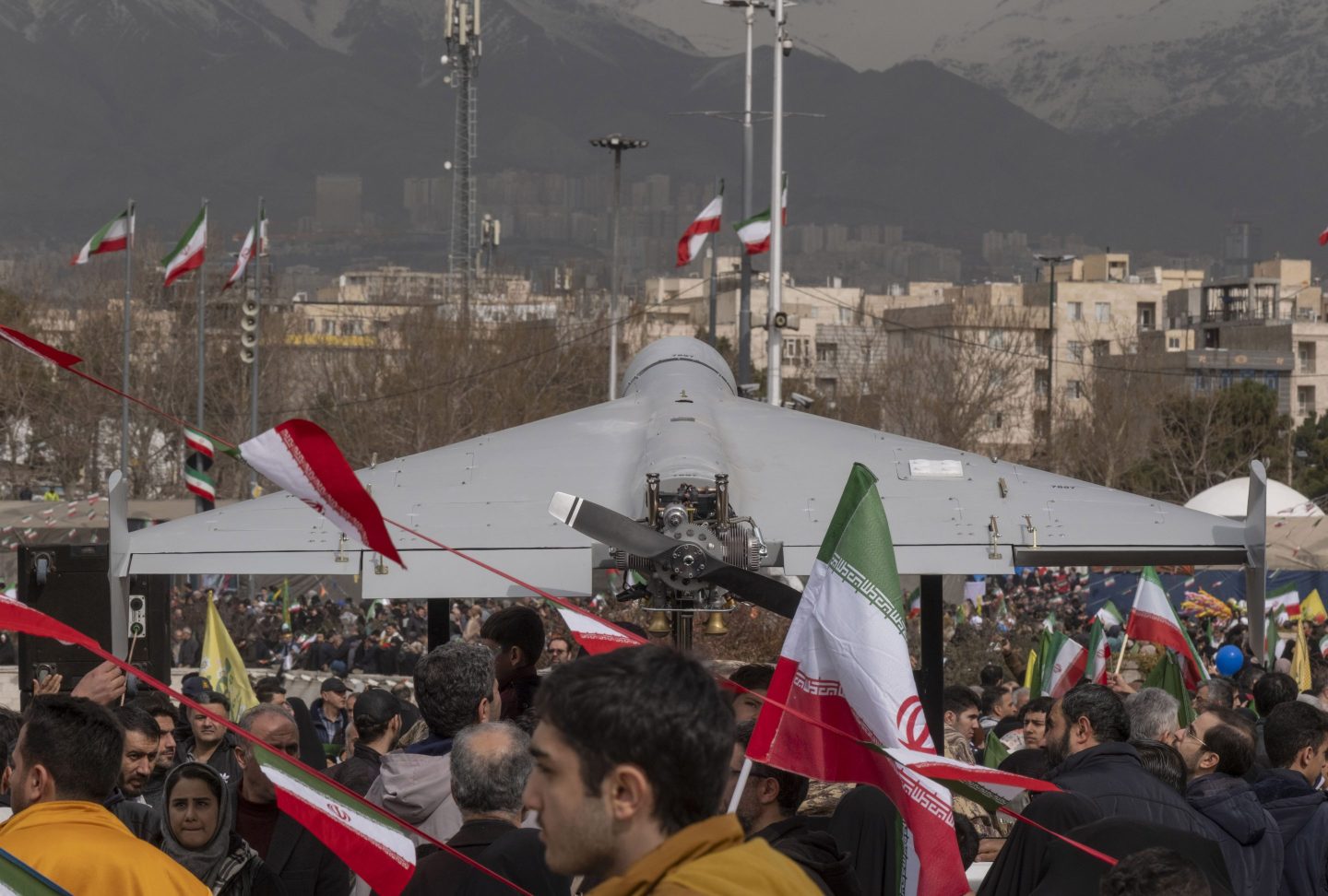
U.S. military gives Iran a taste of its own medicine with cheap copycat Shahed drones, while concern shifts to munitions supply in extended conflict
By Jason MaMarch 1, 2026
1 day ago
placeholder alt text
Success
MacKenzie Scott's close relationship with Toni Morrison long before Amazon put Scott on the path to give more than $1 billion to HBCUs
By Sasha RogelbergMarch 1, 2026
1 day ago
placeholder alt text
Economy
Your grandparents are the reason the U.S. isn't in a recession right now. That won't last forever
By Eleanor PringleMarch 1, 2026
2 days ago
placeholder alt text
AI
American schools weren’t broken until Silicon Valley used a lie to convince them they were—now reading and math scores are plummeting
By Sasha RogelbergMarch 1, 2026
1 day ago
placeholder alt text
Health
Gen Z men are eating ‘boy kibble,’ the human equivalent to dog food, to load up on protein cheaply
By Jake AngeloMarch 1, 2026
1 day ago
placeholder alt text
Middle East
As Iran attacks Dubai, the tax-free haven for the global elite could see 'catastrophic' fallout — 'this can also send shockwaves globally'
By Jason MaMarch 1, 2026
1 day ago

© 2026 Fortune Media IP Limited. All Rights Reserved. Use of this site constitutes acceptance of our Terms of Use and Privacy Policy | CA Notice at Collection and Privacy Notice | Do Not Sell/Share My Personal Information
FORTUNE is a trademark of Fortune Media IP Limited, registered in the U.S. and other countries. FORTUNE may receive compensation for some links to products and services on this website. Offers may be subject to change without notice.