• Home
  • Latest
  • Fortune 500
  • Finance
  • Tech
  • Leadership
  • Lifestyle
  • Rankings
  • Multimedia
Commentary

Why A Dying Islamic State Could Be An Even Bigger Threat To America

By
James Dobbins
James Dobbins
and
Seth G. Jones
Seth G. Jones
Down Arrow Button Icon
By
James Dobbins
James Dobbins
and
Seth G. Jones
Seth G. Jones
Down Arrow Button Icon
March 9, 2017, 3:35 PM ET
SYRIA-CONFLICT-CLASHES-AVIATION
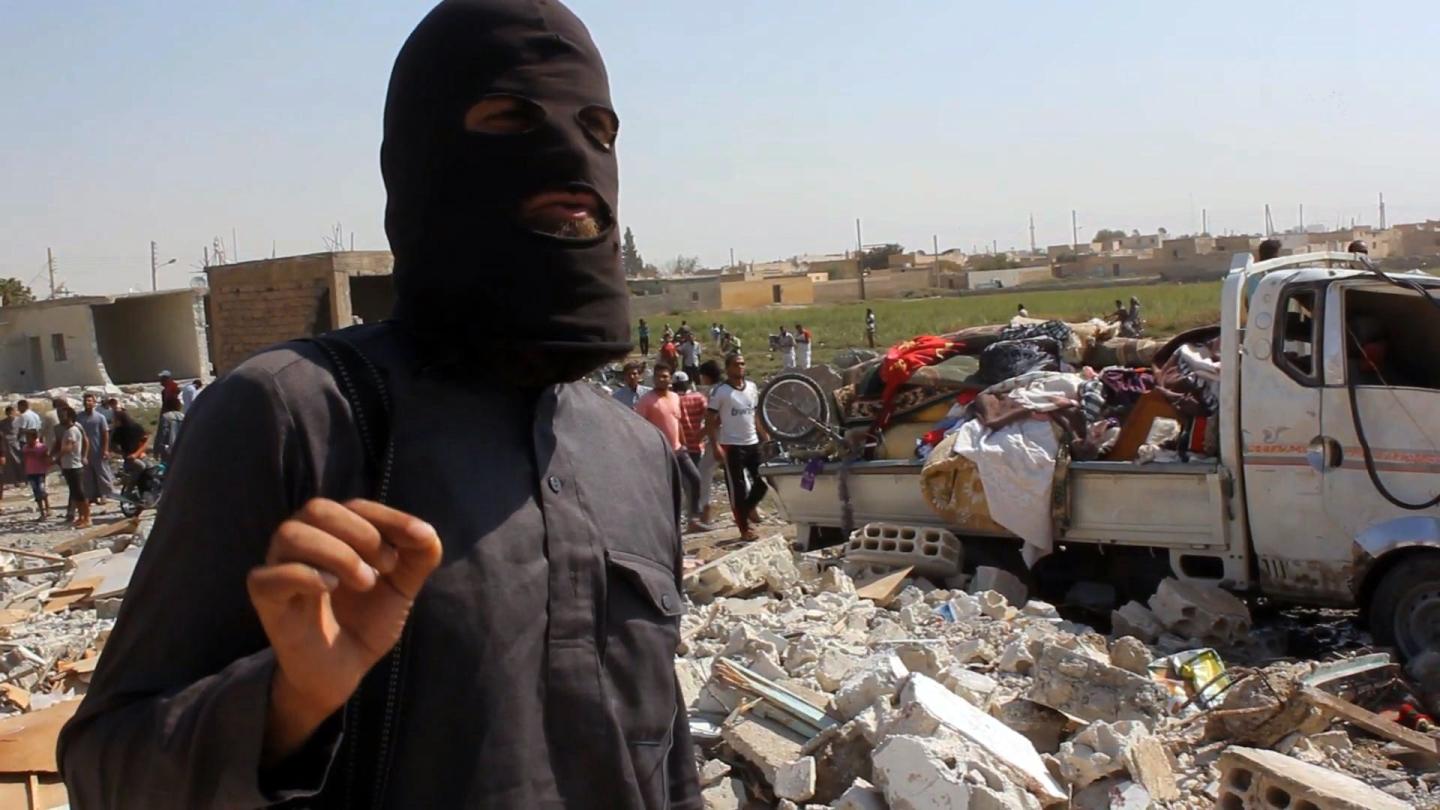
An image grab taken from an AFPTV video on September 16, 2014 shows a jihadist from the Islamic State (IS) group standing on the rubble of houses after a Syrian warplane was reportedly shot down by IS militants over the Syrian town of Raqa. The plane crashed into a house in the Euphrates Valley city, the sole provincial capital entirely out of Syrian government control, causing deaths and injuries on the ground. Photograph by AFP/Getty Images

Later this month, U.S. Secretary of State Rex Tillerson plans to host a 68-nation meeting in Washington to discuss the next moves by the coalition fighting the Islamic State, a senior Trump administration official said on Thursday.

This comes as the Islamic State, an actual state with territory and population, is on the verge of extinction, but remains a threat to the U.S. and many parts of the world. Since 2014, the group’s control over people has been cut by roughly 80% in Iraq and 56% in Syria, according to our estimates. The Islamic State is also slowly but steadily losing control of its largest remaining city, Mosul. Its capital, Raqqa, has been isolated and is awaiting assault. Foreign fighter flows to the region peaked in 2016 and have drastically shrunk. Thousands of Islamic State fighters in Iraq and Syria have been killed, captured, dispersed, or driven underground.

Yet despite these successes, the collapse of the Islamic State’s so-called caliphate will not eliminate the organization or other Salafi-jihadist groups, which will likely continue for years. “Tell me how this ends” then Major General David Petraeus asked in 2003, just after American forces had taken Iraq. This question is just as pertinent today. In the short term, the threat of Islamic State directed or inspired attacks on the U.S. homeland and its allies overseas may even grow.

Over the past two years, the Islamic State has conducted or inspired an increasing number of terrorist attacks from Paris and Berlin to Orlando and New York even as its self-proclaimed caliphate in Iraq and Syria has shrunk. Presently, the Islamic State’s global footprint includes eight formal provinces outside of the core caliphate in Iraq and Syria; dozens of additional aspirant groups; and tens of thousands of inspired and sometimes directed individuals across Asia, the Middle East, Africa, Europe, and North America.

The liberation of Mosul and Raqqa are important initial steps in diminishing the threat from the Islamic State. Without an actual state, the Islamic State will likely lose a substantial amount of its appeal. Without a secure territorial base to operate from, it may have a harder time organizing external attacks. Yet the Islamic State, like al Qaeda before it, will continue to metastasize and seek to spread its influence once it loses its home base.

Those foreign fighters that aren’t killed will likely flee from Iraq and Syria, returning to their homelands, seeking refuge in other countries, or flocking to new jihadist battlefields. Islamic State supporters and leaders in Iraq and Syria will go underground, seeking to regroup and renew the fight by turning to guerrilla tactics. And the Islamic State will continue to orchestrate an ideological campaign on the internet and social media sites to inspire radicalization and encourage attacks.

The Islamic State is a byproduct of the American intervention in Iraq and also of its subsequent departure. The 2003 intervention shifted the political balance in the country away from the formerly dominant Sunni minority toward the Shi’a majority, leaving Sunnis disgruntled, adrift, and ripe for radicalization. The year 2011 saw both the withdrawal of American forces from Iraq and the opening of a civil war in neighboring Syria. With the advent of that civil war, al Qaeda in Iraq, soon to rename itself the Islamic State, shifted its center of gravity across the border.

The coincident American withdrawal from Iraq had several additional consequences. It removed a counterweight to Iranian influence; it halted professionalization of the Iraqi Army, and it reduced American visibility into the deteriorating condition of those forces as they became politicized, corrupted, and progressively weakened by the Shi’a-dominated regime in Baghdad. Washington was consequently taken by surprise when, in early 2014, Islamic State fighters burst out of Syria, rapidly advancing to the outskirts of Baghdad.

George W. Bush and Barack Obama both declared their wars in Iraq over. But wars don’t end by fiat. It will be important that the new administration in Washington not make this mistake a third time. The Islamic State will not be defeated until local forces can secure liberated territory and local governments can effectively administer these areas. This needs to occur not just in Iraq and Syria, but in the half dozen other lands where the Islamic State has established territorial footholds, to include Afghanistan, Nigeria, Libya, and Egypt.

This challenge is particularly acute in Syria, where there is at present no acceptable local government to support. This makes the question of what to do with Raqqa once liberated particularly difficult. Even as the military campaign to take the city gains momentum, Washington will need to reengage diplomatically in the ongoing negotiations over Syria’s future.

It is not accidental that the Islamic State has taken root in some of the most poorly governed countries in the Muslim world. State-building is an unpopular mission, from which successive American administrations have shied. Yet the alternative is war without end.

If the Islamic State is to be defeated and stay defeated, military measures will need to be combined with economic, technical, and political assistance designed to improve state and local capacity. Popular grievances that have given rise to extremist movements need to be better addressed. These are not steps the United States should take alone, but Washington should lead in assembling and guiding donor coalitions working with each of the affected countries.

Seth G. Jones is director of the International Security and Defense Policy at the nonprofit, nonpartisan RAND Corporation and an adjunct professor at Johns Hopkins University. James Dobbins, a veteran diplomat who most recently served as the State Department’s special representative for Afghanistan and Pakistan, is a senior fellow and Distinguished Chair in Diplomacy and Security at RAND.

About the Authors
By James Dobbins
See full bioRight Arrow Button Icon
By Seth G. Jones
See full bioRight Arrow Button Icon

Latest in Commentary

Finance
Lorem ipsum dolor sit amet, consectetur adipiscing elit, sed do eiusmod tempor incididunt ut labore et dolore magna aliqua. Ut enim ad minim veniam
By Fortune Editors
October 20, 2025
Finance
Lorem ipsum dolor sit amet, consectetur adipiscing elit, sed do eiusmod tempor incididunt ut labore et dolore magna aliqua. Ut enim ad minim veniam
By Fortune Editors
October 20, 2025
Finance
Lorem ipsum dolor sit amet, consectetur adipiscing elit, sed do eiusmod tempor incididunt ut labore et dolore magna aliqua. Ut enim ad minim veniam
By Fortune Editors
October 20, 2025
Finance
Lorem ipsum dolor sit amet, consectetur adipiscing elit, sed do eiusmod tempor incididunt ut labore et dolore magna aliqua. Ut enim ad minim veniam
By Fortune Editors
October 20, 2025
Finance
Lorem ipsum dolor sit amet, consectetur adipiscing elit, sed do eiusmod tempor incididunt ut labore et dolore magna aliqua. Ut enim ad minim veniam
By Fortune Editors
October 20, 2025
Finance
Lorem ipsum dolor sit amet, consectetur adipiscing elit, sed do eiusmod tempor incididunt ut labore et dolore magna aliqua. Ut enim ad minim veniam
By Fortune Editors
October 20, 2025

Most Popular

Finance
Lorem ipsum dolor sit amet, consectetur adipiscing elit, sed do eiusmod tempor incididunt ut labore et dolore magna aliqua. Ut enim ad minim veniam
By Fortune Editors
October 20, 2025
Finance
Lorem ipsum dolor sit amet, consectetur adipiscing elit, sed do eiusmod tempor incididunt ut labore et dolore magna aliqua. Ut enim ad minim veniam
By Fortune Editors
October 20, 2025
Finance
Lorem ipsum dolor sit amet, consectetur adipiscing elit, sed do eiusmod tempor incididunt ut labore et dolore magna aliqua. Ut enim ad minim veniam
By Fortune Editors
October 20, 2025
Finance
Lorem ipsum dolor sit amet, consectetur adipiscing elit, sed do eiusmod tempor incididunt ut labore et dolore magna aliqua. Ut enim ad minim veniam
By Fortune Editors
October 20, 2025
Finance
Lorem ipsum dolor sit amet, consectetur adipiscing elit, sed do eiusmod tempor incididunt ut labore et dolore magna aliqua. Ut enim ad minim veniam
By Fortune Editors
October 20, 2025
Finance
Lorem ipsum dolor sit amet, consectetur adipiscing elit, sed do eiusmod tempor incididunt ut labore et dolore magna aliqua. Ut enim ad minim veniam
By Fortune Editors
October 20, 2025
Fortune Secondary Logo
Rankings
  • 100 Best Companies
  • Fortune 500
  • Global 500
  • Fortune 500 Europe
  • Most Powerful Women
  • World's Most Admired Companies
  • See All Rankings
  • Lists Calendar
Sections
  • Finance
  • Fortune Crypto
  • Features
  • Leadership
  • Health
  • Commentary
  • Success
  • Retail
  • Mpw
  • Tech
  • Lifestyle
  • CEO Initiative
  • Asia
  • Politics
  • Conferences
  • Europe
  • Newsletters
  • Personal Finance
  • Environment
  • Magazine
  • Education
Customer Support
  • Frequently Asked Questions
  • Customer Service Portal
  • Privacy Policy
  • Terms Of Use
  • Single Issues For Purchase
  • International Print
Commercial Services
  • Advertising
  • Fortune Brand Studio
  • Fortune Analytics
  • Fortune Conferences
  • Business Development
  • Group Subscriptions
About Us
  • About Us
  • Press Center
  • Work At Fortune
  • Terms And Conditions
  • Site Map
  • About Us
  • Press Center
  • Work At Fortune
  • Terms And Conditions
  • Site Map
  • Facebook icon
  • Twitter icon
  • LinkedIn icon
  • Instagram icon
  • Pinterest icon

Latest in Commentary

hegseth
CommentaryMilitary
America shot its arsenal empty in 2 wars. Now it needs Beijing’s permission to reload
By Steve H. Hanke and Jeffrey WengApril 30, 2026
7 hours ago
Duncan Tait, CEO of Inchcape
Europecar manufacturing
“Competition is good for the industry”. Inchcape CEO’s case for optimism in automotive’s next chapter
By Duncan TaitApril 30, 2026
10 hours ago
agentic
CommentaryAI agents
Why your data infrastructure — not your AI model — will determine whether Agentic AI scales
By Jeffrey Sonnenfeld, Stephen Henriques, Catherine Dai and Zander JeinthanuttkanontApril 30, 2026
13 hours ago
hoskins
Commentaryoffices
Gensler Co-Chair: Hot-desking was supposed to save money. It may be costing you your culture
By Diane HoskinsApril 30, 2026
15 hours ago
tillis
CommentaryCongress
Thom Tillis: Free markets built American prosperity. Government intervention puts it at risk
By Thom Tillis and John StanfordApril 30, 2026
16 hours ago
iran
CommentaryIran
The Strait of Hormuz is a data problem, not just a military one
By Erik Bethel and Ami DanielApril 30, 2026
17 hours ago

Most Popular

Apple cofounder Ronald Wayne—whose stake would be worth up to $400 billion had he not sold it in 1976—says that at 91, he has no regrets
Success
Apple cofounder Ronald Wayne—whose stake would be worth up to $400 billion had he not sold it in 1976—says that at 91, he has no regrets
By Preston ForeApril 27, 2026
3 days ago
Google Cloud revenue is now 18% of Alphabet's business. Is this the beginning of the end of Google's search identity?
Big Tech
Google Cloud revenue is now 18% of Alphabet's business. Is this the beginning of the end of Google's search identity?
By Alexei OreskovicApril 29, 2026
23 hours ago
‘The cost of compute is far beyond the costs of the employees’: Nvidia executive says right now AI is more expensive than paying human workers
AI
‘The cost of compute is far beyond the costs of the employees’: Nvidia executive says right now AI is more expensive than paying human workers
By Sasha RogelbergApril 28, 2026
3 days ago
Jamie Dimon gets candid about national debt: ‘There will be a bond crisis, and then we’ll have to deal with it’
Economy
Jamie Dimon gets candid about national debt: ‘There will be a bond crisis, and then we’ll have to deal with it’
By Eleanor PringleApril 29, 2026
2 days ago
‘They left me no choice’: Powell isn’t going anywhere—blocking Trump from another Fed appointee
Banking
‘They left me no choice’: Powell isn’t going anywhere—blocking Trump from another Fed appointee
By Eva RoytburgApril 29, 2026
1 day ago
With no end in sight, Trump considers new options in Iran war—including the ‘Dark Eagle’ hypersonic missile
Big Tech
With no end in sight, Trump considers new options in Iran war—including the ‘Dark Eagle’ hypersonic missile
By Jim EdwardsApril 30, 2026
15 hours ago

© 2026 Fortune Media IP Limited. All Rights Reserved. Use of this site constitutes acceptance of our Terms of Use and Privacy Policy | CA Notice at Collection and Privacy Notice | Do Not Sell/Share My Personal Information
FORTUNE is a trademark of Fortune Media IP Limited, registered in the U.S. and other countries. FORTUNE may receive compensation for some links to products and services on this website. Offers may be subject to change without notice.