• Home
  • Latest
  • Fortune 500
  • Finance
  • Tech
  • Leadership
  • Lifestyle
  • Rankings
  • Multimedia
Commentary

Obamacare Expert: Scrapping the Individual Mandate Will Only Worsen Health Care’s Biggest Problems

By
Jonathan Gruber
Jonathan Gruber
and
Bethany Cianciolo
Bethany Cianciolo
Down Arrow Button Icon
By
Jonathan Gruber
Jonathan Gruber
and
Bethany Cianciolo
Bethany Cianciolo
Down Arrow Button Icon
March 8, 2017, 5:19 PM ET
GOP Presser
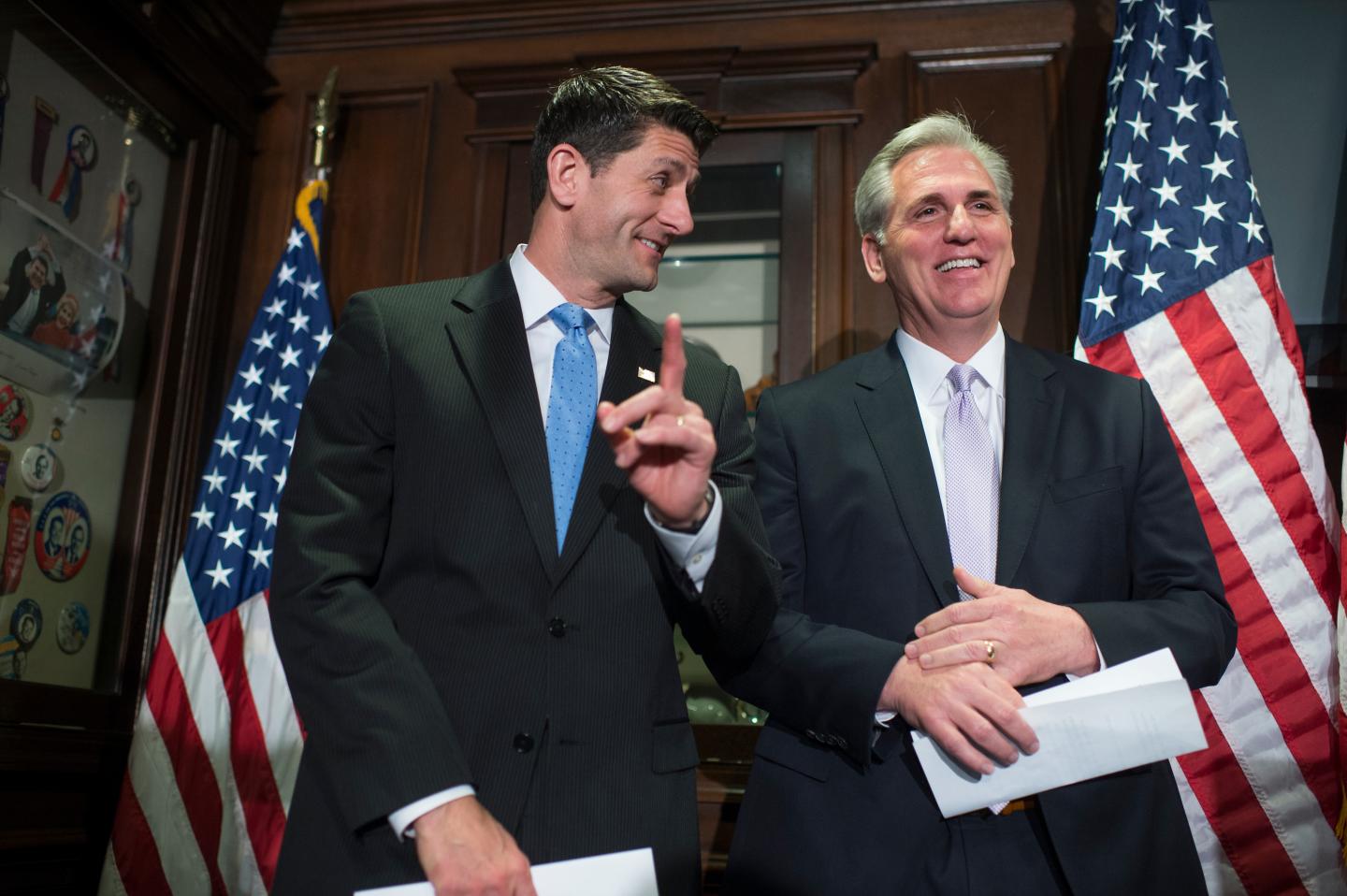
UNITED STATES - MARCH 8: Speaker of the House Paul Ryan, R-Wis., and House Majority Leader Kevin McCarthy, R-Calif., conduct a news conference at the RNC where they discussed the House Republican's new healthcare plan to repeal and replace the Affordable Care Act, March 8, 2017. (Photo By Tom Williams/CQ Roll Call)Photograph by Tom Williams CQ-Roll Call,Inc.

Earlier this week, House Republicans released a long-anticipated health care plan that would “repeal and replace” Barack Obama’s signature Affordable Care Act (ACA). Even though the bill keeps the most popular part of Obamacare and bans insurance companies’ consideration of pre-existing conditions when selling insurance, it nevertheless reintroduces discrimination against the sick that the ACA was designed to protect against.

Here’s how: For many years, insurance markets in the U.S. were fundamentally broken. If you got insurance from your employer or the government, you were in pretty good shape. You got fair coverage at a generally affordable price. But if you didn’t have insurance from one of those sources, you could be denied insurance, your pre-existing conditions could be excluded from coverage, and you could be charged many multiples of the typical enrollee because you were sick.

This ended on January 1, 2014, thanks to the ACA. The plan ensured that individuals can’t be denied coverage and have to be charged a fair price based on their age. The protections have been the most popular aspect of the act, as supporters recognize that in a nation as successful as the U.S., no one should be one traffic accident or one bad gene away from bankruptcy.

Unfortunately, those regulations can’t exist in a vacuum. if you want insurers to not discriminate against the sick, you need to ensure that the healthy join the pool as well. Otherwise, the healthy just wait until they’re sick to buy insurance, and insurers lose money. This isn’t just an idle conjecture; seven states in the 1990s tried such regulations in a vacuum, and the non-group health insurance market collapsed.

One of the biggest problems with the GOP’s proposal is that it scraps Obamacare’s ‘individual mandate’ that fines those who do not have health insurance, while also promising to insure patients that have the highest health risks. The mandate was first pioneered by Mitt Romney as part of Massachusetts’ successful health care reform. The purpose of the mandate is to ensure that the healthy enter the risk pool, allowing insurers to price fairly to the sick and healthy alike. And it worked well in Massachusetts, reducing the uninsured rate to below 3% within five years.

At the national level, the mandate was also effective, although political opposition has prevented it from having as much of an impact as it did in Massachusetts. Premiums have risen, but (despite the press coverage) not as rapidly as they were rising before the ACA. This is particularly true in states that have actively participated in the law, expanding Medicaid and encouraging enrollment in the exchanges.

Politically, it is clear why Republicans want to do away with the mandate. It was always, and continues to be, unpopular. Individuals don’t like being told what to do when the costs to them are clear (they have to buy insurance that they don’t want) and the benefits to society are less clear (it helps make insurance more affordable for all).

The Republican alternative proposal is to replace the individual mandate with a “continuous coverage” provision that penalizes those who go more than two months without coverage. Those individuals would have to pay 30% more for insurance for a year when they sign up after such a gap.

This provision is not a replacement for the individual mandate. The idea of the mandate is to ensure that the healthy get insurance. But the continuous coverage provision does the opposite: It ensures that folks wait until they are sick to get insurance. Why pay for insurance when you don’t need it, when for only 30% more you can get insurance when you actually get sick?

For example, suppose that you are a healthy 29 year old, facing insurance costs of $3,200 per year. Why pay $3,200 per year for insurance that you are unlikely to need, when for less than $1,000 extra, you can get insurance when you need it? It is a much better deal to pay nothing for several years. Under the individual mandate, every year that you go without insurance costs, you pay the larger of $700 or 2.5% of your income. That is a much stronger incentive to sign up, even when healthy.

Moreover, this provision makes health insurance significantly more unaffordable. The mandate under the ACA has an important affordability protection, whereby no one is subject to the mandate if insurance costs more than 8% of their income. But under this alternative, individuals for whom insurance is already unaffordable could end up being burdened further.


For example, suppose that a 64 year old, for whom insurance costs $12,000, gets cancer and has to leave work for two months to get chemotherapy. Since they’re out of work, they don’t have the money to maintain their insurance. But when they get back to work, they now have to pay $3,600 more per year for insurance—just because they missed time due to being sick.

The Republican alternative replaces the individual mandate with an alternative that is less effective and worsens the affordability of insurance for the sick. I understand that Republicans would want to remove the mandate for political reasons. But it is important to recognize that a political act isn’t a substantive replacement. If opponents of the ACA want to strip away its protections against discrimination, they should be open about doing so. But if they want to keep them in place, they need some way to make sure markets don’t collapse, as they are much more likely to do under their alternative proposal.

Jonathan Gruber is a professor of economics at MIT.

About the Authors
By Jonathan Gruber
See full bioRight Arrow Button Icon
By Bethany Cianciolo
See full bioRight Arrow Button Icon

Latest in Commentary

Finance
Lorem ipsum dolor sit amet, consectetur adipiscing elit, sed do eiusmod tempor incididunt ut labore et dolore magna aliqua. Ut enim ad minim veniam
By Fortune Editors
October 20, 2025
Finance
Lorem ipsum dolor sit amet, consectetur adipiscing elit, sed do eiusmod tempor incididunt ut labore et dolore magna aliqua. Ut enim ad minim veniam
By Fortune Editors
October 20, 2025
Finance
Lorem ipsum dolor sit amet, consectetur adipiscing elit, sed do eiusmod tempor incididunt ut labore et dolore magna aliqua. Ut enim ad minim veniam
By Fortune Editors
October 20, 2025
Finance
Lorem ipsum dolor sit amet, consectetur adipiscing elit, sed do eiusmod tempor incididunt ut labore et dolore magna aliqua. Ut enim ad minim veniam
By Fortune Editors
October 20, 2025
Finance
Lorem ipsum dolor sit amet, consectetur adipiscing elit, sed do eiusmod tempor incididunt ut labore et dolore magna aliqua. Ut enim ad minim veniam
By Fortune Editors
October 20, 2025
Finance
Lorem ipsum dolor sit amet, consectetur adipiscing elit, sed do eiusmod tempor incididunt ut labore et dolore magna aliqua. Ut enim ad minim veniam
By Fortune Editors
October 20, 2025

Most Popular

Finance
Lorem ipsum dolor sit amet, consectetur adipiscing elit, sed do eiusmod tempor incididunt ut labore et dolore magna aliqua. Ut enim ad minim veniam
By Fortune Editors
October 20, 2025
Finance
Lorem ipsum dolor sit amet, consectetur adipiscing elit, sed do eiusmod tempor incididunt ut labore et dolore magna aliqua. Ut enim ad minim veniam
By Fortune Editors
October 20, 2025
Finance
Lorem ipsum dolor sit amet, consectetur adipiscing elit, sed do eiusmod tempor incididunt ut labore et dolore magna aliqua. Ut enim ad minim veniam
By Fortune Editors
October 20, 2025
Finance
Lorem ipsum dolor sit amet, consectetur adipiscing elit, sed do eiusmod tempor incididunt ut labore et dolore magna aliqua. Ut enim ad minim veniam
By Fortune Editors
October 20, 2025
Finance
Lorem ipsum dolor sit amet, consectetur adipiscing elit, sed do eiusmod tempor incididunt ut labore et dolore magna aliqua. Ut enim ad minim veniam
By Fortune Editors
October 20, 2025
Finance
Lorem ipsum dolor sit amet, consectetur adipiscing elit, sed do eiusmod tempor incididunt ut labore et dolore magna aliqua. Ut enim ad minim veniam
By Fortune Editors
October 20, 2025
Fortune Secondary Logo
Rankings
  • 100 Best Companies
  • Fortune 500
  • Global 500
  • Fortune 500 Europe
  • Most Powerful Women
  • Future 50
  • World’s Most Admired Companies
  • See All Rankings
Sections
  • Finance
  • Fortune Crypto
  • Features
  • Leadership
  • Health
  • Commentary
  • Success
  • Retail
  • Mpw
  • Tech
  • Lifestyle
  • CEO Initiative
  • Asia
  • Politics
  • Conferences
  • Europe
  • Newsletters
  • Personal Finance
  • Environment
  • Magazine
  • Education
Customer Support
  • Frequently Asked Questions
  • Customer Service Portal
  • Privacy Policy
  • Terms Of Use
  • Single Issues For Purchase
  • International Print
Commercial Services
  • Advertising
  • Fortune Brand Studio
  • Fortune Analytics
  • Fortune Conferences
  • Business Development
  • Group Subscriptions
About Us
  • About Us
  • Editorial Calendar
  • Press Center
  • Work At Fortune
  • Diversity And Inclusion
  • Terms And Conditions
  • Site Map
  • About Us
  • Editorial Calendar
  • Press Center
  • Work At Fortune
  • Diversity And Inclusion
  • Terms And Conditions
  • Site Map
  • Facebook icon
  • Twitter icon
  • LinkedIn icon
  • Instagram icon
  • Pinterest icon

Latest in Commentary

trump
CommentaryZoom
The U.S. has a $282 billion trade surplus you’ve never heard of — and it’s at risk
By Josh KallmerApril 19, 2026
1 day ago
benioff
CommentarySalesforce
AI’s next act: how Salesforce is turning efficiency gains into revenue
By Keith Ferrazzi and Wendy SmithApril 18, 2026
2 days ago
trump
CommentaryWhite House
Trump has already endorsed the Monroe Doctrine. Now he needs to endorse the Truman Doctrine
By Robert HormatsApril 18, 2026
2 days ago
trump
CommentaryManufacturing
Tariffs alone won’t save American manufacturing — here’s what actually will
By Johan "Kip" EidebergApril 18, 2026
2 days ago
hormuz
CommentaryIran
With Hormuz under strain, a trade corridor built for resilience faces a real-world test
By Angela Chitkara and Samantha SuttonApril 17, 2026
3 days ago
broker
CommentarySoftware
The 3 forces quietly dismantling the business model that made enterprise software fabulously profitable
By Michael Jacobides and Stefano PuntoniApril 17, 2026
3 days ago

Most Popular

Thousands of CEOs admit AI had no impact on employment or productivity—and it has economists resurrecting a paradox from 40 years ago
AI
Thousands of CEOs admit AI had no impact on employment or productivity—and it has economists resurrecting a paradox from 40 years ago
By Sasha RogelbergApril 19, 2026
19 hours ago
Markets shudder as Strait of Hormuz starts resembling a combat zone. 'We're prepared to subject you to disabling fire'
Energy
Markets shudder as Strait of Hormuz starts resembling a combat zone. 'We're prepared to subject you to disabling fire'
By Jason MaApril 19, 2026
11 hours ago
'We should absolutely be concerned about non-college-educated men today': higher rents, living at home, falling out of the labor market
Economy
'We should absolutely be concerned about non-college-educated men today': higher rents, living at home, falling out of the labor market
By Catherina GioinoApril 18, 2026
2 days ago
Elon Musk bans résumés and cover letters in hiring for his chip team. These are the 3 bullet points he’s looking for instead
Future of Work
Elon Musk bans résumés and cover letters in hiring for his chip team. These are the 3 bullet points he’s looking for instead
By Jake AngeloApril 19, 2026
19 hours ago
The record-setting U.S. drought is so bad that 97% of the Southeast and two-thirds of the West are parched
North America
The record-setting U.S. drought is so bad that 97% of the Southeast and two-thirds of the West are parched
By Seth Borenstein and The Associated PressApril 18, 2026
2 days ago
The explosion of U.S. debt is wiping out the 'safety premium' of Treasury bonds, and time is running out for an orderly fiscal solution, IMF warns
Economy
The explosion of U.S. debt is wiping out the 'safety premium' of Treasury bonds, and time is running out for an orderly fiscal solution, IMF warns
By Jason MaApril 19, 2026
15 hours ago

© 2026 Fortune Media IP Limited. All Rights Reserved. Use of this site constitutes acceptance of our Terms of Use and Privacy Policy | CA Notice at Collection and Privacy Notice | Do Not Sell/Share My Personal Information
FORTUNE is a trademark of Fortune Media IP Limited, registered in the U.S. and other countries. FORTUNE may receive compensation for some links to products and services on this website. Offers may be subject to change without notice.