• Home
  • Latest
  • Fortune 500
  • Finance
  • Tech
  • Leadership
  • Lifestyle
  • Rankings
  • Multimedia

Trendingnow

1

Current price of oil as of June 16, 2026

2

Team USA star Ricardo Pepi grew up in a trailer in El Paso—and his parents pawned their car title to fuel his soccer dream. Now, he’s in the World Cup

3

Cursor’s 25-year-old CEO is a former Google intern who just cemented a $60 billion deal with SpaceX

1

Current price of oil as of June 16, 2026

2

Team USA star Ricardo Pepi grew up in a trailer in El Paso—and his parents pawned their car title to fuel his soccer dream. Now, he’s in the World Cup

3

Cursor’s 25-year-old CEO is a former Google intern who just cemented a $60 billion deal with SpaceX
CommentaryLeadership

Here’s How To Get America’s Trade Policies Back On Track

By
Alan Wolff
Alan Wolff
Down Arrow Button Icon
By
Alan Wolff
Alan Wolff
Down Arrow Button Icon
February 21, 2017, 1:14 PM ET
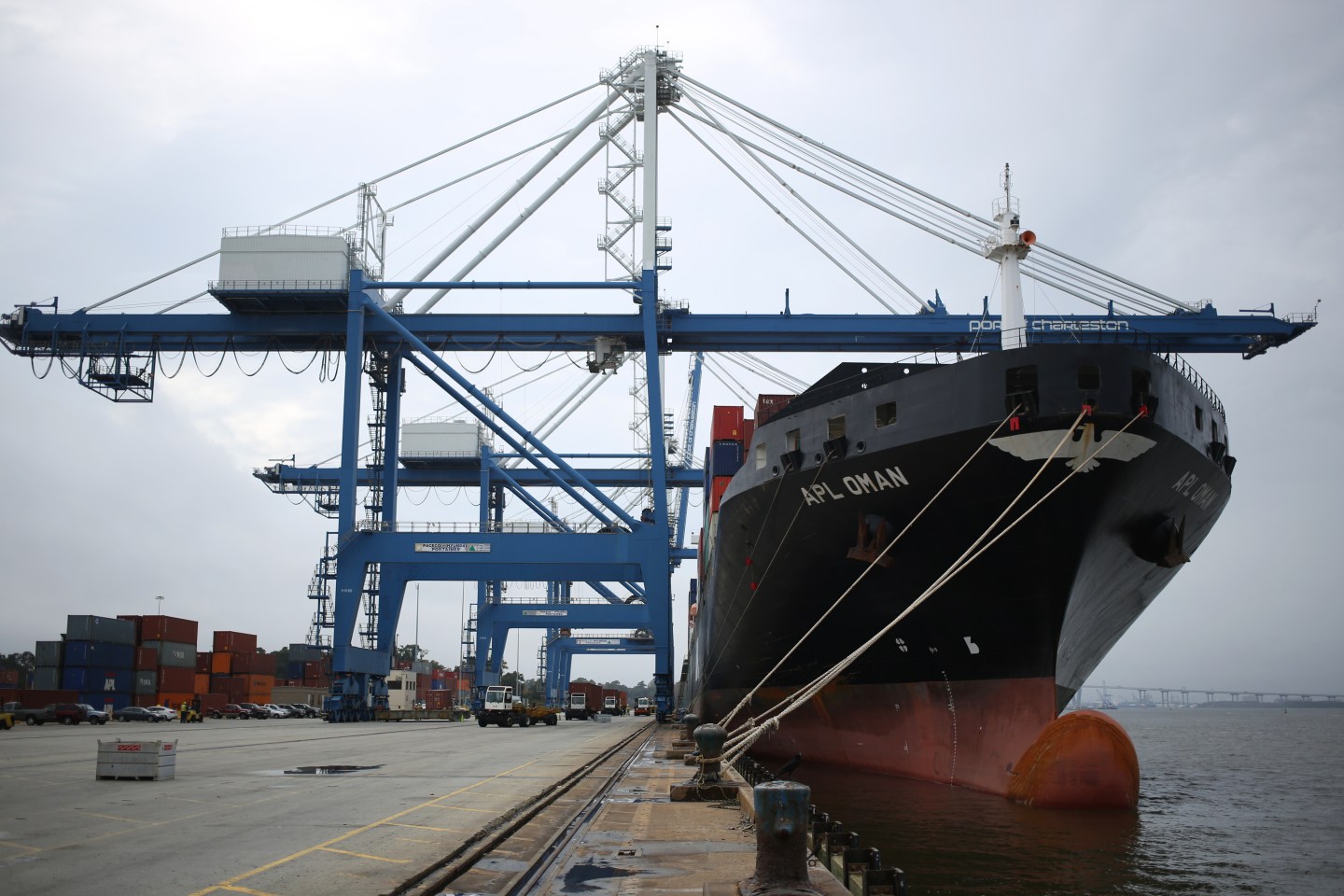
Operations At The Port Of Charleston Ahead Of International Trade Balance Figures
The APL Oman cargo ship sits docked at the Port of Charleston in Charleston, South Carolina, U.S., on Thursday, Dec. 17, 2015. The U.S. Census Bureau is scheduled to release international trade balance figures on December 29. Photographer: Luke Sharrett/Bloomberg via Getty ImagesLuke Sharrett— Bloomberg/Getty Images
Add Fortune on Google for similar content.

Much is in the news lately about the rule of law, particularly as it has applies to immigration. But there are also laws that govern how U.S. trade policy is supposed to be made and implemented that have not received much notice, and there is, of course, the Congress which should have a central role. All were by-passed when President Trump pulled the United States out of the Trans Pacific Partnership (TPP) agreement, which was poised to be a landmark trade deal to foster America’s national interest in Asia.

By a law enacted in 1962 signed by John F. Kennedy, and again by the 1974 Trade Act signed by Gerald Ford, the United States has one chief trade negotiator, and that person is the U.S. Trade Representative (the USTR) – a job that remains empty. There is also a statutory body for coordinating U.S. trade policy, and it is chaired by the USTR, which has not met. This is not all. There are formal advisory committees to be consulted representing all segments of the economy – including industry, agriculture and labor.

There are requirements for public hearings, and for getting the advice of a bi-partisan independent agency, the U.S. International Trade Commission. And Congress under our Constitution has the power to regulate U.S. Commerce; it should be a major participant in key trade policy decisions. It sets negotiating objectives, and approves and implements trade agreements that the USTR negotiates. And it needs to be consulted. None of this appears to be happening.

It is because of this machinery, when it is up and running, that America’s negotiators are second to none in their knowledge of what American businesses (including farmers) and, yes, workers need to get in order to benefit from trade agreements.

While we are only one month into the Trump Administration, America’s trade policy system crafted by Congress and professionally staffed is not yet fully plugged in. America’s front bench of professional trade negotiators is empty — the USTR and his deputies are not in place. Their role under U.S. law to coordinate and implement trade policy and to negotiate for the United States has instead been divided among a number of others, none of whom have been confirmed by the Senate as of this writing, and most of whom will not be. This ad hoc system has not yet produced as many missteps as one might have thought. The meetings with the Prime Ministers of the United Kingdom, Japan and Canada were friendly as befits relations among allies but with little concrete progress was made toward improving international trade, a top priority of the new Administration.

What are the risks of sailing ahead with the ship not captained, and the course uncertain?

The shoals that lie immediately ahead are to be found in the new Administration’s orthodoxy that smaller trade deals involving no more than two countries are superior to bigger agreements among multiple nations. An agreement between two trading partners works best in narrow circumstances — when it concerns primarily their respective trade interests. A trade dispute between two countries might be settled between the two concerned. But for most trade matters, it is best to have many countries join. An example is the World Trade Organization’s Trade Facilitation Agreement with its common sense measures to aid in moving goods across borders without being bedeviled by unnecessary bureaucratic barriers. Nearly two-thirds of the WTO’s 164 members including the U.S. have ratified that agreement and it will soon come into effect.

While it would be optimal to craft new rules for world trade in the WTO, due to the size and diversity of trade policy perspectives of the entire WTO membership, it is very hard to get consensus in the WTO. Given that the WTO rules were written over two decades ago and do not cover a wide range of current issues, coalitions of the like-minded are trying to move forward. One example is the Expansion of the Information Technology Agreement concluded in December 2015. The agreement is of major benefit to the United States that has a substantial share of trade in IT products. The ITA-expansion has 24 signatories representing 53 WTO members, and together with the original ITA, will make some $3 trillion of world trade duty-free.

Important as that agreement is, it is limited to one part of world trade. What about trading rules more generally? The multi-party Trans Pacific Partnership (TPP) was designed to create rules needed for the 21st Century trade and investment – addressing among other things, the conduct of state-owned enterprises that are engaged in commercial competition, new rules for the digital economy for the free flow of data across borders, and for reducing the adverse impact of government regulations generally. It was not only the rules that would have benefitted American trade, but there were breakthroughs as well in lowering tariffs and other barriers to U.S. Exports of both industrial and agricultural products, and opening markets for U.S. Services.

In short, the TPP was designed to meet many of both the last and the new Administrations’ objectives. TPP was open to other countries joining beyond the original 12 nations; additional countries — Indonesia, Korea, the Philippines, Colombia, Thailand and Taiwan — had already expressed an interest in coming in.

TPP would have set a higher standard than the competing agreement, the Regional Comprehensive Economic Partnership (RCEP) Agreement being led by China. This agreement, which involves 16 countries including China, India and Japan, is likely to fall short of the high standards set by the TPP because these countries will not agree to open their borders fully to each other, and will also not find a consensus to put into place the kind of rules that the U.S. and its major pacific rim trading partners were willing to agree to in TPP — not only in the areas listed above, but for labor and the environment.

Other groups are exploring trans-Pacific relations, with a meeting scheduled for mid-March in Chile to discuss alternatives. China has agreed to attend. It is not clear that the U.S. will do so. The U.S. walking away from TPP should not mean walking away from Asia. The U.S. should reach out to the countries of the Pacific Rim, initially bilaterally if necessary, to work its way back to a regional pact led by the United States as soon as possible.

Would adopting better trading rules through trade agreements solve the economic problems experienced by many in the U.S. economy? No, it is just part of the solution. It turns out that a rising tide does not lift all boats. The growth in world trade has done wonders for the U.S. and world economies since WWII, but there need to be five other pillars besides great trade agreements: there needs to be an extensive modernization of U.S. infrastructure, major enhancements to U.S. training and education to meet future workforce needs, a sensible immigration policy (given the continuing contribution of immigrants to America’s competitiveness, among other reasons), major support by the government for basic research, and a more competitive tax system.

There are no magic solutions, but there are strong measures that would address many of the that deep concerns that influenced the outcome of the last U.S. presidential election. A forward-looking trade policy is only one element, but an important one. It is time to staff up, to get the trade policy machinery working again and get professional trade negotiators on board.

Alan Wolff is senior counsel Senior Counsel at Dentons LLP, served as a senior U.S trade negotiator in Republican and Democratic administrations. He is Chairman of the National Foreign Trade Council (NFTC).


About the Author
By Alan Wolff
See full bioRight Arrow Button Icon
Add Fortune on Google for similar content.

Latest in Commentary

Finance
Lorem ipsum dolor sit amet, consectetur adipiscing elit, sed do eiusmod tempor incididunt ut labore et dolore magna aliqua. Ut enim ad minim veniam
By Fortune Editors
October 20, 2025
Finance
Lorem ipsum dolor sit amet, consectetur adipiscing elit, sed do eiusmod tempor incididunt ut labore et dolore magna aliqua. Ut enim ad minim veniam
By Fortune Editors
October 20, 2025
Finance
Lorem ipsum dolor sit amet, consectetur adipiscing elit, sed do eiusmod tempor incididunt ut labore et dolore magna aliqua. Ut enim ad minim veniam
By Fortune Editors
October 20, 2025
Finance
Lorem ipsum dolor sit amet, consectetur adipiscing elit, sed do eiusmod tempor incididunt ut labore et dolore magna aliqua. Ut enim ad minim veniam
By Fortune Editors
October 20, 2025
Finance
Lorem ipsum dolor sit amet, consectetur adipiscing elit, sed do eiusmod tempor incididunt ut labore et dolore magna aliqua. Ut enim ad minim veniam
By Fortune Editors
October 20, 2025
Finance
Lorem ipsum dolor sit amet, consectetur adipiscing elit, sed do eiusmod tempor incididunt ut labore et dolore magna aliqua. Ut enim ad minim veniam
By Fortune Editors
October 20, 2025

Most Popular

Finance
Lorem ipsum dolor sit amet, consectetur adipiscing elit, sed do eiusmod tempor incididunt ut labore et dolore magna aliqua. Ut enim ad minim veniam
By Fortune Editors
October 20, 2025
Finance
Lorem ipsum dolor sit amet, consectetur adipiscing elit, sed do eiusmod tempor incididunt ut labore et dolore magna aliqua. Ut enim ad minim veniam
By Fortune Editors
October 20, 2025
Finance
Lorem ipsum dolor sit amet, consectetur adipiscing elit, sed do eiusmod tempor incididunt ut labore et dolore magna aliqua. Ut enim ad minim veniam
By Fortune Editors
October 20, 2025
Finance
Lorem ipsum dolor sit amet, consectetur adipiscing elit, sed do eiusmod tempor incididunt ut labore et dolore magna aliqua. Ut enim ad minim veniam
By Fortune Editors
October 20, 2025
Finance
Lorem ipsum dolor sit amet, consectetur adipiscing elit, sed do eiusmod tempor incididunt ut labore et dolore magna aliqua. Ut enim ad minim veniam
By Fortune Editors
October 20, 2025
Finance
Lorem ipsum dolor sit amet, consectetur adipiscing elit, sed do eiusmod tempor incididunt ut labore et dolore magna aliqua. Ut enim ad minim veniam
By Fortune Editors
October 20, 2025
Fortune Secondary Logo
Rankings
  • 100 Best Companies
  • Fortune 500
  • Global 500
  • Fortune 500 Europe
  • Most Powerful Women
  • World's Most Admired Companies
  • See All Rankings
  • Lists Calendar
Sections
  • Finance
  • Fortune Crypto
  • Features
  • Leadership
  • Health
  • Commentary
  • Success
  • Retail
  • Mpw
  • Tech
  • Lifestyle
  • CEO Initiative
  • Asia
  • Politics
  • Conferences
  • Europe
  • Newsletters
  • Personal Finance
  • Environment
  • Magazine
  • Education
Customer Support
  • Frequently Asked Questions
  • Customer Service Portal
  • Privacy Policy
  • Terms Of Use
  • Single Issues For Purchase
  • International Print
Commercial Services
  • Advertising
  • Fortune Brand Studio
  • Fortune Analytics
  • Fortune Conferences
  • Business Development
  • Group Subscriptions
About Us
  • About Us
  • Press Center
  • Work At Fortune
  • Terms And Conditions
  • Site Map
  • About Us
  • Press Center
  • Work At Fortune
  • Terms And Conditions
  • Site Map
  • Facebook icon
  • Twitter icon
  • LinkedIn icon
  • Instagram icon
  • Pinterest icon

Latest in Commentary

cj
CommentaryIBM
IBM’s $17 million DOJ settlement makes the case for civility
By Carolynn JohnsonJune 16, 2026
1 day ago
Vietnam has bold plans for its economic future. It will need U.S. tech, capital, and speed to make them happen
CommentaryVietnam
Vietnam has bold plans for its economic future. It will need U.S. tech, capital, and speed to make them happen
By Brian McFeeters and Vu Tu ThanhJune 14, 2026
3 days ago
ivan
CommentaryMidwest
The Sun Belt boom is over. Midwest real-estate investors say ‘I told you so’
By Ivan BarrattJune 14, 2026
3 days ago
t
CommentaryTariffs
A quartz countertop tariff could double your kitchen renovation cost — and kill 13 jobs for every one it creates
By Steve SwedbergJune 14, 2026
3 days ago
nexstar
CommentaryAntitrust
Nexstar CEO: big tech swallowed local newspapers. Local TV could be next
By Perry A. SookJune 14, 2026
3 days ago
ravi
CommentaryWeather and forecasting
I spent 8 years flood-proofing a city. Capital markets are running out of time to take El Niño seriously
By Ravi S. BhallaJune 13, 2026
4 days ago

Most Popular

Current price of oil as of June 16, 2026
Personal Finance
Current price of oil as of June 16, 2026
By Joseph HostetlerJune 16, 2026
1 day ago
Team USA star Ricardo Pepi grew up in a trailer in El Paso—and his parents pawned their car title to fuel his soccer dream. Now, he’s in the World Cup
Success
Team USA star Ricardo Pepi grew up in a trailer in El Paso—and his parents pawned their car title to fuel his soccer dream. Now, he’s in the World Cup
By Preston ForeJune 15, 2026
2 days ago
Cursor’s 25-year-old CEO is a former Google intern who just cemented a $60 billion deal with SpaceX
AI
Cursor’s 25-year-old CEO is a former Google intern who just cemented a $60 billion deal with SpaceX
By Marco Quiroz-GutierrezJune 16, 2026
23 hours ago
'Work hard, stay loyal, and the system will reward you': the Boomer credo is a Gen X betrayal and a Millennial pipe dream
Success
'Work hard, stay loyal, and the system will reward you': the Boomer credo is a Gen X betrayal and a Millennial pipe dream
By Nick LichtenbergJune 16, 2026
24 hours ago
Hundreds of Stanford students walked out of their grad ceremony to protest Google CEO’s commencement speech. It wasn’t all about AI
Big Tech
Hundreds of Stanford students walked out of their grad ceremony to protest Google CEO’s commencement speech. It wasn’t all about AI
By Tristan BoveJune 15, 2026
2 days ago
Current price of oil as of June 15, 2026
Personal Finance
Current price of oil as of June 15, 2026
By Joseph HostetlerJune 15, 2026
2 days ago

© 2026 Fortune Media IP Limited. All Rights Reserved. Use of this site constitutes acceptance of our Terms of Use and Privacy Policy | CA Notice at Collection and Privacy Notice | Do Not Sell/Share My Personal Information
FORTUNE is a trademark of Fortune Media IP Limited, registered in the U.S. and other countries. FORTUNE may receive compensation for some links to products and services on this website. Offers may be subject to change without notice.