• Home
  • Latest
  • Fortune 500
  • Finance
  • Tech
  • Leadership
  • Lifestyle
  • Rankings
  • Multimedia

Trendingnow

1

'The demographic dividend of the last 40 years is ending': J.P. Morgan says the world is running out of the two things that kept interest rates down

2

Jensen Huang made his $172 billion fortune on AI chips. His family's $75 million gift to Vanderbilt argues art decides what technology is for

3

The millennial generation is split in 2: an older crowd with boomer-style comfort, a younger set going 'back to the early 1900s'

1

'The demographic dividend of the last 40 years is ending': J.P. Morgan says the world is running out of the two things that kept interest rates down

2

Jensen Huang made his $172 billion fortune on AI chips. His family's $75 million gift to Vanderbilt argues art decides what technology is for

3

The millennial generation is split in 2: an older crowd with boomer-style comfort, a younger set going 'back to the early 1900s'
CommentaryFinance

Why Dodd-Frank Is Unfair to Banks

By
Donald E. Powell
Donald E. Powell
Down Arrow Button Icon
By
Donald E. Powell
Donald E. Powell
Down Arrow Button Icon
January 26, 2017, 11:48 AM ET
Jason Hardzewicz
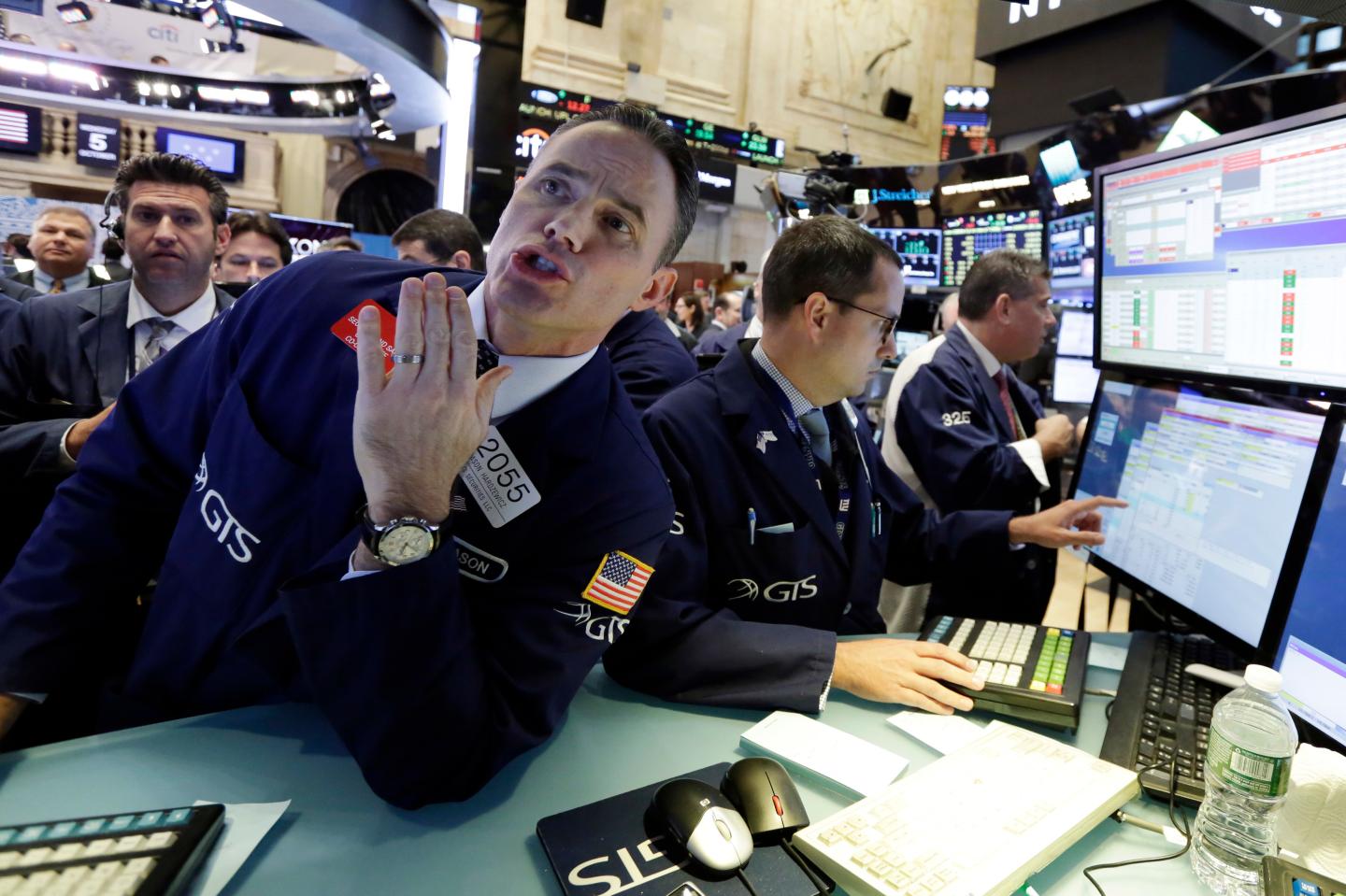
Specialist Jason Hardzewicz, left, works at his post on the floor of the New York Stock Exchange, Wednesday, Oct. 5, 2016. Energy stocks are leading an early gain on Wall Street as the price of crude oil moves higher. (AP Photo/Richard Drew)Richard Drew — AP
Add Fortune on Google for similar content.

President Trump has been in office less than a week, but so far it seems he and Congress share similar views as Wall Street: Less regulation is better, particularly when it comes to Dodd-Frank Act that aims to prevent a repeat of the 2008 financial crisis.

While amending certain parts of the landmark law would certainly reduce the burden on the financial services industry and thus assist in providing a spark to the economy to increase lending and job creation. But one should pause to reflect on the risky banking practices that led to the collapse of the financial system in 2008. We should also acknowledge that Dodd Frank and certain changes in the regulatory regime have made for a more safe, and sound banking system, which has served as the backbone of free enterprise.

It is also important to remember that regulations are imperfect, especially the process by which regulators regulate U.S. banks: one man’s red tape is another man’s accountability. However, the cost of regulation has been well-documented and without credit, the economy will not create jobs or contribute to individual prosperity. We need to strike a balance between the need to protect customers from abuse, perceived or real, and the need to attract capital that will produce a return to shareholders. The problem is the process to execute the principles of the law: when a dispute arises between regulator and the regulate —the financial institution — the process fails to provide the most basic of all constitutional rights.

This problem dates back before Dodd-Frank. More than 20 years ago in 1994, Congress created an internal regulatory appeals process to add additional protection in resolving disputes between financial regulators and bankers. However, many industry observers believe reform efforts have failed, while most bankers do not believe that a clear, fair, and objective process is available when a dispute arises.

Here’s the crux of the problem: the regulator is the prosecutor that initiates the action. If the bank chooses to challenge the matter, the regulator is the judge and jury. Any appeal is stacked against the accused. The dispute may go to an internal review committee or to an ombudsman, who reports to the agency head, or may go to an administrative law judge who has been appointed by the agency.

Even if the fix on the appeal circuit magically went in the accused’s favor, the final decision ultimately returns to the very regulator who initiated the action. This is just wrong and offensive to our basic notions of due process.

Thus, the banker does not challenge or appeal because of the defective process and the threat of retribution. One can only observe the history of conclusion by the various banking regulators to see why most bankers believe that when there is a dispute there is not equitable and reasonable recourse when they have a legitimate objection to a purported regulatory violation or decision.

I am not saying that the banking industry does not need a strong, independent banking regulator that is committed to fulfilling its mission. And it is critically important that dishonest, incompetent bankers who have harmed customers be removed from the system and the regulator should have every tool to enforce its mission. But again, not without due process. Not all bankers are crooks and not all regulators are unbiased and objective.

One alternative that could improve the existing process would be an opportunity for the accused bank to go before a five-member panel that would make a binding decision. The panel would be appointed for five years. Members would be paid only expenses plus a per diem fee and include two members from the banking industry who aren’t currently working at a bank but have the financial expertise that others don’t ( one from a large institution and the other from a small one).

The other two members would come from the regulatory agency (one a federal regulator and the other a state regulator), plus a single member representing the general public.

All individuals must have depth of experience in their background, and have no direct or indirect interest in any insured financial institution. The panel would be selected by the board of the FDIC from a list of 20 names submitted by the bipartisan leadership of the House Financial Services Committee and Senate Banking Committee. The panel would have the ability to drawn upon experts from time to time and its authority and limitation would be part of its charter established by Congress.

I have worked within the banking industry for over 40 years in both a small/mid-sized and large financial institution as well as having banking regulatory experience at the federal level. There are honorable, well-meaning, and smart people representing both the banking industry and the regulatory agencies, but on occasion, well-meaning people have disputes and for that reason, it is important that a valid “due process” system be in place.

It’s possible in America to have a robust, safe and sound banking system along with a fair regulatory system. It doesn’t have to be a choice of one over the other.

Donald E. Powell, a banker for over 40 years, was chairman of the FDIC from 2001-2005.

About the Author
By Donald E. Powell
See full bioRight Arrow Button Icon
Add Fortune on Google for similar content.

Latest in Commentary

Finance
Lorem ipsum dolor sit amet, consectetur adipiscing elit, sed do eiusmod tempor incididunt ut labore et dolore magna aliqua. Ut enim ad minim veniam
By Fortune Editors
October 20, 2025
Finance
Lorem ipsum dolor sit amet, consectetur adipiscing elit, sed do eiusmod tempor incididunt ut labore et dolore magna aliqua. Ut enim ad minim veniam
By Fortune Editors
October 20, 2025
Finance
Lorem ipsum dolor sit amet, consectetur adipiscing elit, sed do eiusmod tempor incididunt ut labore et dolore magna aliqua. Ut enim ad minim veniam
By Fortune Editors
October 20, 2025
Finance
Lorem ipsum dolor sit amet, consectetur adipiscing elit, sed do eiusmod tempor incididunt ut labore et dolore magna aliqua. Ut enim ad minim veniam
By Fortune Editors
October 20, 2025
Finance
Lorem ipsum dolor sit amet, consectetur adipiscing elit, sed do eiusmod tempor incididunt ut labore et dolore magna aliqua. Ut enim ad minim veniam
By Fortune Editors
October 20, 2025
Finance
Lorem ipsum dolor sit amet, consectetur adipiscing elit, sed do eiusmod tempor incididunt ut labore et dolore magna aliqua. Ut enim ad minim veniam
By Fortune Editors
October 20, 2025

Most Popular

Finance
Lorem ipsum dolor sit amet, consectetur adipiscing elit, sed do eiusmod tempor incididunt ut labore et dolore magna aliqua. Ut enim ad minim veniam
By Fortune Editors
October 20, 2025
Finance
Lorem ipsum dolor sit amet, consectetur adipiscing elit, sed do eiusmod tempor incididunt ut labore et dolore magna aliqua. Ut enim ad minim veniam
By Fortune Editors
October 20, 2025
Finance
Lorem ipsum dolor sit amet, consectetur adipiscing elit, sed do eiusmod tempor incididunt ut labore et dolore magna aliqua. Ut enim ad minim veniam
By Fortune Editors
October 20, 2025
Finance
Lorem ipsum dolor sit amet, consectetur adipiscing elit, sed do eiusmod tempor incididunt ut labore et dolore magna aliqua. Ut enim ad minim veniam
By Fortune Editors
October 20, 2025
Finance
Lorem ipsum dolor sit amet, consectetur adipiscing elit, sed do eiusmod tempor incididunt ut labore et dolore magna aliqua. Ut enim ad minim veniam
By Fortune Editors
October 20, 2025
Finance
Lorem ipsum dolor sit amet, consectetur adipiscing elit, sed do eiusmod tempor incididunt ut labore et dolore magna aliqua. Ut enim ad minim veniam
By Fortune Editors
October 20, 2025
Fortune Secondary Logo
Rankings
  • 100 Best Companies
  • Fortune 500
  • Global 500
  • Fortune 500 Europe
  • Most Powerful Women
  • World's Most Admired Companies
  • See All Rankings
  • Lists Calendar
Sections
  • Finance
  • Fortune Crypto
  • Features
  • Leadership
  • Health
  • Commentary
  • Success
  • Retail
  • Mpw
  • Tech
  • Lifestyle
  • CEO Initiative
  • Asia
  • Politics
  • Conferences
  • Europe
  • Newsletters
  • Personal Finance
  • Environment
  • Magazine
  • Education
Customer Support
  • Frequently Asked Questions
  • Customer Service Portal
  • Privacy Policy
  • Terms Of Use
  • Single Issues For Purchase
  • International Print
Commercial Services
  • Advertising
  • Fortune Brand Studio
  • Fortune Analytics
  • Fortune Conferences
  • Business Development
  • Group Subscriptions
About Us
  • About Us
  • Press Center
  • Work At Fortune
  • Terms And Conditions
  • Site Map
  • About Us
  • Press Center
  • Work At Fortune
  • Terms And Conditions
  • Site Map
  • Facebook icon
  • Twitter icon
  • LinkedIn icon
  • Instagram icon
  • TikTok icon
  • YouTube icon

Latest in Commentary

Roderick Wong, MD is Managing Partner and Chief Investment Officer of RTW Investments
Commentary250 Years of Innovation
When 10,000 doctors stood up and cheered for a cancer drug — America’s innovation machine made it possible
By Roderick WongJuly 25, 2026
8 hours ago
t
CommentaryCommunity
Ronald Reagan center director: How to talk politics with family, friends and neighbors, without losing them
By Frederick J. Ryan, Jr.July 25, 2026
8 hours ago
m
Commentarydisruption
The Messi Test and how the Spaniards messed with it: what the World Cup final taught me about the jobs AI can’t touch
By Bhaskar ChakravortiJuly 25, 2026
9 hours ago
alex
CommentaryEntrepreneurship
I sold my startup for millions without a single dollar in revenue. Here’s why that’s the point
By Alexander Kardos-NyheimJuly 25, 2026
13 hours ago
craig
CommentaryPharmaceutical Industry
Big pharma’s patent cliff meets a new biotech Cold War: We need to outrun China, not outlaw it
By Craig GarthwaiteJuly 24, 2026
1 day ago
tim
Commentarysmartphones and mobile devices
NYU Stern pricing expert: There’s a hidden ‘AI tax’ hitting Apple, Dell — and your next phone
By Srikanth JagabathulaJuly 24, 2026
1 day ago

Most Popular

'The demographic dividend of the last 40 years is ending': J.P. Morgan says the world is running out of the two things that kept interest rates down
Economy
'The demographic dividend of the last 40 years is ending': J.P. Morgan says the world is running out of the two things that kept interest rates down
By Eleanor PringleJuly 24, 2026
2 days ago
Jensen Huang made his $172 billion fortune on AI chips. His family's $75 million gift to Vanderbilt argues art decides what technology is for
Big Tech
Jensen Huang made his $172 billion fortune on AI chips. His family's $75 million gift to Vanderbilt argues art decides what technology is for
By Sydney LakeJuly 23, 2026
3 days ago
The millennial generation is split in 2: an older crowd with boomer-style comfort, a younger set going 'back to the early 1900s'
Real Estate
The millennial generation is split in 2: an older crowd with boomer-style comfort, a younger set going 'back to the early 1900s'
By Nick LichtenbergJuly 25, 2026
8 hours ago
The $39 trillion U.S. national debt isn’t as high as Japan’s and Singapore’s relative to economy size—and yet it's still worse somehow
Economy
The $39 trillion U.S. national debt isn’t as high as Japan’s and Singapore’s relative to economy size—and yet it's still worse somehow
By Sasha RogelbergJuly 23, 2026
2 days ago
An 11-year-old is cleaning his neighbors' trash cans for $10 each—he now has 100K followers as teens face the worst summer job market since 1948
Success
An 11-year-old is cleaning his neighbors' trash cans for $10 each—he now has 100K followers as teens face the worst summer job market since 1948
By Orianna Rosa RoyleJuly 25, 2026
10 hours ago
Current price of oil as of July 24, 2026
Personal Finance
Current price of oil as of July 24, 2026
By Joseph HostetlerJuly 24, 2026
1 day ago

© 2026 Fortune Media IP Limited. All Rights Reserved. Use of this site constitutes acceptance of our Terms of Use and Privacy Policy | CA Notice at Collection and Privacy Notice | Do Not Sell/Share My Personal Information
FORTUNE is a trademark of Fortune Media IP Limited, registered in the U.S. and other countries. FORTUNE may receive compensation for some links to products and services on this website. Offers may be subject to change without notice.